Join the ScotiabankStartRight® Program designed for Newcomers‡ and get up to $2,300* in value in the first year.
If you’re planning to rent in London, Ontario, choosing the right neighbourhood is one of the most important decisions you’ll make as a newcomer. London, Ontario neighbourhoods vary widely in price, transit access, safety, and rental availability, but the city remains one of the most affordable places to rent in southwestern Ontario.
This guide breaks down the best London, Ontario neighbourhoods for renting, with a strong focus on affordability, transit access, and newcomer-friendly housing. You’ll also find a neighbourhood comparison table and tips to help you confidently rent in London, Ontario.
Why Rent in London, Ontario as a Newcomer?
Compared to Toronto and the Greater Toronto Area, rent in London, Ontario, is significantly more affordable. The city offers a large supply of purpose-built rental apartments, shorter commute times, and strong public transit corridors. For newcomers arriving without a car, London, Ontario’s affordable neighbourhoods, large supply of purpose-built rentals, and strong public transit corridors, make settling faster and less stressful.
With a strong job market and respected institutions like Western University and Fanshawe College, London offers many budget-friendly neighbourhoods where newcomers can rent safely and comfortably while settling into life in Canada.
This short drone video gives you a bird’s-eye view of the city — from the Thames River and downtown core to residential neighbourhoods newcomers often choose for affordability and transit access.
Video courtesy of Our Retired Life. Aerial footage of London, Ontario showcasing neighbourhoods, green spaces, and the Thames River.
This interactive map shows London neighbourhoods and helps newcomers compare rental areas based on location, transit access, and nearby amenities before renting in London, Ontario.
London, Ontario Neighbourhoods Map: Where to Rent
Each London, Ontario neighbourhood offers different rental prices, types of housing, and lifestyles. Using a London, Ontario neighbourhood map can help newcomers quickly identify areas close to work, schools, public transit, and shopping while staying within budget.
Quick Look: Most Affordable London, Ontario Neighbourhoods for Newcomers
Here’s a quick snapshot of the most affordable London, Ontario neighbourhoods for newcomers based on rental price, transit access, and lifestyle:
First-time renters: Southcrest, Carling Heights
Families: White Oaks, Summerside, Argyle
Students & young professionals: Old North, Argyle
Safety & affordability: Westmount, White Oaks.
Neighbourhood Profiles
Is Southcrest a Good Neighbourhood to Rent in London, Ontario?
Southcrest – Affordable Rentals with Green Space
Overview: Southcrest is a south London neighbourhood known for affordable apartment buildings and access to large parks.
Best For: First-time renters, families, newcomers on a budget
Transit: Strong bus routes along Wharncliffe Road and Baseline Road
Vibe: Residential, practical, community-oriented
Rental Range: Mostly lower- to mid-priced apartments
Southcrest Park and the surrounding ravine system offer green space, walking paths, and recreational facilities. Older apartment buildings often provide larger units at lower rents, making Southcrest one of the best London, Ontario neighbourhoods for newcomers looking to rent affordably.
White Oaks neighbourhood in London, Ontario, features family-friendly streets, parks, and affordable rental options for newcomers.
Is White Oaks a Good Neighbourhood for Newcomers to Rent?
White Oaks – Best Value for Families
Overview: White Oaks is a diverse, family-friendly neighbourhood with one of the highest concentrations of rental housing in the city.
Best For: Families, newcomers without a car, long-term renters
Transit: Excellent bus connections centred around White Oaks Mall
Vibe: Busy, diverse, family-focused
Rental Range: Lower-priced apartments and townhouses
White Oaks Mall serves as a major transit and shopping hub. Libraries, community centres, and parks make this area especially appealing for newcomers planning to rent in London, Ontario.
Is Carling Heights a Good Area to Rent in London?
Carling Heights – Central and Budget-Friendly
Overview: Carling Heights is a centrally located neighbourhood offering affordable rents close to downtown London.
Best For: Downtown workers, students, budget-conscious renters
Rental Range: Lower- to mid-range apartments and older homes
Its central location and flexible housing options make Carling Heights a strong choice for newcomers seeking affordable rent in London, Ontario, with short commute times.
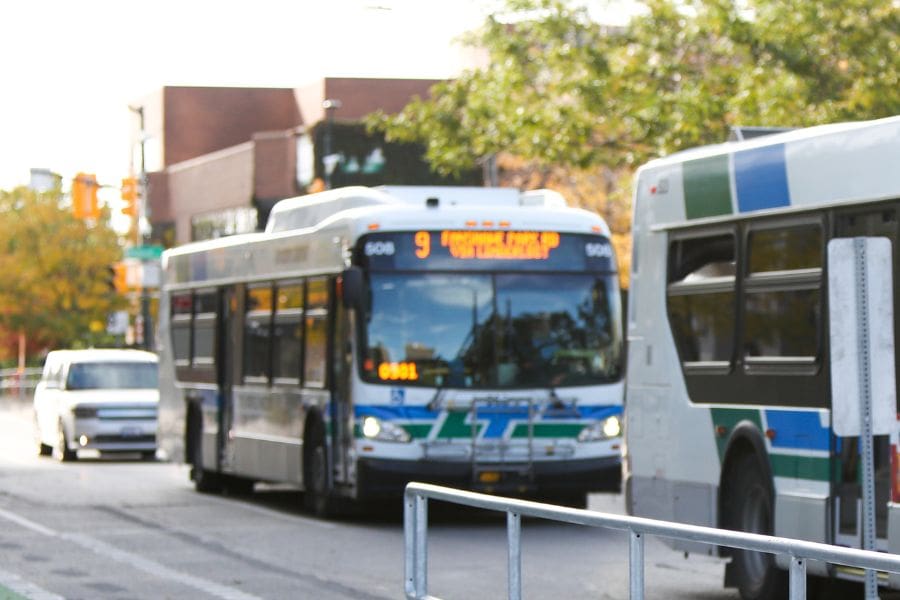
London Transit bus serving the Argyle neighbourhood, providing convenient access to shopping, schools, and downtown.
Is Argyle a Good Neighbourhood for Affordable Rent?
Argyle – Affordable and Transit-Connected
Overview: Argyle is a large east London neighbourhood known for affordability and strong transit connections.
Best For: Students, service workers, newcomers without vehicles
Transit: Excellent access along Dundas Street East
With Argyle Mall and Dundas Street nearby, renters have easy access to groceries, services, and employment. This makes Argyle one of the most practical London, Ontario neighbourhoods for renting on a budget.
Is Summerside a Good Neighbourhood to Rent in London, Ontario?
Summerside – Newer Homes at Lower Prices
Overview: Summerside is a newer neighbourhood in southeast London offering modern rentals at relatively affordable prices.
Best For: Young families, newcomers seeking newer housing
Transit: Limited but improving bus service
Vibe: Suburban, quiet, family-oriented
Rental Range: Mid-range townhomes and newer apartments
Summerside appeals to newcomers who want newer construction, schools, and parks while keeping rent in London, Ontario, within a reasonable range.
Is Westmount a Good Neighbourhood to Rent in London, Ontario?
Westmount – Affordable with Nature Access
Overview: Westmount offers a wide range of rental options and easy access to shopping and parks along the Thames River.
Best For: Families, newcomers seeking green space
Transit: Good bus routes and shopping access
Vibe: Established, residential, relaxed
Rental Range: Lower- to mid-range apartments, condos, duplexes
Located near Springbank Park, Westmount combines affordability with access to nature, making it one of the most balanced London, Ontario, neighbourhoods for renting.
The Old North area is ideal for international students attending Western University.
Is Old North a Good Area to Rent Near Western University?
Old North – Affordable for Students & Newcomers
Overview: Old North is a historic neighbourhood near Western University with a strong rental market.
Best For: International students, young professionals
Transit: Frequent bus routes to campus and downtown
Vibe: Academic, lively, walkable
Rental Range: Mid-range apartments and shared houses.
Compare London, Ontario Neighbourhoods for Renting
NEIGHBOURHOOD
BEST FOR
TYPICAL RENT RANGE
TRANSIT ACCESS
Southcrest
First-time renters, families
Lower-priced apartments
Good bus access
White Oaks
Families, car-free renters
Lower-cost apartments & townhomes
Excellent
Carling Heights
Downtown workers, students
Lower-mid range
Frequent
Argyle
Students, service workers
Lower-priced walk-ups & townhomes
Excellent
Summerside
Young families
Mid-range
Limited but improving
Westmount
Families, nature lovers
Lower – mid range
Good
Old North
Students, young professionals
Mid-range
Frequent
Renting your first home in Canada | Options & solutions for newcomers
Searching for your first home in Canada? Join this exclusive session for key insights on housing market conditions, affordable options, and renting without credit history. Tailored for newcomers settling in the next six months, register now for valuable tips and a free guide!
London consistently ranks among the most affordable mid-sized cities in Ontario. Average rents remain significantly lower than in Toronto, allowing newcomers to reduce their monthly housing costs while building financial stability.
LOCATION
*AVERAGE RENTAL
*Canadian National Average
$2,074
Toronto, Ontario
$2,521
London, Ontario
$1,917
*As of November 2025, asking rents for all property types averaged $2,074, the lowest level since June 2023.
*Estimated rental prices as of November 2025
London remains one of the most affordable mid-sized cities in Ontario, making it an attractive option for newcomers seeking to save on housing costs.
FAQs Newcomers Ask About Renting in London, Ontario
Which London, Ontario, neighbourhoods are best for newcomers?
Southcrest, White Oaks, Carling Heights, Argyle, Summerside, Westmount, and Old North are among the best London, Ontario, neighbourhoods for newcomers seeking affordable rent and transit access.
What are the safest affordable neighbourhoods in London?
Neighbourhoods such as White Oaks, Westmount, Summerside, and parts of Southcrest are widely considered safe and family-friendly while remaining affordable compared to central or luxury areas.
Is rent in London cheaper than in Toronto?
Yes. Average rent in London is much lower than in Toronto, allowing newcomers to save thousands of dollars per year while maintaining access to education, healthcare, and employment opportunities.
Do I need a car to live in London?
Not necessarily. Many London, Ontario, neighbourhoods offer strong public transit, especially White Oaks, Argyle, Old North, and Carling Heights.
Are there good areas for students to rent in London, Ontario?
Yes, neighbourhoods like Old North, Argyle and Carling Heights are popular among students due to their proximity to universities and transit.
Can newcomers rent-to-own a home in London, Ontario?
Yes, some newcomers explore rent-to-own options as a pathway to homeownership in Canada. While traditional renting is common, rent-to-own programs allow you to apply part of your rent toward a future home purchase. Learn more about how newcomers can take this route in our full guide: Can Newcomers Rent to Own a Home in Canada.
Action Plan for Newcomers Renting in London
Research affordable neighbourhoods before arriving
Set a realistic budget including rent, groceries, transportation, and utilities
Focus on areas with strong transit if you don’t own a car
Prepare documents landlords may request (ID, proof of income, references)
Consider an older apartment building for better value
London’s combination of affordability, education, healthcare, and employment opportunities makes it an excellent city for newcomers looking to rent, settle, and build a future in Canada.
🏠 Ready to find your new home in London? Use Rentals for Newcomers to explore available options and secure the right place for you.
If you are moving to Canada, choosing the right city is key! The City of London, Ontario, is one of many Canadian cities to consider. However, it’s vital to research the local job market, housing options, and city before you arrive. The city you choose to settle in can determine your success in Canada. Specifically, you want to ensure there are good job opportunities so you can continue your career. And you want to ensure that housing and the cost of living are affordable to build financial success. Discover what it’s like to live in London and start your research!
About London, Ontario
The City of London in Southwestern Ontario is midway between Windsor and Toronto. It is situated on the Thames River and is nestled between Lake Huron and Lake Erie.
For newcomers, the city offers affordable housing, low crime rates, world-class education, healthcare facilities, and culture. It’s known as the “Forest City” for its more than four million trees, lush green space, and beautiful parks. If you’re looking for the urban lifestyle of a big city with the appeal and charm of a smaller community, the City of London is a great place to live and raise a family.
London is known as the “Forest City.”
London, Ontario was settled in 1793 by Lord Simcoe on behalf of the Commonwealth. It was supposed to be the future capital city of Upper Canada. It officially became a city in 1855.
How Many People Live in London, Ontario?
The city has close to 422,000 residents, and more than 550,000 residents in the census metropolitan area (CMA). The CMA includes the city and surrounding areas of St. Thomas, Thames Centre, Middlesex Centre, Strathroy-Caradoc, Adelaide Metcalfe, Central Elgin, and Southwold.
Rapid growth places London within the top five fastest-growing communities in Canada. It’s the fifth-largest city in Ontario and serves as a regional hub for nearby communities. London offers big city amenities with small-town charm.
How to Find a Job & Build a Career in London
London’s Local Economy
London is a hub of higher education, medical research, technology, and manufacturing. Its location within southwestern Ontario makes it a key supply chain and transportation hub for the province.
The strength of the manufacturing sector, rich agricultural lands, and proximity to the United States border make it an important economic region. London attracts foreign direct investments in advanced manufacturing, food processing, information technology, and other knowledge-based industries.
London’s key sectors are:
Agri-Food
Advanced Manufacturing
Digital Media and Technology
Film and Television
Health and Life Sciences.
Major Employers in London
This city is home to several major employers, including:
London Health Sciences Centre
St. Joseph’s Health Care
Western University
Fanshawe College
Canada Life
3M Canada
Goodlife Fitness
Nestle Canada Inc.
Career Pathways in London
London has an extensive education and healthcare industry, a large financial services presence, and an emerging digital media and technology industry.
You can search for job opportunities and connect with local recruiters, including Aerotek, PHM Search, and Ladder HR Solutions.
The London Housing Market
London offers newcomers a diverse, welcoming, and safe place to call home. The housing market is experiencing significant growth.
Is Housing Expensive in London, Ontario?
London is one of the most affordable housing markets in Ontario and Canada.
Renting your first home in Canada | Options & solutions for newcomers
Searching for your first home in Canada? Join this exclusive session for key insights on housing market conditions, affordable options, and renting without credit history. Tailored for newcomers settling in the next six months, register now for valuable tips and a free guide!
Rentals for Newcomers is a trusted site to research rental prices before you arrive in Canada. When you arrive, you can connect with landlords to view rentals in person. Discover what newcomers need to know about renting in Canada.
Rental prices in London fall below the provincial average. Prices for a one-bedroom have dropped by 5% year-over-year and 3% for a two-bedroom apartment. This makes London rental prices some of the most affordable in the province and in Canada.
The average home price was $605,560, and 2.8% lower than in October, 2024 2024. However, it’s lower than the provincial average of $833,376. With lower housing costs, you can afford more space for your family.
You’ll discover a range of property types for sale. Roughly 55% are single-detached homes, and the remainder are townhouses and condo apartments. Almost two-thirds of residents own homes.
Rapid population growth is driving the increase. However, you can search for more affordable housing in surrounding communities such as Strathroy and St. Thomas.
In London, driving is straightforward. There are no major highways that run through the city. Highways 401, 402, and 403 provide quick and easy access to Toronto, Brampton, and Niagara. It’s about a one-hour drive to the Sarnia-Port Huron US border. Drivers must have a valid Ontario driver’s licence.
London Public Transit
Commuting is easy with London Transit. London has a lower-than-average commute time of 22 minutes compared to 26 minutes for the rest of Canada. London’s rapid transit system eases traffic flow along major corridors to connect people to places faster and easier.
Licensed taxi companies and Uber are also available.
Walking and cycling are easy, given the city’s layout and many bike routes. You’ll find on-street routes, off-street routes, and multi-use pathways.
Go Transit offers daily transportation to the Greater Toronto Area (GTA). The London International Airport offers domestic and international flights.
Community Support for Newcomers
This city continues to become more diverse and supports newcomers through many ethnocultural groups and settlement organizations such as the:
London-Middlesex Local Immigration Partnership
London Cross Cultural Learner Centre
LUSO Community Services
YMCA of Southwestern Ontario.
For more information, please visit London’s immigration portal, a one-stop-shop for newcomers to London.
Language Support in London
Several organizations offer language support in the city. You can connect with any of these organizations if you would like to enhance your language skills: London Language Institute, Canadian ESL Centre, College Boreal, and St Patrick Adult and Continuing Education.
Personal Finance & Banking
All local banks and financial institutions have programs to help newcomers open a bank account and get a credit card. Visiting a local bank branch and meeting with a financial advisor can help you build financial success.
London, Ontario, offers high-quality schools to meet your needs. You’ll find primary, secondary, and post-secondary schools that provide superior education. This is importan,t especially if you are moving to Canada with young children.
Elementary and High School Education
If you have young children, selecting a school close to home will be important. Children must attend a school within the district where they reside. The city has two English-language school boards and two French-language school boards:
London District Catholic School Board
Thames Valley District School Board
Conseil scolaire catholique Providence
Conseil scolaire Viamonde
More than 20 private schools are geared to cultures and religions including the Al-Taqwa Islamic School, London Community Hebrew Day School, and other English as a second language schools.
Western University is among the top higher education schools globally.
Post Secondary Institutions
London is home to two post-secondary schools, Western Univesity and Fanshawe College.
Western University is ranked among the top 1% of higher education institutions globally. It offers more than 480 degree, graduate, and postdoctoral programs in Medicine, Business, Law, Dentistry, Engineering, and Healthcare. The school has over 40,000 students including more than 5,800 international students from around the world.
Western University is home to the Ivey Business School, King’s College, Huron College, and Brescia College. Ivey Business School is one of the top business schools known for its case-study learning method.
Fanshawe is one of Ontario’s largest colleges offering over 200 degree, diploma, certificate, and apprenticeship programs. It provides Applied Arts, Business, Health Care, Human Services, Hospitality, and Technology programs to over 43,000 students.
Other community colleges include Westervelt College, St. Peter’s Seminary, Medix, Ontario Institute of Audio Recording Technology, and triOS College.
Where To Get Medical Care in London, Ontario
One of Canada’s largest acute-care teaching institutions is the London Health Sciences Centre (LHSC). LHSC includes University Hospital, Victoria Hospital, St. Joseph’s Hospital, and Children’s Hospital. London also has many medical centers and research institutes.
Three hospitals provide emergency care with one urgent care center in London. There are more than 20 walk-in medical clinics, and you can visit the Middlesex-London Health Unit for information and help.
In case of a police, fire, or fire or medical emergency call 9-1-1. This number is the same no matter where you live in Canada.
The Ontario Health Insurance Plan (OHIP) covers medical care and services. However, not all services are covered. You can buy private health insurance to cover prescription medication and services not covered by OHIP.
Your health is important and you’ll need to find a doctor taking new patients. Visit Health Care Connect, to search for doctors. However, you may be placed on a waitlist, so begin your search soon after you arrive in London.
What is Day-to-Day Life Like in London?
Things to Do in London
Whether you are into sports, nature, music, or cultural events, there is something for the entire family to enjoy. Victoria Park in the downtown core hosts many cultural festivals. You can check out the farmers market at the Western Fairgrounds. Or, walk along the Thames River, picnic in Springbank Park, or enjoy the water slides at Eastpark. In the winter, you can enjoy the public skating rink and holiday lighting display. There is something for everyone.
Public Spaces & Attractions
London has a vibrant culture enhanced by its museums, theatres, special events, and libraries. It is known for the annual Western Fair and hosts over 120 special events each year including festivals such as Sunfest, Ribfest, and Home County Music & Art Festival.
Restaurants & Nightlife
London has diverse restaurants throughout the city. For nightlife, you can head downtown to Richmond Row or by the Market or grab a bite at local eateries in Wortley Village and other neighbourhoods.
Nature & Natural Landscapes
The “Forest City” has many pathways, acres of rolling parkland, and more than 200 parks and areas to walk, jog, and cycle. Bolar Mountain is the place to be for winter activities. The City of London, Ontario is a short drive to Lake Huron and the beautiful beaches of Grand Bend or Port Stanley.
Sifton Bog offers a nature getaway within steps of the city.
Sporting Events & Concerts
London is home to the London Knights of the Ontario Hockey League (OHL), the London Lightning of the National Basketball League of Canada (NBL), and the Western Mustangs Football team.
The City of London is a prime destination for concerts. It hosts music festivals including Rock The Park and Trackside, and is home to Budweiser Gardens, London Music Hall, Centennial Hall, Rum Runners, and other venues.
Culture & Diversity In London
Diversity
Approximately 20% of London’s population was born outside of Canada. More than 170 languages are spoken, including Arabic, Spanish, Mandarin, and Portuguese. More than 3,000 new immigrants come to the city each year and the largest source of new people is international migration, according to Statistics Canada.
London is rooted in English, Scottish, Irish, German, Dutch (6.3%), Italian (5.0%), and Polish (4.4%) heritage.
The most common cultural groups are East Asian (3.9%), Arab (3.6%), South Asian (3.1%), Black (3.0%), Latin American (2.4%), and Southeast Asian (1.2%). Aboriginals make up 2.6% of the population. Spanish and Arabic are the languages spoken most often after English.
St. Peter’s Cathedral Basilica
Places of Worship
London has many churches, synagogues, mosques, and temples including the:
Islamic Centre of Southwest Ontario
Hindu Cultural Centre
London Jewish Federation.
About two-thirds of the population are Christian. Islam is the second most common faith. You can find places of worship in London by clicking here.
Skiers are enjoying the winter weather at Bolar Mountain.
The Weather in London
London has a temperate climate with large seasonal contrasts. There are four distinct seasons: winter, spring, summer, and fall. On average, the weather is comfortable, allowing for outdoor activities year-round.
Summer months are hot and humid with an average temperature in July of 26°C.
Winters are cold with seasonal snowfall averaging 200 cm. The typical temperature in January is -6.3 °C. While winter can be cold, you can enjoy many outdoor activities when you dress for it.
Common Questions Immigrants Ask About Living in London
Is the City of London, Ontario Good for Immigrants?
London is an ideal city for newcomers. Immigrant communities are growing, it has a strong economy with good paying in-demand jobs and affordable housing. This makes it a good place to build roots and financial success.
What are the Pros and Cons of Living in London, Ontario?
The City of London is home to world-class healthcare and education. Housing is more affordable than many cities in Ontario and Canada. It offers big-city amenities with a small-town feel.
But there are some drawbacks. While you can use public transit, most people rely on a car to get around. It also has fewer job opportunities than cities like Vancouver or Toronto. However, there is also less competition for jobs. But it’s vital to research the job market to ensure there is a demand for jobs that match your skills and experience.
Is London a Safe Place to Raise a Family?
Yes! London is safe. The Crime Severity Index was 64.34 in 2023 and below the national average. London Police Service provides crime prevention and other programs to keep people safe. This makes it an ideal city for young families moving to Canada.
Are you moving to Canada? Thousands of immigrants come to the country every year. There are newcomers dispersed from coast to coast. One of the biggest decisions newcomers must make is where they choose to live. While Barrie is lesser-known than a large city like Toronto, it’s a popular alternative to living in the Greater Toronto Area. Where you choose to live will have a direct impact on your career options, financial success, housing costs, and overall lifestyle.
To find a lower cost of living and more affordable housing, many people consider Ontario cities outside of Toronto. Researching your options will help you choose the best city for you and your family.
Are you interested in learning more about the city of Barrie, Ontario? Our guide provides the thorough information you need to know about living in Barrie.
About Barrie, Ontario
Barrie, Ontario, is a beautiful waterfront city on the shores of Kempenfelt Bay, the western side of Lake Simcoe. It is a growing area that has become a popular destination for new immigrants and people moving out of Toronto as part of a recent interprovincial migration trend.
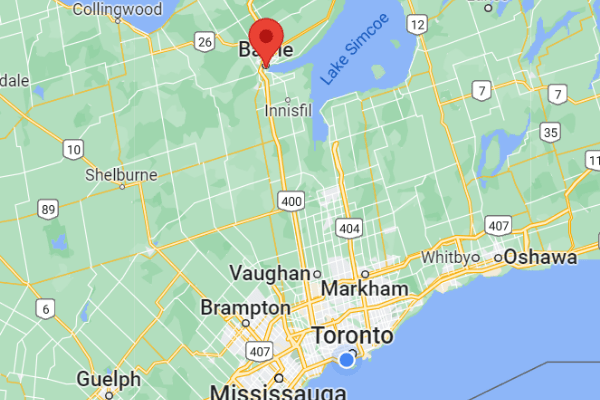
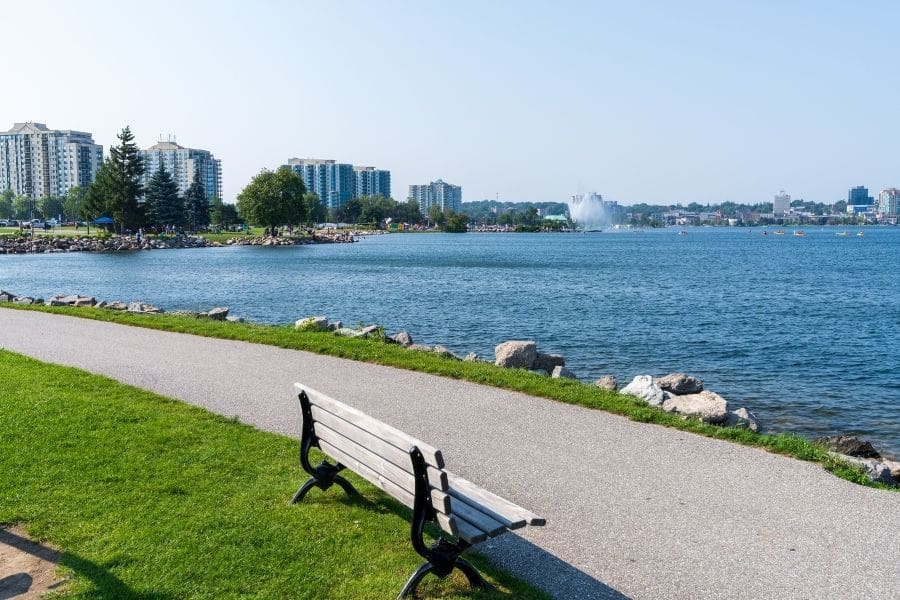
Barrie, Ontario on the shores of Lake Simcoe and 1 hour from Toronto
People are attracted to the region for several reasons. It is a bedroom community of Toronto located about 90 km north of the city with a one-hour commute. The lower housing prices and cost of living are appealing. There is large employment growth, and it has a good transit system. The city is also ideal for people who love the outdoors because of the swimmable beaches and nearby ski hills. There are many great hiking paths, great skiing, and many watersports.
Over the past few decades, it has evolved from a small town to an up-and-coming city. Barrie was first settled during the War of 1812 as a supply depot for British soldiers. The city was named after Sir Robert Barrie, an officer in the British Navy. Over the years, it has evolved from a village (1854) to a town (1870) and became a city in 1959.
How Many People Live in Barrie, Ontario?
The population of Barrie has grown rapidly over the past few years. The city has recently made the list of the top 5 most-moved-to cities in Canada. With a population of 142,000 residents (City of Barrie, 2025), the government of Ontario projects the city could grow to 300,000 residents by 2051. This is based on increased immigration and intra-provincial migration.
How to Find a Job & Build a Career in Barrie
Barrie’s Local Economy
The economy in Barrie is in a growth phase. As more people move out of the big city, businesses are choosing to invest in Barrie. The projected 70% population growth by 2041 brings new jobs and opportunities. Estimates project that more than 30,000 new jobs will be created over the next 20 years.
Some of the biggest growth sectors are arts, entertainment, and recreation, manufacturing, finance and insurance, healthcare, and construction.
The top sectors in Barrie are:
Manufacturing
Security and cloud services
Technology
Food and beverage
Life sciences
Retail
Tourism.
Major Employers in Barrie
Barrie is home to several corporate headquarters, including:
Coca Cola
Hydro One
Scotiabank
The Royal Victoria Regional Health Centre
Georgian College.
Career Pathways in Barrie
There are many ways to explore career opportunities. You can search the Government of Canada Job Bank or other online job boards. You can also use local recruitment agencies such as Randstad Canada, IS2 Workforce Solutions, TalentWorld, and AppleOne Employment Services.
It’s vital to consider where to live within the city. Ideally, you want to choose a neighbourhood that is close to work, schools, and other amenities.
Is Housing Expensive in Barrie, Ontario?
The housing market is more affordable than in other cities in the Greater Toronto Area, but with housing prices on the rise, the gap is shrinking. The lack of supply and not enough new builds are driving up the cost.
Finding a Place to Rent in Barrie
Renters in Barrie can choose from detached homes, condos, apartments, and townhouses in unique neighbourhoods. To get a sense of the character and rental prices of each neighbourhood, check out Best Barrie Neighbourhoods for Newcomers to Rent.
There are a few ways you can look for rental units. You can search online, use realtor websites, or you can use Rentals for Newcomers to search for available rental units in Barrie. Here, you can also find current rental prices in Barrie.
When renting, it’s a good idea to get to protect your family, belongings, and finances.
Renting your first home in Canada | Options & solutions for newcomers
Searching for your first home in Canada? Join this exclusive session for key insights on housing market conditions, affordable options, and renting without credit history. Tailored for newcomers settling in the next six months, register now for valuable tips and a free guide!
Buying a home in Barrie has become more expensive. For example, prices have increased by over 30% in the past year, and are predicted to increase by as much as 15% in 2022. The average price for a detached house in Barrie is $980,000. The average price for a townhome is $853,000, and the average cost for a condo is $626,000.
Barrie is a commuter city. Many people drive to work within the city or to other locations across the Greater Toronto Area. A strong road system serves Barrie. There are several highways in the area, including Highway 400, the major highway that connects to Toronto. Highway 26 is the primary highway that runs through the city and leads to Collingwood. Other highways in the area include Highways 27, 90, and 93.
All drivers must have an Ontario driver’s licence. To get a licence, you need to complete the graduated licencing process. For information on driving in Canada and how to get a licence, read 10 Facts Newcomers Must Know About Driving in Canada.
Barrie Public Transit
Barrie Transit provides public transit and bus routes throughout the city. As well, you can take advantage of the daily GO Train and Bus service to downtown Toronto and other cities in the region. And, using public transit is a convenient, affordable, and simple way to travel within Barrie and across the region. Get more information about Barrie Transit fares.
Allandale GO Station. Photo: City of Barrie
There are no major airports in the city. The closest is Lake Simcoe Regional Airport.
Community Support for Newcomers
Barrie and Simcoe County offer support services to new immigrants who move to the community. You can get information about living and working in the community.
Some of the settlement agencies include the YMCA of Simcoe/Muskoka Immigrant Services, The Learning Centre, Georgian College, and Bradford Immigration & Community Services (BICS).
Language Support in Barrie
Many community agencies offer free language classes. In Barrie, you can take courses at The Learning Centre, Georgian College, and through the YMCA Immigrant Services. Or, you can also take courses with the Simcoe County District School Board in the Adult English as a Second Language program.
Personal Finance & Banking
Having a strong financial plan is important for new immigrants. Newcomers have access to banks, credit unions, and other financial institutions where they can open a bank account, get a credit card, or a line of credit, and apply for a mortgage. Most banks and financial institutions offer specific products and programs for new immigrants. Visit a local branch to open an account. You will need proof of residence and proper identification.
The Government of Ontario manages the school system, including elementary, high school, and post-secondary education.
Elementary and High School Education
Barrie offers residents several elementary and high school education options. You have the choice to attend the public or Catholic school board. It also has two French school boards and several private schools. You can enrol your children at a school with one of the following:
Simcoe County District School Board
Simcoe Muskoka Catholic District School Board
Conseil scolaire catholique MonAvenir
Conseil scolaire Viamonde.
Post Secondary Institutions
Located in Barrie is Georgian College of Applied Arts and Technology. It offers over 130 full-time career-focused programs. There are over 13,000 full-time students, including 4,500 international students from over 85 countries.
Georgian College ofApplied Arts and Technology
Where to Get Medical Care in Barrie, Ontario
Top-quality health care is something we value as Canadians. In Barrie, you can get urgent care through the Royal Victoria Regional Health Centre. You can also go to walk-in clinics throughout the city to receive care for non-urgent needs.
In case of an emergency call 9-1-1. This number is the same no matter where you live in Canada.
The Ontario Health Insurance Plan (OHIP) provides residents with health care coverage. Learn how to apply for an OHIP card.
You can also pay for additional to help cover the costs of prescription drugs and services that are not covered by OHIP. Some employers offer third-party health insurance through their employer benefits packages.
Finding a family doctor is vital. You can search for a family doctor who is taking on new patients through Health Care Connect. You can call 1-800-445-1822 or visit www.ontario.ca/findadoctor.
What is Day-to-Day Life Like in Barrie?
Things to Do in Barrie
As a waterfront community, Barrie offers many year-round activities for residents. You can enjoy the beaches in the summer and head over to nearby ski clubs in the winter. And it is only a short drive to many other outdoor adventures. Downtown Barrie is at the heart of it all.
Public Spaces & Attractions
The city offers many local attractions, including the Simcoe County Museum, Fort Willow, Centennial Park, and Bear Creek Eco Park. If you are into the arts and theatre, check out Five Points Theatre or Maclaren Art Centre. Be sure to check out the iconic Spirit Catcher sculpture.
Left: Blue Mountain, Top Right: Spirit Catcher Sculpture by the waterfront, Bottom Right: Horseshoe Resort
Restaurants & Nightlife
Downtown Barrie is the place to go to dinner or enjoy entertainment and cultural activities. The city hosts many festivals such as Kempenfest, Barrie Waterfront Festival, Winterfest, and the Barrie Film Festival.
Nature & Natural Landscapes
Located on Lake Simcoe, Barrie provides residents with the opportunity to walk along the waterfront, go boating and enjoy the beach life in the summer months. Be sure to check out the beaches at Minet’s Point, The Gables, Tyndale, Centennial, and Johnson’s Beach.
In the winter, Horseshoe Resort, Snow Valley and Blue Mountain are great for skiing, snowboarding, and tubing. Or check out nature at Arboretum Sunnidale Park.
Sporting Events & Concerts
Barrie is home to the Barrie Colts of the Ontario Hockey League, and other minor sports teams. If you want to catch a concert, check out Sadlon Arena or Burl’s Creek Event Grounds, which is home to the popular country music festival Boots and Hearts.
Culture & Diversity in Barrie
Diversity
Barrie is not traditionally known as a diverse city, but it is on the path to becoming more diverse. There are about 20,000 immigrants in the city. 7.6% of the population are minorities and 5% are Aboriginal. The city has a large francophone community with close to 10,000 residents being bilingual.
The largest minority groups are Black (2.7%), South Asian (2.2%), Chinese (1.2%) and Latin American (1.1%).
Worship
Barrie is mainly a Christian community. Around two-thirds of residents identify as Catholic, United, or Anglican. About 30% of the population has no religious affiliation. About 1-2% of the population identify with another religion.
The Weather in Barrie
Barrie has a climate like the rest of southern Ontario. They experience warm and humid summers and cold winters. It is a humid continental climate. The region experiences heavy thunderstorms in the spring and summer.
In the winter, the city gets significant snowfall, largely because it is close to Georgian Bay and Lake Ontario. The average temperature is -8.1°C in January and +21.0°C in July.
Common Questions Immigrants Ask About Living in Barrie
Is Barrie Ontario a Good Place to Live for Immigrants?
Barrie is a mid-sized city that offers a slower-paced lifestyle than living in a large city such as Toronto. Though Barrie is known for being more traditional, it is becoming a more diverse city. Barrie was named the safest city in Ontario to live in. If you are into the outdoors and cottage lifestyle, it’s a great place to consider.
What are the Advantages and Disadvantages of Living in Barrie?
It’s vital to consider the pros and cons of a city before choosing where to live. On the plus side, Barrie is a great location, with a growing job market, a safe community and offers many great seasonal activities. On the downside, it’s less diverse than a city such as Toronto and other potential issues such as road congestion, challenging winters, and rising housing costs.
Is Barrie, Ontario, Expensive?
Barrie is more affordable than many cities in the Greater Toronto Area, but housing prices are rising as the city has become a prime location for interprovincial migration. Many Toronto residents are moving to Barrie. As a result, the cost of housing is rising.
Barrie, Ontario, is one of Canada’s fastest-growing cities, with a population of more than 142,000 people (City of Barrie, 2025). Just 80 km north of Toronto, Barrie offers newcomers a more affordable lifestyle while staying connected to the Greater Toronto Area (GTA) by GO Train and Highway 400. With average rents around $2,080/month (Rentals.ca, 2025), Barrie is a popular choice for commuters, families, and students. Here are the best neighbourhoods in Barrie to rent in as a newcomer.
Before You Rent in Barrie: Tips for Newcomers
Finding the right neighbourhood is only part of the rental journey. As a newcomer, it’s vital to understand how the Canadian rental application process works. Landlords in Barrie often ask for documents such as identification, proof of income, and references before approving your application. Having these ready will help you stand out in a competitive market.
If you’re just arriving and need flexibility, consider short-term rentals or homesharing options. These options allow you to settle quickly while exploring neighbourhoods before signing a long-term lease.
Shared housing is common for students near Georgian College or in the East End. Discover more about Types of Housing in Canada.
Newcomer Tip: Use trusted platforms like Rentals for Newcomers (RFN) to find verified listings and avoid rental scams. Be cautious of landlords who ask for deposits before you see the unit, or request payment through untraceable methods. Always get a lease in writing and confirm landlord details.
Where Should Newcomers Rent in Barrie?
Newcomers should consider renting in neighbourhoods that balance affordability, amenities, and access to transit. The best choice depends on your lifestyle, whether you prioritize commuting, family-friendly amenities, or scenic lakefront living. Here are some top neighbourhoods to consider.
Barrie Rental Neighbourhoods
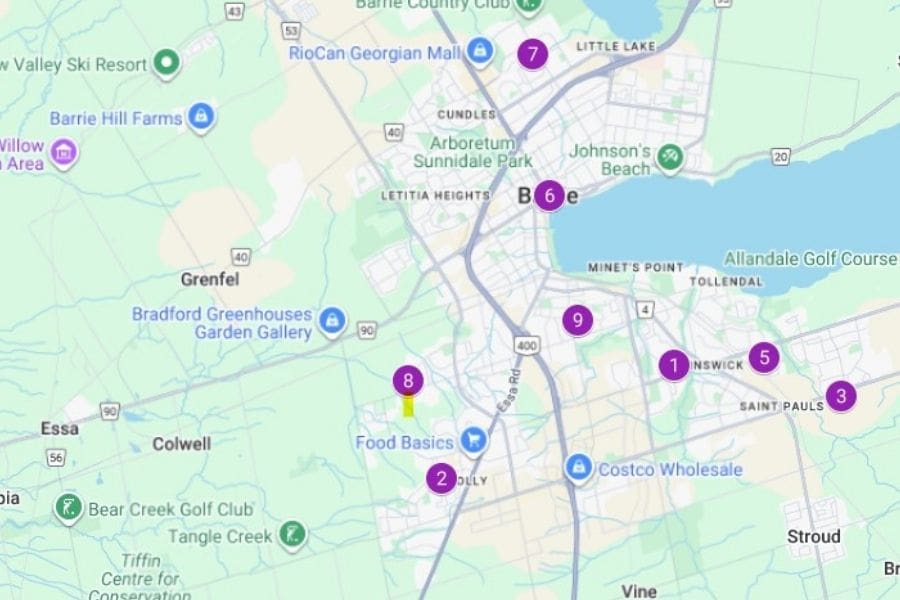
Main rental neighbourhoods in Barrie, Ontario.
1. Painswick: Best for commuters and families
Located in Barrie’s south end, Painswick is one of the city’s fastest-growing neighbourhoods. Its biggest draw is the Barrie South GO Station, which makes commuting to Toronto manageable for professionals.
Ideal for: Families seeking schools and green space, professionals commuting to the GTA, renters who want suburban convenience.
Access:Public Transit: Direct GO Train service to Toronto from Barrie South GO Station. Driving: Easy access to Highway 400, about 15 minutes to downtown Barrie, 75 – 90 minutes to Toronto.
Vibe: Suburban, growing, and family-friendly with plenty of shopping and dining along Big Bay Point Road.
Why newcomers like it: Multiple schools and a public library branch to support family needs; easy commuting by GO train or Highway 400.
2. Holly: Best for growing families
Holly is a rapidly developing neighbourhood in Barrie’s south end. It’s one of the most sought-after areas due to its excellent schools, parks, and strong sense of community.
Ideal for: Families with young children; renters looking for a quiet suburban lifestyle.
Access:Public transit: Barrie Transit bus routes connect to downtown and GO stations. Driving: About 10 minutes to downtown Barrie, quick access to Highway 400.
Vibe: Family-focused with new subdivisions, parks, and shopping nearby.
Rental range: Townhouses $2,000 – $3,000; detached homes $2,600+
Why newcomers like it: Well-rated schools and family-friendly amenities; plenty of green space for kids to play, and access to Highway 400 for commuters.
If you’re looking to settle long-term, Holly offers larger rental homes with room for extended family, ideal for newcomers moving with relatives.
Renting your first home in Canada | Options & solutions for newcomers
Searching for your first home in Canada? Join this exclusive session for key insights on housing market conditions, affordable options, and renting without credit history. Tailored for newcomers settling in the next six months, register now for valuable tips and a free guide!
3. Innis Shore: Best for nature lovers and families
Innis Shore, in Barrie’s southeast, is one of the largest neighbourhoods in the city. It borders Kempenfelt Bay, offering lake views and access to parks and trails.
Ideal for: Families seeking large homes near schools; nature lovers seeking trails and lakefront access.
Access: About 15 minutes to drive downtown with easy access to Highway 400. Public transit offers local bus routes. Nearest GO access is Barrie South GO Station (10 – 15 minutes away).
Vibe: Scenic, spacious, and community-oriented.
Rental range: Townhouses $2,000 – $2,400; detached homes $2,700+.
Why newcomers like it: Top-rated schools and playgrounds, scenic trails and green spaces for outdoor activities, proximity to Wilkin’s Beach for family outings.
4. Sunnidale: Best for space and established homes
Sunnidale, in Barrie’s north end, is known for large lots, mature trees, and established homes. It’s a quiet neighbourhood with excellent schools.
Ideal for: Families seeking space, renters who want a quiet, established community.
Access: About 10 minutes to drive to downtown Barrie; close to Highway 400. Barrie Transit routes connect to downtown and the Allandale Waterfront GO Station.
Vibe: Peaceful and residential with a suburban feel.
Rental range: Detached homes $2,400 – $2,800.
Why newcomers like it: Many schools, including six public and four Catholic options; Sunnidale Park offers trails, streams and an arboretum; ideal for families looking for long-term stability.
This area has fewer apartments, so focus your rental search on single-family homes or basement apartments.
5. Bayshore: Best for families
Bayshore is a well-established neighbourhood in Barrie’s south end, with several subdivisions. It features mainly detached homes with few condos or townhouses. It offers quiet, residential streets mixed with commercial strips, parks, and access to waterfront areas.
Ideal for: Families, including those with school-age children.
Access: Driving to downtown Barrie is quick, and access to Highway 400 is reasonable via connector roads. Several Barrie Transit bus routes connect to other parts of the city.
Vibe: Calm, residential, and close to parks
Rental range: Detached homes $2,500+.
Why newcomers like it: Lake proximity, family parks, and quiet streets.
Barrie waterfront condos nearKempenfelt Bay.
6. City Centre: Best neighbourhood for urban living
City Centre overlooks Kempenfelt Bay and is the heart of downtown Barrie. It’s ideal for renters who want walkable access to shops, restaurants, and the waterfront.
Ideal for: Young professionals, students, or singles seeking apartments.
Access: The central location means short drives anywhere in the city; multiple Barrie Transit routes; close to the Allandale Waterfront GO Station.
Vibe: Urban, busy, and scenic with high-rise condos and apartments.
Why newcomers like it: Walkability to amenities and nightlife; access to the Allandale Waterfront GO Station; beautiful waterfront trails and views.
7. East End: Best for students and longtime residents
The East End is one of Barrie’s oldest areas and is home to Georgian College. It offers mature trees, older brick homes, and family parks.
Ideal for: Students attending Georgian College; families who prefer a quieter, older neighbourhood. Access: About 10 minutes to drive to downtown Barrie; direct Barrie Transit service to Georgian College and downtown.
Vibe: Historic, residential, and student-friendly.
Rental range: Rooms for students typically cost $600 – $900/month; rentals/rooms: $600 – $900/month; detached homes range from $2,000 – $2,500.
Why newcomers like it: Close to Georgian College and Kempenfelt Park, a mix of student housing and family homes, quiet, established neighbourhood.
8. Ardagh: Best for outdoor enthusiasts
Ardagh is located in Barrie’s west end and sits next to the Ardagh Bluffs Natural Area, with over 17 km of trails.
Access: About 10 minutes to drive downtown. Public transit bus routes connect to downtown and GO stations.
Vibe: Residential, scenic, and active with access to nature.
Rental range: Apartments/condos near the waterfront $2,000 – $2,200; Detached homes: $2,600+.
Why newcomers like it: Trails, parks, and outdoor spaces like Bear Creek Eco-Park; mix of new condos and older homes; easy access to Highway 400.
If you love the outdoors but want affordability, look for condos near Ardagh Bluffs instead of detached homes.
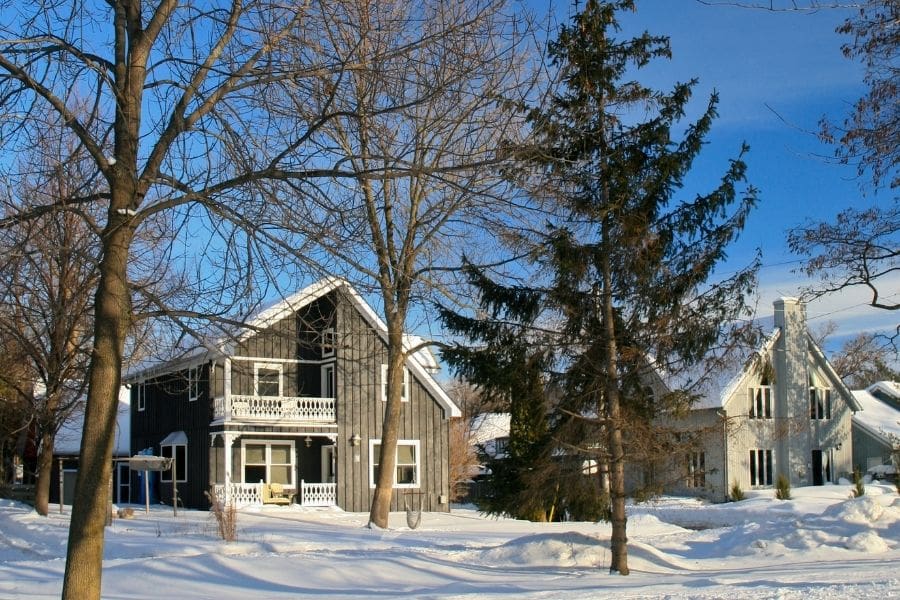
Heritage-style homes in Barrie’s historic Allandale neighbourhood showcase the area’s classic charm.
9. Allandale: Best for heritage charm and commuters
Allandale is one of Barrie’s oldest and most charming neighbourhoods, with heritage homes, lake access, and the Allandale Waterfront GO Station.
Ideal for: Commuters and renters who appreciate heritage charm.
Access: Several Barrie Transit bus routes connect to other parts of the city. Driving to downtown Barrie is quick, and access to Highway 400 is reasonable via connector roads.
Vibe: Calm, residential, and close to parks
Rental range: Detached homes $2,400 – $2,700; Apartments/condos near the waterfront: $2,000 – $2,200.
Why newcomers like it: Historic homes and easy access to BarrieTrails, parks, and outdoor spaces like Bear Creek Eco-Park; a mix of new condos and older homes; easy access to Highway 400.
Barrie Neighbourhoods: Rental Costs at a Glance
Rental Range Key
$ Budget-friendly: Under $1,500/month (mostly student/shared rentals)
$$ Moderate: $1,500 – $2,200/month (apartments, condos, some townhomes)
$$$$Premium: $2,800+/month (new detached homes, large family properties)
NEIGHBOURHOOD
RENTAL RANGE*
Painswick
$1,700 – $2,800+
Holly
$2,000 – $2,600+
Innis Shore
$2,000 – $2,700+
Sunnidale
$2,400 – $2,800
Bayshore
$2,100 – $2,500+
City Centre
$1,800 – $2,200
East End
$600 – $900 (room) / $2,000 – $2,500 (home)
Ardagh
$1,900 – $2,600+
Allandale
$2,000 – $2,700
*Rental ranges are approximate based on 2025 listings.
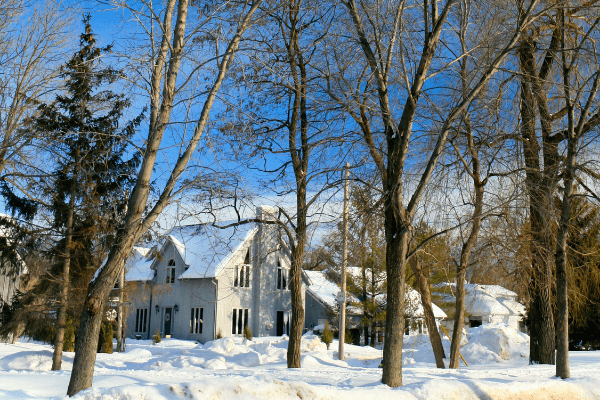
Heritage-style homes in Barrie’s historic Allandale neighbourhood.
FAQs about Renting in Barrie
What types of rental housing are available in Barrie?
Newcomers can find a variety of rental options in Barrie, including high-rise apartments downtown, heritage homes in Allandale and City Centre, family-sized houses in suburban neighbourhoods like Holly and Innis Shore, and modern condos near the waterfront. Read more about types of housing in Canada.
Is Barrie affordable for renters?
Yes. Rental prices in Barrie are generally more affordable than in Toronto, which is why it’s popular with commuters. Compared to Toronto, newcomers in Barrie can find larger rental units for the same price as smaller apartments downtown.
Is Barrie a good city for commuters to Toronto?
Yes. Many newcomers choose Barrie due to its commuter-friendly access. The GO Train connects Barrie to Union Station in Toronto, and Highway 400 provides a direct driving route. Neighbourhoods near the Barrie South or Allandale Waterfront GO Stations are especially popular with commuters.
Which Barrie neighbourhoods are best for families?
Family-friendly neighbourhoods include Painswick, Innis Shore, Holly, and Sunnidale, all of which have schools, parks, and larger homes. Families looking for heritage character often choose Allandale or City Centre.
What is public transit like in Barrie?
If you’re settling in a central or well-served neighbourhood (City Centre, Allandale, Painswick near GO), transit is reasonably good for commuting and daily errands. You may need a car if you live in newer or more peripheral suburbs.
What makes Barrie attractive to newcomers?
Barrie offers a balance of affordability, job opportunities, and lifestyle. It’s a growing city with a strong economy, and it’s close to the GTA. Newcomers like its waterfront, outdoor activities, and diverse rental housing options. Check out our Living in Barrie guide to learn more about jobs, culture, and life in the city.
Final Thoughts about Barrie Neighbourhoods
Barrie’s neighbourhoods offer something for every newcomer, whether it’s commuter convenience in Painswick and Allandale, family living in Holly and Innis Shore, or student-friendly housing in the East End. With average rents below those in Toronto, Barrie is a popular and affordable option for newcomers seeking space, community, and connection to the Greater Toronto Area.
Brampton is one of Canada’s fastest-growing cities and a top choice for newcomers and international students. With a population of more than 791,000 (Statistics Canada, 2024), it is Ontario’s 3rd largest city). It’s known for its diversity, affordability compared to Toronto, and strong community spirit.
If you plan to rent in Brampton, here’s what you need to know about affordability, commuting, and the best neighbourhoods.
Is Brampton Affordable for Renters?
Yes, Brampton is generally cheaper than Toronto and Mississauga for housing.
Average rent (2025): About $2,300 for a one-bedroom and $2,800 for a two-bedroom (Rentals.ca, Aug. 2025).
Detached houses and larger homes dominate in Brampton, but you’ll also find townhouses and basement apartments at lower costs.
Families often choose Brampton because it offers more space for less rent compared to Toronto.
👉 Solution for newcomers: If you don’t have a Canadian credit history, consider applying with a co-signer, offering prepaid rent, or showing proof of income to strengthen your rental application.
How Long is the Commute from Brampton to Toronto?
Brampton is 40 km northwest of Toronto, making it a popular commuter city.
By GO Train: Around 40–50 minutes from Brampton GO to Toronto’s Union Station.
By car: About 45–60 minutes via Highways 401, 407, or 410 (traffic-dependent).
Airport access: Brampton is only 15 minutes from Toronto Pearson International Airport (YYZ).
👉 Solution for newcomers: If you’ll be working or studying in Toronto, choose a neighbourhood near a GO Station for easier commuting.
Brampton Rental Range Key
RENTAL TIER
1-BEDROOM RANGE
2-BEDROOM RANGE
BUDGET$ (Older units or shared housing, often outside premium areas)
$1,700 – $2,000
$2,000 – $2,400
MID-RANGE$$ (Good condition, average location)
$2,000 -$2,300
$2,400 -$2,800
UPPER-MID$$$ (Newer builds, near GO, renovated)
$2,300 -$2,600
$2,800 – $3,200
PREMIUM$$$$ (Large/new homes, top schools/amenities)
$2,600 – $3,000
$3,200 – $3,600
LUXURY$$$$$ (Executive home, prime pockets (e.g. Castlemore)
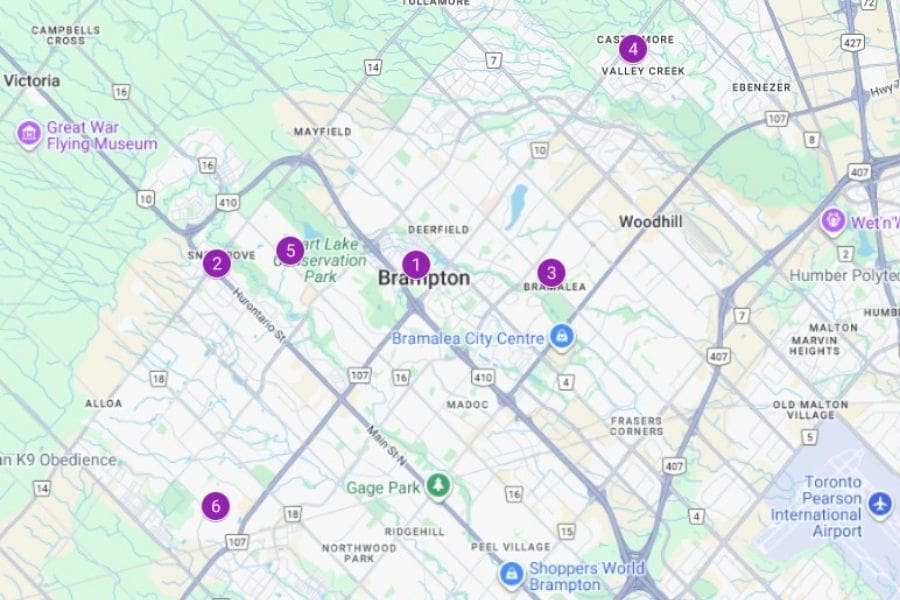
Main rental neighbourhoods in Brampton, Ontario. Explore areas like Downtown Brampton, Snelgrove, Bramalea, Castlemore, Heart Lake, and Mount Pleasant.
Best Brampton Neighbourhoods for Newcomers
Brampton has many neighbourhoods that offer great rental opportunities for newcomers, whether you’re looking for affordable housing, student-friendly areas, or access to green space and transit. Here are the top picks:
1. Downtown Brampton: Best for walkability and transit
Downtown is the historic heart of Brampton, revitalized with theatres, cultural venues, and lively dining options. It’s also the city’s main transit hub, making it one of the most connected places to live.
Ideal for: Students, young professionals, and newcomers without access to a car.
Access: Direct GO Train service to Toronto (40–50 minutes); Brampton Transit hub.
Vibe: Historic yet modern, cultural, and walkable.
Rental range: $$ – $$$ (aparments/condos)
Why newcomers like it: Affordable apartments, great transit links, and plenty of events make it an easy place to start life in Canada.
2. Bramlea: Best for affordability & shopping
Bramalea was one of Canada’s first planned communities and is now a bustling, diverse neighbourhood. It’s known for Bramalea City Centre Mall, strong community services, and affordable rental options.
Ideal for: Budget-conscious renters, students, and families.
Access: Well-connected by Brampton Transit and close to Highway 410.
Vibe: Energetic, convenient, and urban.
Rental range: $ – $$ (apartments/townhouses)
Why newcomers like it: Lower rent compared to many GTA areas, plus easy shopping and nightlife.
Renting your first home in Canada | Options & solutions for newcomers
Searching for your first home in Canada? Join this exclusive session for key insights on housing market conditions, affordable options, and renting without credit history. Tailored for newcomers settling in the next six months, register now for valuable tips and a free guide!
3. Heart Lake: Best for families and nature lovers
Heart Lake is built around its namesake conservation area, offering plenty of trails, green space, and outdoor activities. It balances suburban living with access to nature.
Ideal for: Families, outdoor enthusiasts, and renters seeking affordability.
Access: Quick drive to Highway 410; local Brampton Transit routes.
Why newcomers like it: Parks, schools, and affordability make it attractive for families settling in Brampton.
4. Mount Pleasant: Best for young families & commuters
Mount Pleasant is one of Brampton’s newest and fastest-growing neighbourhoods, designed around the GO Station that connects directly to Toronto. It offers modern homes and amenities in a suburban setting.
Ideal for: Young families, couples, and commuters.
Access: Mount Pleasant GO Station to Union Station; good road connections.
Vibe: Modern, family-friendly, and community-focused.
Why newcomers like it: A fresh start in newer housing with direct Toronto access and family services.
5. Snelgrove: Best for upscale living & small-town feel
On the northwestern edge of Brampton, Snelgrove has a quieter, village-like feel with local businesses and upscale homes. It’s ideal for those who want more privacy and space while staying close to city amenities.
Ideal for: Professionals and established families.
Access: Close to Highway 410 for commuting.
Vibe: Quiet, upscale, and suburban.
Rental range: $$$ – $$$$ (detached homes)
Why newcomers like it: Offers stability, green space, and a calmer pace of life.
6. Vales of Castlemore: Best for luxury homes
Vales of Castlemore is a culturally diverse, prestigious area known for large executive homes and family-oriented living. It combines green space with a strong sense of community.
Ideal for: Larger families and higher-income renters.
Access: Northeast Brampton, with highway connections and nearby conservation areas.
Why newcomers like it: Many immigrant families choose Castlemore for its schools, space, and community feel.
Brampton Neighbourhoods at a Glance
NEIGHBOURHOOD
IDEAL FOR
RENTAL RANGE (approximately)
Downtown Brampton
Students, professionals, commuters
$1,800–$2,400 (1–2 BR)
Bramalea
Budget-conscious renters
$1,600–$2,200 (apartment)
Heart Lake
Outdoor enthusiasts, families
$2,000–$2,800 (townhouse/semi)
Mount Pleasant
Young families, Toronto commuters
$2,200–$2,900 (townhouse)
Snelgrove
Families seeking quiet living
$2,500–$3,200+ (detached)
Vales of Castlemore
Large families, high-income newcomers
$3,000–$4,500+ (detached)
FAQs about Renting and Living in Brampton
Is Brampton cheaper to rent in than Toronto?
Yes. Brampton rents are generally lower than Toronto. On average, a one-bedroom in Brampton costs about $2,300, compared to $2,600+ in Toronto (Rentals.ca, Aug. 2025).
What is the safest neighbourhood in Brampton for families?
Heart Lake and Mount Pleasant are popular family choices, known for schools, parks, and safe, family-friendly communities.
Is Brampton a good place for international students?
Yes. Many international students live in Brampton because of its affordability, diversity, and transit connections to Toronto campuses and Sheridan College in nearby Mississauga.
What Brampton neighbourhood is best for newcomers without a car?
Downtown Brampton is the best choice for newcomers without a car because it has a GO Station, bus hub, and walkable access to shops, dining, and services.
Final Thoughts on Renting in Brampton
Brampton is one of Canada’s most welcoming cities for newcomers, offering a balance of affordability, space, and community compared to Toronto. With a diverse population, strong transit connections, and neighbourhoods ranging from budget-friendly Bramalea to upscale Castlemore, there’s a community for every lifestyle and budget.
For newcomers, the key is to match your priorities with the right neighbourhood:
No car? Choose Downtown Brampton for transit and walkability.
Tight budget? Look at Bramalea or Heart Lake.
Commuting to Toronto? Consider Mount Pleasant with its GO Station.
Want space and privacy? Explore Snelgrove or Vales of Castlemore.
Wherever you settle, Brampton offers a strong support network for immigrants, cultural diversity, and housing options to make your start in Canada easier.
Once you’ve chosen a neighbourhood that matches your budget and lifestyle, check out our Living in Brampton guide to learn more about jobs, culture, and life in the city.
Still searching for a rental in Brampton? Visit Rentals for Newcomers to search and compare prices.
Looking to rent in Sudbury as a newcomer to Canada? Greater Sudbury offers affordable rentals, a welcoming multicultural community, and easy access to nature. With a population of about 166,000 (Statistics Canada) and over 165 ethnic groups (City of Greater Sudbury), it’s one of Ontario’s most diverse cities. More than 40% of residents speak French, far above the provincial average of 2.4%, making it especially appealing to bilingual newcomers. Here’s your guide to the best Sudbury neighbourhoods for renting, complete with who they suit best, how to get around, the local vibe, and what you can expect to pay.
To learn more about the city, our guide to living in Sudbury, Ontario, covers the job and housing markets, lifestyle, and what to expect as a newcomer!
BUDGET (Older units or shared housing, often outside premium areas)
Under $1,100
Under $1,400
MODERATE (Affordable neighbourhoods with decent amenities)
$1,100-$1,500
$1,400-$1,900
MID-RANGE (Popular areas with good transit, services, and newer rentals)
$1,500-$1,800
$1,900-$2,200
UPPER RANGE (Premium locations, new builds, or close to lakes/parks)
Over $1,800
Over $2,200
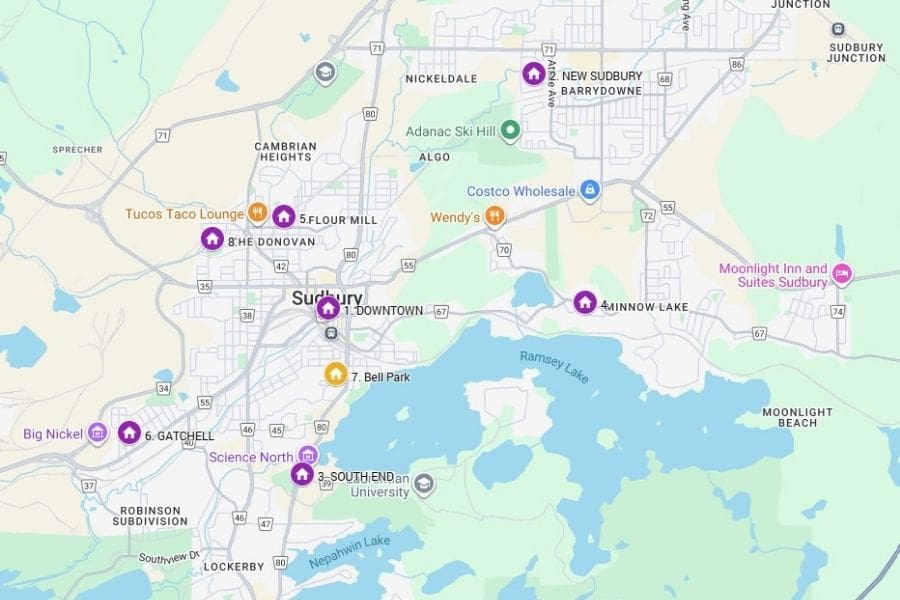
Main rental neighbourhoods in Sudbury, Ontario. Explore areas like Downtown, New Sudbury, South End, Minnow Lake, Flour Mill, Donovan, Gatchell, and Bell Park.
Where Should Newcomers Rent in Sudbury?
Sudbury has many neighbourhoods that offer great rental opportunities for newcomers, whether you’re looking for affordable housing, student-friendly areas, or access to green space and transit. Here are the top picks:
1. Downtown Sudbury: Best for walkability and urban living
Downtown is the cultural and business heart of the city, offering easy access to jobs, transit, and services. You’ll find rental apartments, restaurants, grocery stores, and cultural centres all within walking distance.
Good for: Newcomers without a car, professionals, job seekers, and people who want nightlife and cultural events.
Access: Primary transit hub, close to government services, shops, restaurants, and employment.
Vibe: Energetic and diverse, with a mix of business, culture, and entertainment.
Why newcomers like it: Everything’s within walking distance; lots of cultural events and cafes.
2. New Sudbury: Best for students and shopping
This Sudbury neighbourhood is home to Cambrian College and Collège Boréal. It’s ideal for students and young families, and the New Sudbury Centre, the largest mall in Northern Ontario, is nearby. Rental types include apartments, townhomes, and single detached homes.
Good for: Students, young families, and budget-conscious renters.
Access: Multiple GOVA Transit routes serve the area.
Vibe: Busy and convenient, with easy access to education, retail, and services.
Why newcomers like it: Convenience of having everything nearby, from groceries to healthcare.
Renting your first home in Canada | Options & solutions for newcomers
Searching for your first home in Canada? Join this exclusive session for key insights on housing market conditions, affordable options, and renting without credit history. Tailored for newcomers settling in the next six months, register now for valuable tips and a free guide!
The South End is surrounded by lakes and parks, offering a high quality of life and access to top institutions such as Health Sciences North and Laurentian University. South End rentals are more expensive but provide lakeside living. Greater Sudbury has 300+ lakes within the city limits.
A mother and son are kayaking on Lake Ramsay near Science North.
Rental types in this Sudbury neighbourhood include lakeside homes, townhouses, and newer apartments.
Good for: Families, healthcare workers, and newcomers who love lakeside living.
Access: Near Health Sciences North, Science North, shopping, and conservation areas.
Vibe: Family-friendly, scenic, and active, with a high standard of living.
Why newcomers like it: Strong schools, parks, and shopping within walking or short driving distance.
Sudbury has 300+ lakes within its city limits.
4. Minnow Lake: Best for outdoor activities on a budget
One of Sudbury’s oldest neighbourhoods, Minnow Lake, offers proximity to downtown and scenic trails along Lake Ramsey, and the Kingsway shopping district, often at more affordable rental prices.
Rental types include a mix of older single-family homes and low-rise apartments.
Good for: Active newcomers, those seeking trails and beaches, and pet owners.
Access: Close to Moonlight Beach and off-leash dog parks.
Vibe: Relaxed and outdoorsy, with a small-town feel but close to amenities.
Why newcomers like it: Lakeside living at reasonable prices, plus outdoor recreation year-round.
5. Flour Mill: Best for Francophone newcomers
This historic neighbourhood has deep French-Canadian roots and is a hub for the francophone community in Sudbury. Rental types include affordable apartments and older homes.
Good for: French-speaking newcomers, families seeking French-language schools, and renters seeking affordable housing.
Access: Close to downtown by car or bus.
Vibe: Historic and community-oriented, with strong French-Canadian roots.
Rental range: Budget to Moderate (1-bedroom under $1,500; 2-bedroom under $1,900).
Why newcomers like it: Lower rents and a strong sense of community make it easier to get established.
6. Gatchell: Best for community feel and Italian heritage
Known for its Italian-Canadian roots, Gatchell offers a close-knit community and affordable rental options near the popular Delki Dozzi Park, community pool, parks, and Dynamic Earth science centre. Rental types include older homes from the 1920s-40s on compact lots.
Good for: Budget renters and newcomers seeking a close-knit, multicultural neighbourhood.
Access: GOVA operates bus routes that connect Gatchell to the city center and other areas.
Vibe: Quiet, neighbourly, with a proud Italian heritage.
Why newcomers like it: Quiet streets, established community, and easy downtown access
7. Kingsmount-Bell Park: Best for scenic living near downtown
Located beside Lake Ramsey, this neighbourhood combines scenic lake access with proximity to downtown, making it both relaxing and convenient. Bell Park offers beaches and walking trails.
Good for: Families, students, and nature enthusiasts seeking access to the city.
Access: Moderate (bus, bike paths, walkable to downtown)
Vibe: Picturesque and relaxed with a mix of housing styles.
Rental range: Upper range (1-bedroom over $1,800; 2-bedroom over $2,200).
Why newcomers like it: Beautiful surroundings, recreational access, and a peaceful atmosphere.
8. Donovan: Best for heritage and affordability
One of Sudbury’s oldest neighbourhoods, Donovan has a village-like charm and is home to many long-time residents and new immigrants alike. Rental types include small lot homes, heritage buildings, and affordable apartments.
Good for: Budget-conscious renters, newcomers seeking heritage and culture.
Access: Moderate (car-friendly, near Deerfoot Trail)
Vibe: Village-like, multicultural, and community-focused.
Rental range: Approx. $950–$1,300 for a 1-bedroom; $1,200–$1,600 for a 2-bedroom.
Why newcomers like it: Lower rents and a strong sense of community make it easier to get established.
FAQs about Renting in Sudbury
What is the average rent in Sudbury?
Average rent is about $1,250 for a 1-bedroom and $1,650 for a 2-bedroom (Q2 2025, Rentals.ca). That’s 35–50% lower than Toronto or Ottawa.
What neighbourhood is the most affordable to rent in Sudbury?
Donovan, Gatchell, and Flour Mill offer more affordable rental options.
Which Sudbury neighbourhood is best for international students?
New Sudbury is best if you are attending Cambrian College or Collège Boréal.
What is public transit like in Sudbury?
GOVA Transit operates 25+ routes connecting most major neighbourhoods through the primary transit hub downtown Sudbury.
Final Thoughts on Best Sudbury Neighbourhoods for Newcomers
Sudbury offers a variety of rental options for newcomers, from budget-friendly apartments in Donovan and Gatchell to premium lakeside living in areas like Ramsey Lake and the South End. You can use the rental range key to match your budget with the right neighbourhood. Choose based on what matters most: fast transit, a family-friendly area, or a lively urban vibe. Understanding the rental tiers will help you select the best Sudbury neighbourhood for your unique needs.
Once you’ve chosen a neighbourhood that matches your budget and lifestyle, check out our Living in Sudbury guide to learn more about jobs, culture, and life in the city.
Thunder Bay, Ontario is one of the many Canadian cities that you can explore if you’re moving to Canada. It’s smart to research different Canadian cities before you arrive so that you can select the city that best meets your personal and professional needs. Choosing the right location is also important because it will play a vital role in your financial success.
Your careful research will help you to select the best landing location for you and your family. You can start by assessing the local job market, housing options, and community to determine if it is right for you. If you’re considering living in Thunder Bay, Ontario, Prepare for Canada can guide you with this helpful information.
About Thunder Bay, Ontario
Thunder Bay is the capital of Northwestern Ontario and offers a relaxing, natural atmosphere with lively urban space to live, learn, work, do business and play. Located on the north shore of Lake Superior, it is often referred to as the “Lakehead” because it’s the head of the Great Lakes. It’s the most populous municipality in Northwestern Ontario.
The city has roots dating back to 1683 when it was settled as Fort Caministigoyan. And today, the city comprises two former cities, Port Arthur, and Fort William which both still retain much of their distinct identities. These cities joined to become the City of Thunder Bay in 1970.
How Many People Live in Thunder Bay, Ontario?
There is a population of 108, 843 based on the 2021 Census. If you include the surrounding communities, such as Oliver Paipoonge, Neebing, Shuniah, Conmee, O’Connor, and Gillies, and the Fort William First Nation, there are over 125, 000 people in the region.
How to Find a Job & Build a Career in Thunder Bay
The Local Economy
As the largest city in Northwestern Ontario, this city is a vibrant and growing community and is the region’s commercial, administrative, and medical hub. From trees to transportation to research, health and life sciences, Thunder Bay has been developing its knowledge-based industries, primarily in the fields of biotechnology and molecular medicine.
The city is home to the western campus of the Northern Ontario School of Medicine, the first medical school to open in Canada in a generation.
The top industries in this city are:
Education
Transportation
Manufacturing
Mining
Forestry.
Major Employers in Thunder Bay
Here are the top employers in the city:
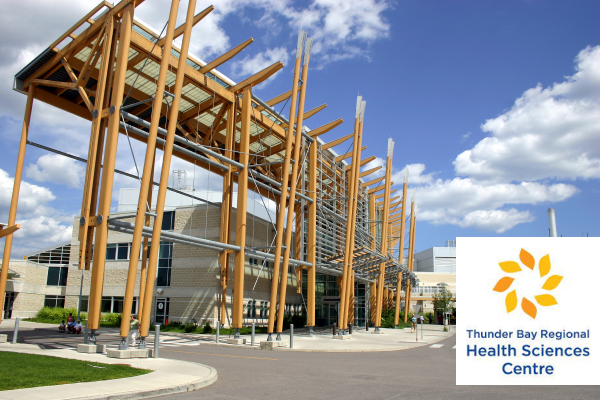
Thunder Bay Regional Health Sciences Centre
Lakehead District School Board
The City of Thunder Bay
Bombardier Transportation
Lakehead University
Barrick Hemlo Gold Mine
Resolute Forest Products
Canadian Pacific Railway.
Bombardier Plant, Thunder Bay Ontario
Career Pathways in Thunder Bay
There are many ways you can look for jobs in the city. You can use the Government of Canada Job Bank and other websites. You can also use local recruitment agencies such as YES Employment Services, Workforce, and The Phelps Group Inc.
The Thunder Bay Housing Market
Where you live within a city is important. You’ll want to be close to your job, schools, and other amenities. Even though it is a smaller city, there are still many neighbourhoods and communities to consider such as Port Arthur and Fort William. Other areas to consider are the Bay, Algoma, Simpson-Ogden, and Westfort.
Is Housing Expensive in Thunder Bay, Ontario?
Affordability is an attractive feature of living in the city. Thunder Bay was ranked number 1 out of 227 major urban international cities for affordable housing, by the fourth annual Demographia International Housing Affordability Survey in 2021. If you are researching affordable cities in Northern Ontario, you should also explore what it is like living in Sault Ste. Marie and Sudbury.
Finding a Place to Rent in Thunder Bay
Even though you may not have as many options as other larger cities, you have more affordable rental options. The average rent for an apartment is $1,150 for a Bachelor, $1,250 for a 1-bedroom, $1,350 for a 2-bedroom, and $1,349 for a 3-bedroom.
🏠 Check out Rentals for Newcomers to search for available rental units and prices in Thunder Bay.
Buying a Home in Thunder Bay
Buying a home in the city is more affordable than in cities like Toronto and even other Ontario cities like Barrie.
According to the Thunder Bay Real Estate Board, the median sale price for single-detached homes is $366,900 (as of March 2022).
Even with rising prices, they are well below the Canadian average. Find out more about buying your first home in Canada: First Time Home Buyer: Newcomer Tips.
Driving & Public Transit in Thunder Bay
Driving in Thunder Bay, Ontario
There are many rural roads in Thunder Bay. Driving can be challenging at times, especially during the winter months. With significant wildlife in the region, it’s essential to pay attention. The main highway through the city is Highway 11/17, also known as the Thunder Bay Expressway.
All drivers must have a valid Ontario driver’s licence.
Thunder Bay Transit operates 17 bus routes across the city. For maps, routes, and schedules, click here. The cost of public transit varies depending on the route, method, and distance. See here for a list of fare prices.
The city is home to the Thunder Bay International Airport, and it’s a railway hub for Canadian National and Canadian Pacific Railway.
Community Support for Newcomers
New immigrants have access to community support through several organizations. They are Thunder Bay Multicultural Association (TBMA), Doors to New Life, and 211 Ontario North.
Language Support in Thunder Bay
Language support services are offered through TBMA, Lakehead University and Confederation College.
Personal Finance & Banking
Establishing your finances in a new country is an essential step. Newcomers can open a bank account, apply for credit cards and loans, and get a mortgage through local banks and credit unions. They have programs in place to assist new immigrants.
Get more banking tips for newcomers:
Top 10 Financial Steps to Take Before You Leave for Canada
Move to Canada | Transferring Cash & Valuables
Thunder Bay’s Education System
There are many primary and secondary education schools. Thunder Bay has 38 elementary schools, three middle schools, eight secondary schools, two private schools, a university, a college, a medical school, and an adult education facility. These schools include French immersion programs, comprehensive special education services, an International Baccalaureate Programme, and an Outdoor Education Centre.
Elementary and High School Education
The main school boards serving the area are the Lakehead District School Board, the Thunder Bay Catholic District School Board, and the Conseil scolaire de district Catholique des Aurores boréales (CSDC).
The Lakehead District School Board is the largest, with 22 elementary schools, four secondary schools and a centre for adult studies. The Thunder Bay Catholic District School Board has 16 elementary schools, three middle schools and two high schools. CSDC operates one elementary and one high school in Thunder Bay, and six schools throughout the Thunder Bay District.
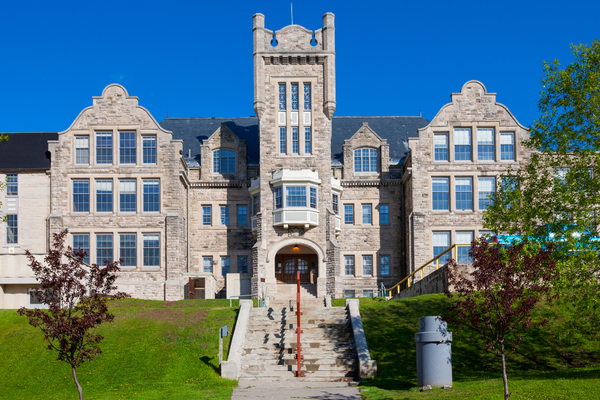
Lakehead University building in Thunder Bay, Ontario, built in 1909.
Post Secondary Institutions
This city is home to Lakehead University and Confederation College. The Northern Ontario School of Medicine has a campus at Lakehead University. Lakehead has about 8,000 students and Confederation College has about 35,00 full-time students. Both offer satellite campuses across Northern Ontario.
Read more about education in Canada:
Schooling in Canada | A Look at the Education System
Higher Education Offers Benefits to Newcomers
Thunder Bay Regional Health Sciences Centre is the major hospital in the city.
Where to Get Medical Care in Thunder Bay, Ontario
The city is home to the Thunder Bay Regional Health Sciences Centre, and many long-term care centres operated by the St. Joseph’s Care Group such as the Lakehead Psychiatric Hospital, St. Joseph’s Hospital, and Hogarth Riverview Manor. And, there are smaller medical and dental clinics.
The Ontario Health Insurance Plan (OHIP) provides residents with health care coverage. Learn how to apply for an OHIP card. In case of an emergency, call 9-1-1. This number is the same across Canada.
For prescription medications and services that the provincial healthcare program does not cover, you can
You can look for a family doctor who is taking on new patients through Health Care Connect. Or call 1-800-445-1822 or visit www.ontario.ca/findadoctor to search online.
What is Day-to-Day Life Like in Thunder Bay?
Things to Do in Thunder Bay
This city is a great place to live if you enjoy the outdoors. It’s home to many parks, conservation areas, and trails. It’s a family-friendly city with many recreation facilities and neighbourhood community centres that offer fitness and seasonal activities.
The city operates indoor ice rinks and seasonal outdoor rinks, indoor and seasonal outdoor community pools, several curling sheets, golf courses, and more. And residents enjoy active lifestyles because they are close to the Boreal Forest wilderness and the rolling hills and mountains of the Canadian Shield.
Public Spaces & Attractions
The city’s main attraction is Fort William Historical Park. Other top places to visit include The Waterfront District marina in Port Arthur, Terry Fox Memorial and Lookout, and Thunder Bay Art Gallery.
Restaurants & Nightlife
The best places to eat, dance, and enjoy nightlife are close to Marina Park. Some of the best places to check out include The Sovereign Room, The Foundry, and On Deck.
Sleeping Giant Provincial Parkon Lake Superior.
Nature & Natural Landscapes
The natural landscapes and parks are what set Thunder Bay apart. You can hike in Sleeping Giant Provincial Park, climb Mount McKay, check out the Kakabeka Falls, and explore Ouimet Canyon Provincial Park and Eagle Canyon. Plus, there are many other parks, trails, and ski areas to explore.
Sporting Events & Concerts
This city does not have any professional sports teams. But, they do have minor sports teams in addition to the Lakehead Thunderwolves, who compete in Ontario University Athletics (OUA). If you are looking to enjoy a concert, check out the Thunder Bay Community Auditorium, and NV Music Hall.
Culture & Diversity in Thunder Bay
Diversity
Thunder Bay is also the sixth most culturally diverse community of its size in North America, with Finnish, Italian, Scottish, Ukrainian, Polish, French, Chinese and Croatian ethnicities. About 4% of the population are visible minorities.
There are close to 14,000 people of Finnish descent, making the city the largest Finnish community in Canada. As well, the city also has a large Indigenous population that represents 13.2% of the population.
Worship
The city is home to Christian Churches of all denominations, as well as Jewish, Hindu, Muslim, Buddhist, and Sikh, among others. About 80% of residents identify as Christian.
You can connect with local multicultural associations to find information about specific faith communities, places of worship and ethnocultural organizations in the city.
The Weather in Thunder Bay
This is the sunniest city in eastern Canada with an average of 2,167 hours of sunshine each year. The sun may be out even in winter and snow. And while summer gets warm, it is cool in the evening, which makes it less humid and more comfortable than other Ontario cities. The average daily temperature is -14.8 °C (average high of -8.6 °C) in January and 17.6 °C (average high of 24.2°C) in July.
With plenty of snow and large vertical drops, local ski hills are great for downhill skiing and snowboarding. Loch Lomond Ski Area is the city’s largest ski area.
Common Questions Immigrants Ask About Living in Thunder Bay
Is Thunder Bay a Good City for Immigrants?
As part of the Rural and Northern Immigration Pilot, the city is looking to attract new immigrants. This will create job opportunities for newcomers. The city is looking for skilled foreign workers to fill job vacancies. And, this makes it a city worth considering for new immigrants.
What are Some Potential Disadvantages of Living in Thunder Bay for New Immigrants?
While the immigrant population is small, the city is working to attract more newcomers. Another downside is it lacks big-city attractions and is more remote. However, you will discover an outdoor haven and an escape from congested cities.
Overlooking Lake Superior in early fall.
What are the Benefits of Living in Thunder Bay?
Thunder Bay is a beautiful part of Canada. It has unique natural attractions and it’s an ideal location for people who enjoy the outdoors. The city has several growing job sectors, offering many career options. Housing affordability is one of the most attractive benefits.
St. Catharines, Ontario is one of the many cities in Canada to consider settling in Canada. It is a medium-sized city in the Niagara Region that is close to many other communities. It is appealing because it’s close to Toronto and the United States border. It’s best known for the Welland Canal, a ship canal that runs through the city.
Canada is a wonderful country to call home. Its diverse population and regions provide you with many unique cities to choose from. The location you choose will have a direct impact on your lifestyle – including where you work, career paths, finances, education, and the cost of living. Are you considering St. Catharines? Discover helpful information about living in St. Catharines, Ontario.
About St. Catharines, Ontario
St. Catharines is the biggest city in the Niagara Region. It is known as The Garden City because of its extensive gardens, parks, and trails. Manufacturing is the city’s biggest industry. It is also the main hub for telecommunication between Canada and the United States. Its unique landscape and location on the Niagara escarpment make it vital for tourism and agriculture.
The city was first settled in 1779. It was later incorporated as a town in 1845 and officially became a city in 1876.
Due to its proximity to other communities in the area, St. Catharines and other towns in the Niagara Region are often referred to collectively. The region includes the 12 communities of Fort Erie, Grimsby, Lincoln, Niagara-on-the-Lake, Niagara Falls, Pelham, Port Colborne, Thorold, Wainfleet, Welland, West Lincoln, and St. Catharines.
St. Catharines, and the Niagara Region in general, has a strong history of welcoming and integrating newcomers. And the many community and cultural organizations the area support this. It’s a growing and diverse community with many recreation and cultural activities to help you meet new people.
How Many People Live in St. Catharines, Ontario?
The City of St. Catharines has a population of 136,803 as of the 2021 Census. This is about one-third of the residents in the Niagara region. The St. Catharines-Niagara Region has over 420,000 residents, making it the sixth-largest metropolitan area in Ontario and the thirteenth-largest in Canada overall.
How to Find a Job & Build a Career in St. Catharines
St. Catharines’s Local Economy
Manufacturing is the city’s dominant industry. There are also many other industries thriving in the area. Top industries include:
Agriculture, food, and beverage
Cross-cutting technologies
Healthcare
Education
Manufacturing
Tourism.
The city has several emerging sectors such as engineering, computer systems design, scientific research and development, and technology.
Major Employers in St. Catharines
The biggest employers in the city include:
Niagara Health System
Algoma Central Corporation
General Motors
SITEL
Royal LePage
Unifor.
Career Pathways in St. Catharines
To look for jobs in the St. Catharines and Niagara Region, you can look at individual company websites. You can also use websites such as the Government of Canada Job Bank. Another option is to work with local recruitment agencies such as Express Employment Professionals, On Demand Staffing, and the Niagara Employment Help Centre.
The St. Catharines Housing Market
Choosing a place to live is a vital decision you will need to make. Many newcomers choose to rent before buying a home.
Is Housing Expensive in St. Catharines, Ontario?
The cost to buy or rent a home in St. Catharines is rising. Like other areas in Ontario and Canada, real estate prices have increased over the past years. The good news is real estate prices are still slightly lower than the national average. Location is always a prime factor that affects real estate costs. St. Catharines has about 30 communities and neighbourhoods to consider.
Renting your first home in Canada | Options & solutions for newcomers
Searching for your first home in Canada? Join this exclusive session for key insights on housing market conditions, affordable options, and renting without credit history. Tailored for newcomers settling in the next six months, register now for valuable tips and a free guide!
Your location, type and size of your rental will affect your costs. The average cost to rent an apartment in St. Catharines is $1,425 for a Bachelor, $1,828 for a 1-bedroom, and $1,903 for a 2-bedroom.
There are plenty of rental options including apartments, houses, townhomes, basement suites, and even single rooms available for rent. So, consider all your options before making a final decision.
🏠 Check out Rentals for Newcomers to search for available rental units and prices in St. Catharines.
Buying a Home in St. Catharines
The cost to buy a home is on the rise in St. Catharines. According to data from Royal LePage, the median price to purchase a home in the Niagara/St. Catharines area increased 23.3% year-over-year to $733,900 (as of March 2022). The median price for a single-family detached home is $768,100, which is a 28% increase from the previous year. The median price for a condo is $436,800.
Highways are the main access point to get in and out of the city. Residents use two major highways to get around – the Queen Elizabeth Way (QEW) and Highway 406. St. Paul Street and Hartzel Road are other busy roads. All drivers must have a valid Ontario driver’s licence to operate a vehicle. The province uses a graduated licencing system.
St. Catharines Transit Commission operates bus routes in the city. Routes also extend to Thorold. Residents also have access to coach buses and GO Transit, which provides service to Niagara Falls and Toronto.
Community Support for Newcomers
There are many settlement services and organizations to help newcomers to connect with people in the community. These services can help you navigate and learn about your new community. They include:
Communication is an important skill. If you want to improve your language skills once you land in Canada, you can get language support through several community groups such as Niagara Folk Arts Multicultural Centre, YMCA Employment and Immigrant Services, Welland Heritage Council and Multicultural Centre, Fort Erie Multicultural Centre, Brock University, and Niagara College.
Personal Finance & Banking
Organizing your personal finances once you get to Canada is a necessity. Local banks and credit unions offer programs for new immigrants. You can get assistance to open a bank account, get a credit card and apply for other financial products such as a line of credit or mortgage.
Get more banking tips for newcomers:
How Much Money Will I Need to Move to Canada?
Top 10 Financial Steps to Take Before You Leave for Canada
Move to Canada | Transferring Cash & Valuables
Open a Bank Account Before Arriving in Canada
St. Catharines’s Education System
You can enroll your children in public, Catholic, independent, or private schools. The city also has several post-secondary institutions.
Elementary and High School Education
The District School Board of Niagara (DSBN) oversees more than 119 schools and faculties, including six Secondary Schools in the city of St. Catharines. They are the DSBN Academy, Laura Secord Secondary School, Sir Winston Churchill, Governor Simcoe, St. Catharines Collegiate, and Eden.
The Niagara Catholic District School Board (NCDSB) oversees 61 elementary and secondary schools within the Niagara Region. This includes three Catholic Secondary Schools within the city: Holy Cross, Denis Morris Catholic High School, and Saint Francis.
Brock University is one of Canada’s top post-secondary institutions.
Post Secondary Institutions
There are several post-secondary institutions in St. Catharines. Brock University and Niagara College of Applied Arts and Technology are the largest. There is also Ridley College, McMaster University’s Michael G. DeGroote School of Medicine opened a satellite campus and Concordia Lutheran Theological Seminary. The schools offer numerous certificate, diploma, and Degree programs.
Where to Get Medical Care in St. Catharines, Ontario
St. Catharines residents have access to great medical care. St. Catharines General Hospital is one of many facilities in the region. The Niagara Health System operates the health care facilities in Niagara. It is a publicly funded system that includes six hospitals with a total of 804 beds and other medical facilities.
Other health facilities found in Niagara Region include the Hotel Dieu Shaver Health and Rehabilitation Centre (124 beds) and the West Lincoln Memorial Hospital (Grimsby).
How to Find A Family Doctor In St. Catharines
Having a family doctor is important to manage your health. In Ontario, You can look for a family doctor who is taking on new patients through Health Care Connect. You can call 1-800-445-1822 or visit www.ontario.ca/findadoctor to search online.
What is Day-to-Day Life Like in St. Catharines?
Things to Do in St. Catharines
St. Catharines and the Niagara Region offer a number of recreational activities. Spacious arenas, state-of-the-art community centres, green parks, rolling trails and bikeways, and numerous sports clubs make it a popular destination for active or leisure-seeking visitors and residents. Enjoy the fresh air and scenic views when you hike, bike, or take a stroll along the Niagara Parkway.
The communities within the Niagara Region are distinct and unique and attract about 15 million visitors annually. Within a 20-minute drive, you can access various festivals, culture, entertainment, recreation, shopping, and education.
Port Dalhousie
Public Spaces & Attractions
There is a lot to see and do in St. Catharines. It has several art galleries such as Rodman Hall Art Centre, CRAM Collective, and the Niagara Artists Centre. If you enjoy festivals check out The Folk Arts Festival, Art of Peace Festival, Niagara Grape & Wine Festival or SCENE Music Festival. Other places to visit in Port Dalhousie, St. Catharines Museum, and the terminus of the Underground Railway.
Restaurants & Nightlife
St. Catharines is home to several world-class wineries. Going on a wine tour is a must. You can also head downtown to try some of the best restaurants in the city including Blue Mermaid Seafood & Steak House, Coppola’s Ristorante, The Yellow Pear, and East Izakaya.
Niagara Falls one of the most well-known landmarks in the world is a 20-minute drive from St. Catharines.
Nature & Natural Landscapes
Many outdoor adventures are awaiting you. You can visit Montebello Park, check out the over 90 kilometres of trails around the city, take a trip to Short Hills Provincial Park, and see the DeCew Falls. Plus, Niagara Falls is only a short drive away.
Sporting Events & Concerts
St. Catharines does not have any professional sports teams. But they do have a variety of minor sports organizations. You are only a short drive to cities like Toronto and Hamilton where you can see professional sports. If you want to see a concert, check out the local listings for the FirstOntario Performing Arts Centre or Warehouse Concert Hall.
Culture & Diversity In St. Catharines
Diversity
St. Catharines welcomes people from all over the world. There is a large English, Scottish, and Irish population. Other large ethnic groups include German (14.19%), Italian (8.61%), Polish (5.47%), Ukrainian (5.42), Black (2.9%), and Chinese(2.1%). 2.6% of the population is Indigenous.
Worship
Niagara Region has a majority Christian population, but many of the world’s faiths are celebrated here. You will find many churches, temples, synagogues, mosques, and other places of worship which might be an important source of support when you first settle in Niagara.
The Weather in St. Catharines
The Niagara region is a large area of land, between two Great Lakes, Lake Erie and Lake Ontario, so it experiences significant changes in weather conditions throughout the year.
Spring (March to June): Temperatures range from 5°C to 20°C. People wear light jackets or no jackets at all. Plants and trees blossom in the many green spaces.
Summer (June to September): Temperatures range from 15°C to over 30°C, with a tendency for high humidity. People wear light clothing when the temperatures rise.
Fall (September to December): Temperatures begin to cool down and can range from below zero to 15°C. People wear light or medium jackets. The trees lose their leaves and fall colours are at their best.
Winter (December to March): Temperatures range from –20°C to 0°C. People wear heavy winter clothes, and the area gets regular and sometimes heavy snowfall (10–30 cm) possible.
Common Questions Immigrants Ask About Living in St. Catharines
Is St. Catharines a Good Place for Immigrants?
St. Catharines is a great community to call home. It is increasingly becoming more diverse as the region grows. It’s in a great location, offers diverse career and education opportunities, and is surrounded by beautiful natural spaces. It has a lot to offer new immigrants to Canada.
What are the Disadvantages of Living in St. Catharines for Newcomers?
There are not a lot of negatives about living in St. Catharines. One area that needs improvement is the transit system. But the city is actively working on making improvements. Because there are many students, it’s somewhat of a university town.
What are the Benefits of Living in St. Catharines?
St. Catharines has a growing economy and is close to other major cities where newcomers can find work. Real estate prices are lower than the national average. The city is dedicated to making a welcoming space for immigrants and actively promotes diversity within the community.
Burlington is a medium-sized city that is located along Lake Ontario. It is part of the Hamilton metropolitan area and is about 60 kilometres from the City of Toronto. The city is also part of the Niagara Peninsula and the Golden Horseshoe. Learn what the city offers newcomers with this guide to living in Burlington, Ontario.
Canada is one of the best countries to live in. It’s also remarkably culturally, economically, and geographically diverse. The province and city you choose to call home will have a big impact on your financial success once you arrive in the country. While Toronto gets a lot of attention, other cities close by, like Burlington, Ontario have a lot to offer new immigrants. So, it’s important to research a potential landing spot. Understanding the local economy, job opportunities, and housing are important factors in your decision.
About Burlington, Ontario
People are drawn to the city because of its natural beauty, waterfront, and great infrastructure, making it an ideal location for commuters. It has a diverse economy and its location between Toronto and Hamilton, and proximity to the United States border make it prime for economic growth. There are many highly desirable areas within the city.
In 2022, Resonance Consultancy ranked Burlington as one of Canada’s 25 Best Small Cities. The city took first place in the Safety subcategory, often a key consideration when selecting a new community.
In 2019, Maclean’s Magazine rated Burlington as Canada’s Best Community and Best Community in Canada for Families. This was based on the local economy, commute, crime, amenities, and culture.
Burlington was originally established as a village in 1874. It received city status in 1974, the same year it surpassed 100,000 residents. Today, there are nearly twice as many residents.
How Many People Live in Burlington, Ontario?
The city of Burlington has a population of 186,948 according to the 2021 Census. This is a 2% increase from 2016. The city is the 28th biggest population-wise, making it an ideal location for newcomers interested in moving to a smaller city.
How to Find a Job & Build a Career in Burlington
Burlington’s Local Economy
Burlington has a diverse economy that is not dominated by a single industry. However, it is known for agriculture, manufacturing, and transportation because of its strategic location. The city is home to over 13,000 businesses, employing more than 85,000 people. If you are looking for work in Burlington, consider these top industries:
Advanced manufacturing
Software development
Professional and technical services
Clean technologies
Food and beverage
Information and communication technology (ICT)
Logistics.
Major Employers in Burlington
The city offers newcomers diverse job opportunities and some of the major employers include:
Boehringer Ingelheim
Cogeco
EMC Corporation of Canada
Evertz Microsystems
Sofina Foods Inc.
Deloitte.
Career Pathways in Burlington
The Burlington Economic Development Centre is a partner in the Global Skills Strategy (GSS) from the Canadian government. This program looks to attract skilled individuals from other countries. This is an opportunity for newcomers to secure a work permit. You can also search for jobs on company websites or connecting with local recruiters such as Randstad Canada, Elby Professional Recruitment Inc, and AppleOne Employment Services.
The Burlington Housing Market
Is Housing Expensive in Burlington, Ontario?
Burlington is a desirable city to live in Ontario and housing costs reflect this with some of the highest real estate and rental costs. It’s following the same trend as other cities in the region such as Oakville, St. Catharines, and the Niagara region.
Burlington has great neighbourhoods such as Aldershot, Alton Village, Brant Hills, Dynes, Headon Forest, Longmoor, Palmer, Plains, Tansley, and many others.
Renting your first home in Canada | Options & solutions for newcomers
Searching for your first home in Canada? Join this exclusive session for key insights on housing market conditions, affordable options, and renting without credit history. Tailored for newcomers settling in the next six months, register now for valuable tips and a free guide!
Burlington is one of the most expensive cities in Ontario for rentals. Rates start at about $1,500 and go up from there. The average cost to rent an apartment in Burlington is $2053 for a 1 Bedroom, $2,349 for a 2-bedroom, and $2,260 for a 3-bedroom.
Use Rentals for Newcomers to search for available rental units in Burlington. Here, you can also find current rental prices in Burlington.
Once you find a place to rent, make sure to buy renter’s insurance. Property owners may require proof of insurance as a condition of the rental agreement. Your landlord’s insurance policy will not cover you.
A home in Burlington can be expensive. How much you pay depends on location, size, features, and other factors. According to the real estate website Zolo, the average house price in Burlington is $1,245, 837 (As of July 2022). The average price of a townhouse is $831,000 and the average price for a condo is $628,000.
Burlington is located along a major transportation corridor. Several major highways run through the city including Highway 403, Highway 407 ETR, and the Queen Elizabeth Way (QEW). Many people commute in the region and highway traffic can delay driving times. Road conditions can be difficult during the winter.
All drivers are required to have a valid Ontario driver’s licence. You must be 16 years old to start the graduated licencing process.
Get more information about driving in Canada:
Driving in Canada: 10 Essential Facts to Know
Driving Test in Canada: A Full Guide
Tips for Winter Driving to Ensure Your Safety
Burlington Public Transit
Burlington has a good public transit system in place. So, if you don’t drive, you can still get around the city easily. Burlington Transit offers bus service throughout the city. Three commuter GO Train stations in the city provide residents with quick access to the Greater Toronto Area.
Community Support for Newcomers
Newcomers to the city have access to community support through the Halton Region. The Halton Newcomer Strategy Steering Committee engages the community to empower newcomers living in Halton. Newcomers also have support through Refugees and Citizenship Canada and the Centre for Skills Development.
Language Support in Burlington
New immigrants can access language support through the LINC (Language Instruction for Newcomers to Canada) program via the Centre for Skills Development. There are two locations in the city on Appleby Line and another on South Service Road.
Personal Finance & Banking
Having a strong personal finance plan is essential to get off to a good start in your new surroundings. All local banks and credit unions offer programs for immigrants to open a bank account, get a credit card, and even apply for a mortgage. Visit a local branch to get started.
Get more banking tips for newcomers:
Burlington’s Education System
The city offers a variety of education options for children and adults. There are public, private, French, vocational, and post-secondary education institutions to further your education.
Elementary and High School Education
Burlington schools are part of the Halton District School Board. Catholic schools are part of the Halton Catholic District School Board. There are 29 public elementary, six public high schools, 14 Catholic elementary, three Catholic high schools, and 10 private schools.
Post Secondary Institutions
One area where Burlington is lacking is post-secondary education. The city is home to the McMaster University DeGroote School of Business and the Oxford College of Arts, Business and Technology. However, the city is close to other big cities with major colleges and universities. So, there are still a lot of options within a short drive.
Read more about education in Canada:
Schooling in Canada | A Look at the Education System
Higher Education Offers Benefits to Newcomers
Where to Get Medical Care in Burlington, Ontario
The Joseph Brant Memorial Hospital is the main care facility in the city. You can also visit walk-in clinics to receive non-urgent care if you don’t have a family doctor. There are also hospitals in surrounding cities.
In case of an emergency call 9-1-1. This number is the same no matter where you live in Canada.
Residents can also buy additional health insuranceto cover the costs of prescription medication and services not covered by OHIP. Many employers also offer healthcare benefits as part of your employee benefits package.
How to Find A Family Doctor in Burlington
Getting a family doctor is important to maintain your health and well-being. Residents in Burlington and the Halton region can search for doctors accepting new patients through the Halton Region website. You’ll see a list of doctors currently taking new patients. Call the office to apply.
Get more information about health care in Canada: Steps to Access Free Health Care in Canada.
What is Day-to-Day Life Like in Burlington?
Things to Do in Burlington
Burlington has a lot to offer residents. It has a beautiful waterfront and natural attractions and it’s only a short trip from some of the top tourist attractions in Ontario.
Burlington is located on the shores of Lake Ontario and offers beautiful landscapes and beaches.
Public Spaces & Attractions
The city offers a diverse collection of attractions to check out, with the Burlington Waterfront Trail at the top of the list. Also be sure to explore the Art Gallery of Burlington, Brant Street Pier, and Beachway Park if you want to hit the beach. If shopping is your thing, check out the Mapleview Shopping Centre.
The city also has a variety of summer festivals including Ribfest, Children’s Festival, Appleby Line Street Festival, Concerts in the Park, and Culture Days.
Restaurants & Nightlife
If you want to experience the best cuisine in the city the Taste of Burlington is a must-attend event. You’ll receive recommendations for the best food to try. The city has more than 300 restaurants. Some of the best include The Carriage House, Spencer’s at the Waterfront, Paradiso Restaurant, and Downtown Bistro & Grill.
Nature & Natural Landscapes
The city is known for its natural landscapes. You can explore them at the Royal Botanical Gardens, Spencer Smith Park, Mount Nemo Conservation Area, LaSalle Park, Cherry Hill Gate, and Kerncliff Park.
Sporting Events & Concerts
Burlington is not home to any professional sports teams. There are a variety of minor sports franchises. If you are to check out a concert, see the local listings at The Burlington Performing Arts Centre, This Ain’t Hollywood, and The Carrigan Arms.
Culture & Diversity in Burlington
Diversity
Burlington is not an overly diverse city. About 16% of the population are visible minorities. This is approximately 30,000 residents. There is a large English, Irish, Scottish, and German population. The largest visible minority is Indian.
Worship
Burlington is a predominantly Christian community. 70% of people identify as Christian. 2% identify as Muslim, 1.1% as Hindu, and 1% as Sikh.
The Weather in Burlington
Burlington’s climate is humid continental. The city is known for high winds, especially during the winter. But it has all types of weather throughout the year – hot sunny days, rain, snow, sleet, and a mixture. The climate is moderate compared to the rest of Canada. The temperature averages about 28 degrees Celsius in July and August and dips to as low as -8 degrees in January
Common Questions Immigrants Ask About Living in Burlington
Is Burlington a Good Location for Immigrants?
There are many reasons that immigrants consider Burlington. It is regarded as one of the best cities to live in Ontario. It’s strategically located in the province and provides access to the best places to explore within a few hours’ drive. There is low unemployment and job opportunities for newcomers. So, yes, it is a good place for immigrants to consider moving.
What are the Disadvantages of Living in Burlington for New Immigrants?
Since it is a highly desirable place to live, real estate and rent are expensive. You will have higher living expenses compared to other cities. The city also has a small minority population. But it does have community programs in place to assist newcomers.
What are the Benefits of Living in Burlington?
Burlington has a diverse economy. They are actively working to attract skilled immigrants to work in diverse industries. Therefore, there are many job opportunities. The city also has a strong transportation network, allowing you to explore opportunities in other areas. It’s a beautiful city with lots of nature to explore, making it ideal for families.
Canada has many cities to choose from as a landing destination, and the City of Greater Sudbury is a welcoming and diverse city to consider! Moving to Canada is a life-changing decision, and the city you choose to settle in will influence your future social, financial, and personal success. This is your opportunity to discover Sudbury, Ontario, with this helpful information and guide!
Deciding where to settle is a big decision. Before you decide where to settle, research and compare Canadian cities to evaluate which one is right for you and your family. Researching factors such as the cost of living, housing options, jobs, and the local economy will help you make an informed decision.
Located in northeastern Ontario. Sudbury is a regional hub for financial and business services, tourism, technology, education, government, and health care. It’s home to Canada’s third-largest French population outside of Quebec, and many residents speak English and French. Historically, the city attracted many immigrants of Italian, Finnish, Polish, Chinese, Greek, and Ukrainian ancestry. Today, over 166 ethnic origins make up the Greater Sudbury community.
About Sudbury, Ontario
Sudbury is a world leader in nickel mining with nine mines, mills, smelters, and a nickel refinery. The local economy was built on the lumber and mining industries. However, today the local economy is much more diverse, contributing to its economic growth.
The city was originally inhabited by the Ojibwe people. In 1850, Ojibwe chiefs agreed to share part of the land with the British Crown, establishing the city. It was officially founded in 1883 and named Sudbury in 1893. The city and suburban communities were combined to become the Regional Municipality of Sudbury in 1973. In 2001, several communities merged to form the City of Greater Sudbury. The city is located 390 km north of Toronto and 483 km west of Ottawa.
How Many People Live in Sudbury, Ontario?
Sudbury is the largest city in Northern Ontario and has 166,000 residents (based on 2021 Census data). This makes it Canada’s 31st-largest city. By land area, it is the largest city in Ontario and the fifth largest in the country. With a large land area, it offers an incredibly low population density of 49.3 people per square km. As such, it offers a unique Northern lifestyle, natural beauty, and a superb quality of life.
How to Find a Job & Build a Career in Sudbury
Sudbury’s Local Economy
Since the discovery of rich mineral deposits in the late 1800s, the economy in the Greater Sudbury area has followed the boom-and-bust cycles of the mining industry. Today the City of Greater Sudbury is a regional shopping destination, serving a catchment area extending across Northeastern Ontario. Sudbury strives to be recognized as one of the smartest, greenest, and sustainable cities.
Sudbury is also home to the Northern Ontario Film Studios, which features a 20,000-square-foot main stage with everything to service film production needs.
The key sectors in Greater Sudbury include:
Manufacturing and Industry
Business and professional services
Cleantech and environmental
Film and Creative Industries
Mining Supply and Services
Research and Innovation
Tourism
Health Care and Life Sciences.
Entrepreneurship is a cornerstone of the local economy, with close to 12,000 small and medium-sized businesses operating within the city.
Employers in Sudbury
There are more than 250 manufacturing companies in the area, and some of its largest employers include:
Vale (global mining company)
Glencore (integrated nickel operations)
Technica Mining (mine construction, development, and production)
City of Greater Sudbury (municipal government)
Health Sciences North (health care and research institute).
Career Pathways in Sudbury
Manufacturing is one of the top industries in Sudbury. Retail, healthcare, sales, and skilled trades offer the most opportunities. There are several ways to look for work in the city.
You can search for a job using a local recruitment agency such as Levert Personnel Resources Inc., Cambrian Search Group, and Workforce Inc.
Sudbury is one of Ontario’s most affordable places to buy a home.
The Sudbury Housing Market
There are many neighbourhoods to consider in Sudbury, including Downtown, New Sudbury, South End, Minnow Lake, and others. Each part of the city offers something unique. Our neighbourhood guide for newcomers highlights where to live based on budget, transit access, and lifestyle.
Is Housing Expensive in Sudbury, Ontario?
As one of the most affordable places to buy a home in Ontario, Sudbury was ranked the fourth most affordable city in Ontario in 2023. Thunder Bay was ranked first according to Statistics Canada and the Canadian Real Estate Association. Like most cities in Canada, Sudbury has seen housing prices increase, largely due to a lack of housing options. But comparatively, it is still cost-effective and affordable.
If you are researching affordable cities in Northern Ontario, you should also explore what it is like living in Sault Ste. Marie and Thunder Bay.
Finding a Place to Rent in Sudbury
To search for rentals in Sudbury, check out Rentals for Newcomers. The average rent for a 1 bedroom apartment is $1,774 and $1,749 for a two-bedroom.
If you plan to rent, make sure to protect your personal belongings with renter’s insurance. Your landlord’s insurance policy will not cover you. Indicating that you intend to buy renters insurance can make you an attractive tenant candidate to landlords. This can work to your advantage, especially if many people are competing for the same rental. Property owners may request proof of insurance as part of the rental agreement. Read more about why newcomers need tenant insurance in Canada.
Finding a House for Sale in Sudbury, Ontario
Sudbury is very affordable compared to larger cities in the country. The national average price of a home in Canada was 667,317 as of July 2024, according to Canadian Real Estate Association. The average home price in Sudbury as of July 2024 was $475,076, up 1% increase from July 2023, according to the Sudbury Real Estate Board.
Driving & Public Transit in Sudbury
Driving in Sudbury, Ontario
Since the city is spread out geographically, residents rely on driving. Three main highways connect the city to the rest of the province: Highway 17 (a main branch of the Trans-Canada Highway), Highway 69, and Highway 144. Highway 400 is in the process of being extended from Toronto to Sudbury.
All drivers need a valid Ontario driver’s licence. You will need to complete the graduated driving program to get a full licence.
GOVA Transit offers bus services to residents in the Greater Sudbury area. There are over 40 routes that offer service throughout the Greater Sudbury area and surrounding communities.
Community Support for Newcomers
Sudbury continues to welcome and support newcomers in this diverse city. Newcomers can get support from local settlement agencies such as the Sudbury Multicultural Folk Art Association, Collègé Boréal, and the YMCA of Sudbury. Reseau Nord offers settlement support in French.
Language Support in Sudbury
In addition to the YMCA and Sudbury Multicultural Folk Art Association, many community organizations offer free language classes for permanent residents. Services are offered in both French and English. The school boards and community colleges also offer programs. LINC Sudbury is also the main provider of language support for newcomers.
Personal Finance & Banking
A strong financial plan will help you make a successful transition to Canada. Newcomers to Sudbury can access banking and financial services through local banks. Most banks offer special programs for newcomers to help you open a bank account, get a credit card, and even qualify for a mortgage.
How Much Money Will I Need to Move to Canada?
Top 10 Financial Steps to Take Before You Leave for Canada
Move to Canada | Transferring Cash & Valuables
Laurentian University offers more than 175 graduate, undergraduate, and doctorate-level programs.
Sudbury’s Education System
Post Secondary Institutions
Sudbury is a regional centre of learning and applied research for northeastern Ontario. For post-secondary education, Laurentian University is a nationally renowned bilingual university and the Northern Ontario School of Medicine.
Cambrian College and Collège Boréal offer exceptional full- and part-time programs. A focus for all programs is the innovative partnerships with the public and private sectors to conduct research activities and other joint ventures.
Elementary and Secondary Education
The elementary and high school (secondary education) system is free to permanent residents. The region offers quality education from kindergarten to Grade 12 in English, French, and French immersion.
You can enroll your children in one of these school boards:
Rainbow District School Board
Sudbury Catholic District School Board
Conseil scolaire de district du Grand Nord de l’Ontario
Conseil scolaire catholique du Nouvel-Ontario.
Where to Get Medical Care in Sudbury, Ontario
The medical sector is experiencing tremendous growth, and Sudbury is a regional resource and referral centre for residents in northeastern Ontario. The city provides quality hospital-based care to patients throughout the region, and several initiatives demonstrate the city’s commitment to a healthy population. In total, there are three hospitals: Health Sciences North, St. Joseph Hospital, and Science North Hospital.
Sudbury residents must obtain a health card to receive free medical care provided by the Ontario Health Insurance Plan (OHIP). OHIP pays for many health services you may need. Click here to learn how to apply for OHIP and get a health card.
How to Find A Family Doctor In Sudbury
It’s important to find a family doctor when you move to Sudbury. There are more than 100 family physicians in Greater Sudbury, and you can register with Health Care Connect to find doctors accepting new patients.
You can also access non-urgent health care through local walk-in medical clinics.
What is Day-to-Day Life Like in Sudbury?
Ramsey Lake provides public access within walking distance of the downtown core, while many provincial parks are within short driving distance of the city. Access to nearby outdoor activities creates a great opportunity for a healthy work-life balance.
Things to Do in Sudbury
Sudbury is a big city geographically. It is an outdoor paradise. There are over 300 freshwater lakes and beautiful forests and woodlands. You can enjoy the outdoors, events, and festivals that the city hosts year-round.
Ramsay Lake in late Fall.
Public Spaces & Attractions
The city offers many attractions including Dynamic Earth, Greater Sudbury Heritage Museum, and the Inco Superstack. Science North is one of the most popular science destinations in Ontario. It’s also built right into the rocky shore of Ramsey Lake.
Check out the Northern Lights Folk Festival, Canada’s longest, continually running outdoor music festival. Other festivals include Cinéfest Sudbury International Film Festival, Junction North International Documentary Film Festival, Sudbury Pride, and Up Here Festival.
Science North is one of the most popular tourist destinations in Ontario.
Restaurants & Nightlife
The city also offers diverse restaurants and cuisines, bars, music, dancing, and live entertainment. Restaurants and nightlife are dispersed throughout the city, but most restaurants and pubs are concentrated downtown.
Nature & Natural Landscapes
Unique in many ways, Sudbury has over 300 lakes within its city limits. Residents are fortunate to have Ramsey Lake near the city’s downtown core. Moonlight Beach is popular in the summer, and residents ski at Adanac Skill Hill during the winter. Many provincial parks are close to the city, where you can camp, canoe, fish, snowmobile, hike, and bike.
A lookout point overlooking beautiful Lake Ramsay is located only five minutes from the downtown core.
Sporting Events & Concerts
The city is home to the Sudbury Wolves hockey team and Sudbury Five of the National Basketball League of Canada. Laurentian University is part of the U Sports League. The city also is home to other minor sports teams.
Culture & Diversity In Sudbury
Diversity
Greater Sudbury was built on immigration and newcomers continue to contribute to the prosperous city it is today. The city celebrates immigration as the key to a healthy and thriving community. Almost 1 in 5 people in Greater Sudbury were either born or their parents were born outside of Sudbury. About 38% of people identify as bilingual (French and English). The other main languages spoken in the city include Italian, Finnish, German, Ukrainian, and Polish.
Immigration is key to a healthy, thriving community, as newcomers bring fresh perspectives and a wealth of experience. They share their talents, credentials, and knowledge, making the city a more diverse and inclusive place to live.
In 2022, the City of Greater Sudbury launched Greater Together to highlight the benefits of immigration to the local economy. Greater Together tells the stories of immigrants who live in Greater Sudbury and work in areas such as health care, education, and mining. Visit Greater Together and check out some of the inspiring immigrant success stories!
Worship
Sudbury is primarily a Christian community. About 80% identify as Christian, with 60% identifying as Catholic. About 18% of the population has no religious affiliation. Other religions that residents identify with include Muslim, Jewish, Buddhist, Hindu, and Sikh.
The Weather in Sudbury
Sudbury has a humid continental climate with hot summers to enjoy many of the lakes and beaches, and cold winters with enough snow for outdoor sports. It is a city where residents enjoy the winter weather. You can expect snow on the ground for six months of the year. The average high temperature in January is −8.4 °C, by May it’s 17.2 °C and in July it’s 24.8.
Sudburians get active skating outdoors on a sunny winter day along Lake Ramsay
Common Questions Immigrants Ask About Living in Sudbury
What are the Pros and Cons of Living in Sudbury?
There are many reasons to consider moving to Sudbury. The diverse community, strong economy, education, and healthcare system make it an ideal city to raise a family. If you love the outdoors and nature, it’s ideal!
One of the potential drawbacks is the cold winter weather. But you can join many enjoyable winter activities to stay active from snowshoeing, skiing, snowmobiling, and more!
Is Sudbury A Cheap Place to Live?
Sudbury is one of the most affordable cities to live in Ontario. Even though the cost of living is rising, it is more affordable than cities like Toronto and Vancouver.
Is Sudbury A Good Place To Live?
Sudbury is the biggest and one of the best cities to live in in northern Ontario. Combined with affordable housing, great job opportunities, a unique lifestyle, and natural beauty, you’ll discover a superb quality of life.
We use cookies to enhance your experience, analyze site traffic, and support marketing. Some are essential, while others are optional. By clicking "Allow All," you consent to all cookies. You can "Disable All" or adjust your choices in "Cookie Settings." Update preferences anytime in our Privacy Policy.
We and our partners use information collected through cookies and similar technologies to improve your experience on our site, analyse how you use it and for marketing purposes. Because we respect your right to privacy, you can choose not to allow some types of cookies. However, blocking some types of cookies may impact your experience of the site and the services we are able to offer. In some cases, data obtained from cookies is shared with third parties for analytics or marketing reasons. You can exercise your right to opt-out of that sharing at any time by disabling cookies.
These cookies and scripts are necessary for the website to function and cannot be switched off. They are usually only set in response to actions made by you which amount to a request for services, suchas setting your privacy preferences, logging in or filling in forms. You can set your browser to block oralert you about these cookies, but some parts of the site will not then work. These cookies do not store any personally identifiable information.
Analytics
These cookies and scripts allow us to count visits and traffic sources, so we can measure and improve the performance of our site. They help us know which pages are the most and least popular and see how visitors move around the site. All information these cookies collect is aggregated and therefore anonymous. If you do not allow these cookies and scripts, we will not know when you have visited our site.
Embedded Videos
These cookies and scripts may be set through our site by external video hosting services likeYouTube or Vimeo. They may be used to deliver video content on our website. It’s possible for the video provider to build a profile of your interests and show you relevant adverts on this or other websites. They do not store directly personal information, but are based on uniquely identifying your browser and internet device. If you do not allow these cookies or scripts it is possible that embedded video will not function as expected.
Google Fonts
Google Fonts is a font embedding service library. Google Fonts are stored on Google's CDN. The Google Fonts API is designed to limit the collection, storage, and use of end-user data to only what is needed to serve fonts efficiently. Use of Google Fonts API is unauthenticated. No cookies are sent by website visitors to the Google Fonts API. Requests to the Google Fonts API are made to resource-specific domains, such as fonts.googleapis.com or fonts.gstatic.com. This means your font requests are separate from and don't contain any credentials you send to google.com while using other Google services that are authenticated, such as Gmail.
Marketing
These cookies and scripts may be set through our site by our advertising partners. They may be used by those companies to build a profile of your interests and show you relevant adverts on other sites. They do not store directly personal information, but are based on uniquely identifying your browser and internet device. If you do not allow these cookies and scripts, you will experience less targeted advertising.
Facebook Advanced Matching
Facebook Advanced Matching can improve ads attribution and conversion tracking. It can help us reach better-targeted custom audiences through our ads. When possible, we will share with Facebook hashed information like your name, phone, email, or address.
Facebook CAPI
Facebook Conversion API Events (CAPI) help us better understand how you interact with our websites. They allow us to measure the impact of our ads on the website's conversions and they improve ads targeting through custom audiences. When possible, we might share with Facebook information like name, email, phone, address.