Join the Scotiabank StartRight® Program designed for Newcomers and get up to $2,300* in value in the first year.

Rental Market in Canada 2026 Spring Update: Prices, Vacancy Rates & Newcomer Outlook

Written By

Corinna Frattini

Apr 30, 2026

Pre-Arrival

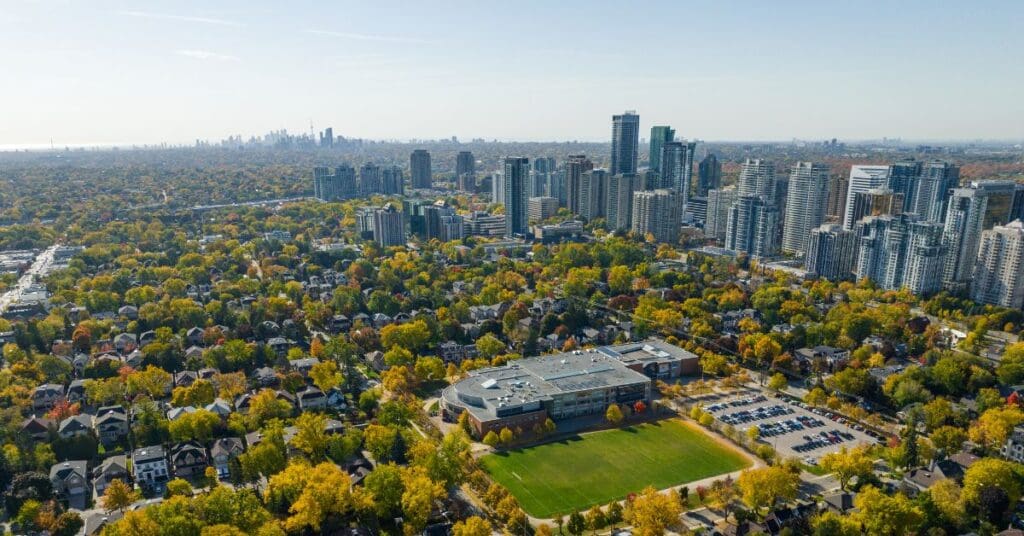
Wide-angle view of the Toronto skyline with the CN Tower and Lake Ontario under a clear blue sky, illustrating the surge in new rental housing supply for 2026.

Affordability Challenges & The “New Reality” for the Rental Market in Canada in 2026

As of April 2026, Canada’s rental market has entered a cooling phase. While the cost of living remains high, the frantic bidding wars of previous years have largely disappeared. A combination of slower population growth (immigration slowed by 18% in 2025) and a record-breaking surge in new completions has shifted the power balance back toward tenants.

For newcomers to Canada, rental market information can help you decide where to live, help you budget, and improve your chances of securing housing. Explore the rental market in Toronto, Vancouver, Calgary, and other major Canadian cities, including trends and vacancy rates.

This is the most favourable market in half a decade for newcomers. Landlords are no longer just “taking applications”; they are actively competing for reliable tenants with move-in bonuses and “rent-free” months. However, despite Canada’s rental market easing, the Canada Mortgage and Housing Report (CMHC) Rental Market Report reveals that affordability remains a challenge for newcomers.

Whether you’re arriving soon or preparing in advance, knowing how the rental market is evolving can help you. Discover what’s in store with our spring update for Canada’s rental market.

Key National Stats at a Glance: Spring 2026 Update

METRICVALUE
(As of April 2026)
NOTE FOR NEWCOMERS
National vacancy rate 3.1% (up from 2.2% in 2024)Highest in years = more choice for tenants
Average 2-bedroom rent $1,550/month (+5.1% Year-over-year)Growth has slowed to a crawl (+2.2%)
Rent for new tenantsDeclined 3.8% (Year-over-year)“Net rents” are falling due to incentives
Landlord Incentives66% of new buildingsCommon to see 1-2 months of free rent or cash bonuses

Why it matters: Higher vacancy rates mean more choice, more listings, and better negotiating power, even if overall rents remain high.

Vancouver Rental Market: Highest Vacancy in 30 Years

A high-angle view of purpose-built rental apartments in the Vancouver rental market, highlighting the record-high vacancy rates and new housing supply in 2026.
With vacancy rates hitting a 30-year high of 3.7% in early 2026, neighbourhoods like Vancouver’s West End are seeing more availability and softer rent growth than at any point in the last decade.
  • Average 2-bedroom rent (purpose-built): ~$2,415 (purpose-built) / ~$3,170 (Condo)
  • Vacancy rate: ~3.7%

📢 The Update: Vancouver is seeing its highest vacancy rate since the late 1980s. A sharp drop in international student numbers and a record number of new apartment completions have forced landlords to lower asking prices for the first time in recent memory.

Toronto Rental Market: A Renter’s Window of Opportunity

A modern apartment building in the Toronto rental market displaying a "Now Renting" sign with luxury amenities, highlighting the 2026 surge of new supply and newcomer incentives in the Canada rental market.
In 2026, many new developments in the Toronto rental market are offering incentives such as 1 to 2 months of free rent to attract newcomers in a rebalancing Canada rental market.
  • Average 2-bedroom rent: ~$2,687 (Asking rents down 5.6% year-over-year
  • Vacancy rate: 3 – 5.4% (Depending on building age)

📢 The Update: The Greater Toronto Area (GTA) market is “cooling rapidly.” Urbanation reports that net rents have hit a 16-quarter low. If you are moving to Toronto, do not accept the first price you see; nearly 70% of new buildings are offering incentives.

Navigating the Canadian rental market is often the first and biggest challenge for newcomers. To help you find a soft landing, we’ve put together two essential resources: The Newcomer’s Rental Application Guide, a step-by-step checklist that will help you stand out to landlords, and our upcoming webinar, Renting Your First Home in Canada.

Calgary Rental Market: Stabilizing After Rapid Growth

  • Average 2-bedroom rent: ~$1,876
  • Vacancy rate: 2.8%

📢 The Update: Calgary’s “rent explosion” has ended. High construction volume (exceeding Toronto’s starts for the first time) means more supply is hitting the market this spring. Explore what the city has to offer newcomers in our comprehensive Living in Calgary, Alberta guide.

Calgary and Edmonton offer the best ‘square-footage-per-dollar’ ratio in Canada for 2026. This makes it an ideal time to secure more space for your settlement journey. Learn why a larger layout might be your best long-term move in our guide: Renting Your First 2-Bedroom Apartment in Canada.

Edmonton Rental Market in 2026: The Value King

  • Average 2-bedroom rent: ~$1,595/month
  • Vacancy rate: 3.4%

📢 The Update: Edmonton remains the most affordable major city for newcomers. With the fastest building timelines in Canada, supply continues to keep pace with demand, keeping rent growth modest. Check out our guide to the Best Edmonton Neighbourhoods for Newcomers to find areas that suit your lifestyle and budget.

Ottawa Rental Market in 2026: Higher Vacancy, Softening Rents

  • Average 2-bedroom rent (purpose-built): ~$2,350/month (Down ~2.1% Year-over-year)
  • Vacancy rate: 3.5%

📢 The Update: 64% of new rental projects in Ottawa are now offering incentives. It is now common to see “one month free” or “free high-speed internet for a year” in new developments in areas like Nepean, Kanata, and the downtown core. For more guidance on where to live, see our best Ottawa neighbourhoods for newcomers guide.

Rental Market Vacancy Key: What the Numbers Mean for You

To help you navigate the 2026 data, it’s useful to understand what these percentages actually mean for your search. In the Canadian real estate context, a 3% vacancy rate is the magic number that economists call a “Balanced Market.”

VACANCY RATEMARKET TYPEIMPACT ON NEWCOMERSSTRATEGY
Less than 2%Critically TightHigh competition, bidding wars, and rents rise quickly.Have all documents ready; apply on the spot.
2.1% to 2.9%Landlord’s MarketLimited choice; few to no incentives offered.Start your search early (60 days out).
3% to 5%Balanced MarketThe “Sweet Spot.” Landlords and tenants have equal power.Negotiate! Compare 3+ listings before deciding.
Above 5%Tenant’s MarketHigh supply; falling rents; many incentives.Landlords competing for YOU; expect significant rent discounts and multiple incentives.

What’s Driving the Rental Market in Canada This Spring?

Two construction workers using a drone and tablet to monitor a high-rise apartment project, illustrating the 2026 surge in housing supply in the Canada rental market.
A record-breaking wave of new apartment completions is a primary driver of the shifting Canada rental market in 2026, offering newcomers more options as supply finally catches up with demand.

1. Zero Population Growth Projection

Changes to Canada’s immigration levels, study permits, and work permits sharply reduced rental demand, especially in Ontario and British Columbia. The federal government’s 2025/2026 immigration plan has reduced the number of temporary residents, leading to a net loss of nearly 290,000 non-permanent residents.

2. The “Incentive” War:

To avoid leaving units empty, landlords may now offer “1 to 2 months of free rent.” This effectively lowers your annual cost, even if the “sticker price” looks high.

3. More rental supply

Many investors who intended to sell condos are now forced to rent them out due to a slow resale market, flooding the high-end rental market.

Practical Tips for Newcomers in the 2026 Rental Market in Canada

  • Research local housing markets and compare rental prices
  • Consider short-term rentals first while searching locally
  • Prepare documents in advance to present to landlords (employment letter, references, proof of funds)
  • Learn about factors that affect rental affordability in Canada
  • Look beyond the first year and prioritize long-term stability
  • Factor in transportation, location, and household size when choosing an apartment for your family.

Outlook for the Rest of 2026

The market is expected to remain “tenant-friendly” through the summer. However, experts warn that the current slowdown in new housing starts (developers pausing due to high costs) could lead to a new supply shortage by 2028. For now, 2026 is the year to lock in a stable, long-term lease.

💡 Newcomer Pro-Tip: Housing and Employment are two important settlement pillars. While you track vacancy rates, don’t forget to track your networking progress. A strong LinkedIn profile can lead to the job offer that makes your dream apartment affordable. Learn how to optimize your profile here.

Next Step for Newcomers

A happy newcomer family holding the keys to their new apartment, symbolizing a successful housing search.
With more choice and better negotiating power in 2026, finding a home that fits your family’s needs is more achievable than ever for newcomers to Canada.

🏠 Find rentals that fit your budget and household needs. Explore Rentals for Newcomers to see options across Canada!

FAQs: Rental Market in Canada in 2026

Is rent going down in Canada in 2026 for newcomers?


Yes, for new tenants. While “sitting tenants” (those already in leases) may see modest increases, asking rents for new leases have fallen in Vancouver, Toronto, and Calgary. As of April 2026, the national “net rent”, which includes the value of landlord incentives, is at a 16-quarter low. If you are a newcomer signing a new lease today, you are likely paying less than someone who moved in a year ago.

Which Canadian cities offer the most affordable rent for newcomers in 2026?

Edmonton and Calgary generally have lower rents and higher vacancy rates than Toronto or Vancouver. Read more about rental affordability in Canada and how to balance housing costs with location, household needs, and long-term stability.


Are landlords offering rental incentives in the 2026 rental market?

Absolutely. It is now the “standard” rather than the exception. Currently, 66% of new rental buildings in major urban centers are offering incentives. The most common deals include 1 to 2 months of free rent, cash move-in bonuses (averaging $400/month in value), and waived security deposits or parking fees. Always ask: “What move-in incentives are you currently offering?”

Should newcomers wait to rent in Canada in 2026?


There is no need to wait, but you should shop around. With the national vacancy rate at 3.1% (a “Balanced Market”), you have the leverage to compare multiple units. The “best” time to rent is now through the summer of 2026, as the high volume of new completions has peaked. Experts warn that a slowdown in new construction starts today could tighten the market again by 2028, so locking in a lease in 2026 is a smart move.

WRITTEN BY

Corinna Frattini

Senior Editor and Content Director, Prepare for Canada

Corinna researches and writes content to help newcomers make informed decisions about housing, employment, banking, and aspects of settling in Canada. With a background in human resources and leadership development, her articles focus on how newcomers can continue their careers in Canada. Her writing combines research, practical guidance, and clear language to support newcomers on their journey.

© Prepare for Canada 2026

Related Articles