Join the ScotiabankStartRight® Program designed for Newcomers‡ and get up to $2,300* in value in the first year.
Living in Ottawa, Ontario: 2026 Newcomer’s Guide to Housing Costs, Jobs & Lifestyle
Written By
Corinna Frattini
•
May 5, 2026
•
Choosing a City
Ontario
Ottawa
Ottawa, Ontario, is the prestigious and stable heart of Canada. Known as “The Capital,” it offers a unique blend of historical significance, a booming tech sector, and a high quality of life. If you are wondering whether living in Ottawa is the right city for you, this 2026 guide covers vital information about Ottawa rent prices, jobs, and lifestyle in a city that balances big-city opportunities with a community-focused feel.
Before moving, research:
Job opportunities in your field: Ensure your skills match Ottawa’s public service and high-tech labour markets.
Housing costs: Ottawa offers more value than Toronto, but prices vary between urban centers and the suburbs like Kanata and Orleans.
Cost of living in Ottawa: Budget for groceries, utilities, and transportation.
Culture and daily life: Understand the city’s bilingual nature and its “four-season” outdoor lifestyle to adapt faster.
This research will help you make informed decisions and start your life in Canada on the right foot.
Quick Facts About Living in Ottawa: 2026
Metric
2026 Data
Comparison Note
City Population
~1,100,000 (City) / 1.5M (Metro)
4th largest metro area in Canada
*Avg. 1-Bedroom Rent
$1,950
~25% higher than the national average
Benchmark Home Price
$793,000
Stabilizing after 2024-2025 growth
Top Industry
Public Service & High-Tech
“Silicon Valley North” (Kanata)
Climate
Humid Continental
Known for world-class skating in winter
*While this is an average, the market moves fast. You can see live Ottawa listings right now at Rentals for Newcomers.
About Ottawa, Ontario
Ottawa is uniquely positioned in Eastern Ontario, bordering Gatineau, Quebec. Together, they form the National Capital Region (NCR). This creates a distinctive bilingual environment where 45% of the population is functionally bilingual. In 2026, Ottawa is a global leader in SaaS, Cybersecurity, and Life Sciences, attracting professionals wanting “big city” careers with “small town” safety and commute times.
While Ottawa is a top choice for newcomers, it is important to see how its rental market and employment sectors compare with other major Canadian hubs. Check out our comprehensive guide to the best cities in Canada for immigrants to see how Ottawa’s cost of living stacks up nationally.
Jobs in Ottawa: 2026 Outlook
💡 Employment Trends: According to Prepare for Canada’s 2026 employment analysis, based on the March 2026 labour force data from Statistics Canada, the unemployment rate is 6.2% (Ottawa-Gatineau). While the economy has seen fluctuations, Ottawa’s unemployment rate remains relatively steady largely due to the stability of the public sector.
What are the top industries for jobs in Ottawa?
Key Sectors: Federal Public Service, Technology (SaaS & Wireless), Healthcare, and Life Sciences.
Top 5 Occupations (2026)
SaaS & Software Developers (Kanata Tech Sector)
Public Policy Analysts & Administrators (Federal Government)
Cybersecurity Specialists
Healthcare Professionals (The Ottawa Hospital & Queensway Carleton)
Skilled Trades (Supporting massive transit and residential expansion)
Major Employers: Government of Canada, Shopify, Nokia, Leonardo DRS, and the University of Ottawa
Tips for Newcomers Seeking Jobs in Ottawa
The Federal Public Service and a high-growth technology ecosystem (known as “Silicon Valley North”) drive the Ottawa job market. Many roles in the capital require specific security clearances or bilingualism; preparing early and networking are even more critical here than in other Ontario cities.
Search Local & National Job Boards: Start with the Canada Job Bank or the City of Ottawa’s career portal. For specialized roles, check the careers pages of Ottawa’s “Big Three” anchor employers:
The Government of Canada (GC Jobs): The region’s largest employer.
The Ottawa Hospital / CHEO: Leaders in healthcare and life sciences research.
The Kanata North Tech Park: A major anchor, housing over 500 companies and 33,000 tech employees.
Connect with Free Settlement Agencies: Don’t wait until you arrive. Many agencies offer pre-arrival services to help you tailor your resume to Ontario standards and understand the local labour market.
Attend Welcoming Ottawa Week (WOW):Held every June (22nd-30th in 2026), this city-wide initiative features job fairs, networking events, and direct access to employers and community leaders.
Ottawa offers a “middle ground” for Ontario. It is much more affordable than Toronto but more expensive than neighbouring cities like Kingston or Montreal. As of May 2026, the average rent for a 1-bedroom apartment is $1,778.
The 2026 Ottawa Rental Market: Costs & Process
Renting is often the first step for newcomers arriving in the capital. According to the Rentals for Newcomers 2026 Market Watch, while the early 2020s saw high competition and rising costs, the Ottawa market has become more balanced. With thousands of new units completed and more supply on the market, landlords are now more likely to offer incentives such as “one month of free rent” to attract reliable tenants.
Budgeting for Living in Ottawa: May 2026 Rental Costs
Living in Ottawa in May 2026 requires a monthly budget of approximately $3,200 to $4,500 for a single professional or $6,500 to $9,000 for a family of four. This includes the median Ottawa rent price of $1,778 for a one-bedroom apartment, plus roughly $650 for groceries, $162 for utilities, and $125 for a monthly transit pass.
This table shows the median asking rents. According to Rentals for Newcomers’ latest pricing guide, these figures represent the benchmark you should use when planning your monthly housing budget.
Unit Type
Median Monthly Rent
Year-over-Year Trend
Studio Apartment
$1,475
➖ Stable
1-Bedroom Apartment
$1,778
📉 Down 0.3%
2-Bedroom Apartment
$2,258
➖ Stable
3-Bedroom/Townhouse
$2,535
📈 Up 1.2%
👉 The surge in new apartment completions has led many landlords to offer move-in bonuses. To see current prices and incentives, check out active rental listings now.
Navigating the Canadian rental market as a newcomer, often without a Canadian credit history or local references, can feel like a puzzle. We’ve put together two essential resources: The Newcomer’s Rental Application Guide, a step-by-step checklist that will help you stand out to landlords, and our upcoming webinar, Renting Your First Home in Canada.
🏠 Where to Search for Rentals
An aerial view of The Glebe neighbourhood, showing Ottawa’s unique mix of historic houses, modern apartments, and integrated green spaces near the Rideau Canal.
While the city average provides a budget, your lifestyle will dictate where you live. For a deep dive into the specific vibes and prices of each area, see our full guide: Best Ottawa Neighbourhoods for Renting.
For Tech Professionals: Look at Kanata or Nepean (close to “Silicon Valley North”). Search Nepean listings now.
For Families:Barrhaven and Orléans offer more space and are close to schools.
💡 Expert Tip: While the median for a 1-bedroom is $1,950, Rentals for Newcomers suggests exploring areas like Vanier or Cyrville, where quality units can often be found for $100–$200 below the city average.
The “Across the River” Choice: Living in Ottawa vs. Gatineau
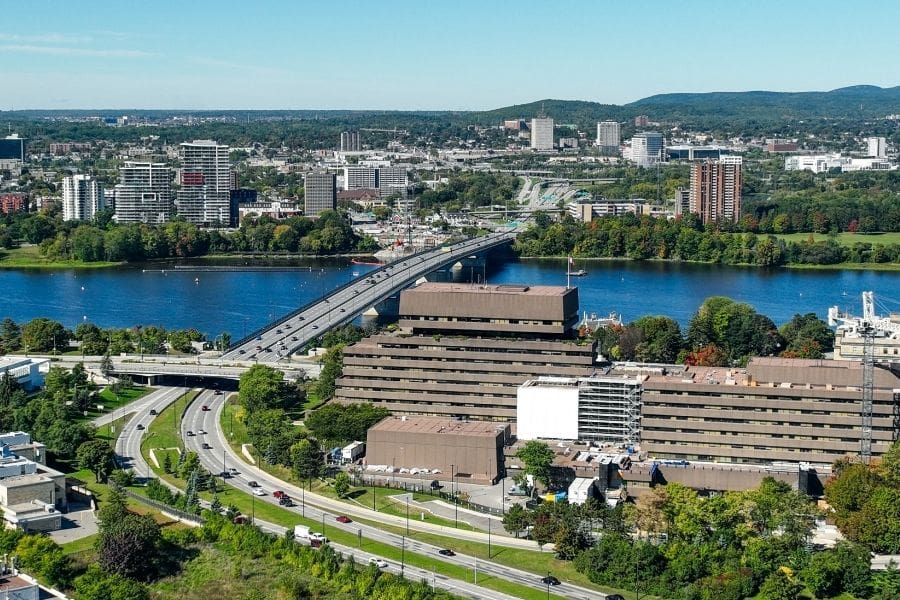
An aerial view of the Macdonald-Cartier Bridge connecting Ottawa and Gatineau. This major crossing is a daily route for thousands of commuters navigating the National Capital Region in 2026
When researching rentals, you will likely notice that prices in Gatineau (the city directly across the river in Quebec) are much lower than in Ottawa. While rent is often 15% to 20% cheaper in Gatineau, keep in mind that Quebec has higher provincial income taxes than Ontario.
For many newcomers, the extra tax you pay can actually be more than the money you save on rent. Additionally, cross-border commuting can be difficult, as traffic between Ottawa and Gatineau is heavy during rush hour.
Look for Landlord Incentives: Because the market is “softer” in 2026, many newer buildings offer move-in bonuses. Ask, “Are there any move-in incentives or flexible rent options for new residents?”
Understand Rent Control:
Controlled: If the building was first lived in before November 15, 2018, the landlord can only raise your rent by the provincial guideline (set at 2.1% for 2026).
Uncontrolled: Newer buildings (post-2018) do not have a legal cap on rent increases. So, budget carefully if you choose a brand-new condo.
Mandatory Tenant Insurance: Most Ottawa landlords require proof of insurance before they give you the keys. Budget for renters’ insurance.
Prepare a “Tenant Resume”: Since you may not have a Canadian credit score yet, bring proof of your savings, a letter from your employer, and references from your home country to build trust with landlords.
Book a short-term rental before you arrive in Canada, and search for a permanent or long-term rental upon arrival.
🏠 Find your first home: Use the Rentals for Newcomers search tool to find apartments specifically vetted for new arrivals. Find up-to-date listings and prices!
Buying a Home in Ottawa
Ottawa offers a great middle ground for newcomers. It is more affordable than Toronto or Vancouver, and it has a strong, stable housing market. As of May 2026, there are more homes for sale than in previous years, and prices aren’t rising as quickly. This makes it a good time for buyers to look for a home.
Here is how Ottawa home prices look:
Property Type
Benchmark Price (May 2026)
Market Trend
All Homes (Average)
$692,584
📈 Up 1.0%
Detached Houses
$845,000
📉 Down 0.8%
Townhouses
$562,5000
📈 Up 0.8%
Condo Apartments
$401,650
📉 Down 5.8%
Tips for newcomers buying a home in Ottawa
Work with a Local Real Estate Agent: A licensed agent can help you find the right neighbourhood, explain the paperwork, and handle the final sale.
Get a “Mortgage Pre-approval”: Talk to your bank to find out exactly how much money they will lend you. Having this letter ready makes your offer much stronger when you find a house you love.
Look in Growing Areas: Consider neighbourhoods like Vanier (close to downtown), Barrhaven (very popular with families), or Orléans (great value and a strong French-speaking community).
Most major banks offer newcomer programs that help you open an account before you arrive, get a credit card, and start building your credit history. By visiting a local bank branch, you can also learn about financial products such as lines of credit, savings accounts, and mortgages. You can even meet with a personal banking advisor who can help you budget for life in Ottawa and plan for long-term goals like buying a home.
Community Support for Newcomers in Ottawa, ON, Canada
The city offers a strong settlement network with several agencies to provide tailored support.
Key Settlement Services in Ottawa
Organization
Best For
Signature Programs & Perks
YMCA – YWCA Ottawa
First Arrivals
The first stop for Language Assessment (CLB).
Ottawa Community Immigrant Services Organization (OCISO)
Offers the “Multicultural Liaison Officer” program in schools to help newcomer children adjust.
Hire Immigrants Ottawa
Career
Connects internationally trained professionals with local employers.
World Skills Employment Centre
Career & Skills
Focus on getting newcomers into the Ottawa tech and government workforce.
Centre de services communautaires Vanier
Francophones
Bilingual Settlement: Comprehensive health and social services for the French-speaking newcomer community.
Ready to Start Your New Life in Ottawa?
Moving to a new country involves many moving parts. To make sure you don’t miss a step, from getting your Social Insurance Number (SIN) to enrolling your children in school, we’ve created a comprehensive guide just for you.
Driving & Transit in Ottawa, Ontario, Canada
Navigating the City: Transit & Living in Ottawa
LRT (O-Train): Line 1 (Confederation Line) runs east-west, while Line 2 (Trillium Line) runs north-south. Line 2 has recently expanded to serve the South and the Ottawa International Airport (YOW).
The Queensway (Hwy 417): The main artery. In 2026, peak-hour traffic can be heavy; newcomers are encouraged to live near their work sector (e.g., Kanata for tech, Centretown for gov).
Licensing: Newcomers must visit a DriveTest Centre to exchange their out-of-province or international license for an Ontario license.
Air and Rail Travel
Ottawa Macdonald-Cartier International Airport (YOW): Located about 20 minutes from downtown, YOW is the primary gateway for the National Capital Region.
The “Porter Hub” Advantage: In 2026, Porter Airlines officially made Ottawa its main secondary hub. This means newcomers have access to more domestic flights (such as Windsor, Sudbury, and Charlottetown) and frequent “sun” routes to Mexico and the Caribbean than in previous years.
VIA Rail: Ottawa is a major stop on the busy Windsor-Quebec City Corridor, making train travel a popular alternative to driving.
Healthcare & Medical Services
Provincial Health Insurance: The OHIP Guide
The Ontario Health Insurance Plan (OHIP) covers medically necessary services, including visits to family doctors and specialists, as well as most hospital care and surgical procedures. OHIP provides peace of mind for people establishing residency in the city.
Resident Category
Waiting Period
OHIP Eligibility & Coverage Notes
Newcomers (from Outside Canada)
No Waiting Period
Coverage begins the first day you establish residence in Ontario.
Moving from Another Province
3 Months
Your “old” provincial plan covers you for the first 3 months. OHIP begins on the 1st day of the 3rd month.
Work Permit Holders
No Waiting Period
Eligible if working full-time for an Ontario employer for at least 6 months. Requires an employer letter confirming your role and start date.
International Students
Not Eligible
Automatically enrolled in the University Health Insurance Plan (UHIP) at the University of Ottawa and Carleton.
Canadian Citizens/PRs
No Waiting Period
Must be physically present in Ontario for 153 days in any 12 months to maintain coverage.
📍 Where to Apply: Apply immediately at a ServiceOntario location to process your health card application. Popular locations for applications are the Ottawa City Hall branch (Centretown) and the Westgate Shopping Centre.
How to Find a Family Doctor in Ottawa
Once you have your OHIP card, your next priority is to find a primary care provider.
Health Care Connect: The primary provincial tool for finding a doctor. You register online, and a “Care Connector” will work to match you with a family doctor or nurse practitioner accepting new patients. Due to a provincial shortage, the wait for a family doctor in Ottawa currently averages 14-18 months.
Walk-in Clinics: Use walk-in clinics or the AppleTree Medical Group for immediate needs.
Health811 (in Ottawa and across Ontario): This is your 24/7 bilingual phone nursing triage service. By dialling 811, you can speak with a registered nurse for medical advice or help finding local health services.
Urgent Care vs. Emergency: Locals use Urgent Care Centres, such as the Orleans Health Hub or St. Vincent Hospital, for issues like stitches, sprains, or minor infections. This keeps Emergency Rooms (at The Ottawa Hospital and Montfort) clear for life-threatening crises.
Major Hospitals in Ottawa
Ottawa is a national leader in specialized medicine, research, and bilingual healthcare. The city’s medical services are primarily divided into three major networks: The Ottawa Hospital (TOH), Montfort Hospital (the province’s flagship Francophone teaching hospital), and specialized centers like CHEO and the University of Ottawa Heart Institute.
Hospital
Primary Specialty
Key Focus for Newcomers
The Ottawa Hospital (Civic Campus)
Trauma & Neuroscience
The regional center for adult trauma and the home of the University of Ottawa Heart Institute, Canada’s largest cardiovascular center.
CHEO (Children’s Hospital of Eastern Ontario)
Pediatrics & Youth
One of Canada’s leading pediatric hospitals. It features a 24/7 Pediatric ER and specialized mental health services for youth under 18.
The Ottawa Hospital
General & Specialized
A multi-campus network that serves as the region’s primary provider for adult trauma and specialized research.
Montfort Hospital (Hôpital Montfort)
Bilingual Community Care
The primary point of care for Francophone residents, and a key community teaching hospital in the East End.
Queensway Carleton Hospital (QCH)
Acute Care & Orthopedics
The primary hospital for the West End (Kanata/Nepean). Known for its Surgical Centre and being the first point of contact for the tech-sector corridor.
Royal Ottawa Mental Health Centre
Mental Health Research
One of Canada’s most prestigious psychiatric hospitals and research facilities, specializing in complex mental health and recovery.
Schools & Learning: A Guide for Families & Students Living in Ottawa
Ottawa offers high-quality education at all levels. Whether you are looking for a school for your child or a university for yourself, here is a clear breakdown of how the system works in 2026.
Elementary & High School
In Ottawa, education is free for residents. Unlike most cities, you can choose from four different school boards based on the language you speak and your religious preference:
English Public (OCDSB): The largest board. Classes are in English, but they offer popular “French Immersion” programs where students learn several subjects in French.
French Public (CEPEO): For families who speak French as their first language. All classes are taught in French.
English Catholic (OCSB): These schools include religious education but are open to students of all faiths.
French Catholic (CECCE): French-language education with a Catholic focus.
💡 Newcomer Tip: If your child is new to Canada, you must start at a Family Welcome Centre. They will assess your child’s English and math skills to make sure they are placed in the right grade with the right support. You can also ask for a Multicultural Liaison Officer (MLO), who can help your family in your native language. Read more in our guide, Schooling in Canada | A Look at the Education System.
Child Care (Daycare)
Thanks to a national program, daycare costs have dropped significantly. As of early 2026, the average cost in Ottawa is about $19 per day, with the government working toward a $10-per-day goal. However, it may be difficult to secure a daycare spot, and there may be a waitlist.
Colleges & Universities
Ottawa is a “University Town.” These schools have strong connections to government and technology jobs.
University of Ottawa (uOttawa): Famous for being the world’s largest bilingual (English-French) university. It is a top choice for Law, Medicine, and Social Sciences.
Carleton University: Located near the river, it is best known for Journalism, Public Affairs, and Engineering.
Algonquin College: Located in the West End, this is the place to go for “hands-on” training in skilled trades, technology, and nursing.
La Cité collégiale: The largest French-language college in Ontario, specializing in technical and creative careers.
Pros and Cons of Living in Ottawa
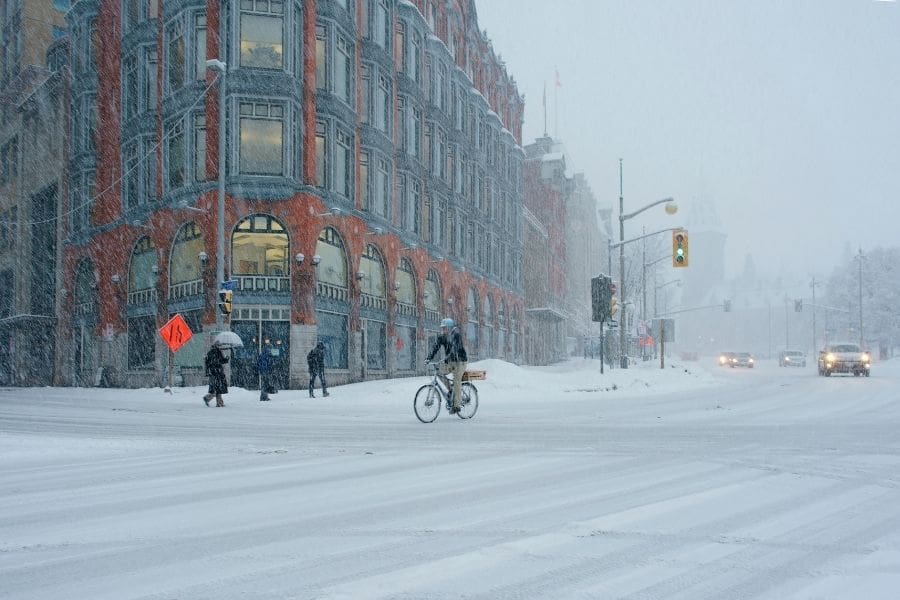
Ottawa is famous for its snowy winters. While the city is well-equipped to handle heavy snowfall, newcomers should prepare for a ‘four-season’ lifestyle that includes world-class snow removal and a lively winter culture.
This table looks at the pros and cons of moving to Ottawa in 2026.
Feature
Pros (The Benefits)
Cons (The Challenges)
Lifestyle
National Cultural Hub: Access to Canada’s best museums, galleries, and major events like Canada Day and Winterlude.
“Early to Bed” Reputation: While the culinary scene is growing, the city is generally quieter at night compared to Toronto or Montreal.
Housing
Stability & Choice: While expensive, the market is less volatile than Toronto, offering a mix of urban condos and spacious suburban family homes.
The Affordability Squeeze: Rent and home prices remain high relative to the national average, requiring a strong household income.
Nature
Greenbelt & Waterways: Amazing access to Gatineau Park, the Ottawa River, and the Rideau Canal for year-round outdoor recreation.
Extreme Winters: Ottawa is one of the coldest capitals in the world; winter lasts from November to April with significant snowfall.
Economy
Recession-Proof Jobs: A massive public service sector and a global tech hub (Kanata) provide high-paying, stable career paths.
The Bilingual Barrier: Many high-level career opportunities, especially in government, require proficiency in both English and French.
Transit
Expanding LRT Network: The 2026 completion of Stage 2 LRT is improving connectivity to the airport and suburban hubs.
Ongoing Reliability Issues: The light rail system has faced historical “growing pains” that can make commuting frustrating.
Community
Safe & Family-Oriented: Consistently ranked as one of the safest and best cities in Canada to raise children.
Bilingual Complexity: Navigating two provincial systems (Ontario/Quebec) if you choose to live in Gatineau but work in Ottawa.
Culture & Community: Embracing the Ottawa Lifestyle
Arts, Culture & Entertainment: The Heart of the Capital
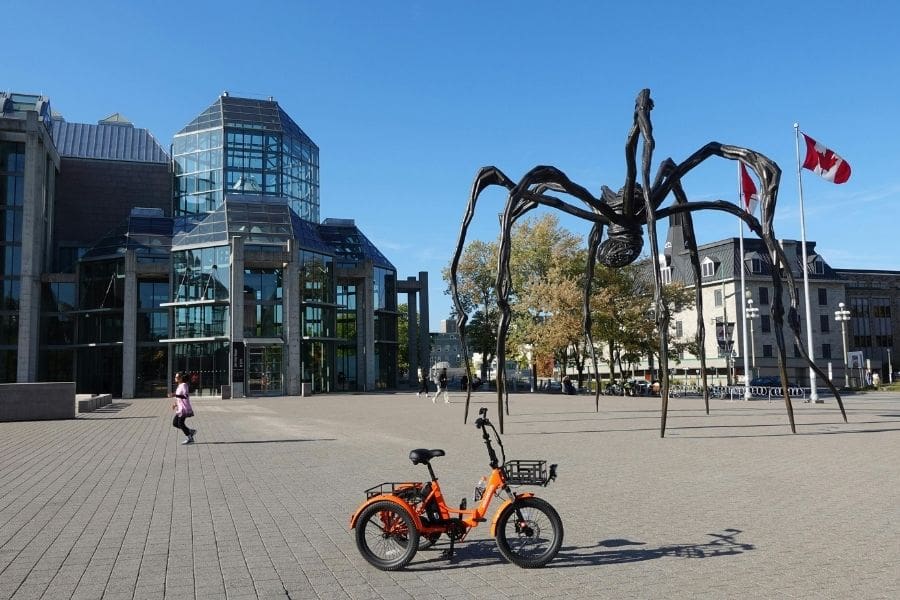
Standing 30 feet tall, the ‘Maman’ spider sculpture greets visitors at the National Gallery of Canada. For many Ottawa residents, it has become a symbol of the city’s bold and creative spirit.
In 2026, Ottawa is much more than a government city. It is a cultural destination where national history meets a modern, diverse arts scene. With recent upgrades to major venues such as the National Arts Centre, the city hosts world-class concerts, Broadway shows, and international events all year. Check out Ottawa’s Event Calendar for current activities.
Museums & History:
Ottawa is home to Canada’s most famous museums. You can explore the National Gallery of Canada for world-class art or visit the Canadian Museum of History (just across the river) to learn about the country’s past. For something unique, the Canada Aviation and Space Museum and the Canadian War Museum are “must-sees.”
Cultural Celebrations:
Ottawa’s biggest party is Canada Day (July 1st), where the whole city turns into a festival. Other major events include the Canadian Tulip Festival in May and Winterlude in February. Winterlude is famous for its massive ice sculptures and for turning the city into a winter playground. If you’re looking to explore beyond the capital, check out our Canadian Winter Festivals Guide.
Professional Sports:
You can cheer for the Ottawa Senators (NHL) at the Canadian Tire Centre. If you prefer football, the Ottawa Redblacks (CFL) play at the lively Lansdowne Park. Soccer fans also gather at the same stadium to support Atlético Ottawa (CPL).
Active Living: Parks, Trails, and the Ottawa Lifestyle
Skaters enjoy the Rideau Canal Skateway in 2026. Stretching through the heart of the city, the ‘World’s Largest Skating Rink’ saw over one million visits during the 2025–2026 season. Photo: Courtesy of Destination Ontario.
Ottawa is one of the greenest cities in Canada. Living in Ottawa means you are never far from a park or a trail.
The Rideau Canal: The city’s most famous landmark. In the summer, you can walk, bike, or boat along it. In the winter, the Rideau Canal Skateway becomes the world’s largest rink, stretching nearly 8 kms through the heart of the city.
Gatineau Park: Just a 15-minute drive from downtown, this massive park is perfect for hiking, camping, and seeing beautiful fall colours.
The Ottawa River: For those seeking adventure, the river is world-famous for whitewater rafting and kayaking. You can even try the world’s only interprovincial zipline, which lets you fly across the water from Ontario into Quebec.
ByWard Market: This is the city’s oldest public market. It is a great place to walk around, grab a “BeaverTails” pastry, and shop for local food and crafts.
Newcomer Community & Cultural Events
Ottawa is very welcoming to people from all over the world. The city celebrates its diversity with many community festivals.
Multicultural Festivals: Throughout the summer of 2026, you can visit events like the Latin Sparks Festival, Greek Fest, and Festival L’Outaouais en Fête.
Welcoming Ottawa Week (WOW): Every June (June 22–30 in 2026), the city holds special events to welcome newcomers. These include storytelling nights, soccer matches, and community picnics designed to help you meet new people and feel at home.
Final Thoughts: Is Living in Ottawa Right for You?
Residents gather at a scenic lookout facing the Ottawa skyline. In 2026, Ottawa’s strength lies in its diversity, offering a welcoming environment for newcomers from all walks of life.
Choosing Ottawa, Ontario, in 2026 means choosing a city that offers a high quality of life and great stability. It is much more than just a government town; it is a leading tech hub and a safe, bilingual community that is perfect for families.
Ultimately, living in Ottawa remains one of the most balanced choices for newcomers in 2026. While the ‘sticker shock’ of Ottawa rent prices can be daunting at first glance, the city’s high average salaries and stable employment market often provide a better long-term return than more volatile hubs like Toronto or Vancouver. By doing your research today, you’re already one step ahead in the housing puzzle.
Not for most tech or service jobs. However, for federal government roles, the ability to speak French and English is often a requirement for promotion and permanent status.
How cold does it get in Ottawa?
Ottawa is the 7th coldest capital city in the world. Expect deep snow from December to March. On the plus side, the city is built for the cold, with underground tunnels (pedway) and world-class snow removal.
How do I find a family doctor?
Use the Health Care Connect registry. This is the provincial “waiting list” for people without a primary care provider.
Is it a good place to raise a family?
Absolutely. Ottawa consistently ranks as the safest major city in Canada and has some of the highest-rated public schools in the province.
WRITTEN BY
Corinna Frattini
Senior Editor and Content Writer, Prepare for Canada
Corinna researches and writes content to help newcomers make informed decisions about housing, employment, banking, and aspects of settling in Canada. With a background in human resources and leadership development, her articles focus on how newcomers can continue their careers in Canada. Her writing combines research, practical guidance, and clear language to support newcomers on their journey.