Join the ScotiabankStartRight® Program designed for Newcomers‡ and get up to $2,300* in value in the first year.
Choosing a city is one of the biggest decisions you’ll make when moving to Canada. While many immigrants consider landing in large cities such as Toronto, smaller cities like Oshawa, Ontario can offer what you’re looking for. This city provides safe neighbourhoods, good schools, and a variety of businesses. It’s also proud of its growing retail and business segment while showing a commitment to community-based living.
Selecting the right city, for example, one that is affordable, offers suitable career options, and meets the needs of you and your family takes some research. It’s vital to consider the location, local economy, transit system, education, and overall quality of living within a city to ensure it meets your selection criteria. This upfront effort can help you avoid landing in a city, only to find it necessary to move to a more suitable city. And, moving again can be expensive. So, let Prepare for Canada guide you with helpful information about living in Oshawa, Ontario.
About Oshawa, Ontario
The Greater Toronto Area (GTA) consists of a number of regional municipalities, including Durham Region. This region forms the east end of the GTA, along Lake Ontario, and Oshawa is the largest city in the region. The city is located about 60 km east of Toronto.
Because Oshawa is home to the General Motors headquarters in Canada, it is known as “Canada’s Motor City”. It’s a safe and family-friendly area ideal for commuters.
Oshawa was incorporated as a village in 1850 and has grown into the city it is today. The name Oshawa originates from the Ojibwa term aazhawe, meaning “the crossing place.”
How Many People Live in Oshawa, Ontario?
The city of Oshawa is a mid-sized city with a population of over 170,000 residents. The population in the metro area (which includes Whitby and Clarington) is over 405,000. The population is growing consistently at 1% per year. This makes the Oshawa area the sixth largest in Ontario.
How to Find a Job & Build a Career in Oshawa
Oshawa’s Local Economy
Oshawa is known for its strategic location along the eastern part of the Greater Toronto area. Highway 401 links the city with Toronto, Montreal, and Ottawa. Manufacturing and construction are two major growth industries. Manufacturing is expected to grow by 8.5% in 2022 and construction by 4.3%. The city will also see the reopening of GM Canada’s Truck Assembly Plant, which will boost the local economy.
Here is a breakdown of the biggest industries in the city:
Healthcare 18%
Retail Trade 15%
Educational Services 11%
Admin & Support 8%
Public Administration 8%
Accommodations & Food Services 8%
Manufacturing 6%
Professional Services 3%
Finance & Insurance 3%
Information & Cultural 2%
Other 18%.
Major Employers in Oshawa
There are close to 12,000 companies, employing about 70,000 residents. Employment grew by about 5.9% in 2021. The top employers include:
General Motors of Canada
Ontario Ministry of Finance
University of Ontario Institute of Technology
Lakeridge Health
Concentrix.
Career Pathways in Oshawa
There are several ways to search for job opportunities. You can use the Government of Canada Job Bank, search individual websites of top employers in Oshawa and use an employment agency. The top recruitment agencies in the area are Durham Recruiting, Adecco, Redwood Employment, and Randstad Canada.
The Oshawa Housing Market
Finding a place to live is at the top of the priority list for newcomers. Whether you plan to rent or buy, assessing your housing options is important. Knowing where top employers, schools, stores, and other amenities are located can help you make your decision.
Is Housing Expensive in Oshawa, Ontario?
Affordability is increasingly becoming an issue in Oshawa as many people in the City of Toronto move out of the city. Oshawa is now one of the most expensive places to rent an apartment in the GTA. Real estate prices have also risen in recent years.
Renting your first home in Canada | Options & solutions for newcomers
Searching for your first home in Canada? Join this exclusive session for key insights on housing market conditions, affordable options, and renting without credit history. Tailored for newcomers settling in the next six months, register now for valuable tips and a free guide!
If you are looking to rent, there are many neighbourhoods to consider, such as Vanier, Donevan, Eastdale, O’Neil, and Central Oshawa. You could also consider nearby towns such as Whitby, Ajax, and Bowmanville. While prices can vary based on factors such as location, size, and apartment features, the average rent in Oshawa is $1,349 for a Bachelor, $1,260 for a 1-bedroom, $2,143 for a 2-bedroom, and $2,264 for a 3-bedroom.
The average price to buy a home in Oshawa is $793,000 according to Zolo. The average cost of a detached 3-bedroom home is $790,000. A 3-bedroom townhouse is $694,000, and the average price for a condo is $524,000 (figures as of September 2022).
While many newcomers arrive in Canada with savings to purchase their first home, this is one of the largest investments you’ll likely make in Canada. So, it’s vital to inform yourself about the process and key factors to consider. To learn more about buying your first home in Canada, check out: First Time Home Buyer: Newcomer Tips.
Driving & Public Transit in Oshawa
Driving in Oshawa, Ontario
Like many other cities in the Greater Toronto Area, Oshawa is a commuter town. This means that many people live in Oshawa and drive to offices across the Durham region or downtown Toronto. Highway 401 goes directly through the city and connects to Highways 412, 418, and 407 ETR.
All drivers must have a valid Ontario driver’s licence and insurance. The province of Ontario has a graduated licencing system. You must complete all steps to become a fully licensed driver. Learn more about driving in Canada:
Driving in Canada: 10 Essential Facts to Know
Driving Test in Canada: A Full Guide
Tips for Winter Driving to Ensure Your Safety
GO Transit provides regular train and bus services between Oshawa and Toronto and other GTA municipalities.
Oshawa Public Transit
Oshawa has a good public transit system. Go Transit trains and buses connect residents to Toronto. Durham Regional Transit offices local bus services in the city. The transit system makes it easy and affordable to commute. In addition, it offers a greener way to travel and avoids the frustration of heavy traffic congestion.
The city is also home to the Port of Oshawa and Oshawa Executive Airport.
Community Support for Newcomers
All newcomers to Oshawa can get settlement assistance through Welcome Centre Immigrant Services. They can help you with many settlement services, such as finding housing, searching for jobs, accessing health care, and they can answer your questions about settling in Oshawa. Read more about settlement services and how they can help you succeed.
Language Support in Oshawa
Language skills are vital to your success in Canada. The Welcome Centre Immigration Services offers language support where you can get your language skills assessed, get reading and writing help, and receive community services in your mother tongue. You can also find language courses through Durham College and other post-secondary institutions in the city.
Personal Finance & Banking
A good financial plan will help newcomers acclimate to the city more effectively. Once you arrive in Oshawa, you can open a bank account with a local bank or credit union. Both offer services and financial products for new immigrants. They can help you open accounts, get a credit card, apply for a mortgage, and even get a line of credit. Visit a local branch or open an account online.
Get more banking tips for newcomers:
How Much Money Will I Need to Move to Canada?
Top 10 Financial Steps to Take Before You Leave for Canada
Move to Canada | Transferring Cash & Valuables
Oshawa’s Education System
The government of Ontario oversees the school system in the province. However, each city has a unique school board that runs the day-to-day operations of the primary, high school, and post-secondary schools.
Elementary and High School Education
Public education is offered through the Durham District School Board. There are 28 elementary and 6 high schools in the city. The Durham Catholic District School Board oversees catholic education. There are 11 Catholic elementary and 2 high schools. There are also several French-language and private schools.
Post Secondary Institutions
There are three post-secondary schools in Oshawa with over 20,000 full-time students. They include:
Durham College
University of Ontario Institute of Technology (UOIT)
Trent University Durham
Read more about education in Canada:
Schooling in Canada | A Look at the Education System
Higher Education Offers Benefits to Newcomers
Where To Get Medical Care in Oshawa, Ontario
Oshawa residents have access to great healthcare. Lakeridge Health Oshawa is one of the largest community hospitals in the province. RS. McLaughlin Durham Regional Cancer Centre is also onsite. In case of an emergency call 9-1-1. This number is the same no matter where you live in Canada.
The Ontario Health Insurance Plan (OHIP) provides residents with health care coverage. You must be a resident to qualify. Learn how to apply for an OHIP card.
You can also buy private health insurance to cover the costs of prescription medications and services not covered by OHIP. Many employers also offer healthcare benefits as part of their employee benefits package.
How to Find A Family Doctor In Oshawa
Having a family doctor is important to ensure you can access healthcare. You can search for a family doctor taking new patients through Health Care Connect. You can call 1-800-445-1822 or visit www.ontario.ca/findadoctor to search online.
If you cannot find a family doctor in Oshawa, you may be able to find one in another nearby town. You can also visit a local walk-in clinic to receive non-emergency care.
Get more information about health care in Canada: Steps to Access Free Health Care in Canada.
What is Day-to-Day Life Like in Oshawa?
Things to Do in Oshawa
Oshawa’s proximity to Lake Ontario and spacious parkland provide residents with lots to explore. The city is a short drive from Toronto, which offers access to many entertainment options.
Public Spaces & Attractions
There are a variety of public attractions for residents to enjoy. Some of the top tourist attractions include Canadian Automotive Museum, Ontario Regiment RCAC Museum, The Robert McLaughlin Gallery, Tribute Communities Centre, Oshawa Museum, and Parkwood Estate.
Restaurants & Nightlife
The city offers a diverse selection of cuisine options, including Wildfire Steakhouse, Cyrus Persian Restaurant, Avanti, The White Apron Restaurant, and Rainbow Restaurant. The city hosts several festivals throughout the year including Oshawa Peony Festival, Kars on King, and Oshawa Fiesta Week.
Nature & Natural Landscapes
Oshawa has lots for people to explore outdoors. There are wildlife reserves, parks and trails, biking paths, and a beach. Be sure to check out the Waterfront Trail, Darlington Provincial Park, Oshawa Valley Botanical Garden, McLaughlin Bay Wildlife Reserve, and the Oshawa Zoo and Fun Farm.
Oshawa Beach along Lake Ontario.
Sporting Events & Concerts
Oshawa is home to the Oshawa Generals of the Ontario Hockey League (OHL). It also has many other junior sporting teams. If you want to enjoy a concert, check out The Music Hall, Stage 44, and Regent Theatre.
Culture & Diversity In Oshawa
Diversity
Oshawa is a diverse community that continues to welcome new immigrants. The city welcomed 4,700 newcomers in 2021 and they plan to continue to be a city that is welcoming of newcomers. About 15% of the city’s population is visible minorities. The top minority groups are black (5.5%), South Asian (3.8%), Chinese (1.4%), and Filipino (1.3%). 2.9% of the population is Aboriginal.
Worship
Oshawa is a predominantly Christian community. About 75% of residents are either Protestant, Roman Catholic, or Christian, 0.9% are Muslim, 0.4% are Hindu, and 0.4% are Sikh.
The Weather in Oshawa
Oshawa has a similar climate to the rest of southern Ontario. It has a humid continental climate with warm summers and cold winters. The average temperature can be as low as an average of -8.5 Celsius in January to as high as an average of 25.1 Celsius in July.
Cycling along the Waterfront Trail in the Fall.
Common Questions Immigrants Ask About Living in Oshawa
Is Oshawa a Good Place for Immigrants?
Oshawa is a good city for new immigrants. It offers affordable housing options, job opportunities, and great education options. It’s ideal for families and young professionals.
What are the Potential Disadvantages of Living in Oshawa for New Immigrants?
Traffic can be an issue, especially during rush hour. And like many other cities in Ontario, the cost of living is rising. But, these are common disadvantages found in many cities across Canada.
What are the Benefits of Living in Oshawa?
Oshawa is a great city to consider if you want to live in the Greater Toronto Area. It’s a short commute to downtown Toronto with good transit, and real estate is more affordable.
Mississauga, Ontario is a popular city for immigrants to Canada. This large, multicultural city has a strong support system for newcomers making it even more appealing. Choosing the right landing city is a big decision and it’s wise to research and compare cities to make the best possible decision. Discover what you can expect living in Mississauga, Ontario from housing to jobs to quality of life, and culture.
Important factors to consider when choosing a city are the job market for your profession and the cost of housing. Choosing a city with suitable job opportunities that match your skills and experience and affordable housing options will set you up for success in Canada. In addition, you want to ensure that the city you choose meets your personal and practical needs.
Mississauga’s waterfront on Lake Ontario provides a scenic route for cyclists and pedestrians.
About Mississauga, Ontario
Mississauga, Ontario is located in Peel Region on the shores of Lake Ontario. The city is also part of the Greater Toronto Area (GTA) and is 24km from Toronto. This makes Mississauga a popular location for people commuting to work in the City of Toronto or nearby cities such as Brampton.
Mississauga has grown over the years to become one of the biggest municipalities in Canada. Founded in 1805 as Toronto Township, it was reclassified as Mississauga Township in 1968 and became the City of Mississauga in 1974.
How Many People Live in Mississauga, Ontario?
The population of Mississauga is roughly 766,00. It is the seventh-largest city in Canada and the third-largest city in Ontario. Residents come from all parts of the world, making it one of Canada’s most globally connected and diverse cities. 53% of Mississauga’s population were born outside the country, making it one of the largest landing cities for immigrants.
Companies from diverse industries employ residents of Mississauga.
How to Find a Job & Build a Career in Mississauga
Mississauga’s Local Economy
Home to Pearson International Airport, and with access to all major highways in the GTA, Mississauga is an attractive location for business. It’s home to the head offices of multinational corporations and the world’s most recognized brands.
Mississauga is a hub for innovation, technology, supply chain, transportation, and manufacturing.
Top industries include:
Pharmaceuticals
Transportation
Information & Communication technology
Food & Beverage Manufacturing
Electronics
Banking and Finance
Life Sciences.
Major Employers in Mississauga
Many newcomers choose to live in Mississauga because of the diverse industries and career opportunities. More than 60 Fortune 500 companies are located in Mississauga including:
Amazon
Google
Microsoft
Walmart
Pepsi.
There are also career options in many industries, professions, and trades. Upon arriving in Canada, you can contact local recruitment agencies to explore job opportunities. Some top recruiting firms are Randstad Canada, Robert Half, Resolve Recruit Inc., and AppleOne Employment Services.
Residential neighbourhood along the Mississauga waterfront.
The Housing Market in Mississauga
Mississauga offers different types of housing to choose from based on your budget, lifestyle, and preferences. Housing is more expensive than in many mid-sized or small cities in Canada. You can research Mississauga rental housing costs and options at Rentals for Newcomers.
Is Housing Expensive in Mississauga, Ontario?
The housing market in Mississauga is more expensive than in other areas in Ontario and Canada. However, it is more affordable than other cities within the Greater Toronto Area.
The cost of renting or buying a house in Mississauga varies depending on where you choose to live. Some of the most expensive neighbourhoods are Lorne Park, Gordon Woods, and Credit Mills. More affordable neighbourhoods are Applewood, Meadowvale, Fairview, and Mississauga Valleys.
Renting your first home in Canada | Options & solutions for newcomers
Searching for your first home in Canada? Join this exclusive session for key insights on housing market conditions, affordable options, and renting without credit history. Tailored for newcomers settling in the next six months, register now for valuable tips and a free guide!
The city ranks among the top five most expensive cities to rent. Rent is typically higher than $2,000 per month for a 1-bedroom apartment. Consider how much rent is relative to how much you can expect to earn to manage your expenses. Housing affordability in Canada is based on spending roughly 30% of your income on housing costs.
NUMBER OF BEDROOMS
AVERAGE RENT (As of October, 2024)
Studio
$1,747
I-Bedroom
$2,207
2-Bedroom
$2,742
3-Bedroom
$3,328
Prices fluctuate based on rental market trends.
🏠 You can research rental prices in Mississauga before you arrive in Canada at Rentals for Newcomers.
According to the Canadian Real Estate Association, the benchmark price for single-family homes was $1,362,200 as of September 2024 (down 2.1% from September 2023). The average price for a townhouse was $829,900 (down 3.7%), and the average cost of a condo was $644,800 (down 3.2% from year-ago levels). Find out more about buying a home in Canada, First Time Home Buyer: Newcomer Tips.
Driving & Public Transit in Mississauga
Major roadways near Pearson International Airport.
Driving in Mississauga, Ontario
Many Mississauga residents commute to work within the GTA. Commute times can be lengthy given traffic congestion issues within the GTA. However, major highways pass through the city, making it easy to get around.
Highway 401 passes through the north end. Residents also have access to Highways 403, 409, 410, and 427. HiHighway 407 is an Express Toll Route (ETR) that helps drivers travel quickly across the GTA.
Learn more about driving in Canada:
Driving Test in Canada: A Full Guide
Getting Your Drivers License in Ontario
Tips for Winter Driving to Ensure Your Safety
Mississauga Public Transit
MiWay is Mississauga’s efficient and safe public transit system. Using MiWay, residents can connect with GO Transit (regional bus and train service), Toronto Transit Commission (TTC), Brampton Transit, Milton Transit, and Oakville Transit. These options provide residents with access to most of the Greater Toronto Area.
MiWay’s extensive bus routes connect to neighbourhoods and key destinations. This makes it easier to navigate the city without owning a car. There are also plans to extend the Toronto subway to the city by 2030.
The city has also developed a network of cycling paths to make it easier for residents to explore the city by bike. This contributes to sustainability efforts and promotes healthier modes of transit.
Community Support for Newcomers
Newcomers to Mississauga have access to support through a variety of community organizations. The Newcomer Settlement Program can help you get information about everything you need to settle. The City of Mississauga also offers various services and programs for newcomers.
Language Support in Mississauga
Public libraries offer programs to help immigrants learn English and improve their language skills. You can also take language classes through Settlement.org, Immigration Peel, and other community groups. Learn more about Services in Canada to Help Newcomers Settle.
Personal Finance & Banking
Having a strong financial foundation is vital when you move to Canada. All local banks and financial institutions have programs to assist newcomers. You can open a bank account, apply for credit cards, open a line of credit, and apply for a mortgage. You can also get assistance for many other financial products. Visit a local bank branch in person or online to start the process.
Related Posts:
How Much Money Will I Need to Move to Canada?
Top 10 Financial Steps to Take Before You Leave for Canada
Move to Canada | Transferring Cash & Valuables
Mississauga’s Education System
Mississauga offers children and adults vast education options. There are four school boards and university and college campuses across the city. Parents have access to daycare and preschool options. There are also before and after-school programs.
Elementary and High School Education
There are 121 elementary and secondary public schools and 114 Catholic elementary and secondary schools.
Four school boards run more than 150 schools:
Peel District School Board
Dufferin-Peel Catholic District School Board
Conseil scolaire Viamonde
Conseil scolaire de district catholique Centre-Sud.
If you prefer, you can enroll your children in one of the private schools or English as a second language (ESL) schools. Multiple schools also offer specialized Arts, Business, Technology, and Sports programs.
University of Toronto – Mississauga Campus.
Post Secondary Institutions
Newcomers have several post-secondary education options. The University of Toronto has a campus in Mississauga. The Sheridan Institute of Technology & Advanced Learning Hazel McCallion Campus is downtown. Lambton College and Mohawk College also have a satellite campus in the city specifically for international students.
You are also a short commute to other post-secondary institutions in Toronto. Read more about education in Canada:
Schooling in Canada | A Look at the Education System
Higher Education Offers Benefits to Newcomers
Where To Get Medical Care in Mississauga, Ontario
Mississauga has two hospitals that are part of Trillium Health Partners. Credit Valley Hospital is in the northwest and Mississauga Hospital is in the southeast. The city also has hundreds of smaller medical and dental clinics.
In the event of an emergency call 9-1-1. This emergency number is the same no matter where you live in Canada.
Permanent residents can get publicly funded health care through the provincial government’s Ontario Health Insurance Program (OHIP). You can apply for OHIP as soon as you arrive in Ontario. You can buy private health insurance for prescription medication and services the provincial healthcare program does not cover. Many people have third-party health insurance through their employer benefits packages.
Mississauga offers many year-round events and activities. The city has a vibrant arts community, cultural celebrations, festivals, and cuisine.
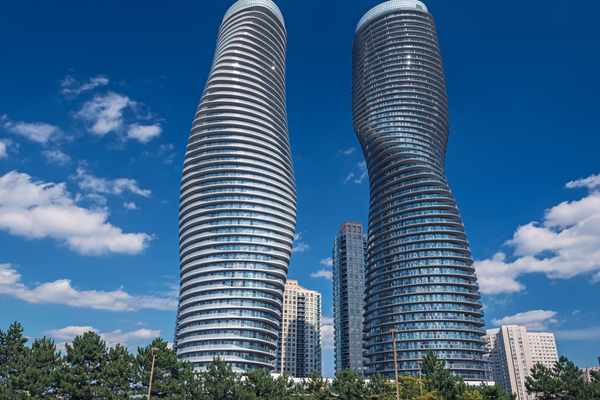
The Absolute World Condominium Towers are a must-see in downtown Mississauga.
Public Spaces & Attractions
Mississauga has a lot to explore. It’s perhaps best known for the unique Absolute World Towers. If you love shopping, Square One Shopping Centre is a must-see. Erin Mills Town Centre, and Dixie Outlet Mall, are other popular shopping centres. If you enjoy the arts, the Mississauga Art Gallery is one of the city’s premier cultural attractions. The city is also close to major attractions in Toronto.
Restaurants & Nightlife
Mississauga offers international cuisine from around the world. You can find diverse cultural restaurants throughout the city. The local neighbourhoods of Port Credit and Streetsville are lined with cafes, pubs, and restaurants with authentic ethnic cuisines.
Pinnacle Grand Park
Nature & Natural Landscapes
The city has an open space system with 3,100 hectares of parkland for those who enjoy the outdoors. Some top places to visit include Pinnacle Grand Park, Rattray Marsh Conservation Area, Lakefront Promenade Park, and Jack Darling Memorial Park.
Sporting Events & Concerts
The city has many minor sports franchises such as the Steelheads of the Ontario Hockey League and the Raptors 905 of the NBA G League. In addition to many bars and clubs in the city, you can see concerts and live music at Paramount Fine Foods Centre.
Dancers, singers, and performers from many cultures participate in Mississauga’s multicultural festival.
Culture & Diversity in Mississauga
Diversity
Mississauga is one of the most diverse cities in Canada and its key strength is its multiculturalism.
Based on 2021 Census data, the largest ethnocultural background is European (37.6% of the population). This is followed by South Asian (25.4%), Chinese (7.3%), Black (6.9%), Filipino (5.4%), and Arab (6%).
Outside of English, the most common first language was Urdu (5.0%), Arabic (4.7%), Mandarin (3.2%), Polish (3.1%), and Punjabi (2.9%).
Worship
There are a variety of religious beliefs represented in the city. Mississauga is a primarily Christian community. However, 49.9% identify as Christian, 30.4% as Catholic, and 3.6% as Orthodox.
Other religions include Islam (17%), Hinduism (8.8%), Sikhism (3.4%), Buddhism (2%), and Judaism (0.2%). 18.1% have no religious affiliation.
Sunset over the Credit River.
The Weather in Mississauga
The weather in Mississauga is like other cities across the Greater Toronto Area. It has a continental climate that is like the rest of Southern Ontario.
July is the warmest month with an average temperature of about 27 degrees Celsius. January is the coldest month with an average temperature of -10 degrees. Expect changing weather conditions throughout the year.
Common Questions Immigrants Ask About Living in Mississauga
Is Mississauga a good place for immigrants?
Mississauga is a great city for newcomers because of its diversity. People from all over the world call the city home. There are job opportunities across many industries. Settlement agencies can lend community support and help you settle. It has a beautiful waterfront along the shores of Lake Ontario with three beaches, and it is home to hundreds of free festivals and cultural events each year.
What are some disadvantages of living in Mississauga?
Housing prices are one of the main concerns for newcomers considering moving to Mississauga. Prices can be expensive. The city also has significant traffic on major highways and city streets. This could add time to your daily commute.
What are the benefits of living in Mississauga?
There are many benefits to living in Mississauga and making it a place to call home in Canada. It offers a strong economy, diverse business landscape, robust education and healthcare facilities, and a thriving multicultural city in Canada.
Moving to Canada offers exciting opportunities and a new way of life. However, it’s a significant decision that requires exploring where to live and work in Canada. Brampton, Ontario, is one of many cities to consider. It is a popular destination for new immigrants due to its vibrant multiculturalism. However, it’s vital to research the city before you make your final decision about where to live. Learning about the housing market, local economy, career options, and what the city offers will ensure you make the best decision for you and your family. This overview will give you a taste of what you can expect living in Brampton!
Where is Brampton, Ontario Located?
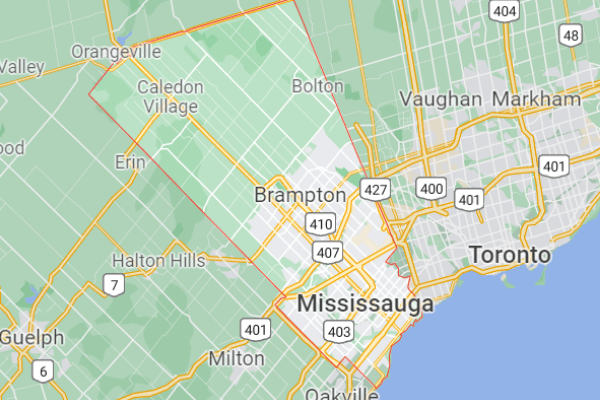
Brampton, Ontario is located in the Regional Municipality (RM) of Peel. The RM includes the cities of Mississauga and Brampton, and the Town of Caledon. The region is also part of the Greater Toronto Area (GTA) and is 40 km from the City of Toronto. Brampton is one of the fastest-growing cities in Canada.
Peel Region includes the cities of Mississauga, Brampton, and the Town of Caledon.
Historically inhabited by indigenous peoples, it was named after the Town of Brampton, England, and incorporated as a town in 1873. It became a city in 1974. Today, it is one of the most diverse cities in Canada.
How Many People Live in Brampton, Ontario?
The city has a population of close to 700,000. It is the 9th largest city in Canada, the 4th largest in Ontario, and the 3rd largest within the GTA. 52% of the city’s population were born outside of Canada, making Brampton the fourth-largest visible minority population in the country.
How to Continue Your Career and Find a Job in Brampton
Discover more about the economic landscape, top industries, and how to continue your career in Brampton.
Brampton’s Local Economy
Brampton’s proximity to Pearson International Airport, major highways, and corporations attract many people and businesses to the region. It’s a destination for corporate head offices, warehouses, manufacturing facilities, and factories. It is a prime location along the supply chain in the province. High growth is expected in the city until 2041.
The top industries in Brampton are:
Advanced manufacturing
Supply chain and logistics
Information and communication technologies
Innovation and technology
Food and beverage
Health and life sciences
Business services.
Major Employers in Brampton
Brampton is home to major employers across many industries. It is home to more than 100 Biotech firms. And it’s located in the centre of the Toronto-Waterloo Innovation Corridor, the second-largest tech cluster in North America outside of Silicon Valley. Some of the top employers include:
Amazon
Dynacare
Coca-Cola Bottling Ltd.
Maple Lodge Farms Ltd.
CN Rail.
Career Pathways in Brampton
Brampton is building an Innovation District. This is an ecosystem to connect talent, educators, investors, and entrepreneurs with high-growth organizations. The City of Brampton is also strengthening its labour force in its key industries.
Careers in manufacturing, construction, food & beverage, healthcare, life science, logistics, and information technology offer diverse opportunities. You can contact local recruiters when you arrive in Canada. Some top recruiting firms are Advantage Group, IS2, Robert Half, Randstad Canada, and HCR Personnel Solutions, Inc.
Looking over a Brampton Neighbourhood at Mississauga Rd and Queen St. West
The Brampton Housing Market
Brampton continues to grow and expand, offering newcomers a range of housing options. Whether you are looking for a detached home, condo, or townhouse, you can find it in one of the city’s many neighbourhoods. Read more about Best Brampton Neighbourhoods for Newcomers to Rent.
Most newcomers book short-term accommodation before arriving in Canada and then search for permanent rental accommodation when in Canada. Buying a home remains a dream for newcomers to grow roots and build equity in Canada. However, it’s wise to rent a home before jumping into homeownership.
Is Housing Expensive in Brampton, Ontario?
Housing prices are rising in Brampton, like all other cities in the province. But it is more affordable than others in the Greater Toronto Area. This makes it a more attractive city for newcomers wanting to buy homes.
The location you choose to live will determine how much you pay for housing. The most expensive neighbourhoods are Toronto Gore, Huttonville, Vales of Castlemore, and Brampton West. Some of the most affordable areas are Bramalea, Sandringham-Wellington, and Heart Lake.
Renting your first home in Canada | Options & solutions for newcomers
Searching for your first home in Canada? Join this exclusive session for key insights on housing market conditions, affordable options, and renting without credit history. Tailored for newcomers settling in the next six months, register now for valuable tips and a free guide!
Rental prices vary based on the type of housing you require, location, and vacancy rates in Brampton.
NUMBER OF BEDROOMS
AVERAGE RENT (As of October, 2024)
Studio
$1,595
1-Bedroom
$1,838
2-Bedroom
$2,342
3-Bedroom
$3,069
Rental prices change based on rental market trends.
Use Rentals for Newcomers to search for available rental units in Brampton. Here, you can also find current rental prices in Brampton.
Also, consider buying renters’ insurance if you are renting an apartment. Most property owners will require it as part of your lease agreement. In Canada, your property owner’s insurance does not protect the tenant. You will need renters’ insurance to protect your family, belongings, and finances. Read more about Why Newcomers Need Tenant Insurance in Canada.
Brampton neighbourhood on a fall day.
Buying a Home in Brampton
Brampton’s benchmark home price as of September 2024 saw a year-over-year price drop of 5.9% to $984,000.
Homebuying Stats:
AVERAGE BRAMPTON HOME SOLD PRICE: $1,035,184 (Down 0.6 COMPARED TO LAST YEAR).
TYPE OF HOUSE
AVERAGE PRICE (UP OR DOWN) YEAR-OVER-YEAR
Detached Home
Down 1.8% to $1.9 M
Semi-Detached Home
Price unchanged at $932k
Condo Townhouse
Down 2.6% to 675k
Condo Apartment
Down 3.8% to 521k
All prices as of September 2024.
Buying a home in Brampton is expensive. But prices are coming down.
This is a big part of life for Brampton residents. The city is surrounded by several major highways including Highway 410 which runs through the middle. Other Highways include 401, Highway 10, Highway 7, and Highway 407 Electronic Toll Road.
Brampton has some of the highest auto insurance rates in the province. The region is known for a high car accident rate. To save on auto insurance, drive safely and keep a clean driving record.
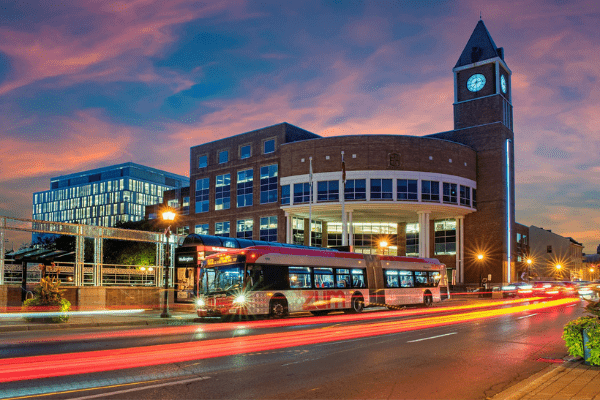
Zum bus in front of Brampton City HallCredit: Brampton Transit
Brampton Public Transit
Brampton Transit is one of the fastest-growing transit providers in Canada. Residents use Zum bus rapid transit to connect to attractions and destinations in Brampton and connect to public transit systems such as York Regional Transit and MiWay (Mississauga Transit). If you work in Toronto, it’s a quick and easy commute on the GO train or to other areas across the GTA.
Using public transit offers an affordable option to owning and operating a car. And, you can avoid the busy roads and highways that can be quite congested.
Community Support for Newcomers
As a home to many immigrants, Brampton offers a range of newcomer services. So, you can get support to find work, look for housing, enhance your language skills, and much more. Free newcomer services can help you adapt to your new community faster and easily.
Newcomers can access language support services at the Brampton Library, or take language classes through Settlement.org, Immigration Peel, and other community groups. Settlement workers can help you with jobs, housing and schools, health care, banking, and more!
Personal Finance & Banking
Setting yourself up for financial success is vital before and after you arrive in Canada. All local banks in Brampton have programs to help newcomers. You can open personal and business bank accounts and apply for other financial products. Banks can assist you with getting a credit card, opening a line of credit, and applying for a mortgage. Visit a local bank branch to start the process.
Brampton offers top-notch education for children and adults. There are two main school boards in the area. However, one thing that Brampton lacks is a post-secondary institution. But, you can access colleges and universities throughout the GTA.
Parents have access to many preschool and daycare options. There are before and after-school programs, and private, public, and community childcare programs across the city.
Elementary and High School Education
The Peel District School Board runs 122 public schools in Brampton. We Welcome the World Centres can help you register your children in school and access other helpful services.
The Dufferin-Peel Catholic District School Board runs 44 Catholic elementary and middle schools and nine high schools. Their Newcomer Centres can provide a smooth entry into the school community.
If you prefer, you can enroll your children in a private school in Brampton. However, you pay tuition fees if your children attend a private school.
Post Secondary Institutions
The city has two post-secondary institutions – Algoma University at Brampton and Sheridan College. There are also private colleges such as TriOS College, SDI College, Medix College, and Evergreen College.
William Osler Health System’s Brampton Civic Hospital and Peel Memorial Hospital are the two major hospitals in the city. However, there are plans to expand facilities.
The city has hundreds of smaller medical and dental clinics that operate in Brampton. You can pay for additional health insurance plans for prescription drugs and services that the Ontario Health Insurance Plan (OHIP) does not cover. Some people have third-party health insurance through their employer benefits packages.
In case of an emergency call 9-1-1. This number is the same no matter where you live in Canada.
Read more about the steps to access free health care in Canada.
What is Day-to-Day Life Like in Brampton?
Things to Do in Brampton
Brampton is a great place to call home with many recreation facilities, museums, cultural centres, and exciting events happening all year.
Public Spaces & Attractions
The city has several unique attractions. Some of the most popular are the Peel Art Gallery, Artway Gallery, Great War Flying Museum, and many others. If you’re into the arts, The Rose and Lester B. Pearson Theatre holds multicultural productions throughout the year.
Restaurants & Nightlife
Brampton is known for its culinary experience from around the world. You’ll discover diverse cultural restaurants throughout the city. Check out the Brampton Food Guide to learn about the hidden gems and abundance of diverse foods!
Nature & Natural Landscapes
Some of the top outdoor attractions include Gage Park, Claireville Conservation Area, Heart Lake Conservation Area, and Professor’s Lake.
Garden Square in Brampton, Ontario. Credit: City of Brampton
Sporting Events & Concerts
Garden Square is a great place to see local music artists, live entertainment, cultural events, and much more. The city is home to several minor league sports teams. The most notable is the Brampton Battalion of the Ontario Hockey League
Culture & Diversity In Brampton
Diversity
Brampton is one of Canada’s most multicultural cities, with over 250 cultures and 171 languages spoken.
Top Visible Minority Groups (2021 Census):
South Asian: 340,815
Black: 85,305
Filipino: 21,060
Languages Spoken: English (95%), Punjabi (24%), Hindi (11%), Urdu (5%), French (5%).
Brampton is home to large Sikh, Hindu, and Muslim communities, alongside Christian denominations. With one of the largest South Asian communities in Canada, celebrations like Diwali are on a grand scale. From temple gatherings to fireworks and local events, it’s a time that truly showcases Brampton’s vibrant multicultural spirit. Read more about How Newcomers Celebrate the Festival of Lights.
Enjoying the winter weather at an outdoor public skating rink Credit: City of Brampton
The Weather in Brampton
Brampton has a continental climate that is like the rest of Southern Ontario. The average temperature ranges from -9.4° C in January to as high as 27.1° C in July.
The city enjoys four seasons. You can expect sunny and humid days during the summer, rain in the fall and spring, and cold and snow in the Winter.
Common Questions Immigrants Ask About Living in Brampton
Is Brampton Cheaper than Toronto?
Yes, Brampton is 10–20% more affordable for housing while still offering easy access to Toronto jobs.
Is it Better to Live in Brampton or Mississauga?
With the cities close together, it is common for immigrants to consider both. These neighbouring cities are similar in size and population. When choosing between the two, you might consider your housing choices, lifestyle preferences, and the type of community you want to live in. However, both are excellent choices for newcomers.
What are the Pros and Cons of Living in Brampton?
Brampton is a dynamic, diverse, and fast-growing city. It offers great amenities for newcomers and provides a healthy job market and affordable housing. Some downsides include a lack of post-secondary schools and traffic congestion on city roads and surrounding highways. It’s important to weigh the pros and cons of living in Brampton when deciding which city to live in Canada.
Moving to Canada is a big decision, and so is choosing the right city to settle in. Selecting the right city with a good job market and an affordable housing market can help you build financial success in Canada. Discover what the Kitchener-Waterloo region offers and what makes it so appealing with this helpful guide.
Researching your destination city in Canada is vital. Importantly, you need to understand the local job and housing markets. Specifically, you must know what jobs are in demand in the local labour market to secure a job. And, you need to understand housing prices. Housing costs in Canada vary, but prices are substantially higher in Vancouver and Toronto. Living in a more affordable housing market can lower your cost of living, allowing you to rent or buy a larger house for you and your family.
About Kitchener-Waterloo, Ontario
The Kitchener-Waterloo region is an active, thriving place to live, work, study and invest. Immigrants come from around the world to make their home in Canada. It has a thriving technology sector, is located along a major highway and is the 4th largest Census Metropolitan Area (CMA) in Ontario. Commonly referred to as KW or the Tri-cities, the CMA includes the three urban centres of Kitchener, Waterloo, and Cambridge plus, four scenic rural townships: North Dumfries, Wellesley, Wilmot, and Woolwich.
KW is a popular and affordable alternative to living in Toronto and offers a mix of big-city benefits and small-town charm. From KW, you can drive to the nearby cities of Toronto, London, Brampton, and Hamilton in about one hour. The area is close to nearby airports including the Region of Waterloo International Airport, London International Airport, and Toronto Pearson International Airport.
KW is an hour’s drive to cities such as Toronto, Hamilton, and London, Ontario.
How Many People Live in Kitchener-Waterloo, Ontario?
Over 623,000 people live in Kitchener-Waterloo-Cambridge (as of 2020). More than half live in Kitchener. The population has been increasing by about 1.5% – 2% per year. However, over the past few years, it has been one of the fastest-growing regions in Ontario. It is expected to reach 729,000 people by 2031.
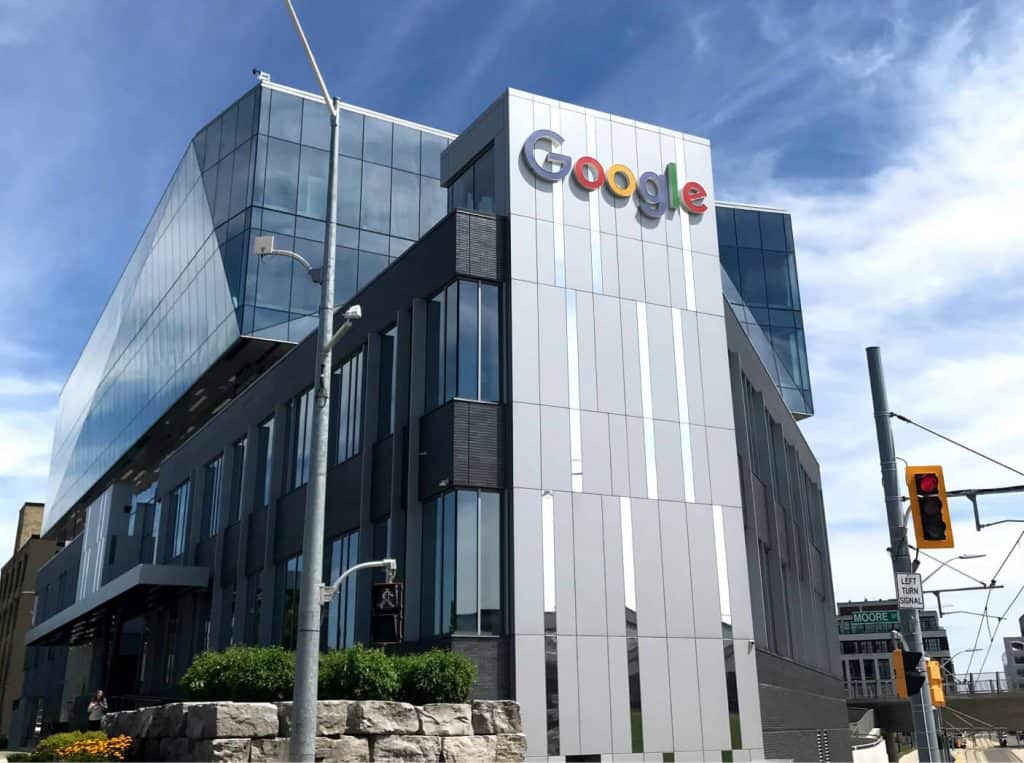
The Waterloo Region is also known as “Canada’s Silicon Valley”. Google Canada Head Office in KW
KW’s Local Economy
The KW region has a diverse economy with sectors from manufacturing to high-tech. The area historically also has one of the lowest unemployment rates in Ontario.
The region is home to world-class employers and has one of the highest employment rates in Ontario. With a strong manufacturing base and other industries to provide meaningful employment, it is also a fast-growing hub for:
Technology and Innovation
Insurance
Advanced Manufacturing
Automotive
Aerospace
Digital
Food Processing.
Major Employers in KW
The KW region has many large employers, such as Sun Life Financial, the University of Waterloo, Manulife Financial, Sandvine, and Wilfrid Laurier University.
The city is also home to three well-known think tanks: the Perimeter Institute for Theoretical Physics, the Institute for Quantum Computing, and the Centre for International Governance Innovation. Together with Kitchener and Cambridge, Waterloo is part of Canada’s Technology Triangle (CTT), a joint economic development initiative that markets the region internationally.
Some of the top employers are:
Allianz Global Assistance Canada
BlackBerry Limited
Equitable Life Insurance Company of Canada
Gore Mutual Insurance Company
Home Hardware Stores Limited
NAVBLUE
Toyota Motor Manufacturing Canada Inc. / TMMC
WS Audiology Canada Inc.
Career Pathways in KW
The job growth rate is on the rise. Total employment is close to 290,000 (2017). The region has the 10th largest workforce and the 4th largest manufacturing workforce in Canada. The top industries that are hiring are technology, manufacturing, insurance, and health care.
You can search for jobs through local recruiters such as Randstad Canada, RobertHalf, Biznets Professional Recruitment, Adecco Staffing, and MaxSys.
The Kitchener-Waterloo Housing Market
A key priority when moving to KW includes finding the perfect place to call home. And, it’s common for new immigrants to rent or live in a short-term rental before buying a house in KW.
Is Housing Expensive in Waterloo, Ontario?
Waterloo has a range of housing types with various sizes, characteristics, and prices. Relatively, you’ll find that housing prices are affordable, lower than in Toronto and the surrounding area, but higher than in some other southern Ontario communities located away from Toronto.
Finding a Place to Rent in Kitchener-Waterloo
To better understand rental prices, it’s best to research the rental housing market before you arrive.
🏠Check out Rentals for Newcomers to search for available rental units and prices in the KW area.
However, it’s best to search for rental housing when you arrive in Canada to view the apartment and meet with the landlord physically. This is also the best way to avoid rental scams.
CITY
AVERAGE RENT 1-BEDROOM APARTMENT (Year-over-Year Change)
AVERAGE RENT 2-BEDROOM APARTMENT
ONTARIO
$2,118 (-5% Y/Y)
$2,573 (-4% Y/Y)
Kitchener
$1,859 (-3.4%)
$2,246 (-4.4)
Waterloo
$2,038 (0.6%)
$2,566 (5.5%)
Cambridge
$1,906
$2,333
Average Rental Costs as of March 2025: Source Rentals.ca
Housing in the KW region is more affordable than Vancouver and Toronto, Canada’s largest cities.
CITY
SINGLE-FAMILY DETACHED HOME MEDIAN PRICE (As of February 2025)
Kitchener-Waterloo-Cambridge
$729,900
Vancouver
$1,185,100
Toronto
$1,073,900
Housing Market in Canada: Latest News for Newcomers
To buy a home, contact a local realtor who will guide you through the home-buying process. Find out more about buying your first home in Canada: First Time Home Buyer: Newcomer Tips
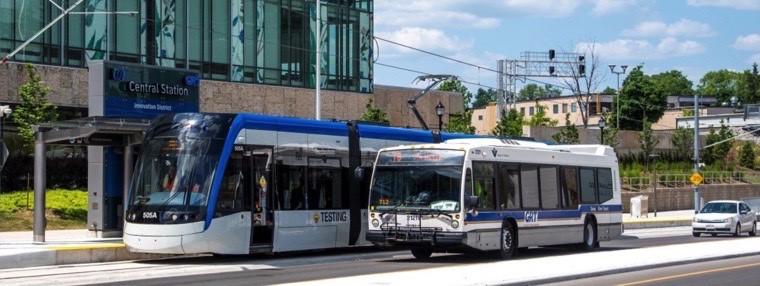
Grand River Transit operates light rail train and bus routes in Kitchener, Waterloo, Cambridge, and surrounding areas
Driving & Public Transit in Kitchener-Waterloo
Driving in Kitchener-Waterloo
Kitchener-Waterloo is conveniently located near Highway 401, providing quick access to other major cities in the region. Highways 7 and 8 also pass through the area. It is common for residents to commute to work.
Drivers must have a valid Ontario driver’s licence. You must be at least 16 to drive and pass the graduated licensing system to get a full G licence. You require a Class A or D licence to operate commercial vehicles.
Getting Your Drivers License in Ontario
Driving Test in Canada: A Full Guide
Tips for Winter Driving to Ensure Your Safety
Getting Your Driving License in Canada
Public Transit
The Grand River Transit system operates a bus and light rail system within the KW region. For maps, routes, and schedules, click here.
The cost to ride public transit varies depending on the route, method, and distance. Click here for fares and routes. And with GO Bus and Train services, you can live in the region and still have quick and convenient access to Toronto.
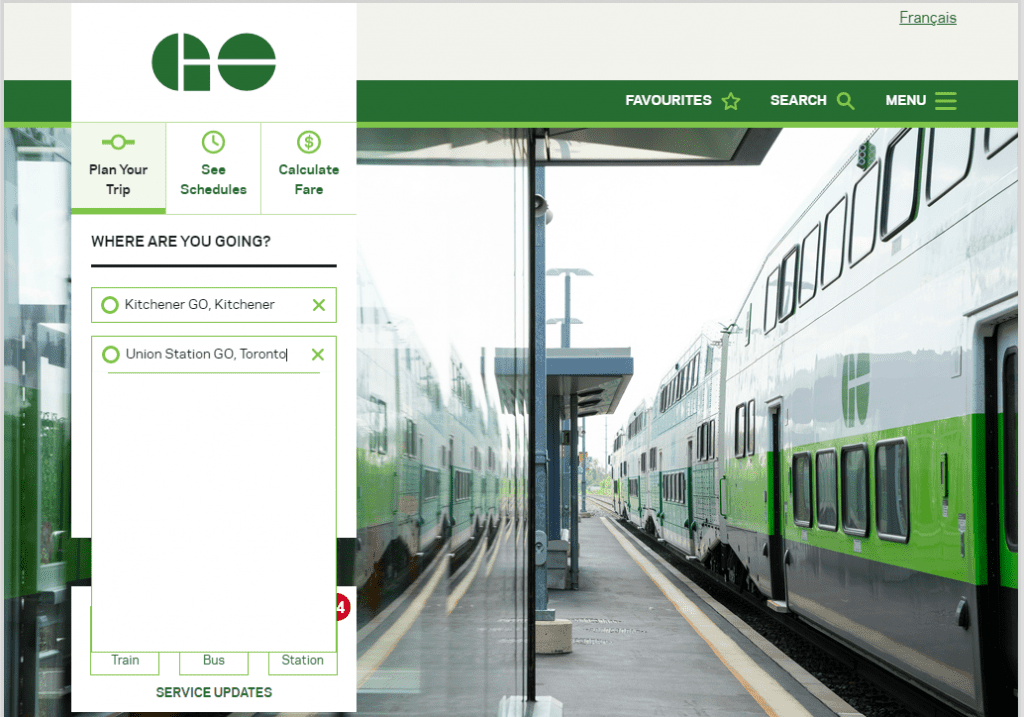
The GO train from KW to Toronto is a frequent rapid transit experience for commuters.
Community Support for Newcomers
The KW area is diverse and welcomes immigrants from around the globe. You can find settlement agencies across the region to help you adapt to your new community and access other services. Refugees and new immigrants can use services such as:
If you want to have your English language skills assessed or get language support, you can access many local programs. For example, Conestoga College, St. Louis Adult Learning Centres, English at First, and Renison University College offer Language Instruction for Newcomers to Canada (LINC) classes. Work-specific programs are also available.
Personal Finance & Banking
All local banks in Waterloo have programs to help newcomers open a bank account and get a credit card. You can learn about getting a mortgage, personal loans, and investments. Visit a local bank branch to start the process.
Get more banking tips for newcomers:
Top 10 Financial Steps to Take Before You Leave for Canada
Move to Canada | Transferring Cash & Valuables
Waterloo’s Education System
There are many learning opportunities for your children in the Kitchener-Waterloo Region. There are separate boards for catholic and public education.
Elementary and High School Education
Waterloo region has 121 schools – 103 elementary schools and 16 high schools. There are 46 Catholic elementary schools and five Catholic high schools. In addition, Kitchener-Waterloo has several private, adult, and continuing education institutions.
Post Secondary Institutions
The region is home to two universities and one technical college:
In case of an emergency call 9-1-1. This number is the same no matter where you live in Canada.
For prescription medications and services that the Ontario Health Insurance Plan (OHIP) does not cover, you can buy private insurance.
Some employers offer third-party health insurance as part of their benefits package. Otherwise, you can take out an individual policy. For more information about health care in the Kitchener-Waterloo region, click here.
How to Find A Family Doctor in Kitchener-Waterloo
The KW region, like many other areas in Ontario, has a shortage of doctors, so finding one can be difficult. Start looking for a physician who is taking new patients as soon as you arrive in the region. Register with Health Care Connect to find a doctor. Learn more about health care in Canada: Steps to Access Free Health Care in Canada
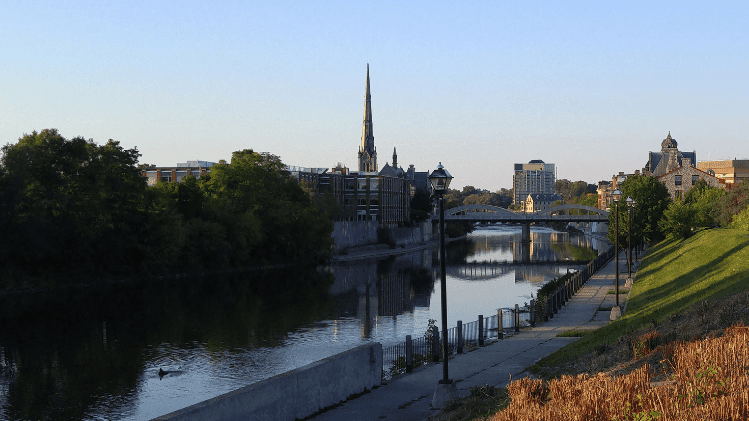
Grand River flowing through the KW Region in Cambridge
What is Day-to-Day Life Like in Kitchener-Waterloo?
Things to Do in Waterloo
Waterloo is a great place to work, attend school, and raise a family. There are many things for new immigrants to do for fun and leisure. The region has historic landmarks, a broad selection of excellent restaurants, thriving farmers’ markets, art galleries, museums, antique shops, and factory outlets.
Public Spaces & Attractions
The top attraction in the region is Kitchener-Waterloo Oktoberfest. Each year people since 1969, people love to celebrate the second-largest Oktoberfest in the world. It is also home to many other events such as the Kitchener-Waterloo Multicultural Festival, Kitchener Blues Fest, and Kultrun World Music Festival.
Restaurants & Nightlife
The KW area is filled with diverse restaurants, pubs, and bars. There are many locations featuring European and German cuisine. The downtown areas in Kitchener, Waterloo, and Cambridge are great places to get a bite to eat.
Nature & Natural Landscapes
Waterloo Region has many parks and trails along the Grand River for residents and visitors to explore. Larger parks, like Waterloo Park and RIM Park, have ball diamonds, sports fields, picnic areas, public washrooms and access to transit and parking.
Sporting Events & Concerts
The region is home to the Kitchener Rangers of the Ontario Hockey League and the KW Titans of the National Basketball League of Canada. The entertainment scene offers a wealth of live theatre, concerts by local and visiting artists, and performances by the Kitchener-Waterloo Symphony.
Culture & Diversity in Kitchener-Waterloo
Diversity
According to the 2021 Statistics Canada census, 146,575 immigrants live in the Waterloo Region. The region has the 8th highest proportion of immigrants in the province. Between 3,000 and 4,000 new immigrants move to the area annually.
In the last decade, the greatest number of immigrants were Asian, of which 18,265 were from India. European-born immigrants made up 47,630 with the highest number of immigrants coming from the United Kingdom with 10,130 people.
Since the Waterloo Region has German settlement roots dating back to 1916, there is also a large German community. And, there are more than 50,000 people in the region with German ethnic origins.
Places of Worship
Waterloo Region is home to many places of worship, providing faith communities across the city with reflective spaces. For a list of churches and other places of worship in the Waterloo Region, click here.
The Weather in the KW Region
The region has a humid continental climate with four distinct seasons and large temperature differences. It has warm summer months and moderate winters.
Winter usually lasts from mid-December to mid-April and this is when you can expect snowfall. The average high in January is -3.1°C and in July rises to 25.9°C.
Downtown Kitchener has many beautiful heritage buildings making it a unique place to call home
Common Questions Immigrants Ask About Living in KW
Is it Expensive to Live in Kitchener-Waterloo?
Housing in the KW area is less expensive compared to other Ontario cities. A major benefit is the average salary is comparable to what you get in big cities, so the overall cost of living is lower. There is ample opportunity to find affordable housing in KW and surrounding communities.
What are the Pros and Cons of Moving to Kitchener-Waterloo?
Kitchener-Waterloo offers new immigrants many benefits. It is a safe and affordable community and offers many great festivals and cultural events. It’s also close to other cities. You can also live in surrounding communities, with many housing options. One drawback people often express is it is a student city because of the two universities. Traffic can also be heavy during rush hour.
Living in Kitchener-Waterloo vs. Toronto – What’s the Difference?
Many people compare cities in Ontario to Toronto when thinking about where to move. The KW region offers many of the same career opportunities as Toronto, especially in technology, but the cost of living is about 20% cheaper. You are only an hour drive from Toronto, so you can still enjoy the big city amenities without the higher cost.
Many newcomers are drawn to Toronto, Canada’s largest city and the most diverse in the world, for its exciting atmosphere. However, the cost of living in Toronto is high. Making the right choice about where to live is crucial for your career and finances. You’ll need to compare Toronto’s job market, career prospects, housing options and costs, and quality of life with other locations in the Greater Toronto Area (GTA) and across Canada. Discover what to know about living in Toronto to help you make an informed decision.
About Toronto, Ontario
Toronto is the financial capital of Canada and the second-largest financial services center in North America. About 40 percent of Canada’s business headquarters are here, including the country’s largest banks. Toronto is the capital of the Province of Ontario and is located on the north shore of Lake Ontario.
It was settled in 1750 as Fort Rouille, established as York in 1793, and incorporated as Toronto in 1834. The city amalgamated with neighbouring towns in 1953 as Metro Toronto. In 1998 it amalgamated as the City of Toronto with much great development since then.
Known as the ‘city of neighbourhoods’ Toronto has more than 240 neighbourhoods across six local boroughs: : East York, Etobicoke, North York, Old Toronto, Scarborough, and York.
Common Questions Immigrants Ask About Living in Toronto
How Many People Live in Toronto, Ontario?
The population of the City of Toronto topped 3 million in 2024. The Greater Toronto Area (GTA) population is approximately 7.1 million.
What is the Greater Toronto Area (GTA)?
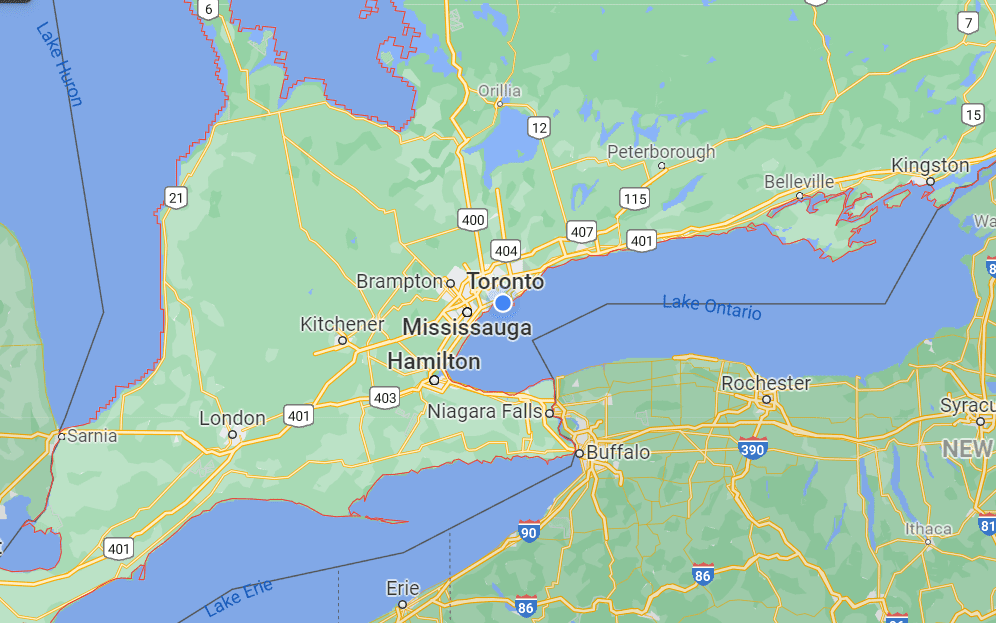
The GTA includes the City of Toronto and four regional municipalities:
Halton Region includes: Burlington, Oakville, Milton, and Halton Hills.
Peel Region includes: Brampton, Mississauga, and Caledon.
York Region includes: Aurora, East Gwillimbury, Georgina, King, Markham, Newmarket, Richmond Hill, Vaughn, and Whitchurch-Stouffville
Durham Region includes: Pickering, Ajax, Whitby, Oshawa, Clarington, Uxbridge, Scogog, and Brock.
Greater Toronto Area Map
What are the Advantages and Disadvantages of Living in Toronto?
Toronto, a multicultural city with world-class amenities including education and healthcare, provides ample opportunities for career advancement. However, the high cost of living and traffic congestion might deter those who prefer a slower pace or smaller community.
Is Toronto a Good Location for Immigrants?
Toronto is the most diverse city in Canada with a strong support system for newcomers, including settlement services. You will have access to resources, local ethnic communities, and services to ease your transition to Canada. This makes it an ideal city for newcomers.
Is Moving to Toronto Worth it?
It’s expensive to live in Toronto. But, it offers more job opportunities than other cities in Canada. It is an ideal location for career-focused individuals. There are many business opportunities, and the city is economically stable. However, you have to earn a high salary to live comfortably.
Toronto is Canada’s business and financial capital.
How to Find a Job & Build a Career in Toronto
The Local Economy
Toronto’s diverse economy offers business and professional opportunities in everything from technology to green energy, film, retail, and financial services. It is Canada’s business and financial capital and the second-largest financial services centre in North America.
Toronto-based businesses export over $70 billion in goods and services to every corner of the globe with retail sales of $62 billion annually. The city’s economy relies on innovation and new ideas to create economic wealth.
Key industries are:
Financial services
Aerospace
Education
Film
Fashion
Food & Beverage
Green energy
Biotechnology and Life sciences
Information and Communications and Technology
Tourism.
Major Employers
This city is home to major employers in many industries. Some of the top employers in the region are:
Canada’s big five banks: Scotiabank, Royal Bank of Canada, Canadian Imperial Bank of Commerce, Toronto-Dominion Bank, and Bank of Montreal
Proctor & Gamble Inc.
Questrade, Inc.
Salesforce
University of Toronto.
The city is also home to 9 of Canada’s 10 largest law practices, 9 of the top 10 accounting firms, and all 10 top human resources and benefits firms.
Tourism is a key industry.
Career Pathways
Approximately 35% of jobs are in downtown Toronto across all sectors including finance, technology, retail, and service. Toronto is North America’s fastest-growing tech market, offering unique career opportunities.
Toronto’s thriving tourism industry accounted for $9 billion in 2024. With hundreds of conferences, concerts, and events, there are many hospitality and customer service jobs.
While wages are higher than anywhere else in Canada, so is the cost of living in Toronto. Research the cost of living, salary estimates for your occupation, and housing prices to ensure you can live comfortably.
Local recruitment agencies such as Randstad Canada, IQ Partners, and Motion Recruitment, can help you when you arrive in Canada.
The Toronto Housing Market
Where you live is one of the biggest decisions you’ll make when you move to a new city. It’s important to consider cost and availability. Because it’s expensive to live in Toronto, given the high cost of housing, many people choose to live in surrounding cities in the GTA.
Is Housing Expensive in Toronto, Ontario?
While many newcomers want to live in Toronto for convenience and lifestyle, it comes with higher rental and home-buying prices. Living further from the downtown core means you’ll likely be able to afford a larger home in a quieter setting. But, if you work downtown, your daily commute will be longer.
Renting your first home in Canada | Options & solutions for newcomers
Searching for your first home in Canada? Join this exclusive session for key insights on housing market conditions, affordable options, and renting without credit history. Tailored for newcomers settling in the next six months, register now for valuable tips and a free guide!
As of February 2025, the average cost to rent an apartment or condo in Toronto is $2,364 for a 1-bedroom, $3,084 for a 2-bedroom, and $3,642 for a 3-bedroom.
🏠 Check out Rentals for Newcomers to search for rentals and current prices in Toronto!
Buying a Home in Toronto
Buying a home in this city is expensive, and prices continue to rise. Toronto has some of the highest real estate costs, and a low housing supply is putting pressure on prices.
Toronto has the busiest roadways in North America. It is the main hub for road, rail, and air transportation. It has an extensive highway system with over 400,000 vehicles using Highway 401 and roughly 2.5 million daily commuters.
View of Highway 401.
There are six major highways:
Highway 401: The major east-west highway in the city’s north end
Queen Elizabeth Way/Gardiner Expressway: The major east-west highway in the city’s south end.
407 ETR (Express Toll Route): A multi-lane highway that runs across the top of the GTA.
Don Valley Parkway/Highway 404: The major north-south highway east of downtown Toronto
Highway 427: North-south highway on the west side of the city
Highway 400: North-south highway on the east side of the city
Drivers must know how to drive safely in winter and on highways with high traffic volumes.
Toronto residents can travel within Toronto and to other GTA cities using public transit including subways, Rapid Transit (RT), buses, streetcars, and GO trains.
The Toronto Transit Commission (TTC) operates the transit system. The Toronto Streetcar system is North America’s largest and busiest light-rail system.
GO Transit operates a regional transit service within the GTA. Public transit offers a great alternative to buying and operating a car in Toronto. Many people in Toronto prefer public transit to reduce travel time and avoid road congestion.
Public transit costs vary based on the mode of travel and distance. Learn more about Public Transit in Toronto.
Pearson International Airport (YYZ) located in Mississauga along Highway 401 is one of the busiest in the world. Toronto is also home to Billy Bishop Toronto City Airport (YTZ). All airports are accessible using public transit.
Community Support for Newcomers
Many settlement agencies can help newcomers adapt to life in Canada and Toronto. Settlement agencies can help you find a house, job, childcare, and get information about healthcare and social services.
The city is a mosaic of more than 150 languages spoken daily. Over 30% of Toronto residents speak a language other than English or French at home. There are hundreds of ethnocultural organizations, including professional associations and community centres in the city.
3-1-1 is a special telephone number for non-emergency municipal services and offers information in more than 180 languages. The City of Toronto website provides information in more than 50 languages.
Personal Finance & Banking
All banks in Toronto have programs to help new immigrants open a bank account get a credit card, or mortgage, and learn about financial services and products. You can open a bank account before arriving in Canada.
The City of Toronto offers many options, including licensed child care centers, public, Catholic, francophone, bilingual, language immersion, private, and religious schools.
Toronto also has three universities and five colleges that offer training for almost every profession and skill. If you are looking for child care services, click here to find licensed child care centres.
Elementary and High School Education
Education in Canada is mandatory for children between five and 16, and they can attend public or private schools.
Toronto is a Canadian leader in the number of post-secondary schools and graduates with more than 15,000 medical/ biotech researchers, two top-ranked MBA schools, and excellent engineering, computer sciences, and multimedia programs.
Universities include Ryerson University, York University, University of Toronto, and OCAD University. Colleges include Centennial College, George Brown College, Humber College, and Seneca College.
Princess Margaret and Mount Sinai Hospitals
Where to Get Medical Care in Toronto, Ontario
There are over 30 hospitals located across the city. Toronto General Hospital is ranked as one of the top hospitals in the world. Toronto has one of the highest standards in the world for healthcare and medical services. The city has world-class hospitals, medical communities, and research facilities.
In case of an emergency call 9-1-1. This number is the same no matter where you live in Canada.
Toronto residents are eligible for Ontario Health Insurance Plan (OHIP). This provincially-funded medical plan supplies free, essential hospital and medical care to permanent residents in Ontario.
Applying for the OHIP card is one of the first things you do when you arrive to ensure you and your family receive vital health care. You can buy private health insurance to cover the waiting period for the provincial healthcare program, or for medication and services that Ontario Health does not cover. Some people have third-party health insurance through their employer benefits packages.
How to Find a Family Doctor
Finding a family doctor is a crucial step to ensuring your health and well-being. Register with Health Care Connect to search for a family doctor. You may be put on a waiting list.
If you are unable to find a family doctor, you can go to one of many non-emergency walk-in clinics in the city. Get more information about health care in Canada: Steps to Access Free Health Care in Canada
What is Day-to-Day Life Like in Toronto?
Things to Do
As the biggest city in Canada, Toronto has something to offer everyone. Whether you are a foodie or sports fanatic, love art, music, theatre, or the outdoors, you’ll find many things to do in the city. There is always something going on. And, you can often find many free events or low-cost activities.
Public Spaces & Attractions
There are many world-class attractions in the city. Some top places to visit include Ripley’s Aquarium of Canada, CN Tower, Royal Ontario Museum, Art Gallery of Ontario, Toronto Zoo, and Eaton Centre.
Toronto is a city that loves to celebrate. From the massive Pride Parade in June to the vibrant St. Patrick’s Day festivities in March, there is always something happening downtown. Check out our Saint Patrick’s Day Guide to see how the city celebrates its Irish heritage.
The city is also home to events such as the Toronto International Film Festival (TIFF), Canadian National Exhibition, Luminato, Nuit Blanche, Caribbean Festival, and many more.
Vibrant nightlife on King Street West.
Restaurants & Nightlife
Toronto has restaurants galore. Some of the best places to eat are in the Distillery District, Dundas Square, and Queen Street West. You can wander through Kensington Market and St. Lawrence Market to sample food, shop, and more. The Entertainment District, King West, and many other locations throughout the city offer you all types of bars, pubs, and clubs.
Nature & Natural Landscapes
Even though it’s an urban city, there are still a lot of outdoor activities. You can walk along the Harbourfront, visit Toronto Island, High Park, Scarborough Bluffs, and many other parks throughout the city. It offers ample green space, over 1,600 parks to explore, and beautiful beaches on Lake Ontario.
Sporting Events & Concerts
Toronto is a sports city. It is home to the Maple Leafs of the National Hockey League, the Raptors of the National Basketball Association, the Blue Jays of Major League Baseball, Toronto FC of Major League Soccer, and the Argos of the Canadian Football League. And, it’s home to the Hockey Hall of Fame.
The city is also a music hub. From small gigs in bars to concerts for 50,000 people, it has it all. Roy Thompson Concert Hall is home to the Toronto Symphony Orchestra. You can also enjoy outdoor concerts by the lake at the Budweiser stage, see top artists in the Scotiabank Arena, and local acts at music clubs throughout the city.
Culture & Diversity in Toronto
Diversity
Toronto is the most culturally diverse city in Canada. Each year tens of thousands of newcomers move here from around the world. In 2021, there were 1,286,140 immigrants, or 47% of the population.
The top represented ethnicities are: China (10%), Philippines (9%), India (6%), Sir Lanka (4%), Italy (4%), and Jamaica (4%). United Kingdom, Hong Kong, Portugal, and Guyana are 3% each. The top three countries for recent immigrants are the Philippines, China, and India. More than 23,000 residents identify as Aboriginal, 86% are First Nations, and 14% are Metis.
Places of Worship
As a diverse city, there are many places of worship in Toronto to practise your religious beliefs. Though all Toronto neighbourhoods have sacred spaces for believers to gather, certain city regions have a larger number of religious communities than others. The main religions that people follow in the city include Christianity, Muslim, Hinduism, Judaism, and Buddhism.
The Weather in Toronto
Toronto has a moderate climate because of its location on the shores of Lake Ontario. The area has four distinct seasons:
Spring is a rainy season. The average temperature is about 12°C in March, April, and early May.
Summer begins on June 21, but July and August are the warmest and most humid months with daytime temperatures usually above 20°C and often rising above 30°C.
Fall has cooler weather and it rains often. Average temperatues are about 10°C to 12°C.
Winter is cold and it snows often. The snow stays on the ground for weeks or months. The t From December to February, the temperature is usually below 0°C, day and night. Temperatures can drop below -25°C.
Those who live in Ottawa love it. If you are moving to Canada, it is a top city to consider. As the Nation’s capital city, Ottawa, Ontario offers many career options to help you succeed financially once you arrive.
Where you decide to live in Canada will have a significant impact on your future. So you need to research what the city has to offer. It’s important to think about the housing market and your career options, and how they will affect your family and lifestyle. Ottawa is a large and diverse city in Canada, which is one reason why new immigrants select it as a preferred destination. This overview of living in Ottawa can help you decide if it will meet your personal and professional needs.
About Ottawa, Ontario
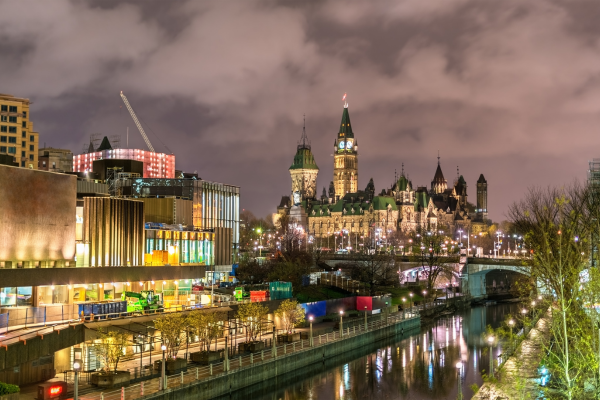
Canadian Parliament Building is situated near the Rideau Canal.
Ottawa is the capital of Canada and the city plays a vital role in Canadian history. Canada’s Parliament building towers over the city, which, along with the famed Rideau Canal, makes it a picturesque place to live.
The city is located in Eastern Ontario, and it borders Gatineau, Quebec. Gatineau is on the north bank of the Ottawa River, and together they form the National Capital Region (NCR). It is also between Toronto and Montreal, and north of the eastern United States. The city was founded in 1826 as Bytown and incorporated as Ottawa in 1855. It was named the capital of Canada with Confederation in 1867.
Ottawa’s multicultural and bilingual populations make it appealing to new immigrants. About 50 percent of its residents speak English, and 30 percent speak French. The remaining 20 percent speak other languages.
Ottawa is also appealing to newcomers because of its economic strength. As home to the Federal Government, it offers many career options in government and the tech sector. It is truly an international city and a great place to raise a family.
How Many People Live in Ottawa, Ontario?
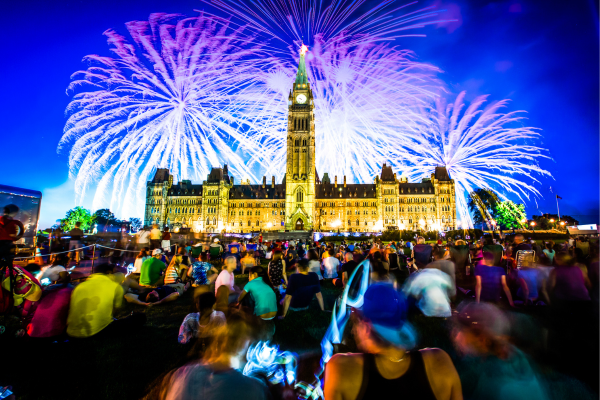
Fireworks display on Canada Day.
Ottawa is the second-largest city in Ontario and the sixth-largest city in Canada. It has a population of 1,017,449 (2021 census). The Ottawa-Gatineau metropolitan area has over 1.4 million residents.
Ottawa has a young and diverse population. Over 65 percent of residents are between 18 and 49. There are over 200,000 people (23% of the total population) who were born outside Canada who call Ottawa home.
How to Find a Job & Build a Career in Ottawa
Ottawa’s economy is strong with a variety of job opportunities.
Ottawa’s Local Economy
With the highest-educated workforce in Canada, Ottawa has more engineers, scientists, and PhDs per capita than any other city in the country. It also has Canada’s highest due to a booming public sector and high-tech industry. The unemployment rate is stable and is usually below the national average.
Ottawa has a strong economy and offers a variety of job opportunities for people with diverse backgrounds and interests.
Key industries in Ottawa include:
IT
Biotechnology and life sciences
Professional services
Public service
Tourism.
Major Employers in Ottawa
The Bank of Canada is a leading employer in Ottawa.
Ottawa is home to major technology and healthcare companies. The Federal Government is the leading employer in the region. Learn more about some of f Ottawa’s top employers in 2025.
Career Pathways in Ottawa
Ottawa has consistently seen higher job growth than other Ontario cities. It has an unemployment rate of 4.9% (as of March 2024). This is lower than the national average of 6.1%.
The city’s top industries continue to experience the most growth. Industries that are hiring in the region include:
Technology
E-commerce
Government and public service
Construction
Real Estate.
Some local recruitment agencies to help with your job search include Randstad Canada, LRO Staffing, Advantage Group, Keynote Search, Aerotek, and TH Employment Solutions.
The Ottawa Housing Market
While finding a job in Ottawa is an important first step, so is finding a place to live. For new immigrants, it’s common to take up short-term housing or rent an apartment before buying a home.
Is Housing Expensive in Ottawa, Ontario?
There are plenty of housing options in the Ottawa region. Housing costs across Ontario are on the rise. Similar to other Ontario cities that you may be considering, Ottawa housing costs are increasing. Fortunately, the cost to buy a home in Ottawa is more affordable than in other larger cities such as Toronto. As always, the neighbourhood you choose to rent or buy will dictate the cost.
Renting your first home in Canada | Options & solutions for newcomers
Searching for your first home in Canada? Join this exclusive session for key insights on housing market conditions, affordable options, and renting without credit history. Tailored for newcomers settling in the next six months, register now for valuable tips and a free guide!
New immigrants have many rental options. You can find places to rent across the city. Ideally, you want to find a place that is close to your job, place of worship, schools, shopping, transit, and other important locations.
These are considered the best locations to live for renters:
🏠 Check out Rentals for Newcomers for available rental units and current prices in Ottawa!
Buying a Home in Ottawa
Ottawa’s housing market offers newcomers different housing options. For example, about 40% of properties are detached homes. The remaining are townhomes, semi-detached houses, condos, and apartments.
The cost to buy a home is on the rise in Ottawa. According to Royal LePage, the average home price in Ottawa is $757,700 in the first quarter of 2024. This is a year-over-year increase of 4.4 percent.
The median price of a single-family detached home increased by 4.5 percent over last year to $869,300. The median price to buy a condo increased by 4.6 percent to $401,500.
These numbers are still below the national average and remain more affordable than the housing market in the Greater Toronto Area and Vancouver. To buy a home, contact a realtor in the area who will guide you through the home-buying process. Find out more about buying your first home in Canada: First Time Home Buyer: Newcomer Tips
Driving & Public Transit in Ottawa
Driving in Ottawa, Ontario
Highway driving is a vital skill for Ottawa residents. Commuting from neighbouring communities into the city is common. The region has several highways including Highway 417 (part of the Trans-Canada Highway), Highway 416, and Highway 401. The city also has parkways, including Queen Elizabeth Driveway, Rockcliffe Parkway, and Aviation Parkway.
Winter weather can create difficult road conditions. So if you haven’t driven in winter weather before, it’s helpful to learn how to drive in snowy conditions. The minimum age to get a driver’s licence is 16. All drivers must complete the graduated driver’s licence process. To get a commercial driver’s licence in Ontario you will need a Class A or Class D licence. Read more about Driving in Canada: 10 Essential Facts to Know.
Ottawa Public Transit
OC Transpo operates public transit in Ottawa. The rapid transit system consists of buses and light and medium rail lines. Bus services run seven days per week and connect to all major neighbourhoods in the city as well as Gatineau.
Ottawa is commonly regarded as the best place to live in Canada. Part of this has to do with its diverse and multicultural population and how the city supports newcomers. The city offers many settlement services for newcomers.
In addition to the Newcomer Information Centre, other agencies include Ottawa Community Immigrant Services, Immigrant Women Services Ottawa, Catholic Immigration Center, and Hire Immigrants Ottawa. For information about settlement services in the Ottawa area, click here. Read more about Services in Canada to Help Newcomers Settle.
Language Support in Ottawa
Several organizations in the city offer language support services to newcomers and anyone looking to improve their English or French speaking skills. They include the IWSO Language Services Ottawa, Language Interpretation Services (ONHC), and YMCA Language Assessment and Referral Centre. Language classes are also funded by the Government of Canada.
Personal Finance & Banking
All local banks in Ottawa have programs to help new immigrants. They can help you open a Canadian bank account. Banks can also help you get a credit card, line of credit, and a mortgage, Visit a local bank branch to start the process.
Ottawa offers high-quality English and French education in public, Catholic, and private school systems. The government pays for public elementary and secondary school education. However, if you enroll your children in private schools, you will have to pay tuition fees. Ottawa’s colleges and universities offer specialized learning for adults and high school graduates.
Elementary and High School Education
Ottawa is unique because they have four school boards: English, English-Catholic, French, and French-Catholic The largest is the Ottawa-Carleton District School Board (OCDSB) with 147 schools. In total, there are 318 schools, including 65 high schools in the city. There are also several private schools.
Post Secondary Institutions
Ottawa has two universities and two colleges:
University of Ottawa offers more than 300 programs in 10 faculties and is North America’s premier bilingual university.
Carleton University offers over 200 programs in 47 departments, including public affairs, journalism, film studies, engineering, IT, and international studies.
La Cite collégiale offers 70 full-time college programs in areas such as administration, media and communications, health, technology, hospitality and tourism, community services and trades.
The city also has two Catholic universities – Dominican University College and Saint Paul University.
Read more about education in Canada:
Schooling in Canada | A Look at the Education System
Higher Education Offers Benefits to Newcomers
Where To Get Medical Care in Ottawa, Ontario
In case of an emergency call 9-1-1. This number is the same no matter where you live in Canada. There are four hospitals in the region: Queensway Carleton Hospital, The Ottawa Hospital, Montfort Hospital, and Children’s Hospital of Eastern Ontario. As well, there are several specialized hospitals and clinics in the region.
Ottawa residents are eligible for the provincial public health program, Ontario Health Insurance Plan (OHIP). It covers a range of medical services, including check-ups with your family doctor or at walk-in clinics, hospital visits, eye exams, and vaccines. However, OHIP does not cover the cost of prescription drugs.
As a newcomer to Ontario, you can apply for OHIP as soon as you arrive.
For prescription medications and services that OHIP does not cover, you can buy private health insurance. When you secure a job, your employer may offer insurance for you and your family.
How to Find A Family Doctor In Ottawa
Newcomers need to find a family doctor. They can supply medical advice, write prescriptions, and refer you to specialists. To find hospitals, doctors, and dentists in Ottawa, visit Health and Support Services. Get more information about health care in Canada: Steps to Access Free Health Care in Canada
What is Day-to-Day Life Like in Ottawa?
Things to Do in Ottawa
Ottawa has many cultural attractions, including galleries, museums, and festivals. As well, Ottawa has many recreation facilities throughout the city including multi-purpose facilities, seniors’ centres, parks, tennis courts, basketball courts, arenas, and outdoor rinks. One of the greatest winter activities is skating on the Rideau Canal. You can rent skates, and skate the longest outdoor rink in the world! Winterlude is an epic Canadian winter festival that occurs each year during the first three weeks of February.
National Gallery of Canada
Public Spaces & Attractions
As a top tourist destination in Canada, there is much to see and do. Some of the most popular attractions include Parliament Hill, The Canadian War Museum, National Gallery of Canada, Peace Tower, Canadian Museum of Nature, and the Canada Aviation and Space Museum.
The city also hosts many festivals and events throughout the year. The most popular include the Canada Day celebration, Canadian Tulip Festival, Ottawa Dragon Boat Festival, Winterlude, and other events at the ByWard Market.
Restaurants & Nightlife
Ottawa has a bit of everything. With a diverse population, you can experience food from virtually every culture you can imagine. This city has countless great restaurants, pubs, and nightclubs. ByWard Market, Elgin Street, Little Italy, and Chinatown are popular destinations. You also have the choice to cross over to Quebec and visit Hull and Gatineau.
Nature & Natural Landscapes
Ottawa lies on the Southbank of the Ottawa River. In terms of nature, it is perhaps best known for the Rideau Canal. Other top nature destinations in the region include Gatineau Park, Rideau Falls, and Hog’s Back Falls.
Sporting Events & Concerts
Ottawa is home to the Senators of the National Hockey League (NHL). The Ottawa Redblacks of the Canadian Football League (CFL), also call the city home. There are also other minor pro leagues, minor league, and collegiate sporting teams in the area.
If you love music, Ottawa is a great place to live. In addition to hosting top international artists throughout the year, it also has world-class music festivals such as Bluesfest and the Ottawa International Jazz Festival.
Culture & Diversity in Ottawa
Diversity
Ottawa is a proud multicultural city and reflects the rich cultures and traditions of both English and French Canada. About 50 percent of residents speak English and 30 percent speak French. The remaining 20 percent speak other languages.
More than 200,000 immigrants call the city home. Of these residents, 45% are from Asia and the Middle East, 26% are from Europe, 14% are from Africa, 11% are from Central and South America, and 4% are from the United States.
14% of residents state their mother tongue is French. 22% have a primary language other than French or English.
Religion
As a diverse city with a large immigrant population, people practice different faiths in Ottawa. About 65% are Christian. 6.7% are Islam, and 1.4% are Buddhist.
The Weather in Ottawa
The city has a humid continental climate. Being in the northeastern part of Ontario, Ottawa is known for its very cold winters. It averages about 88 inches of annual snowfall. Temperatures can reach -20 degrees Celsius or below. The wind chill can make it feel even colder. The coldest month of the year is January. The average temperatures range from -5 C to -14 C.
The good news is the spring and summer months warm up considerably. You can expect daytime highs averaging about 25 C from June to August.
Common Questions Immigrants Ask About Living in Ottawa
Is Ottawa a Good Place to Live?
Ottawa is consistently ranked as the best place to live in Canada as well as one of the best 100 cities in the world. Its diversity, strong economy, schools, and Canadian history make it a great place for newcomers. It also ranks as the best place to live for new immigrants to Canada.
Is Ottawa Good for Immigrants?
Absolutely. Ottawa is an excellent location for immigrants to live. The city is clean, friendly, and culturally diverse. It has a good transit system, is great for pedestrians, and offers many housing options. The city has a world-class education system and is home to the Federal Government. Perhaps most important for newcomers, it offers a range of career opportunities.
Is Living in Ottawa Expensive?
Ottawa can be an expensive place to live. While it does have slightly lower than average housing prices, rent is higher than in most cities. Food, entertainment, and transit can be more expensive than in a smaller city. But, considering the career opportunities and job prospects, it balances out.
Ontario currently has a population of 14.8 million and the Government of Ontario is projecting the province to grow to over 20.4 million by 2046. It could even surpass 21 million in a high growth scenario. And, most of this growth will be driven by immigration. The greatest population growth has mainly been in southern Ontario within the area known as the “Golden Horseshoe” This includes the area along the shores of Lake Ontario from Oshawa to St. Catharines and includes the Greater Toronto Area and the City of Hamilton.
Ontario’s growth is a good news story reflecting that newcomers are choosing Ontario cities to start their new life in Canada. Immigration has long played an important role in Ontario’s social, cultural and economic fabric. And, today Ontario continues to welcome people from more than 150 countries. A sign of its diversity is the number of languages that you can hear people speaking on our streets.
Ontario is a land of opportunity! And its prosperity has been built by the hard work of generations of immigrants. If you’re considering living in Ontario, learn more about its population, location and regions, cities, economy, and culture.
Province of Ontario flag flying high alongside the Canada flag.
Where is Ontario Located?
Located in central Canada, Ontario has the country’s largest population. While it has the largest population, approximately 85% of people live in large cities located on the shores of the Great Lakes. But, the land area of the province is enormous. It’s the second-largest province after Quebec and covers an area of more than 1 million square km.
There are vast distances between its largest cities. For example, the distance between Toronto in southern Ontario and Ottawa in the eastern part of the province is 452 km. That’s about a five-hour drive. The distance between Toronto and Windsor is 362 km or about a four-hour drive.
Ontario shares a border with Manitoba to the west, Quebec to the east, James Bay and Hudson Bay to the north, and the Great Lakes and the United States border to the south. The five Great Lakes (Lakes Huron, Ontario, Michigan, Erie, and Superior) hold one-fifth of the world’s freshwater surface.
Map of Ontario, Canada bordered by the provinces of Manitoba, Quebec, the Great Lakes, and Hudson Bay.
Ontario, Canada Time
Most of Ontario Canada is in the Eastern Time Zone. However, officially some communities in Ontario’s Northwest region fall in the Central Time Zone. The province follows Daylight Saving Time (DST). At the beginning of DST in the Spring, people move their clock forward by one hour. In the Fall, people move their clock back one hour when DST ends.
Ontario’s Indigenous Peoples
For newcomers to Ontario, learning about the history of indigenous peoples in Canada can help to build a better future. Celebrating the unique heritage of First Nations, Inuit and Métis peoples is a vital way to recognize the Indigenous Peoples who were here before any newcomers arrived in Canada.
There are 133 First Nations communities located across Ontario that represent major cultural and linguistic groups. This makes Ontario home to 23% of all Indigenous peoples in Canada. First Nations communities are located from Windsor in the south to the Northern shores of Hudson Bay. There are over 30 remote First Nations in Ontario that are only accessible by air year-round or ice road access for most of the year. However, many indigenous peoples live off-reserve in urban cities including Thunder Bay, Sudbury, Ottawa, and Toronto.
What are the Main Industries in Ontario?
Ontario is a hub for economic opportunities. It offers a unique combination of resources, manufacturing, exports, and a focus on innovation. The province is home to almost 50% of all employees in high tech, financial services and knowledge industries. Other sectors that drive the highly diverse economy include:
Construction:
With a number of major infrastructure projects, combined with new housing and renovation activity, the construction industry is a large employer for Ontarians. And, faced with labour shortages, the industry continues to focus on building a more diverse labour force and recruiting newcomers to Canada.
Manufacturing:
Ontario is Canada’s manufacturing powerhouse. Key manufacturing industries include auto, information and communications technologies, biotech, pharmaceuticals, and medical devices. Innovation is always at the forefront whether it’s creating the next generation of autonomous vehicles or streamlining aerospace, food processing, and cleantech processes.
Ontario is one of the top producers of vehicles in North America with assembly plants in Windsor, Brampton, Cambridge, and other cities in the province.
Agriculture:
Much of Ontario’s south is covered by high-quality farmland that produces fruit crops, vegetables, cash crops such as soybeans, corn, wheat and barley, commercial dairy, beef, poultry, and hog farms.
Forestry:
Forestry plays a major role in the province’s economy and supports many direct and indirect jobs across Ontario communities. Ontario wood supports the livelihoods of about 147,000 people. The province is one of Canada’s most forested regions that support a range of in-demand products such as lumber, furniture, flooring, and plywood. Ontario wood supports
Mining:
Ontario’s mining industry is a global leader in productivity and is among the world’s top 10 producers of nickel and platinum group metals. According to the Ontario Mining Association, the average weekly wage for direct mining jobs is over 60% higher than the average industrial wage in the province.
Services:
The services sector is a large part of Ontario’s economy and includes business and financial services, professional and scientific-technical services, and arts and culture.
Tourism:
With four distinct seasons, year-round activities such as hiking, camping, and skiing make the province of Ontario a premier tourism destination.
FiveEconomic Regions in Ontario
Statistics Canada identifies five economic regions in Ontario: Greater Toronto Area, Central Region, Eastern Region, Northern Region, and Southwest Region. Each region also has unique geographic, and cultural differences. While all regions are forecasting employment and population growth, that growth may vary by region. So, it’s vital to research your profession so that you can create a solid career pathway.
1.Greater Toronto Area (GTA):
The Greater Toronto Area, commonly known as the GTA includes the City of Toronto, and the regional municipalities of Durham, Halton, Peel, and York. It’s a commercial, distribution, financial, and economic centre with the second largest financial centre in North America. It has one of the highest concentrations of financial services company headquarters in the Americas.
Toronto is a destination city that people from around the globe recognize. But there are other cities located within the GTA that are close to Toronto such as:
The central region includes the economic regions of Muskoka-Kawartha, Kitchener-Waterloo-Barrie, and Hamilton-Niagara Peninsula. This region includes the cities of:
Much of the Central Region is covered by farms, lakes (with freshwater beaches), and rivers. The region also has a large tourism sector because of the many recreational activities it offers.
Horseshoe Resort near Barrie, Ontario is apremier tourism destination.
3.Ontario’s Eastern Region
This economic region includes Ottawa and Kingston-Pembroke. Ottawa is the nation’s capital and home to Parliament Hill and Buildings. With Canada’s Federal Government located in Ottawa, the city offers great career options in government and the tech sector. Learn more about living in Ottawa.
4. Ontario’s Northern Region
The northern part of the province is experiencing strong growth in key sectors of the economy including construction, forestry, mining and manufacturing. The Northern Region also continues to develop as an important natural resource, service, and transportation centre.
Two economic regions are within the Northern Region: the Northeast and the Northwest. Notable cities in the Northeast Region include Sudbury, Sault Ste. Marie, and Thunder Bay in the Northwest Region. The Sudbury Basin is a geological phenomenon that runs 100 km wide and 15 km deep. At the edge of this basin are nickel, copper, and other minerals that make Sudbury one of Canada’s largest mining centres.
Another growing sector is health sciences due to innovations in medical research and science facilities in the region.
5.Ontario’s Southwest Region
The Southwest Region is shaped by nature and is also Canada’s most southern region. It has deep agricultural roots due to its milder climate and longer growing and harvest seasons.
Cornfield located near Windsor, Ontario. Corn is one of Ontario’s large agricultural products.
Is Ontario an Expensive Place to Live?
Although it’s the province in Canada with the most opportunities for newcomers, it can be an expensive place to live. In part, this is due to having some of the highest housing costs in Canada, especially in Toronto and the GTA. Housing costs comprise the largest living expense, but other costs include:
Utilities (including electricity and communication services) are usually not included in rent
If you plan to live in Ontario, it’s wise to take financial steps before you move to Canada and prepare to manage your costs. The cost of living can vary by city as well. When researching cities to live in, it’s helpful to research both the average wages for your profession by region as well as housing and living costs.
Ontario’s Climate
Ontario has regional climate differences. For example, Northern Ontario has longer and colder winters than Southern Ontario. You’ll find the weather is warmest in Windsor, Ontario’s most southern city.
Areas that receive westerly winds off the Great Lakes are often called the “snow belt” and can receive excessive snow. In contrast, the areas around Toronto and Hamilton are in the partial rain shadow of the Niagara Escarpment and receive less than 150 cm of snow annually.
In the summer, temperatures can rise above 30°C (86°F), while in the winter they can drop below -40°C (-40°F).
Culture and Diversity in Ontario
In addition to driving Ontario’s population growth, immigration fuels economic growth, reunites families and promotes culture and diversity in communities. In fact, the City of Toronto is one of the most multicultural cities in the world. You can explore international neighbourhoods such as Little India, Little Italy, Chinatown, Greektown, and more!
The province is highly diverse with over 250 ethnic origins. Cities across Ontario welcome newcomers to contribute to their social, economic, and cultural vitality. Settlement services throughout the province help newcomers adapt and thrive in their new communities.
Studying in Ontario
Its excellent higher education system is among the many reasons international students choose to study in the province. Ontario is home to 23 public universities, 24 colleges, and more than 400 registered private colleges. While Canada leads other Western countries with the rise of international students, Ontario hosts the largest number of students in its post-secondary schools.
Economic immigrants with at least one year of Canadian study experience had higher earnings 10 to 11 years after immigration than those without such experience, regardless of whether they had pre-admission Canadian work experience. These findings suggest that, for economic immigrants who are new graduates and new entrants to the labour market, Canadian credentials translate into stronger economic outcomes in the longer term.
International students as a source of labour supply: A summary of recent trenDs Statistics Canada: March 2022
Provincial Attractions
Among many of the popular attractions that contribute to Ontario’s booming tourism industry are the world-famous Niagara Falls, Science North in Sudbury, and Parliament Hill in Ottawa. Ontario is also home to six national parks and over 300 provincial parks and beaches.
While many new immigrants choose to move to Toronto when they come to Canada, there are many other great cities in the Greater Toronto Area (GTA), including Markham. The city you choose is an important decision that will play a big role in your life now and in the future. Before making a final decision, it’s important to consider the local job market, housing costs, transportation, and entertainment options. All of these and other factors will shape your lifestyle.
Are you thinking about moving to Markham? Prepare for Canada can guide you with helpful information about living in Markham.
About Markham, Ontario
Markham, Ontario is a diverse city. Similar to other cities in the Greater Toronto Area (GTA), it’s home to people from all over the world. It’s located in York Region about 30 minutes from downtown Toronto. Because of this, it is a popular location for commuters.
The city is home to hundreds of corporate head offices, providing residents with the opportunity to work in many different industries. Importantly, Markham is at the center of the second-largest tech cluster in Canada and a key player in Ontario’s innovation corridor.
As one of the most diverse cities in Canada, diversity and inclusion are a strategic priority for the city. It’s a community that welcomes people from all races and religions.
The city was first settled in 1794 as Thornhill and Unionville. It was later incorporated as a village in 1872, a town in 1971, and a city in 2012.
How Many People Live in Markham, Ontario?
The city of Markham has a population of 338,503, as of the 2021 Census. This is an increase of 2.9% since 2016. It’s the 7th largest city in Ontario and the 4th largest in the Greater Toronto Area.
How to Find a Job & Build a Career in Markham
Markham’s Local Economy
Regarded as Canada’s high-tech capital, the city is home to hundreds of corporate offices and over one thousand high-tech and life science companies. There are more than 10,000 companies in the city, with 240 being foreign, employing more than 179,000 people.
The top industries in Markham are:
Information and communication technology (ICT)
Life sciences
Financial services
Engineering
Professional scientific services.
Major Employers in Markham
Markham offers job opportunities with an extensive list of international companies. The city attracts many top high-tech companies in Canada including:
IBM Canada
AMD Technologies Inc
Aviva Canada
Johnson and Johnson Inc
TOSHIBA.
Career Pathways in Markham
You can explore opportunities on the Government of Canada Job Bank website, company websites, or by using local recruitment agencies such as Randstad Canada, Robert Half, Aerotek, and Modern Technical Staffing Inc.
The Markham Housing Market
Is Housing Expensive in Markham, Ontario?
Rent and real estate costs are expensive in Markham. It is one of the most expensive cities in Canada. One way to keep costs down is to choose a more affordable neighbourhood or even consider a smaller community close by. Higher living costs are a result of urbanization and the tendency of people to move out of the city of Toronto into suburban areas. This created a greater demand for housing in the region.
Renting your first home in Canada | Options & solutions for newcomers
Searching for your first home in Canada? Join this exclusive session for key insights on housing market conditions, affordable options, and renting without credit history. Tailored for newcomers settling in the next six months, register now for valuable tips and a free guide!
Renting an apartment in Markham is significantly more expensive than in other cities in the province. The average cost to rent in Markham is $2025 for a 1 Bedroom, and $3200 for a 2 Bedroom. This is much higher than the provincial average rent of $1,395.
🏠 Check out Rentals for Newcomers for a trusted, practical, and fast way to find housing!
When renting a home or apartment, it’s also important to buy renter’s insurance. While it’s optional, many landlords require it as part of your tenant application.
Purchasing a home in Markham is expensive. According to Zolo, the average cost of a 3-bedroom in Markham is $1.4 million (as of May 2022). This is a 14% increase from the previous year. The average price for a 2-bedroom townhouse is $1 million (a year-over-year increase of 40%). The average cost of a condo is $810,000.
A big part of life for Markham residents involves driving. Many people commute to work in the city and across the GTA. The city has a grid layout with major streets extending to Toronto. They include Yonge Street, Bayview Avenue, and Leslie Street. There are also several major highways passing through the city – Highway 404, Highway 407 ETS toll road, and Regional Road 7 (formerly Highway 7).
All drivers are required to have a valid driver’s licence and insurance to drive in Ontario. Learn more about driving in Canada with these 10 essential facts.
Markham Public Transit
York Region Transit (YRT) connects Markham with other surrounding cities, including Richmond Hill, Newmarket, Vaughan, and Toronto. Residents can travel downtown by connecting to the TTC subway system or GO Transit.
Get more information about driving in Canada:
Driving in Canada: 10 Essential Facts to Know
Getting Your Ontario Drivers License
Driving Test in Canada: A Full Guide
Tips for Winter Driving to Ensure Your Safety
Community Support for Newcomers
Within York Region, newcomers can access five service hub Welcome Centres. They help immigrants to settle and integrate into their new life. There are two centres in Markham, one in the North and another in the South end of the city. These centres offer settlement and employment services in many languages.
Language Support in Markham
Newcomers can receive language support services from the Welcome Centres. You can also find assistance through Settlement.org, and other community groups and educational institutions.
Personal Finance & Banking
Having a strong financial plan is important to be successful. So it’s vital to open a bank account as soon as possible. All local banks and credit unions offer programs for new immigrants to help them open an account and get a credit card. You can also get help qualifying for a mortgage and other financial advice.
Get more banking tips for newcomers:
Top 10 Financial Steps to Take Before You Leave for Canada
Move to Canada | Transferring Cash & Valuables
Open a Bank Account Before Arriving in Canada
Markham’s Education System
Markham has a modern education system with many education options. There are two main school boards in the area. Even though Markham has minimal post-secondary options, you can access top colleges and universities throughout the Greater Toronto Area.
There are many pre-school and daycare options for parents, as well as before and after school programs, and private, public, and community childcare programs across the city.
Elementary and High School Education
The two main school boards in the city are The York Region District School Board and the York Catholic District School Board. The Conseil scolaire Viamonde operates secular French schools. The Conseil scolaire catholique MonAvenir operates Catholic French schools. Overall, there are 190 public schools and over 100 Catholic schools.
Post Secondary Institutions
Seneca College campus located in Markham
Currently, there are no post-secondary institutions in the city. However, Seneca College has a campus in the business district. York University plans to open a new campus in the city in 2023.
Read more about education in Canada:
Schooling in Canada | A Look at the Education System
Higher Education Offers Benefits to Newcomers
Where To Get Medical Care in Markham, Ontario
The Markham Stouffville Hospital is the city’s main healthcare facility. Residents also have access to care at Shouldice Hospital and at the close by Scarborough Hospital Birchmount Campus. In case of an emergency call 9-1-1. This number is the same no matter where you live in Canada.
The city of Markham has a little bit of everything. It’s close enough to Toronto and all the amenities it offers and it has a variety of outdoors and nature to explore. It is close to many of the top attractions in Ontario, in addition to great things to do within the city itself.
Public Spaces & Attractions
Arts culture and diversity are a big part of the community. The city has several performing arts groups including Kindred Spirits Orchestra, Markham Little Theatre, Markham Youth Theatre, Unionville Theatre Company, and the Markham Concert Band.
There are still a variety of small farms in the area. Check out Reesor Farm Market, Galten Farms, Forsythe Family Farms, and Adventure Valley
Other top attractions in the city include Frederick Horsman Varley Art Gallery, Markham Museum, Markham Village, and Cathedral of the Transfiguration. Shopping is big in Markham. There is a large number of Chinese and East-Asian malls and shops.
Historic buildings in Markham Village
Restaurants & Nightlife
Chinese and Asian cuisine dominate the restaurant industry in the city, but the city does have restaurants featuring food from around the world. The city holds many festivals throughout the year. Some to check out include the Night It Up! Night Market, Taste of Asia Festival, Unionville Festival, Markham Village Music Festival, Markham Jazz Festival, Markham Ribfest & Music Festival, Doors Open Markham, Thornhill Village Festival, Markham Fair, Olde Tyme Christmas Unionville, and Markham Festival of Lights.
Nature & Natural Landscapes
Markham has over 22 km of scenic pathways. Some of the natural landscapes to experience are Milne Dam Conservation Park, Bob Hunter Memorial Park, and Pomona Mills Park.
Sporting Events & Concerts
Even though the city doesn’t have a professional sports team, it’s only a short drive to Toronto to see the Maple Leafs, Raptors, and Blue Jays. To see live music, check out the local listings for MFG Complex, and other venues throughout the GTA.
Culture & Diversity In Markham
Diversity
Markham is very diverse. About 78% of the population identifies as a visible minority, with 6% being recent immigrants. There is a significant Chinese population in the city. Close to half of the residents are of Chinese descent. The biggest minority groups are Chinese (46.5%), Indian (10.1%), Sri Lankan (4.4%), Irish (4.2%), Italian (3.7%), Filipino (3.1%) and Iranian (2.5%). One-third of the population’s mother tongue is Cantonese or Mandarin.
Worship
Markham is culturally diverse and this is reflected in the number of religions that are practiced in the area. 44% of the population identify as Christian. Others identify as Hindu (9.8%), Muslim (7.5%), Buddhist (4.4%), Jewish (2.4%), and Sikh (1.4%). About 30% of the population has no religious affiliation.
The Weather in Markham
Markham has a continental climate that is like the rest of Southern Ontario. The city experiences all four seasons of weather (spring, summer, fall, and winter). The temperature will vary greatly by season. The average temperature in January is about -6o C and the average high temperature in July is 26o C.
Common Questions Immigrants Ask About Living in Markham
Why is Markham a Good City for Immigrants?
As one of the most diverse cities in all of Canada, Markham is a popular landing spot for new immigrants, especially people of Asian heritage. The city offers great job opportunities and is only a short drive to Toronto, the biggest city in Canada.
What are the Potential Disadvantages of Living in Markham for Newcomers?
One of the main disadvantages of living in Markham is the cost of living. Everything from real estate to restaurants and transit are more expensive than other smaller cities in Canada. However, you also have a better chance of getting a higher-paying job.
What are the Benefits of Living in Markham?
Markham is a high-tech hub. So, if you work in the technology field, the city is a desirable destination for you to find work. There are many great outdoor trails, public transit, and you are close to other cities in Ontario.
Deciding to move to Canada is life-changing. A new country brings about new opportunities and a new way of life. Richmond Hill, Ontario is one of the many cities in the Greater Toronto Area to consider.
But before you choose a new city to call home, it’s important to carefully research your options. There are many cities in Canada and they are all unique. So smart things to consider include career options, the regional location, the housing market, and the overall lifestyle a city can offer. Where you live will affect both your financial success and overall quality of life in Canada.
Is Richmond Hill at the top of your list of cities you are considering? Prepare for Canada can guide you with helpful information.
About Richmond Hill, Ontario
Richmond Hill is a diverse city that is located in York Region. The region includes nine municipalities: Aurora, East Gwillimbury, Georgina, King, Markham, Newmarket, Vaughan, Whitchurch-Stouffville, and the City of Richmond Hill. York Region is also part of the Greater Toronto Area (GTA) and is about 36 km from Toronto. The village of Richmond Hill was incorporated in 1872. It received town status in 1957 and city status in 2019.
Richmond Hill has seen significant growth since the 1990s. Thanks to its strong economy, job opportunities, and the quality of life it provides, it attracts thousands of young and skilled immigrants each year.
How Many People Live in Richmond Hill, Ontario?
202,000 people live in Richmond Hill, according to the 2021 Census. This is an increase of 3.6% since 2016. The city is the third-largest in York Region and the 27th largest in Canada. Over 60% of the population are visible minorities. This is well over 100,000 residents.
How to Find a Job & Build a Career in Richmond Hill
Richmond Hill’s Local Economy
The city has a diverse economy that is made up of small businesses and corporate headquarters. It is becoming known for IT and high technology with over one thousand businesses in this industry.
Other leading industries you’ll find here are:
Insurance and Finance
Professional Services
Healthcare.
OpenText Building in Richmond Hill
Major Employers in Richmond Hill
The city has a wide range of employers in many industries. Some of its top employers include:
Apotex
BMW
OpenText
Compugen
Mackenzie Richmond Hill Hospital.
Career Pathways in Richmond Hill
You can search for jobs on the City of Richmond Hill website. Working with a recruitment agency is also a common way to search for employment. Top recruitment agencies include Randstad Canada, AppleOne Employment Services, and Robert Half.
The Richmond Hill Housing Market
Richmond Hill continues to grow, much like other parts of the York Region. It offers newcomers a variety of housing options. You can choose to rent or buy when you move to the city. Main neighbourhoods include:
Oak Ridges
Bayview North
Doncrest
Elgin Mills
Headford
Hillsview
Mill Pond
Richvale
Bayview Hill.
Richmond Hill continues to grow, much like other parts of the York Region, offering newcomers a variety of housing options.
Is Housing Expensive in Richmond Hill, Ontario?
Housing in the city is expensive. It is one of the most expensive cities in Ontario to rent or buy. It is a highly desirable place to live, which can make finding affordable options more challenging.
Finding a Place to Rent in Richmond Hill
Compared to other cities in the GTA, Richmond Hill is an affordable place to rent. But it is still expensive overall. According to Zumper, the median cost to rent a one-bedroom is $2,173 for a one-bedroom. It is $2,700 for a two-bedroom and $3,190 for a three-bedroom unit. Housing availability can be an issue, and with low vacancy rates come rising rental costs.
🏠 Check out Rentals for Newcomers to search for available rental units and current prices in Richmond Hill.
Buying a Home in Richmond Hill
It is expensive to purchase a home in Richmond Hill. Prices have increased by 12% in the past year, and they continue to climb. The average price to buy a home is $1.5 million as of April 2022 according to real estate website Zolo.
The average price for a 3-bedroom townhouse is $1.3 million and the average price for a condo is $734,000. Find out more about buying your first home in Canada: First Time Home Buyer: Newcomer Tips
Driving & Public Transit
Driving in Richmond Hill, Ontario
Highway driving is part of daily life in Richmond Hill. It’s common for residents to commute to work in other parts of the GTA. There are several major highways in the area. They are Highway 404/ Don Valley Parkway, Highway 7, Highway 407 toll expressway, and Highway 401. Heavy traffic is common in these areas.
All residents are required to have a valid Ontario driver’s licence. The province uses a graduated licencing system. Learn more about licencing requirements on the Ministry of Transportation (MTO) website.
Get more information about driving in Canada:
Driving in Canada: 10 Essential Facts to Know
Getting Your Ontario Drivers License
Driving Test in Canada: A Full Guide
Tips for Winter Driving to Ensure Your Safety
Richmond Hill Public Transit
York Region Transit (YRT)/Viva has 120 routes across the nine municipalities of the York Region and offers easy access to the transit systems in the neighbouring City of Toronto, Peel Region, and Durham Region. To plan your trip with YRT/Viva, visit their website.
Toronto Transit Commission (TTC) has routes that operate in the York Region and bring passengers to some of the Toronto subway stations. GO Transit offers trains and bus services from Union Station in Toronto to York Region. For fare information when using the TTC and GO Transit connecting services click here.
Community Support for Newcomers
As a city with a diverse population, it offers a wide selection of support for newcomers. All new immigrants have access to programs that help to settle in the city. Among many of the services, you can get help to look for work, find housing, and improve your language skills.
York Region’s Local Immigration Partnership (LIP) offers support to newcomers. Welcome Centre Immigration Services has seven locations in York Region, including in Richmond Hill. You can get general information in fifteen languages.
Language Support
You can take language classes through Settlement.org, Welcome Centre Immigrant Services, Immigration Settlement Services, and many other community groups.
Personal Finance & Banking
Setting up a bank account and getting your finances in order upon moving to Richmond Hill is an important step in getting settled. All local banks and credit unions offer services specifically for new immigrants. They can help you open a bank account, get a credit card, apply for loans, and get a mortgage.
Get more banking tips for newcomers:
Top 10 Financial Steps to Take Before You Leave for Canada
Move to Canada | Transferring Cash & Valuables
Open a Bank Account Before Arriving in Canada
Richmond Hill’s Education System
Richmond Hill has many education options for children and adults. There are two main school boards – York Regional District School Board and York Catholic District School Board.
While the city does not have a post-secondary institution, you can get access to top colleges and universities throughout the GTA. Parents have access to many preschool and daycare options. There are before and after school programs, and private, public, and community childcare programs across the city.
Elementary and High School Education
Residents have access to public, Catholic, and private school education. The York Regional District School Board has twenty-seven elementary and five high schools. The York Catholic District School Board has thirteen catholic elementary and two high schools. There are also four private primary schools and five private high schools.
Post Secondary Institutions
There are no colleges or universities in Richmond Hill. But there are satellite campuses of York University, University of Toronto, and Seneca College located in York Region.
Read more about education in Canada:
Schooling in Canada | A Look at the Education System
Higher Education Offers Benefits to Newcomers
Mackenzie Richmond Hill Hospital offers emergency care along with core and specialized health care services.
Where To Get Medical Care in Richmond Hill, Ontario
Most basic health care services in Ontario are publicly funded. Richmond Hill residents are covered by the Ontario Health Insurance Plan (OHIP). Prescription medications and some other medical services are not covered by OHIP, but you can buy private health insurance.
Mackenzie Richmond Hill Hospital offers a full-service emergency department, and core and specialized services to provide the health care you need. In case of a medical emergency (when there is a life-threatening condition) call 9-1-1.
York Region Emergency Medical Services works 24 hours per day and uses up to thirty-three ambulances, nine rapid response vehicles and four special response vehicles.
How to Find a Family Doctor
When you arrive, finding a family doctor will be important so that you can receive primary medical care. Family doctors can prescribe medication and refer their patients to specialists and hospitals. Not all family doctors accept new patients, so if you have difficulty finding a healthcare provider, you can enroll in the Ministry of Health Health Care Connect Program.
If you need medical care, but still don’t have a doctor, you can go to a walk-in clinic. Get more information about health care in Canada: Steps to Access Free Health Care in Canada
What is Day-to-Day Life Like in Richmond Hill?
Things to Do in Richmond Hill
Richmond Hill’s location within the GTA offers newcomers many different things to do. Whether you enjoy the outdoors, culture, the arts, or sports, there is something for everyone.
Hillcrest Mallis a large shopping destination with over 130 stores.
Public Spaces & Attractions
The city offers residents a variety of attractions to explore. Some of the most popular are the David Dunlop Observatory, Hillcrest Mall, Richmond Hill Heritage Centre, and the Hillcrest Farmer’s Market.
Restaurants & Nightlife
Richmond Hill has a variety of neighbourhoods that offer cuisine from many cultures. Yonge Street is the best spot to discover many unique restaurants, pubs, and bars.
Nature & Natural Landscapes
There are many outdoor spaces for nature lovers. You can go for a hike at Oak Ridges Trail or Rouge River Headwaters Walk, check out Wilcox Lake, Saigeon Trail walkways above wetlands and Oak Ridges Corridor Conservation Reserve.
Nature enthusiasts can explore Rouge River Headwaters Walk.
Sporting Events & Concerts
Even though the city doesn’t have any professional sports teams, it’s only a short drive away to Toronto to see the Maple Leafs, Raptors, Toronto FC, and Argos. You can check out live performances at the Richmond Hill Centre for the Performing Arts. Again, there are countless world-class concert venues only a short drive away.
Culture & Diversity in Richmond Hill
Culture Days is an annual event that increases cultural awareness through visual arts, music, dance, film, food and media.
Diversity
Richmond Hill is a culturally diverse city. Over 60% of the population identifies as a visible minority. This is about 120,000 residents. Residents speak 126 languages.
The largest minority population is Chinese, which make up 30% of residents. Other large immigrant communities include Iranian (11%), Italian (10%), East Indian (5.8%), and Russian (5.4%).
Each year, the city celebrates its cultural diversity through the annual Culture Days events. The event raises cultural awareness through visual arts, music, dance, film, food, and media.
Worship
As a diverse city, residents practice different religions. About 50% of the population identifies as Christian. This is followed by Islam (11.5%), Judaism (5.5%), Buddhism (2.8%), and Hinduism (2.4%). About one-quarter of the population has no religious affiliation.
Richmond Hill has a humid continental climate with four seasons. Winters are cold with the daily average temperature in January of -7°C. Temperatures often feel colder than they are because of the wind chill. Snow can fall anytime between November and April. Snowstorms are not unusual.
Summers are hot and humid with temperatures ranging from 20°C to 31°C. However, the high humidity makes temperatures feel warmer than they are. Spring and autumn are cool and pleasant, sometimes with large differences between day and night temperatures.
Common Questions Immigrants Ask About Living in Richmond Hill
Is Richmond Hill a Good Place for Immigrants?
Yes. It’s regarded as one of the best places to live and work in Canada. Its truly diverse population makes it an attractive destination for new immigrants.
What are Some Disadvantages of Living in Richmond Hill for New Immigrants?
While it is a great place to live, Richmond Hill is one of the most expensive cities in Ontario. If you don’t enjoy commuting, you won’t like the traffic. Your location could limit your job opportunities.
What are the Benefits of Living in Richmond Hill?
Richmond Hill gives you the calm and quietness of a small town while still located close to Toronto, a major city. There are many outdoor activities and it is a great location for commuters. Most of the residents are families with children.
Are you thinking about moving to Canada? Many new immigrants choose the province of Ontario, and the city of Windsor specifically, as their new home. Where you choose to move is a decision that will affect your life for years to come.
Before choosing a destination city, it’s vital to research the cost of living, the housing market, local economy, education options, and things you can do for fun. Learn more about the city and get helpful information about living and working in Windsor.
Windsor, Ontario, is located in Southwestern Ontario on the border of Detroit, Michigan. It is known as the “Automotive Capital of Canada.” The city is surrounded by a rich agricultural region in Essex County.
About Windsor, Ontario
Windsor is the southernmost city in Canada and home to the Ambassador Bridge, the busiest commercial border crossing between Canada and the United States.
The area was originally settled in 1749 as a French agricultural region. Then, in 1797, post-American Revolution, it was established as a settlement named “Sandwich.” It was later incorporated as the city of Windsor in 1854, after the town in Berkshire, England.
Today, the city is a major contributor to the auto industry in Canada. It’s known for its industrial and manufacturing industries. It is a hub for commercial transportation and has grown to the third-largest city in Southwestern Ontario, behind London and Kitchener-Waterloo.
How Many People Live in Windsor, Ontario?
According to the 2021 census data, the city has a population of 229,660 people. This makes it the 15th largest city in Canada and the 7th largest in Ontario. Since 2016, the population has grown by 6.3%. The Windsor and Detroit area is the most populated trans-border area in North America.
How to Find a Job & Build a Career in Windsor
Windsor’s Local Economy
Windsor is a well-known leader in the automotive industry. There are more than 90 auto and parts manufacturers located in the region. This includes Ford Motor Company and Fiat Chrysler. It is also a tourism destination due to its proximity to the U.S. border. The main drawback of the local economy is its relatively high unemployment rate compared to other cities in the province. It sits at 10.7% (as of February 2022). The national average is 7.7%.
The top industries are:
Automotive
Manufacturing
Government services
Tourism
Education.
Major Employers in Windsor
Most of the major employers in this city are in manufacturing. Other employers include:
Stellantis
Ford Motor Company
FCA Canada
AP Plasman Corp.
Sutherland Group Canada.
Downtown Windsor Business Core.
Career Pathways in Windsor
Auto and parts manufacturing is the top industry for those looking to work in Windsor. There are a few ways to search for jobs in the city. You can look for work using workforce WindsorEssex, Government of Canada Job Bank, and local employment recruiters. They include Aerotek, Prostaff Employment Solutions, Canadian Executive Search Group, and others.
The Windsor Housing Market
There are plenty of housing options. The city is divided into four distinct sectors: Downtown, East End, West Side, and South Side. Within each of these areas, there are unique neighbourhoods. For example, some are geared to young families, others to older adults, singles, or even a mix of residents. Before you decide where to live, consider how suitable the neighbourhood is for your lifestyle.
Old Sandwich Town neighbourhood. Windsor is one of the most affordable large cities in Ontario.
Is Housing Expensive in Windsor, Ontario?
Windsor is one of the most affordable large cities in Ontario. Even with rising house prices, the city has not seen a steep increase like other large cities in the province. Housing costs are still lower than the national average.
Finding a Place to Rent in Windsor
Windsor has rental units available across the city. Rent can start as low as $900 per month and go up. The average rent for an apartment is $1,142 for a Bachelor, $1,181 for a 1-bedroom, $1,396 for a 2-bedroom, and $1,698 for a 3-bedroom. Rental rates are more affordable than in many other cities in Ontario.
When renting in Canada, buying renter’s insurance can protect you and your family in the event of damage, a break-in, or a fire. As well, most property owners today will require that you have insurance as part of your rental agreement.
🏠 Check out Rentals for Newcomers to search for available rental units and current prices in Windsor.
Buying a Home
Windsor is one of the most affordable larger cities. According to Royal LePage, the average price of a home in Canada is now $779,000 (as of January 2022). And the average price for a single-family home in Windsor is $553,100 as of February 2022, according to The Canadian Real Estate Association. The average price for a townhouse is $433,900, and the price for a condo/ apartment unit is $346,600.
Find out more about buying your first home in Canada: First Time Home Buyer: Newcomer Tips.
Driving & Public Transit in Windsor
Driving in Windsor, Ontario
As the southernmost city in Ontario, Windsor is the endpoint for the Quebec City-Windsor Corridor. It is the final stop for Highway 401 and Via Rail. Local highways such as E.C. Row Expressway and Highway 3 connect the city to surrounding communities.
The city has two border crossings, the Ambassador Bridge, and the Detroit-Windsor Tunnel. There is also a Canadian Pacific Railway tunnel, and the Detroit–Windsor Truck Ferry.
The Ambassador Bridge is North America’s #1 International Border Crossing.
With an international border, there is significant commercial traffic. All drivers must have a valid Ontario driver’s licence.
Transit Windsor supplies bus service to the community. It runs 15 bus routes. Service extends to LaSalle, Essex, Kingsville, and Leamington. There is also service to downtown Detroit via Tunnel Bus for special events and for those who work or go to school across the border.
Community Support for Newcomers
The Windsor Essex County Local Immigration Partnership offers a strong support system for newcomers. It is an initiative of Immigration, Refugees and Citizenship Canada (IRCC) to help communities offer comprehensive newcomer services. Other settlement agencies in Windsor include the YMCA of Southwestern Ontario, the Multicultural Council of Windsor-Essex County, and New Canadians’ Centre of Excellence Inc.
Learn more about Services in Canada to Help Newcomers Settle.
Language Support in Windsor
As a permanent resident of Canada, you are eligible for Language Instruction for Newcomers to Canada (LINC) offered by local settlement agencies. You can have your language skills assessed by the Language Assessment and Resource Centre.
All newcomers need a good financial plan to help them have a successful transition to life in Canada. Local banks offer programs for new immigrants to help them open a bank account, get a credit card, qualify for a mortgage, and access other financial products. Visit your local branch or apply online.
The province of Ontario oversees the school system in Windsor. Residents have access to public, private, and catholic education. And, the city is home to several post-secondary schools.
Residents have access to public, private, and catholic education. The city is home to several post-secondary schools.
Elementary and High School Education
City of Windsor elementary and secondary schools are regulated by four school boards:
Greater Essex County District School Board (Public English Board)
Windsor Essex Catholic District School Board (Catholic English Board)
Conseil Scolaire Catholique Providence (Catholic French Board)
The Conseil Scolaire Viamonde (Public French Board)
Private school is also available to students from kindergarten to grade 12. In total, there are 55 elementary and 15 high schools.
Post Secondary Schools
Windsor is home to one university and two colleges. They are the University of Windsor, St. Clair College, and College Boreal. Collectively, they offer programs to over 20,000 students annually.
Read more about education in Canada:
Schooling in Canada | A Look at the Education System
Higher Education Offers Benefits to Newcomers
Where to Get Medical Care in Windsor, Ontario
There are two hospitals in the city, Windsor Regional Hospital and Hôtel-Dieu Grace Healthcare. These are the places to visit in case of a medical emergency. Windsor Regional Hospital also has formal and informal agreements with Detroit-area hospitals to provide expanded healthcare services.
For non-emergency care, visit a local walk-in clinic. In case of an emergency, call 9-1-1. This number is the same across Canada.
Residents must obtain a health card to receive free medical care provided by the Ontario Health and Insurance Plan (OHIP). Click here to learn how to apply for OHIP. You can buy private health insurance for prescription medications and services that OHIP does not cover. Some employers offer medical benefits through their employee benefit plan.
Top left: The Canadian club brand centre, Top Right: Ontario Hockey League, Bottom Left: Art Gallery of Windsor, Bottom Right: Peche Island
What is Day-to-Day Life Like in Windsor?
Things to Do in Windsor
This city offers residents a diverse list of things to do. From local festivals, biking on trails along the Detroit River, checking out musical acts and events at the casino, and enjoying the outdoors, there is something for everyone.
Public Spaces & Attractions
This city is well known for being the home of Caesars Windsor. But there is much more to do than test your luck. Great restaurants and events are happening all the time. Other great attractions in the area include The Canadian Club Brand Centre and Hiram Walker & Sons Limited distillery, and the Art Gallery of Windsor. If you like waterparks, take the family to Adventure Bay Family Water Park.
Restaurants & Nightlife
In addition to the restaurants and nightlife at the casino, the city offers a great riverfront park system with fine restaurants. If you enjoy Italian food, check out Erie Street, Windsor’s Little Italy, called “Via Italia”. You can also sample wine in the Lake Erie North Shore Wine Region in Essex County.
If you enjoy festivals check out the Windsor-Detroit International Freedom Festival during Canada Day, the Bluesfest International Windsor each July, and Detroit Windsor International Film Festival.
Nature & Natural Landscapes
Windsor has an extensive bike trail system that includes the Riverfront Bike Trail, Ganatchio Bike Trail, and Little River Extension. Other things to check out in the area include Peche Island, taking a walking tour of Ford City, or visiting the Ojibway Prairie Complex.
Sporting Events & Concerts
This city is home to the Windsor Spitfires of the Ontario Hockey League, Windsor Express of the National Basketball League of Canada, and a variety of minor league teams. You can check out local concerts at The Colosseum at Caesars Windsor, Rockstar Music Hall and other local music venues.
Culture & Diversity in Windsor
Diversity
This is the fourth most diverse city in Canada. There are more than 170 ethnicities and 70 languages spoken. About 23% of the population are immigrants. This is more than 75,000 residents. The biggest minority groups are Arab (7.4%), Black (4.9%), South Asian (4.4%), and Chinese (3.4%).
Worship
This city has a diverse religious community. About 40% identify as Catholic, 22% Protestant, 6.9% Muslim, and 4% Orthodox. 20% of residents have no religious affiliations.
The Weather in Windsor
Windsor has a humid continental climate. And because of its southern location, it has the warmest climate of all Ontario cities. Windsor actually has the same latitude as Northern California. The average temperature reaches above 10°C (50°F) 223 days of the year.
It gets less snow than other cities in the province. Summers are hot and humid, with an average temperate of 23 degrees Celsius. Winters are mild, with the temperature dipping down to an average of -3 degrees in January.
Because of its southern location, Windsor has the warmest climate of all Ontario cities.
Common Questions Immigrants Ask About Living in Windsor
Is Windsor a Good Place for Immigrants?
Yes. Windsor is one of the most culturally diverse cities in Canada. It offers affordable housing and close access to the United States. There are largely Middle Eastern, Italian, Asian, and European communities.
What are the Benefits of Living in Windsor?
Windsor is known for having more affordable housing prices. You are only 10 minutes from Detroit, and the city offers great entertainment options for a city of its size. It is an ideal location if you plan to work in manufacturing or tourism.
What are Some Potential Disadvantages of Living in Windsor for New Immigrants?
The big potential drawback of moving to Windsor is the local economy. The city has a higher-than-normal unemployment rate. It is also relatively focused on industrial and manufacturing careers. But, on the other hand, being so close to Detroit also opens other career opportunities.
We use cookies to enhance your experience, analyze site traffic, and support marketing. Some are essential, while others are optional. By clicking "Allow All," you consent to all cookies. You can "Disable All" or adjust your choices in "Cookie Settings." Update preferences anytime in our Privacy Policy.
We and our partners use information collected through cookies and similar technologies to improve your experience on our site, analyse how you use it and for marketing purposes. Because we respect your right to privacy, you can choose not to allow some types of cookies. However, blocking some types of cookies may impact your experience of the site and the services we are able to offer. In some cases, data obtained from cookies is shared with third parties for analytics or marketing reasons. You can exercise your right to opt-out of that sharing at any time by disabling cookies.
These cookies and scripts are necessary for the website to function and cannot be switched off. They are usually only set in response to actions made by you which amount to a request for services, suchas setting your privacy preferences, logging in or filling in forms. You can set your browser to block oralert you about these cookies, but some parts of the site will not then work. These cookies do not store any personally identifiable information.
Analytics
These cookies and scripts allow us to count visits and traffic sources, so we can measure and improve the performance of our site. They help us know which pages are the most and least popular and see how visitors move around the site. All information these cookies collect is aggregated and therefore anonymous. If you do not allow these cookies and scripts, we will not know when you have visited our site.
Embedded Videos
These cookies and scripts may be set through our site by external video hosting services likeYouTube or Vimeo. They may be used to deliver video content on our website. It’s possible for the video provider to build a profile of your interests and show you relevant adverts on this or other websites. They do not store directly personal information, but are based on uniquely identifying your browser and internet device. If you do not allow these cookies or scripts it is possible that embedded video will not function as expected.
Google Fonts
Google Fonts is a font embedding service library. Google Fonts are stored on Google's CDN. The Google Fonts API is designed to limit the collection, storage, and use of end-user data to only what is needed to serve fonts efficiently. Use of Google Fonts API is unauthenticated. No cookies are sent by website visitors to the Google Fonts API. Requests to the Google Fonts API are made to resource-specific domains, such as fonts.googleapis.com or fonts.gstatic.com. This means your font requests are separate from and don't contain any credentials you send to google.com while using other Google services that are authenticated, such as Gmail.
Marketing
These cookies and scripts may be set through our site by our advertising partners. They may be used by those companies to build a profile of your interests and show you relevant adverts on other sites. They do not store directly personal information, but are based on uniquely identifying your browser and internet device. If you do not allow these cookies and scripts, you will experience less targeted advertising.
Facebook Advanced Matching
Facebook Advanced Matching can improve ads attribution and conversion tracking. It can help us reach better-targeted custom audiences through our ads. When possible, we will share with Facebook hashed information like your name, phone, email, or address.
Facebook CAPI
Facebook Conversion API Events (CAPI) help us better understand how you interact with our websites. They allow us to measure the impact of our ads on the website's conversions and they improve ads targeting through custom audiences. When possible, we might share with Facebook information like name, email, phone, address.