Join the ScotiabankStartRight® Program designed for Newcomers‡ and get up to $2,300* in value in the first year.
Yes — Fort McMurray is ideal for newcomers seeking strong job opportunities, higher-than-average wages, and a young, diverse community. Many people move here to build their careers and savings through well-paid work in energy, construction, trades, transportation, and other support services. While the city doesn’t have the amenities of larger Canadian cities, it offers stability, outdoor recreation, and a work-focused lifestyle.
Is Fort McMurray a Good Place to Live?
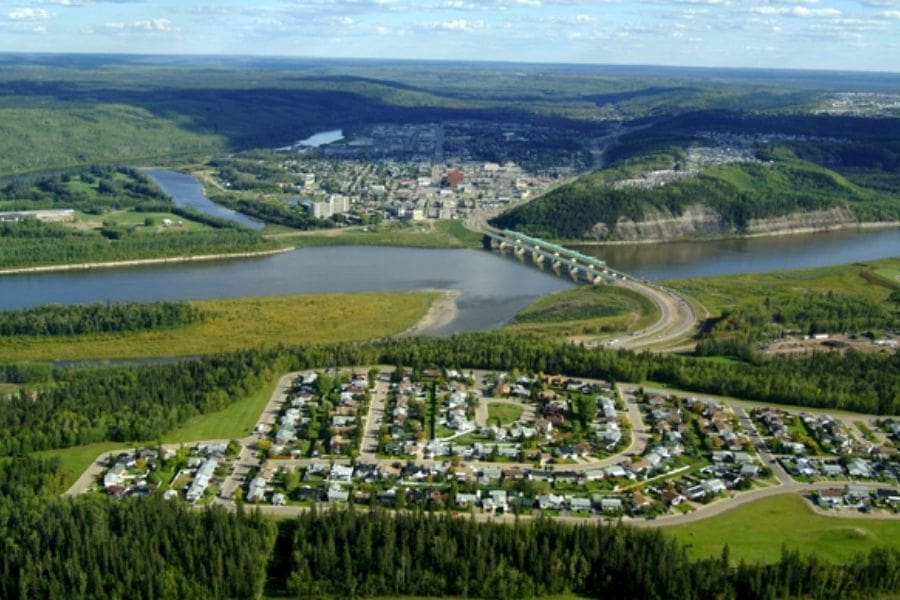
Fort McMurray is part of the Regional Municipality of Wood Buffalo in northern Alberta. It is 435 km northeast of Edmonton and about 60 km west of the Saskatchewan border. It is known across Canada as the centre of the Athabasca oil sands, home to major employers like Suncor, Syncrude, CNRL, Shell, and Imperial.
People who enjoy living here typically value:
High earning potential
Tight-knit communities
Opportunities for skilled trades, engineering, and technical roles
Outdoor recreation, especially northern lights viewing, hiking, and winter activities
A multicultural population, including large Filipino and Muslim communities.
Fort McMurray’s remote location increases transportation costs, making everything from groceries to utilities more expensive. However, it’s a great city for certain newcomers — especially workers in trades, engineering, construction, or equipment operation.
About Fort McMurray, Alberta
Fort McMurray is part of the Regional Municipality of Wood Buffalo (RMWB) in northern Alberta. It is the largest community in the region and a major hub for the oil and energy sector.
How Many People Live in Fort McMurray?
~68,000 (2021 Census, with seasonal fluctuations)
Average age: 33 years
More than 80 languages spoken, with large Filipino and Muslim communities.
Fort McMurray is a major hub for oil sands and energy sector jobs.
Job Market & Career Opportunities in Fort McMurray
Fort McMurray is one of Canada’s major centres for oil sands mining and energy production.
Renting your first home in Canada | Options & solutions for newcomers
Searching for your first home in Canada? Join this exclusive session for key insights on housing market conditions, affordable options, and renting without credit history. Tailored for newcomers settling in the next six months, register now for valuable tips and a free guide!
🏠 Use online tools like Rentals for Newcomers to find up-to-date listings and compare prices.
Buying a Home
Average listed home price (Nov 2025): ~CAD 410,000 (+10.4% Year-over-year).
Single-family homes and townhomes range from CAD 300,000–700,000.
Supply is limited, making mortgage pre-approval guidance from a real estate agent vital.
Compared to major cities like Toronto or Vancouver, homes may appear more affordable — but given a smaller supply and demand from workers, housing still represents a large investment.
Tips for Buying a Home
Connect with licensed real estate agents to help you understand how to find, finance, and close on a home.
Get pre-approved for a mortgage to strengthen your offer.
Some of the most newcomer-friendly neighbourhoods remain:
Timberlea: Family-friendly, with schools, green spaces, and newer homes.
Thickwood: More established, with services, shops and amenities.
Downtown / City Centre: Convenient for amenities.
Parsons Creek / Eagle Ridge: Modern development, townhouses.
Banking & Personal Finances in Fort McMurray, Alberta
Managing your personal finances is a vital part of living in Fort McMurray, Alberta, Canada. Most major banks offer newcomer programs that help you open an account before you arrive, get a credit card, and start building your credit history.
By visiting a local bank branch, you can also learn about financial products such as lines of credit, savings accounts, and mortgages—useful as you budget for life in Fort McMurray or long-term goals like buying a home.
Newcomer & Community Support Services
Fort McMurray has strong settlement supports for newcomers, including:
YMCA of Wood Buffalo – Immigrant Settlement Services
Employment help
Language support
Translation
Community orientation.
Keyano College & Wood Buffalo Regional Library
Language training
Academic upgrading
Newcomer programs.
Healthcare in Fort McMurray
Alberta Health Services (Northern Regions) provides hospital, clinic, and specialist care in Fort McMurray. As a newcomer, it’s important to apply for health coverage within three months of arrival. Learn step-by-step how to apply for your Alberta health card.
Facilities:
Northern Lights Regional Health Centre (hospital)
Several medical clinics
Specialist services (some require travel to Edmonton).
Healthcare Coverage
Healthcare coverage covers some, but not all, medical services. You may want to buy travel medical health insurance to protect yourself from costly healthcare bills while waiting for provincial coverage. Read more in our guide: Do You Need Travel Medical Health Insurance to Move to Canada?
Finding a Family Doctor
Some doctors in Fort McMurray are accepting new patients. Use the Alberta Find a Doctor website to find a family doctor, nurse practitioner, clinic, or health team.
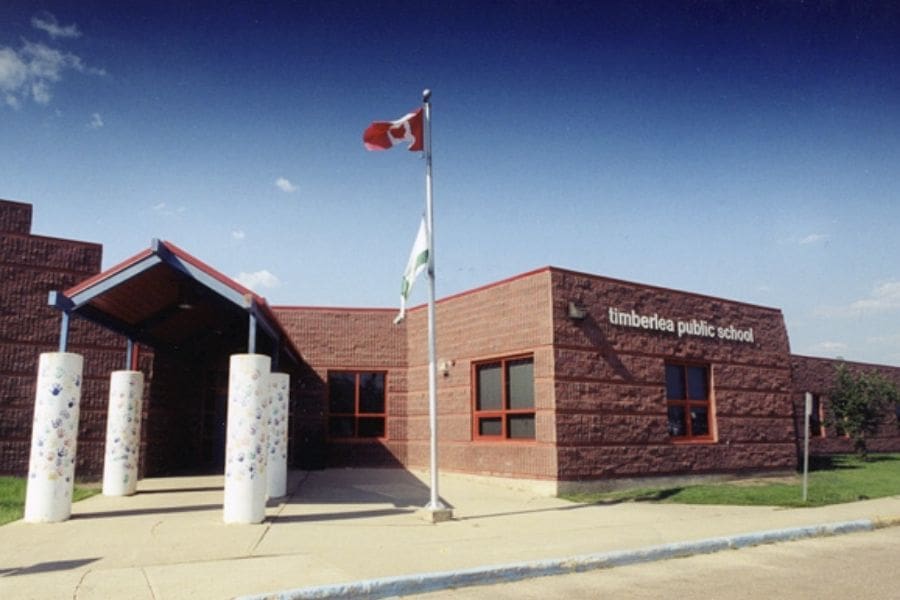
Timberlea Elementary Public School.
Education in Fort McMurray
Elementary & Secondary Schools
Fort McMurray offers public, Catholic, and French-language education. Options include:
Fort McMurray Public School Division (includes Islamic School + French Immersion)
Fort McMurray Catholic School District
Northland School Division (rural areas)
Greater North Central Francophone Education Region (French first language).
Before deciding whether Fort McMurray is the right place for you, here’s a quick look at the key advantages and challenges newcomers should keep in mind:
PROS
CONS
Strong job opportunities, especially in energy and trades
High rental prices compared to many smaller communities
Higher-than-average wages and strong earning potential
Limited housing inventory can make buying a home competitive
Young, diverse community with many newcomers
The cost of living rises quickly for larger families or multi-bedroom rentals
Chance to build savings quickly due to well-paid work
Winter conditions are long, cold, and can increase heating costs
Modern neighbourhoods with newer homes and amenities
Economy and housing demand can fluctuate with oil-sector activity
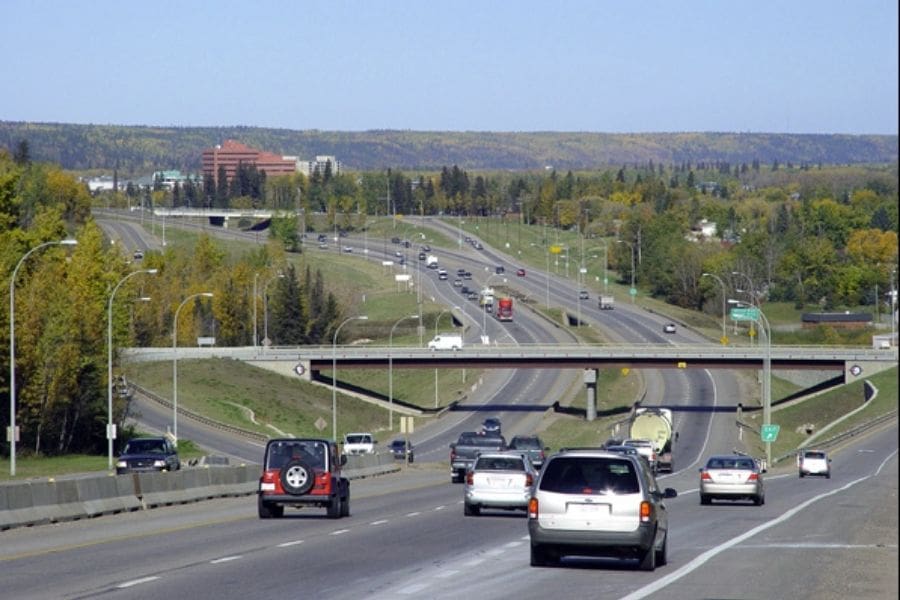
Vehicles travel along Highway 63, the main route connecting Edmonton to Fort McMurray, Alberta, serving commuters, oil sands workers, and residents.
Getting Around Fort McMurray, Alberta
Driving in Fort McMurray
Most residents rely on a car to get around Fort McMurray. The city is connected by several major highways:
Highway 63: The main route to Edmonton, approximately 435 km southwest. Due to heavy oil sands traffic, it handles some of the highest tonnage per kilometre in Canada, including the largest and heaviest loads carried by trucks.
Highway 881: Provides access from Lac La Biche and northern communities.
Highway 69: A short spur off Highway 63 connecting Fort McMurray to the airport and nearby residential areas.
A valid Alberta driver’s licence is required to drive in the region. Winter driving conditions can be challenging, so it’s vital to prepare your vehicle.
Public Transit
The Regional Municipality of Wood Buffalo operates a public transit system serving Fort McMurray. Services include:
Local bus routes run seven days a week
Specialized transportation for people with disabilities
School bus routes and weekday rush-hour services to industrial areas
Reduced weekend and holiday service.
What is Life Like in Fort McMurray?
Things to Do
Fort McMurray has a “work hard, play hard” culture. Popular activities include:
Viewing the Northern Lights
Borealis Park
MacDonald Island Park (the largest recreation complex in the region)
Heritage Village
Oil Sands Discovery Centre.
Restaurants & Nightlife
You’ll find:
Pubs and lounges
International restaurants
Cinema, casino, bowling, and family entertainment.
The nightlife is smaller than in big cities, but locals make the most of community events.
Nature & Outdoor Recreation
Vista Ridge All Seasons Park
Beacon Hill Lookout
Snowmobiling, hiking, trail walking
Wildlife viewing (bison, northern birds).
FAQs Newcomers Ask About Fort McMurray
Is it expensive to live in Fort McMurray?
Yes. Housing costs are high due to strong industry wages and limited supply.
Do I need a car to live here?
For most people, yes. Transit is available, but it does not cover all routes frequently.
Is Fort McMurray a good place for families?
Yes. Neighbourhoods like Timberlea and Thickwood are popular among families, with good schools and parks.
Is Fort McMurray culturally diverse?
Yes. More than 80 languages are spoken in the region.
What is the weather like in Fort McMurray?
Summers are brief but warm, lasting from May to September. Days are generally sunny and nice for outdoor activities like hiking, fishing, and exploring local parks.
Winter usually spans from November to March, with the coldest months being December through February. Snow and icy conditions are common, so dressing for winter and preparing for winter driving are essential.
Final Thoughts
Fort McMurray can be a rewarding place for newcomers who want strong job opportunities, higher wages, and a diverse, welcoming community. While housing costs can be high and winters are long, many people choose the region to build their careers and save, especially in fields such as energy, trades, and transportation. Fort McMurray may not offer big-city amenities, but it provides stability, good incomes, and a supportive environment for newcomers looking to establish themselves in Canada.
🏠 Ready to find your new home in Fort McMurray? Use Rentals for Newcomers to explore available rental options and secure the right place for you.
Vancouver is one of Canada’s most desirable, but expensive, cities to rent in. While rents are high, you can still find pockets of value, especially in East Vancouver (Hastings-Sunrise, Renfrew), Joyce–Collingwood,and Surrey. These areas offer lower rent, good transit, and diverse communities. For newcomers, finding the best areas to live in Vancouver, BC, Canada, means balancing affordability, transit, safety, and lifestyle.
Whether you’re a student, young professional, or family, understanding the best areas to live in Vancouver, BC, Canada will help you find the best place to rent for newcomers. Explore neighbourhoods, compare rental costs, and discover the perfect fit for your move.
Vancouver attracts newcomers with its multicultural communities, strong job opportunities, and a vibrant outdoor lifestyle with mountains, beaches, and parks nearby. To learn more about day-to-day life, job opportunities, housing options, and newcomer services, check out our full guide to Living in Vancouver, British Columbia.
Most Affordable Areas to Live in Vancouver (Quick List)
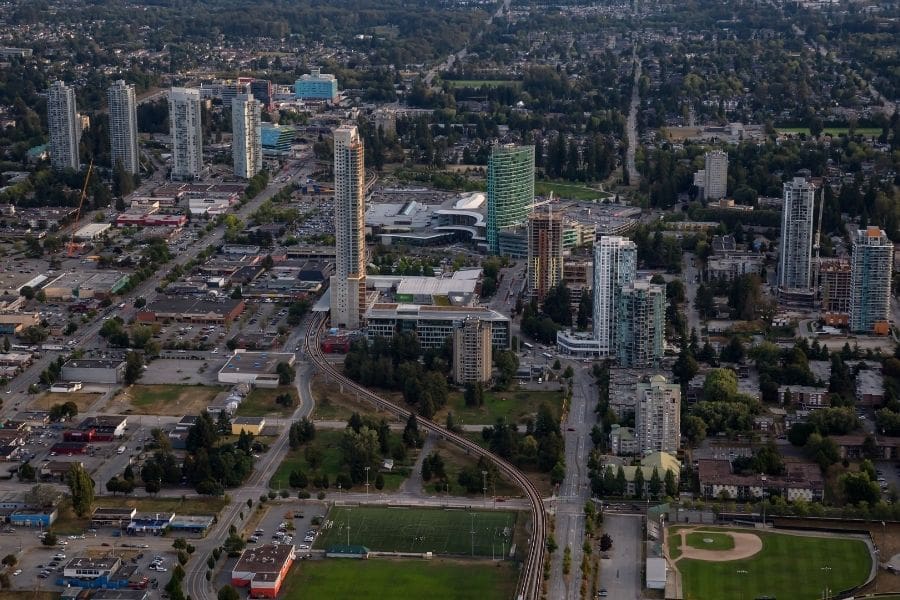
Surrey City Centre – Best area for an affordable alternative to living in the city of Vancouver with SkyTrain access.
Joyce-Collingwood – Affordable with SkyTrain access
East Vancouver (Hastings-Sunrise & Renfrew) – Best value near downtown.
Higher-priced but Popular Neighbourhoods
The West End – Walkable, central, and lively
Mount Pleasant – Creative and walkable
Kitsilano – Beachside lifestyle and trendy
North Vancouver (Lonsdale) – Family-friendly and scenic.
Vancouver Neighbourhood Rental Comparison (2025 Estimates)
To compare, the national average for a 1-bedroom apartment is around C$1,836 (Oct 2025). Newcomers can save hundreds of dollars each month by choosing more affordable areas such as Surrey or Joyce-Collingwood over central Vancouver.
NEIGHBOURHOOD
1-BEDROOM AVG. RENT
NOTES
Canadian National Average*
$1,836
Based on recent Canadian rental data
Surrey (Greater Vancouver Area)
$1,900 – $2,300
Most affordable option near Vancouver; fast SkyTrain access
Joyce-Collingwood
$2,200 – $2,500
Affordable SkyTrain-connected area
East Vancouver
$2,300 – $2,700
Mix of older rentals + newer developments; good value
The West End
$2,500 – $3,100
Dense rental stock; older buildings = more affordability
Kitsilano
$2,600 – $3,200
Highly desirable; close to beaches and shops
Mount Pleasant
$2,600 – $3,200
Trendy, central, popular with young professionals
North Vancouver
$2,600 – $3,200
Scenic, safe, highly walkable; SeaBus access to downtown
Solution: Newcomers can save more than $600/month by choosing to rent in Surrey rather than Vancouver while still staying close to the city core.
The Ultimate Rental Application Guide
Unlock the Secrets to Crafting a Winning Rental Application.
Are you a newcomer to Canada searching for your perfect rental home? Look no further! Our comprehensive guide will help you navigate the rental application process confidently and successfully!
Overview: This vibrant, multicultural neighbourhood is known for its affordability and easy access to downtown via the SkyTrain. It offers a mix of low-rise apartments and newer condos, local shops, grocery stores, and services.
Best for: Affordable rentals within Vancouver city limits; families, international students
Transit: Joyce-Collingwood Station (Expo Line); 15 minutes to downtown. See our complete Vancouver Public Transit guide for details on routes, fares, and tips for newcomers.
Vibe: Culturally diverse, family-friendly, walkable, with many newcomer-owned businesses and grocery stores
🏠 Why newcomers like it: Lowest rental prices in Vancouver without sacrificing transit convenience.
East Vancouver neighbourhoods offer some of the most affordable rental options in the city, with a strong community feel and convenient transit.
3. East Vancouver (Hastings-Sunrise & Renfrew)
Overview: East Vancouver offers a mix of older homes, apartments, and condos at more affordable rates than the West Side. Hastings-Sunrise is considered one of the best places to live in Vancouver, BC, for newcomers looking for affordability and transit links.
Best for: Newcomers seeking budget-friendly housing near downtown; families
🏠 Why newcomers like it: Good downtown access with affordable rents.
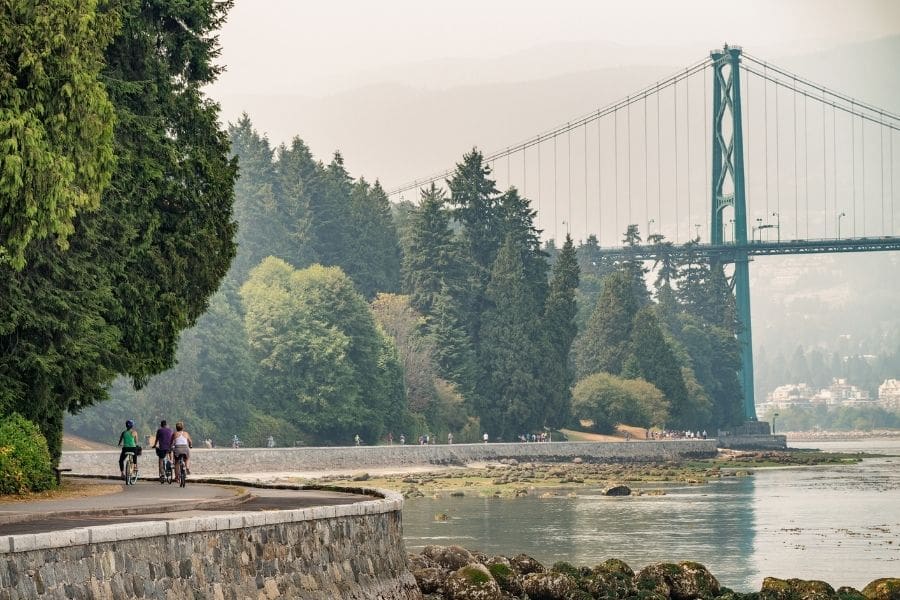
Cyclists enjoying the Stanley Park Seawall — one of the West End’s biggest attractions for newcomers who love walkable, active, and scenic neighbourhood living.
4. The West End
Overview: A dense, lively neighbourhood bordering downtown Vancouver and English Bay with older rental buildings.
Best for: Downtown workers, students, newcomers without a car
Transit: Walkable; frequent
Vibe: Lively, social, close to English Bay and Stanley Park
🏠 Why newcomers like it: Walkable access to work, shops, parks, and beaches.
A trendy café in Kitsilano Beach, perfect for newcomers enjoying the neighbourhood’s vibrant community, local eateries, and beachside lifestyle.
5. Kitsilano
Overview: Kitsilano, or “Kits,” is a scenic neighbourhood near Vancouver’s west side beaches and parks. It offers a mix of older rental apartments, condos, and townhomes, along with trendy shops and cafés.
Best for: Students, young professionals, and newcomers seeking an outdoor lifestyle
🏠 Why newcomers like it: Vibrant lifestyle with quick access to downtown and the Broadway tech district.
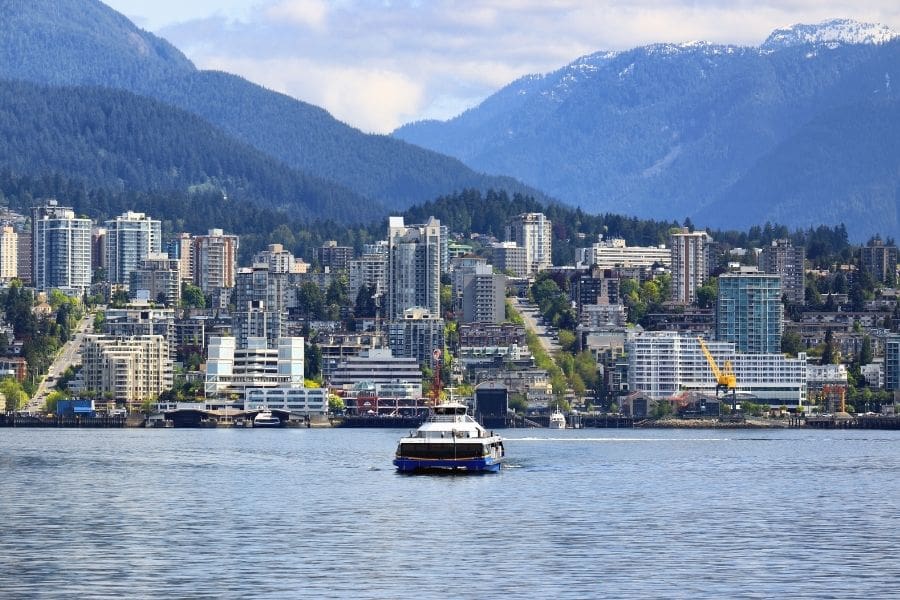
The BC Ferry Seabus crossing Vancouver Harbour from Lonsdale Quay in North Vancouver, connecting residents and newcomers to downtown Vancouver quickly and conveniently.
7. North Vancouver (Lonsdale)
Overview: A safe, family-friendly area with excellent schools and easy access to nature. The neighbourhood is quieter than downtown Vancouver but remains connected via the SeaBus.
Best for: Families, outdoor enthusiasts
Transit: Lonsdale Quay + SeaBus (12 minutes to downtown)
Vibe: Safe, community-oriented, close to mountains and trails
In 2023, over 5,000 rental scams were reported across Canada, many targeting international students and newcomers.
FAQs – Best Areas to Live in Vancouver for Newcomers
What is the best place to live in Vancouver, BC, for newcomers?
Many newcomers find East Vancouver, Joyce–Collingwood, and North Vancouver ideal places to rent when looking for the best place to live in Vancouver, BC, Canada, due to affordability, transit, and community amenities.
Which nearby cities are cheaper than Vancouver for renting?
Surrey, BC, is more affordable; other options include New Westminster.
How much can newcomers expect to pay for rent in Vancouver?
A 1-bedroom: $2,600 and $3,100; 2-bedroom: $3,600 and $4,500. East Vancouver and Joyce-Collingwood are on the lower end.
Do I need a car to live in Vancouver?
No. Many neighbourhoods, such as the West End and Mount Pleasant, are highly walkable and transit-connected.
Are there good options for families?
Yes. North Vancouver (Lonsdale) and Hastings-Sunrise are safe and family-friendly.
Newcomers can explore different types of housing when searching for a place to rent in Vancouver.
Final Thoughts: Still Thinking about the Best Areas to Live in Vancouver?
Finding the right place to rent is one of the most important steps for newcomers settling in Vancouver. While the city is known for high rental rates, there are affordable neighbourhoods like Joyce–Collingwood, Hastings-Sunrise, Surrey, and East Vancouver that provide excellent transit connections, safety, and access to services.
Planning your move to Canada? Living in Edmonton might be the perfect choice. From a strong economy and affordable housing to excellent schools and healthcare, Edmonton offers newcomers the resources to settle in smoothly. This guide will help you navigate life in the city and make informed decisions before you arrive.
About Edmonton, Alberta
Where Is Edmonton Located?
Edmonton is the capital city of Alberta, located in western Canada along the North Saskatchewan River. It’s about 300 km north of Calgary and is known for its wide-open skies, four distinct seasons, and friendly communities. For newcomers, living in Edmonton means easy access to nature, a growing job market, and a balanced cost of living.
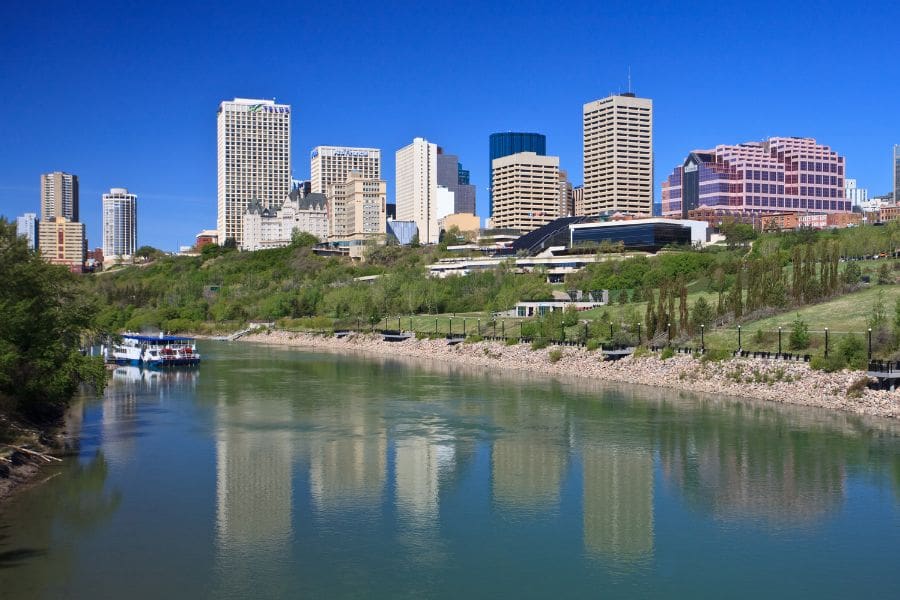
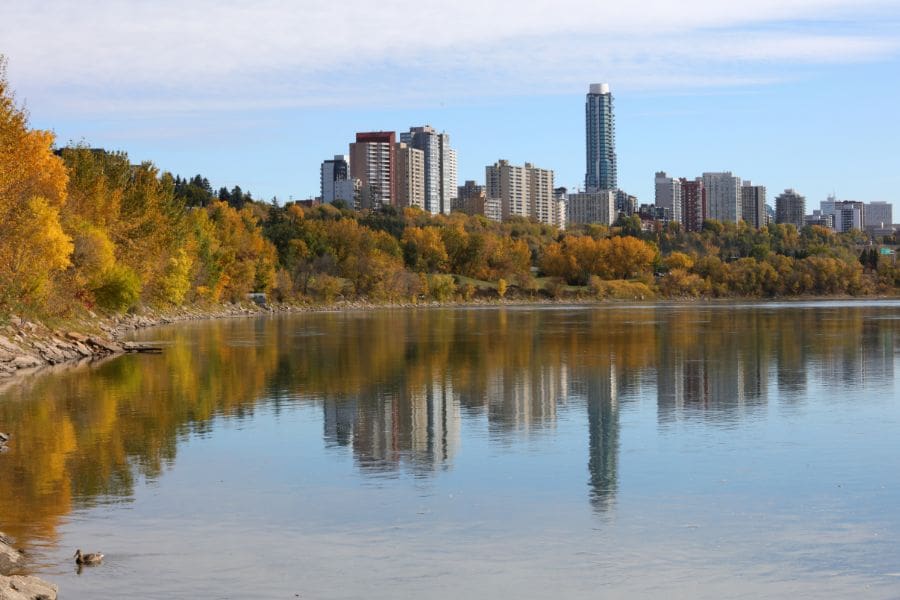
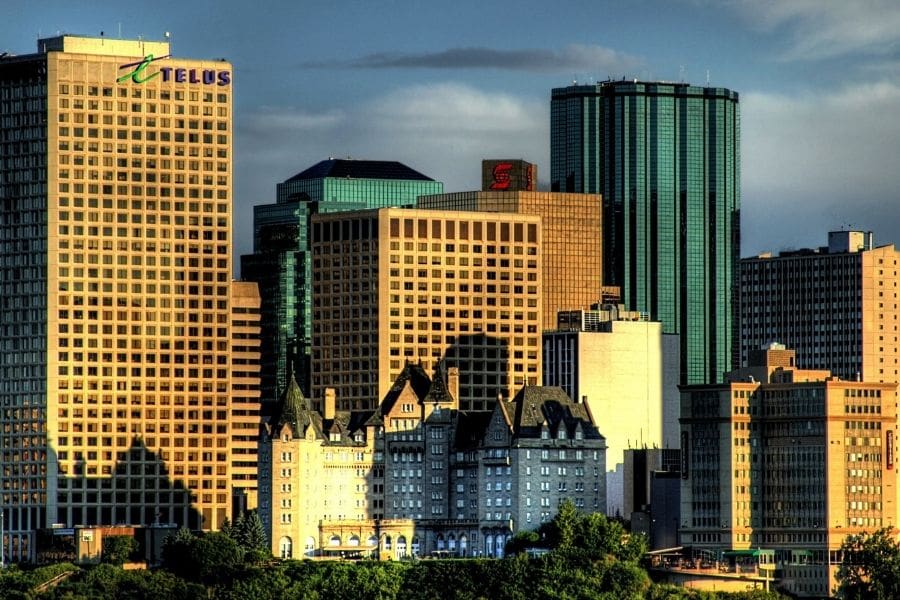
Edmonton’s River Valley skyline in the summer.
Key Facts
Population (2025): Approximately 1.5 million (metropolitan area)
Climate: Dry and sunny, with warm summers and cold, snowy winters
Major Industries: Energy, technology, construction, healthcare, and education
A Snapshot of Edmonton’s History and Culture
Edmonton began as a Hudson’s Bay Company trading post in the late 1700s and has grown into one of Canada’s most dynamic and diverse cities. It’s home to the University of Alberta, one of the country’s top research institutions, and the West Edmonton Mall, once the largest shopping mall in the world.
The city’s multicultural population continues to grow, with thousands of immigrants settling here each year. From vibrant cultural festivals to community programs that support newcomers, Edmonton offers a welcoming environment where people from around the world can thrive.
Why Newcomers Choose Edmonton
Many newcomers choose this city for its:
Affordable housing
Career opportunities
High quality of life.
Safe neighbourhoods, accessible services, and a strong support network make it easier to start a new life in Canada.
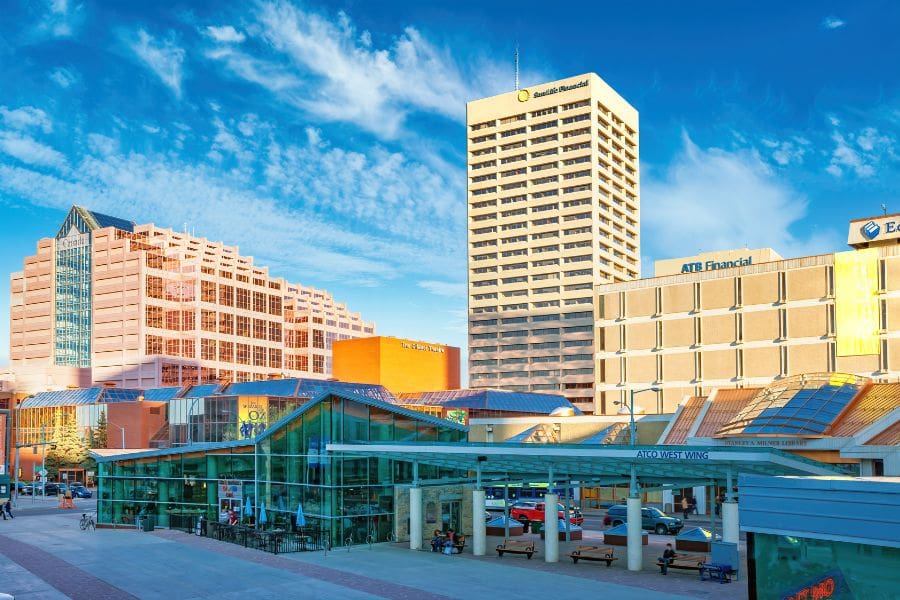
Churchill Square in downtown Edmonton with office towers in the background.
What Jobs are Available in Edmonton for Newcomers?
The Growing Job Market
Living in Edmonton means access to a thriving economy, powered by energy, construction, healthcare, and technology. With an average income around $72,000/year, Edmonton offers newcomers both opportunity and affordability.
Living in Edmonton offers newcomers one of Canada’s more affordable major city housing markets. The city provides a mix of rental apartments, condos, and single-family homes, suitable for singles, families, and students.
Rental and Homebuying Prices as of August 2025
AVERAGE RENT Source: rentals.ca
AVERAGE HOME PRICE Source: WOWA
1-bedroom: $1,391
2-bedroom: $1,759
Average home price: $461,281
Average townhouse price: $301,342
Average condo price: $218,063
Renting in Edmonton
Renting is often the first step for newcomers. You’ll discover a range of neighbourhoods and types of housing to suit different lifestyles and budgets.
Despite recent price increases, Edmonton remains more affordable than Calgary, Vancouver, or Toronto, making it an attractive option for newcomers planning long-term settlement.
Renting your first home in Canada | Options & solutions for newcomers
Searching for your first home in Canada? Join this exclusive session for key insights on housing market conditions, affordable options, and renting without credit history. Tailored for newcomers settling in the next six months, register now for valuable tips and a free guide!
Buying a home provides stability and positions newcomers to take advantage of Alberta’s low property taxes and long-term property value growth.
Neighbourhoods to Consider
When choosing the right neighbourhood, consider factors such as housing costs, access to public transit, and your lifestyle. Popular options for newcomers include:
South Edmonton: Family-friendly, great schools, parks.
West Edmonton: Close to shopping, LRT, and community amenities.
Downtown Edmonton: Ideal for young professionals seeking shorter commutes.
Organizations like the Welcome Centre for Immigrants and the Edmonton Immigrant Services Association offer support with settlement, employment, and language services.
Edmonton’s road system and major highways (Yellowhead, QE2) make driving and connecting to other regions easy. Gas prices are among the lowest in Canada, making commuting cost-effective.
Public Transit
The Edmonton Transit Service operates buses and Light Rail Transit lines connecting key areas like Downtown, the University of Alberta, and South Edmonton. Read more about how Edmonton Transit Moves You Affordably.
How Does Healthcare Work in Edmonton?
Medical Coverage
New residents can register for the Alberta Health Care Insurance Plan (AHCIP), which covers most medically necessary services. You can also buy additional private insurance for services like prescription drugs and dental care. Read more: Do You Need Travel Medical Health Insurance to Move to Canada?
Healthcare Facilities
Edmonton is home to several major hospitals, including the University of Alberta Hospital and the Royal Alexandra Hospital.
Where Can Newcomers Study in Edmonton?
Primary and Secondary Education
The city offers many educational options through public, private, and Catholic school boards. Programs include bilingual and French immersion tracks.
TheUniversity of Alberta is among the top 5 in Canada and top 100 globally for employability after graduation.
Post-Secondary Schools
Edmonton is home to the University of Alberta, Northern Alberta Institute of Technology (NAIT), and MacEwan University. These post-secondary schools offer a range of academic and vocational programs.
What’s the Weather Like in Edmonton Year-Round?
Winter Weather
Winters are cold, with average temperatures in January around -11.7°C. Snowfall occurs roughly 141 days per year, so winter tires and proper clothing are vital. Despite the cold, residents enjoy over 2,299 hours of sunshine annually, making the climate bright and manageable.
Summer Weather
Summers are warm, with average temperatures in July reaching 17.5°C. Thunderstorms and large hail are not uncommon during the warmer months.
Culture and Lifestyle: Living in Edmonton
Festivals and Events
Known as “Canada’s Festival City,” it hosts many cultural events year-round, including the Edmonton International Fringe Festival and the Edmonton Folk Music Festival.
Outdoor Activities
The city offers outdoor activities, from exploring the North Saskatchewan River Valley to visiting nearby national parks like Elk Island.
FAQs
Is Edmonton a good city for newcomers?
Yes. Over 25% of the population are immigrants, according to Statistics Canada (2024). The city is welcoming and supportive, with strong settlement services.
How much does it cost to live in Edmonton?
In 2025, rent averages $1,071 for a one-bedroom; the median home price is $435,000. Expect $2,000 – $2,500/month for living expenses.
Is Edmonton cheaper than Calgary?
Yes. Housing in Edmonton is typically more affordable, though daily expenses are similar.
Is Edmonton safe?
The city is generally safe, though crime levels vary by neighbourhood. You can learn about local safety programs and resources through community police initiatives.
Final Thoughts
Living in Edmonton offers newcomers a balance of affordability, opportunity, and community support. Stable employment, accessible services, and diverse neighbourhoods make it easier to build a new life in Canada.
Before you move, plan your finances, explore housing and employment options, and leverage newcomer support programs to start strong.
Some of the best neighbourhoods in Calgary for newcomers looking to rent include Beltline, Mission, Signal Hill, Hillhurst, West Springs, Bridgeland, Inglewood, Lake Bonavista, Brentwood, and Altadore. These areas offer a mix of affordability, access to transit, family-friendly amenities, and walkability, making them ideal for students and families settling in Calgary.
Thinking of moving to Calgary? Whether you’re arriving as a skilled worker, international student, or newcomer family, choosing the right Calgary neighbourhood is key to settling in successfully. This guide breaks down the best Calgary neighbourhoods for newcomers, including rental and family-friendly options, so you can find the right fit based on lifestyle, housing type, and affordability.
View of downtown Calgary from across the Bow River. This area connects easily to the vibrant Beltline neighbourhood.
Beltline: Downtown convenience with urban energy
The Beltline is one of Calgary’s most vibrant inner-city communities, offering everything from high-rise condos to boutique shops, trendy cafes, and a buzzing nightlife scene.
With proximity to the downtown core and major employment hubs, Beltline remains one of the best Calgary neighbourhoods for renting a modern condo or apartment downtown. It’s a favourite among professionals, students, and newcomers who want walkability and transit access. The lively area around 17th Avenue is known for its restaurants and nightlife.
Beltline Neighbourhood
Good for: Young professionals, students, newcomers wanting walkability
Access: Excellent (CTrain, bus routes, downtown proximity)
Vibe: Urban, energetic, high-density with nightlife and restaurants
Rental range: $1,800–$2,200/month (1-bed)
Elbow River Pathway on a bright winter day.
Mission: River views and character living
Mission is a charming inner-city neighbourhood with character homes, low-rise condos, and quick access to the Elbow River pathways. It’s ideal for those who value a walkable lifestyle close to downtown, while enjoying a quieter, more residential atmosphere. The community has a rich history, a strong sense of identity, and affordability that attracts first-time buyers and renters.
Renting your first home in Canada | Options & solutions for newcomers
Searching for your first home in Canada? Join this exclusive session for key insights on housing market conditions, affordable options, and renting without credit history. Tailored for newcomers settling in the next six months, register now for valuable tips and a free guide!
Signal Hill: Family-friendly suburb with mountain views
Located in Calgary’s southwest, Signal Hill is one of the best Calgary neighbourhoods for renting a family home, with easy access to schools, shopping, and the Light Rapid Transit (LRT). With easy access to the West LRT line and stunning mountain views to the west, it’s a top choice for families and professionals seeking a peaceful, family-oriented environment.
Signal Hill Neighbourhood
Good for: Families, homeowners, suburban newcomers
Access: Good (West LRT nearby, car-friendly)
Vibe: Quiet, suburban, family-oriented with shopping plazas
Rental range: $1,500–$1,750/month (1-bed); higher for detached homes
Hillhurst: Heritage homes in a walkable district
Nestled near Kensington and the Bow River, Hillhurst combines the charm of heritage homes with modern infill developments.
It’s an inner-city gem with high walkability, access to shops, restaurants, and downtown, as well as top schools. Young professionals and families alike enjoy the mix of convenience and character that defines this neighbourhood.
Vibe: Heritage charm meets modern living, community-focused
Rental range: $1,600–$1,800/month (1-bed)
West Springs: Upscale living with suburban comfort
West Springs offers a polished suburban lifestyle with modern homes, boutique shopping, and great schools. Though it’s farther from the downtown core, many residents enjoy the peaceful surroundings and amenities that make it feel like a small town within the city. It’s ideal for families or professionals who prefer quieter, more upscale environments.
West Springs Neighbourhood
Good for: Affluent families, commuters, lifestyle seekers
Rental range: $1,800–$2,000/month (1-bed); higher for family homes
Bridgeland: Trendy, green, and close to the core
Bridgeland is a revitalized inner-city neighbourhood just northeast of downtown. Known for its parks, walkable streets, and eclectic dining scene, it’s popular with professionals and newcomers who love a mix of nature and convenience. The neighbourhood offers some of the best views of Calgary’s skyline and easy access to the Bow River pathways
Bridgeland Neighbourhood
Good for: Urban professionals, nature lovers, foodies
Access: Good (CTrain station, river pathways)
Vibe: Trendy, walkable, scenic with skyline views
Rental range: $2,000–$2,300/month (1-bed)
Inglewood: Historic, creative, and community-focused
Inglewood is Calgary’s oldest neighbourhood, located just east of downtown. Its rich history blends with a modern, creative vibe, attracting artists, small business owners, and newcomers who love community spirit. You’ll find heritage homes, music venues, vintage stores, and riverside trails in a walkable and distinctive setting.
Inglewood Neighbourhood
Good for: Artists, creatives, history lovers
Access: Moderate (bus, bike paths, walkable to downtown)
Lake Bonavista, in southeast Calgary, was the first neighbourhood in Canada built with its own lake, created just for the community. Residents enjoy access to private beaches, parks, and a strong sense of community. This quiet, mature suburb is perfect for families seeking space, nature, and excellent schools, all while being close to major roadways.
Lake Bonavista Neighbourhood
Good for: Families, lake lifestyle seekers, long-term homeowners
Access: Moderate (car-friendly, near Deerfoot Trail)
Vibe: Quiet, mature, pride of ownership with exclusive lake access
Located near the University of Calgary, Brentwood is a well-connected, family-friendly area with plenty of green space and schools. With excellent access to the CTrain, it’s ideal for international students, faculty, and newcomers who want a peaceful lifestyle without sacrificing transit access. The housing mix includes detached homes and mid-rise apartments.
Brentwood Neighbourhood
Good for: Students, faculty, families with kids
Access: Excellent (CTrain, University of Calgary nearby)
The Altadore neighbourhood offers green spaces and proximity to the Glenmore Reservoir.
Altadore: Trendy living near the River and Marda Loop
Altadore is a trendy southwest neighbourhood near the vibrant Marda Loop shopping district. Known for its modern infill homes, green spaces, and proximity to the Elbow River and Glenmore Reservoir, it’s popular among young families and professionals who want a walkable, lifestyle-focused community with great outdoor access.
Altadore Neighbourhood
Good for: Professionals, infill homebuyers, active families
Access: Good (bus routes, near major roads)
Vibe: Trendy, modern, walkable with outdoor access (Marda Loop, river)
Rental range: $1,800–$2,000/month (1-bed)
Compare Neighbourhood Prices At a Glance
Rental Range (1-Bedroom): Key
$ = Budget-friendly (Under $1,400 for 1-bed
$$ = Moderate (Around $1,400 – $1,800)
$$$ = High (Over $1,800)
AREA
AVG. 1-BED RENT (June 2025)
Beltline
$1,950
Mission
$1,742
Signal Hill
$1,537
Hillhurst
$1,677
West Springs
$1,927
Bridgeland
$2,190
Inglewood
$1,665
Lake Bonavista
$2,026
Brentwood
$2,092
Altadore
$1,927
FAQs about Calgary Neighbourhoods
What are the safest neighbourhoods to rent in Calgary?
Altadore, Signal Hill, and Brentwood are safe, family-friendly communities with strong community associations and low crime rates. Always check the Calgary Police crime map for up-to-date safety information before choosing a place to live.
What is the average cost of renting in Calgary in 2025?
As of June 2025, average monthly rent prices in Calgary are approximately $1,650–$2,000 for a 1-bedroom and $2,000–$2,500 for a 2-bedroom.
Where should international students live in Calgary?
For students attending the University of Calgary, Brentwood, is ideal due to its proximity to campus and transit access.
Final Thoughts
If you’re moving to Calgary or simply searching for the best places to live in Calgary, this guide can help you decide where to live based on your lifestyle, budget, and priorities. From the vibrant energy of Beltline to the family-friendly calm of Signal Hill, these Calgary neighbourhoods offer something for everyone. Whether you’re a newcomer, international student, young professional, or growing family, discover the best neighbourhoods in Calgary for renting and settling in with confidence.
Whether you’re moving to Canada permanently or arriving as an international student, selecting the right neighbourhood will shape your experience. Edmonton offers diverse communities, affordable housing options, and welcoming vibes, vital for newcomers looking to settle in and thrive. From walkable inner-city areas to quiet family-oriented communities, this guide explores the best Edmonton neighbourhoods for newcomers, based on affordability, rent prices, transit access, safety, schools, and community life.
As of 2025, Edmonton is home to over 1.4 million people in the metro region, making it the 6th-largest metropolitan area in Canada. What makes it appealing for newcomers, though, is its affordability.
According to Rentals.ca and Urbanation, the average rent for a one-bedroom apartment in Edmonton in June 2025 was $1,367 compared to $2,479 in Toronto and $2,671 in Vancouver. For a two-bedroom unit, the Edmonton average was $1,690, which is still one of the lowest among Canada’s major cities.
Compared to other major cities like Toronto or Vancouver, Edmonton offers lower rent prices.
Cultural diversity
Over 25% of Edmonton’s population is made up of immigrants, making it one of Canada’s most multicultural cities.
Job opportunities
Edmonton is known for its oil and gas roots, but today the city is a hub for other dynamic sectors like tech, construction, skilled trades, and natural resources.
World-class education
The University of Alberta ranks among the Top 4 universities in Canada and the Top 100 globally, with over 46,000 students.
Natural beauty
The North Saskatchewan River Valley offers green space, trails, and family-friendly outdoor areas.
Renting your first home in Canada | Options & solutions for newcomers
Searching for your first home in Canada? Join this exclusive session for key insights on housing market conditions, affordable options, and renting without credit history. Tailored for newcomers settling in the next six months, register now for valuable tips and a free guide!
What are the Best Neighbourhoods in Edmonton for Newcomers?
Now that you know why Edmonton is a strong choice for newcomers, let’s explore neighbourhoods using stats about affordability, lifestyle, livability, and rental range.
Rental Range Key
Moderate: $1,300 – $1,700/month
High: $1,800+
Varies: Depends on building age and amenities
Ritchie: What’s it like living in Ritchie, Edmonton
Ritchie is a well-loved southeast neighbourhood that offers a blend of affordability, community spirit, and urban convenience. Nearly half the homes are single-family houses. The rest are apartments, duplexes, and townhouses, offering flexibility for renters.
It’s close to the scenic Mill Creek Ravine, local parks, schools, and Ritchie Market, a hub for local cafes and shops. Cyclists and families alike appreciate Ritchie’s walkability and outdoor access.
Good for: Young professionals, families, people who enjoy an active outdoor lifestyle
Access: Public transit and bike-friendly Vibe: Trendy, outdoorsy, close-knit
Rental range: Moderate.
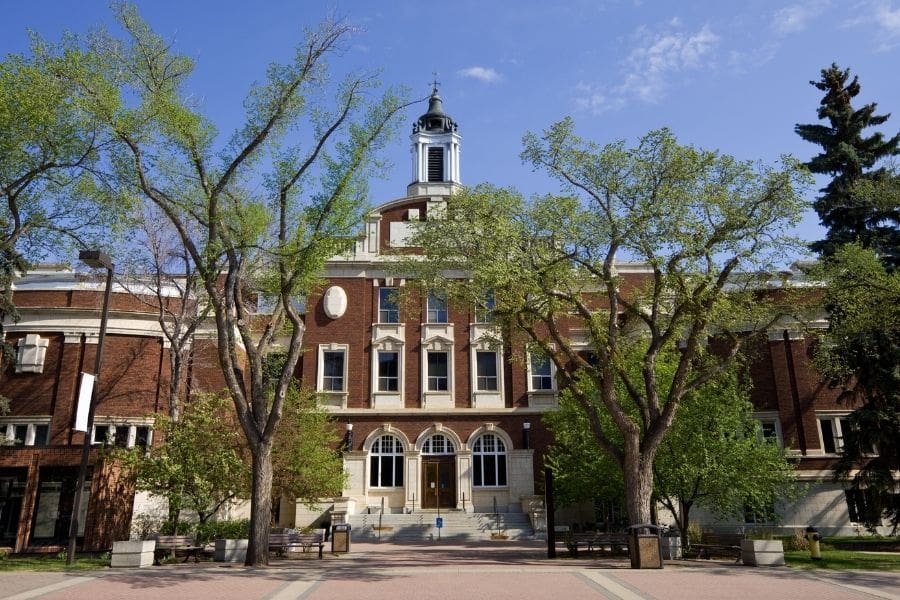
The University of Alberta, one of Canada’s top-ranked schools, located near Garneau.
Garneau: Is Garneau a good place for international students?
Garneau is one of the most historic and walkable Edmonton neighbourhoods near the University of Alberta, making it ideal for international students and university staff. It blends heritage homes with modern rentals, trendy cafes, and cultural spots like the Garneau Theatre.
Garneau offers a mix of rental housing options, including apartments, condos, and older character homes. The Edmonton neighbourhood is ideal for newcomers looking to rent in central Edmonton.
Good for: Students, academics, newcomers without a car Access: Excellent transit & bike lanes
Vibe: Academic, artsy, central Rental range: Moderate to high.
Old Strathcona historical district, now Edmonton’s premier arts and entertainment district.
Strathcona: What is Strathcona like in Edmonton?
Strathcona is the heartbeat of Edmonton’s arts and culture scene. Located just south of downtown, it’s famous for Whyte Avenue, boutique shops, live music venues, and events like the Fringe Festival.
Newcomers who love a vibrant, walkable lifestyle with access to nightlife, cafes, and creative energy will love this area.
Good for: Young adults, creatives, renters
Access: Transit-friendly and central
Vibe: Academic, artsy, central Rental range: Moderate
Aspen Gardens: Is this neighbourhood safe and family-friendly?
If you’re moving to Edmonton with children or seeking peace and privacy, Aspen Gardens is a quiet southwest neighbourhood with larger lots and mature trees. Known for its low crime rate, green spaces, and proximity to Whitemud Creek Ravine, this area offers a high quality of life.
Housing tends to be larger and more upscale, but some rentals do exist.
Good for: Families, nature lovers, long-term renters Access: Car-dependent, some transit
Vibe: Quiet, spacious, upscale
Rental range: Moderate to high
Greenfield: What makes Greenfield great for families?
Also in southwest Edmonton, Greenfield is a peaceful, residential neighbourhood ideal for newcomer families. It features top-rated schools, parks, and a local shopping hub. It’s also well-connected by the Edmonton transit systemand close to the Century Park LRT station.
The neighbourhood offers a mix of home styles, including apartments and duplexes.
Good for: Families, commuters, working professionals Access: Excellent via LRT
Vibe: Suburban, friendly, convenient
Rental Range: Moderate
Glenora: Is Glenora a good neighbourhood in Edmonton?
Glenora is a prestigious and scenic Edmonton neighbourhood located just west of downtown. With older character homes, access to the River Valley, and landmarks like the Royal Alberta Museum, it’s ideal for newcomers seeking an elegant, centrally located place to live.
Good for: Families, professionals, mature renters
Access: Good transit and walkability Vibe: Historic, green, elegant
Rental range: High
Queen Alexandra: Where do students and newcomers live near Whyte Ave?
Located near Whyte Avenue and the University of Alberta, Queen Alexandra offers a mix of old-style charm and newer condo developments. It’s a practical choice for students and newcomers who want urban access with quieter streets.
Good for: Students, young families, renters, urban dwellers
Access: Walkable and transit-connected Vibe: Balanced, walkable, up-and-coming
Rental range: Moderate.
Downtown: Is Downtown Edmonton a good place to live?
Downtown is the business and cultural core of Edmonton, ideal for newcomers who want to be close to work, school, or transit. You’ll find major institutions like MacEwan University, NorQuest College, and numerous cafes, museums, and shopping centres. If you love festivals, museums, and events, this is where it’s all happening.
Good for: Professionals, students, urban newcomers
Access: LRT and major bus routes Vibe: Energetic, central, convenient
Rental range: Varies by building.
Oliver: Is Oliver a walkable neigbourhood in Edmonton?
Oliver is one of Edmonton’s most walkable and diverse communities, close to the River Valley and west of downtown. It’s known for Jasper Avenue, the go-to spot for restaurants, shops, and nightlife. This neighbourhood is ideal for newcomers who want quick access to shopping, cafes, and parks, and don’t have a car.
Good for: Young professionals, couples, students, renters Access: Excellent walkability and transit
Vibe: Lively, urban, well-connected
Rental range: Moderate.
Westmount: What is Westmount known for in Edmonton?
Westmount is a historic and trendy neighbourhood northwest of downtown. It has a strong community spirit, great schools, and quick access to 124th Street, a hotspot for shopping and dining. The area is popular among professionals and families seeking a cozy, character-filled place to call home.
Good for: Professionals, families, community seekers, artists Access: Good transit and walkability
Vibe: Friendly, heritage-rich, stylish
Rental range:Moderate
Quick Stats Summary for Renters (2024 – 2025)
NEIGHBOURHOOD
AVG. 1-BED RENT
BEST FOR
Ritchie
$1,350 – $1,600
Families, professionals
Garneau
$1,400 – $1,800
Students, academics
Strathcona
$1,450 – $1,700
Young adults, creatives
Aspen Gardens
$1,600 – $2,200
Families, long-term renters
Greenfield
$1,400 – $1,700
Families, transit users
Glenora
$1,600 – $2,300
Professional, executives
Queen Alexandra
$1,450 – $1,750
Students, couples
Downtown
$1,300 – $1,800
Professionals, urban renters
Oliver
$1,400 – $1,750
Walkers, newcomers
Westmount
$1,400 – $1,800
Families, creatives
How Newcomers Can Avoid Rental Scams in Edmonton
Finding a rental in a new city is exciting, but it’s also when many newcomers are vulnerable to rental scams. Scammers often target immigrants who may not know the rental process in Canada.
Landlords in Alberta must provide a lease agreement that outlines the rights and responsibilities of both parties.
Red Flags to Watch For:
Too Good to Be True: If the rent is significantly below the market average for the area, be suspicious.
Pressure to Send Money Quickly: Never send money (especially via wire transfer or cryptocurrency) to someone you haven’t met or a place you haven’t seen.
No Lease or Written Agreement: Legitimate landlords in Alberta must provide a lease agreement that outlines your rights and responsibilities.
Smart Steps to Take
Use Verified Rental Platforms: Sites like Rentals for Newcomers, PadMapper, and Zumper screen for fake listings.
Google the Address + Photos: Scammers often steal photos from other listings. Reverse image search or look up the address to verify it’s a real property.
As of June 2025, the average rent was around $1,367 for a one-bedroom and $1,690 for a two-bedroom apartment.
Q2. What are the safest neighbourhoods in Edmonton for newcomers?
Neighbourhoods like Aspen Gardens, Greenfield, and Glenora are often ranked among the safest, with low crime and strong community involvement.
Q3. Which Edmonton neighbourhoods are best for international students?
Top picks include Garneau, Queen Alexandra, and Strathcona because they are close to the University of Alberta, public transit, and student-friendly rentals.
Q4. Where can I find affordable rentals in Edmonton?
Neighbourhoods like Ritchie, Greenfield, and parts of Oliver offer more affordable rental options compared to other major Canadian cities.
Final Thoughts: Choosing the Right Edmonton Neigbourhood
As a newcomer, it’s easy to feel overwhelmed by choices. But with Edmonton’s many neighbourhoods, you can find one that suits your budget, lifestyle, and needs. Use affordability, transit access, school zones, and community atmosphere as your guideposts. Edmonton has some of the lowest rental rates in Canada, making it a great place to get started.
Canada is one of the largest countries in the world. Many new immigrants come to the country because of the vast opportunities and variety of unique cities to choose from. Many newcomers choose to move to the province of Alberta because of the more affordable living expenses and economic opportunities. While Calgary and Edmonton are typically the main destinations, moving to Lethbridge is worth considering.
When assessing a city, it’s helpful to research the job market, housing options, and community culture. Each one of these will influence your lifestyle. If you are considering moving to Lethbridge, Prepare for Canada can guide you.
About Lethbridge, Alberta
Lethbridge is located in the south-central region of Alberta. It’s located close to the Canadian Rocky Mountains and is known for its warm summers and mild winters. It’s an ideal location for people who enjoy exploring the outdoors.
The city’s prime location makes it a major hub for transportation and business in Southern Alberta.
The city is about a two-hour drive south of Calgary, and it’s just over one hour north of the United States border into the state of Montana.
The Lethbridge area was originally inhabited by First Nations and was created to support drift mining. It was incorporated as a town in 1890 and later as a city in 1906.
How Many People Live in Lethbridge, Alberta?
According to the 2021 Census, there are 98,406 residents. This is an increase of 6.1% since 2016. The city has experienced significant population growth since 2000. The Census Metropolitan Area has a population of close to 125,000. It’s the fourth-largest city in Alberta.
How to Find a Job & Build a Career in Lethbridge
Lethbridge’s Local Economy
Lethbridge was originally established on drift mining for coal and later developed into a primarily agriculture-based economy. However, it has become more diversified over the past few decades. It has become the industrial, commercial, distribution, and financial centre for southern Alberta. About half of the workforce is in hospitality, health, education, or retail.
The top industries in Lethbridge are:
Health
Education
Wholesale and retail
Hospitality and food services
Construction
Manufacturing
Business and professional services.
Major Employers in Lethbridge
Lethbridge employs over 80,000 people, some of who commute from other close by towns. Most of the major employers in the city are government-based. Top employers in the area include:
Alberta Health Services
University of Lethbridge
Lethbridge School District
City of Lethbridge
Lethbridge College
Alberta Government
Covenant Health
Lethbridge Research Centre.
Alberta Health Services
Career Pathways in Lethbridge
Lethbridge is an ideal location if you want to work in health, education, or government services. You can search for a job online through the Alberta job centre website. You can also connect with local recruiting agencies such as Select People Solutions, Positive Lifestyles Recruitment (PLR), and Hire Standard Inc.
The Lethbridge Housing Market
Finding the right home to fit your lifestyle and financial situation is an important decision to make. Lethbridge has lots of options. The city has close to 40 neighbourhoods spanning three main regions – North Lethbridge, West Lethbridge, and South Lethbridge. The west is the newest area and is home to Lethbridge University. This has been the main growth area for the city.
Lethbridge is very affordable compared to other cities in Alberta and other provinces.
Is Housing Expensive in Lethbridge, Alberta?
Alberta is the main option for newcomers because of its more affordable real estate compared to other parts of Canada. Lethbridge is very affordable compared to other cities in the province and across the country. You can find the lowest prices in the Park Meadows neighbourhood.
Finding a Place to Rent in Lethbridge
Lethbridge rental rates are very affordable. About 30% of the population are renters. You can find a place to rent for as low as $750 per month. You can pay anywhere from $700 to $1,500 or more depending on the type of apartment you need. The average rent for an apartment in Lethbridge is $954 for a Bachelor, $1024 for a 1 Bedroom, $1163 for a 2 Bedroom, and $1323 for a 3 Bedroom.
Use Rentals for Newcomers to search for available rental units in Lethbridge. Here, you can also find current rental prices in Lethbridge. It’s a great resource to help you find a place to rent quickly. When looking for a place to live, consider buying . This will give you protection for your family and personal belongings.
Lethbridge real estate prices are significantly more affordable than in other areas of the country. About 70% of the population own a home. Even though costs have increased by over 10% in the past year, you can pay hundreds of thousands of dollars less. According to the real estate website Zolo, the median price for a home is $399,000. The median price for a townhouse is $270,000 and the median price for a condo is $155,000.
Driving & Public Transit in Lethbridge
Driving in Lethbridge, Alberta
Four provincial highways pass through the city, Highway 3, 4, 5, and 25. The city is located along the CANAMEX Corridor. This freeway system connects Canada to Mexico through the United States. Therefore, the city sees a lot of commercial truck traffic.
The majority of people drive in Lethbridge. According to Statistics Canada, 91% of residents drive. You can get a learner’s licence at the age of 14. But you must complete the graduated licencing program to become fully licenced in Alberta.
Get more information about driving in Canada:
Driving in Canada: 10 Essential Facts to Know
Driving Test in Canada: A Full Guide
Tips for Winter Driving to Ensure Your Safety
Lethbridge Public Transit
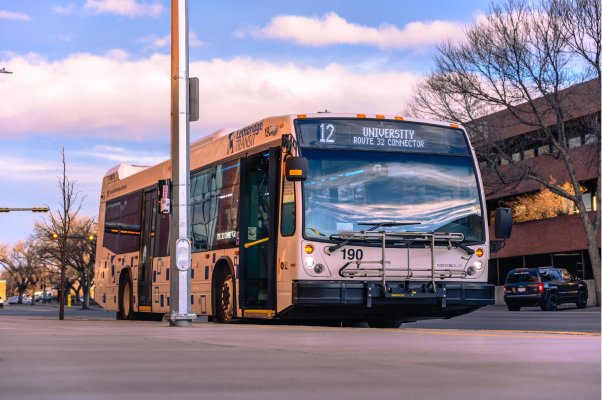
Lethbridge Transit operates a fleet of 40 buses for more than a dozen routes throughout the city. Lethbridge Airport is a commercial airport offering commercial flights to Calgary.
Community Support for Newcomers
Lethbridge is not known for being a diverse city. But it does have a strong support program for new immigrants moving to the city. Newcomers can get assistance with Resettlement, translation, and a variety of community support services through the Lethbridge Local Immigration Partnership (LIP) initiative. This is funded by Immigration, Refugee and Citizenship Canada (IRCC) and is in partnership with Lethbridge Family Services.
Language Support in Lethbridge
There are a variety of private and public resources newcomers can use to receive language support. Some include Lethbridge Family Services, Language Linx, and Southern Alberta Language Assessment Services. You can get Interpretation/translation services in over 20 different languages through the LIP program.
Personal Finance & Banking
Setting up a bank account and organizing your finances is important when you move to Canada. All local banks offer programs for new immigrants to open a bank account. There are also programs in place to help you get a line of credit, mortgage, and access to other financial products. Visit a bank close to your home or fill out an application online.
Lethbridge has a strong education system. Families can enroll their children in public, private, Catholic, or French language schools. You also have access to daycare and childcare programs for children who are not old enough to attend school.
Elementary and High School Education
Three school boards oversee the education system, the Lethbridge School Division, Holy Spirit Roman Catholic School Division, and the Palliser School Division, which oversees education in areas outside the city. In the public board, there are five high schools, four middle schools, and 14 elementary schools. In the Catholic board, there are 15 schools.
Post Secondary Institutions
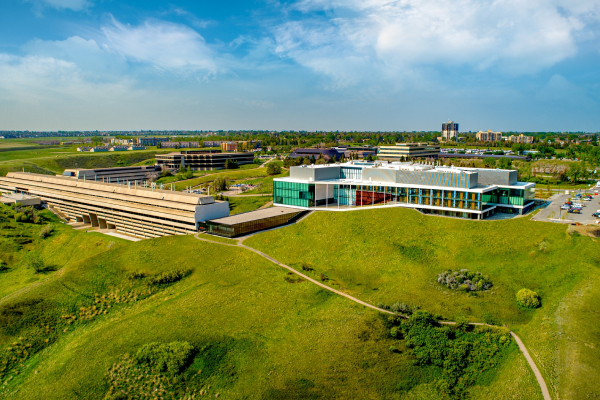
The University of Lethbridge is one of two post-secondary institutions in this city.
The city is home to two post-secondary institutions, University of Lethbridge and Lethbridge College. Red Crow Community College also has a campus in the city.
Read more about education in Canada:
Schooling in Canada | A Look at the Education System
Higher Education Offers Benefits to Newcomers
Where To Get Medical Care in Lethbridge, Alberta
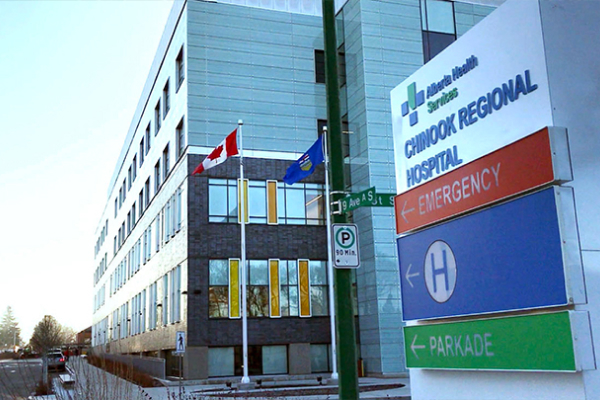
Lethbridge has one hospital, the Chinook Regional Hospital on the city’s south side and easily accessible from all parts of town. In case of an emergency call 9-1-1. This number is the same no matter where you live in Canada. The city also has many walk-in clinics you can visit for non-emergency care.
Many health services are free for people covered by the Alberta Health Care Insurance Plan (AHCIP). Newcomers can apply for the AHCIP three months before leaving their country of origin. If your employer doesn’t offer health benefits, you can purchase individual .
How to Find A Family Doctor In Lethbridge
Finding a family doctor is important to ensure your family has access to proper health care. However, you may need to be put on a waiting list until a doctor accepts new patients. You can use this College of Physicians and Surgeons of Alberta online search tool to find a doctor.
What is Day-to-Day Life Like in Lethbridge?
Things to Do in Lethbridge
There is no shortage of things to do in the city. There are many parks, golf courses, shopping, eateries, and vast outdoor sites to explore. Lethbridge is known for its parkland. 16% of the city is designated as parkland for residents to enjoy.
The Galt Museum is one of many art galleries in Lethbridge.
Public Spaces & Attractions
The south side of the city has the majority of attractions. Downtown is home to Park Place Mall and Galt Gardens. The city is home to art galleries, including the Southern Alberta Art Gallery (SAAG), Galt Museum, and CASA. You can also check out Fort Whoop-Up, Pure Casino, and the Helen Schuler Nature Centre.
Restaurants & Nightlife
There are many great restaurants, bars, and pubs in the city. If you are hungry check out Italian Table, Two Guys and A Pizza Place, Bootsma Bakery, and ITEA Express. If you are thirsty, check out The Penny Coffee House, Sonder Coffee Bar, Theoretically Brewing Company, and Spectrum Ale Works.
Nikka Yuko Japanese garden is a natural landscape attraction.
Nature & Natural Landscapes
There are a lot of natural landscapes to explore in the region. Some of the main attractions are Nikka Yuko Japanese Garden, Henderson Lake Park, Indian Battle Park, Park Lake Provincial Park, and Elizabeth Hall Wetlands.
Sporting Events & Concerts
The city is home to the Lethbridge Hurricanes of the Western Hockey League and other amateur sports teams. If you want to see live music or concerts, check out the local listings at The Geomatic Attic and Enmax Centre.
Culture & Diversity In Lethbridge
Diversity
Lethbridge has a large European community. 30% have English heritage, 23% are German, and 22% are Scottish.
Close to 13% of the population are immigrants and 2.3% are recent newcomers to Canada. So, the city is becoming more diverse as a higher number of immigrants move to the area. The most common minority language spoken in the city is Spanish.
The largest visible minority group is South Asian. They make up 2.3% of the population. Others include Black (2.1%), Filipino (1.9%), Latin American (1.7%), and Chinese (1.4%). 7.1% of the population are Aboriginal.
Worship
Two-thirds of residents identify as Christian. 32% of residents do not have a religious affiliation. The remaining residents are a combination of Buddhists, Sikhs, Muslims, Jews, and Hindus.
The Weather in Lethbridge
Lethbridge has a semi-arid climate. It is known for its warm summers and mild winter weather because of its southern location in the province. The city has one of the lowest amounts of precipitation in the country. It has an average high temperature of 26 degrees Celsius in July and August and an average low of -12 degrees in January.
Common Questions Immigrants Ask About Living in Lethbridge
Is Lethbridge a good place for new immigrants to Canada?
Even though it’s not as diverse as other Canadian cities, Lethbridge has much to offer newcomers. The city is actively seeking newcomers to fill many open job positions. So, you’ll be able to quickly find work. There are many affordable housing options, so you will have no trouble finding a place to live, making your transition easy.
What are the disadvantages of living in Lethbridge for new immigrants?
There are not a lot of significant disadvantages to moving to Lethbridge. It’s a smaller city and it is somewhat remote. So, if you want to live in a big city, this is not the place for you. The economy is not as diverse as in other regions, but there are still ample opportunities in a variety of fields.
What are the benefits of living in Lethbridge?
There are a lot of attractive features that make Lethbridge an ideal location to live. It has a low cost of living and much more affordable rental and real estate costs compared to other parts of the country. It also has a strong economy and education system.
The decision to move to Canada can be life-changing. But the country is a big place and there are a lot of potential cities you could choose to call home. The city you select will play a big part in your financial success and how your life will unfold in the future. Calgary, Alberta is one of the many major cities in Canada to consider.
Is Calgary the right city for you? Maybe or maybe not. Researching each potential landing spot for you is essential. You need to be aware of the local job market, and housing options, and decide if it makes sense for your family.
Prepare for Canada can guide you with helpful information about living in Calgary.
About Calgary, Alberta
Calgary is a diverse and prosperous city in the province of Alberta. It sits in the foothills of the Rocky Mountains, where the Bow and Elbow rivers meet. Calgary enjoys more days of sunshine than any other major Canadian city and is less than an hour’s drive from the majestic Rockies. It offers fresh air, open spaces, parks, pathways, and mountains and rivers.
The city’s roots date back to 1875. It officially became a town in 1884. Today it is the largest city in Alberta and the third-largest in Canada. Calgary is also the third-most ethnically diverse city in all of Canada. It has residents from over 200 ethnic backgrounds. It has one of the highest visible minority rates in Canada, behind only Toronto and Vancouver. Most Calgary residents are of European origin. Many immigrants are attracted to Calgary’s low tax rate, strong oil and gas industry, agriculture industry, and the lifestyle it offers.
How Many People Live in Calgary, Alberta?
Calgary is a large city. The Calgary Census Metropolitan Area (CMA) population is about 1,581,000 as of 2021. The CMA includes the City of Calgary and its suburban areas. There are over 400,000 immigrants who call the city home.
It has one of the fastest growth rates in Canada. The city experienced a population growth of 5.5% from 2016 to 2021 and it continues to rapidly grow.
How to Find a Job & Build a Career in Calgary
Calgary’s Local Economy
The city is recognized as the capital of the Canadian oil and gas industry. It is home to many of Canada’s oil and gas producers and is the decision-making hub and head office location of every energy company doing business in this country.
Calgary is becoming a global energy centre, with companies and organizations working in alternative energies, green power, and environmental technologies. Many financial businesses have grown up around these energy companies. Small business and self-employment levels also rank among the highest in Canada.
Career Pathways in Calgary
Calgary is focused on the digital transformation of its industries. Businesses across all industries are investing in this transformation.
The main sectors include:
Aerospace
Energy & Environment
Digital Media & Entertainment
High-tech manufacturing
Financial services
Life sciences
Technology
Transportation and logistics
Tourism.
Major Employers in Calgary
Calgary is known for its large oil and gas employers such as BP Canada and Imperial Oil.
The other top employers in the region include:
Westfair Foods Ltd.
Canadian Natural Resources Limited
Suncor Energy
Agrium
Flint Energy Services Ltd.
Canadian Pacific Railway
WestJet
Shell Canada
Husky Energy.
Search for jobs through local recruiters such as BOWEN Group, About Staffing, Randstad Canada, Manpower, and TAG Recruitment Group Inc.
The Calgary Housing Market
Securing a job and creating a career plan is vital for new immigrants. But, you also need to find somewhere to live in Calgary. There are plenty of housing options in Calgary. Renting a place is your first housing priority, especially if you are not yet ready to buy your first home in Canada.
Is Housing Expensive in Calgary, Alberta?
Home purchase costs are less than in cities like Vancouver or Toronto. But Calgary is still expensive. Rental prices are declining, but are higher than in smaller or mid-sized Canadian cities.
Where you choose to live within the city can have a large financial difference. Neighbourhoods such as Bayview, Parkdale, Roxboro, and Elbow Park are expensive. The more affordable areas include Deer Ridge, Renfrew, Evanston, Rocky Ridge, and Coach Hill.
Buying a home in Calgary remains more affordable than in Ontario or British Columbia, though it’s pricier than in many smaller Canadian cities. Condos can be a more affordable choice for first-time homebuyers.
Calgary is located along the Trans-Canada Highway and Highway 2. It is a hub that is part of the CANAMEX corridor. There is a lot of commercial traffic in the area. The city uses a numbered street system on a grid; streets run north-south, while avenues run east-west. The street numbers radiate outwards from the city centre.
Calgary Public Transit
Calgary Transit offers public transit services across the city with buses, shuttle buses, and light rail (C-Train). The light rail network is the backbone of the system. The convenient system can serve all of your transit needs, is cost-effective, and helps keep the city green. Read more about Calgary public transit tips for newcomers.
Calgary International Airport (YYC), in the city’s northeast, is a transportation hub for much of central and western Canada. The city’s presence on the Trans-Canada Highway and the Canadian Pacific Railway (CPR) mainlines also makes it an important hub for freight.
Community Support for Newcomers
Calgary is one of the most diverse cities in Canada. It welcomes newcomers from different countries around the world. Newcomers can access many services and programs to help adapt to the region. You can get support for moving, finding housing, job searching, language skills, and more.
Other top organizations to use include the Centre for Newcomers, the Calgary Catholic Immigration Society, the Calgary Immigrant Women’s Society, and The Immigrant Educational Society. Click here for a full list of support services.
Language Support in Calgary
Immigrant Services Calgary offers a variety of free language support services for immigrants. You can also get language support from other organizations. They include YWCA Calgary, CIWA, and Language Instruction for Newcomers to Canada (LINC) through The Immigration Education Society.
Personal Finance & Banking
All local banks, credit unions, and other financial institutions in Calgary have programs to help newcomers. You can open a bank account, get a credit card, or a line of credit, and apply for a mortgage. Visit a local bank branch to start the process.
Calgary’s Education System
Calgary offers a wealth of school options: public, Catholic, francophone, bilingual, language immersion, private, charter, religious, sports, arts, music, and science-focused.
The city also offers childcare and preschool options. To find Calgary daycares, pre-schools, family day homes, out-of-school care, or group family child care, the government has a great child care search tool.
Calgary offers many English as a second language (ESL) schools in the city. Most immigrant-serving centres and organizations also provide ESL classes, while there are programs for younger students within the public and Catholic school systems.
Elementary and High School Education
There are more than 100,000 children enrolled in 247 schools, including 27 senior high schools, run by the Calgary Board of Education.
Close to 59,000 students in 11 schools are enrolled through the Calgary Catholic School Board. This included 14 high schools and elementary and junior high schools.
Calgary has four major adult acute care hospitals and one major pediatric acute care site: Alberta Children’s Hospital, Foothills Medical Centre, Peter Lougheed Centre, Rockyview General Hospital, and South Health Campus. It is also home to the leading Tom Baker Cancer Centre.
In addition to these centres, you will find other care centres and hundreds of smaller medical and dental clinics in the city. Residents can buy private health insurance for prescription drugs and services not covered through Alberta Health Service.
In case of an emergency call 9-1-1. This emergency number is the same across Canada.
How to Find A Family Doctor In Calgary
One of the first steps take after arriving in Calgary is finding a family doctor. The College of Physicians and Surgeons of Alberta provides an online search tool to find a doctor in Calgary.
If you are unable to find a family doctor, you can go to one of many general non-emergency walk-in clinics in the city. Get more information about health care in Canada: Steps to Access Free Health Care in Canada
What is Day-to-Day Life Like in Calgary?
Things to Do in Calgary
Calgary is a unique city. It’s modern but still has roots in cowboy culture. The city is best known for the Calgary Stampede, an annual event occurring each July since 1912. It is one of Canada’s largest festivals, with over 1 million people visiting it each year.
Due to its proximity to the Rocky Mountains, the city has traditionally been a popular destination for winter sports. After hosting the 1988 Winter Olympics, Calgary is home to several major winter sporting facilities such as Canada Olympic Park and the Olympic Oval.
Public Spaces & Attractions
Calgary is the site of the Southern Alberta Jubilee Auditorium performing arts, culture, and community facility, which is the resident home of the Alberta Ballet Company, the Calgary Opera, and many other cultural ceremonies. The city is also home to several theatre companies.
Calgary hosts annual festivals and events, such as the Calgary International Film Festival, the Calgary Folk Music Festival, Wordfest: Banff Calgary International Writers Festival, Expo Latino, Calgary Pride, and other cultural and ethnic festivals.
Restaurants & Nightlife
The city has many multicultural areas where you can find ethnic restaurants and stores. Downtown Calgary is the prime destination for restaurants and nightlife.
Nature & Natural Landscapes
The city has many urban parks including Fish Creek Provincial Park; Bowness Park, Edworthy Park, the Inglewood Bird Sanctuary, Confederation Park, Prince’s Island Park, and Nose Hill Park, the largest municipal park in Canada.
Sporting Events & Concerts
Calgary is an Olympic city. It is home to the Calgary Flames hockey team and the Calgary Stampeders football team. The city regularly hosts international winter sporting events at its Olympic facilities. The city is also a regular stop for international musicians and events.
Culture & Diversity in Calgary
Diversity
Calgary is one of the most diverse cities in Canada. More than 400,000 immigrants live in the city (2016 Census) and this number continues to climb. More than 20,000 new immigrants move to this city each year.
Immigrants account for one-third of the workforce in the city. More than 40% of newcomers work in manufacturing. Immigrants account for 42% of all workers in tourism, accommodation, and food services.
60% of Calgary’s population has European heritage. Other well-represented minorities include South Asian (9.5%), Chinese (6.8%), Filipinos (5.5%), Caribbean (5.4%), and Middle Eastern (3.5%) About 4% of the population in the city have Aboriginal heritage.
Places of Worship
In keeping with the multicultural makeup of Calgary, the city is home to many faith communities. To find places of worship, click here.
The Weather in Calgary
Close to the Rocky Mountains, Calgary experiences a dry, humid continental climate, with long, cold, dry, but variable winters, and short, moderately warm summers.
The city is among the sunniest in Canada with an average of 332.9 days of sunshine. Even on cold, snowy days, you can feel the warmth of the sun. The average temperature ranges from a January daily average of −8.9 °C to a July daily average of 16.2 °C.
The chinook is a distinctive characteristic of the Calgary winters which can be uncomfortably cold sometimes. The Chinook is a warm, moist wind from the Pacific Ocean that may raise the temperature by as much as 15 degrees in a few hours.
Common Questions Immigrants Ask About Living in Calgary
Is Calgary A Good Place To Live?
Calgary is one of the top cities to live in Canada. It is consistently ranked as one of the most livable cities in the world. It has a diverse population and economy. Housing prices are considerably more affordable than in other major cities in Canada and around the world, and you have access to quality academic institutions. It is an Olympic city with close access to some of the most beautiful landscapes in the world.
Is Calgary Better Than Edmonton for Newcomers?
It depends on many unique factors. Calgary could be a better choice for you, or it may not. Your career aspirations, job opportunities, financial situation, and other things must be considered. Take time to compare what Edmonton has to offer before you make a final decision.
What are the Pros and Cons of Living in Calgary?
There are advantages to choosing to move to Calgary. The most notable are affordable housing, low sales tax, and job opportunities and it is an outdoor lover’s paradise. The most commonly cited drawback of moving to Calgary is the weather. It gets extremely cold during the winter and the region is known for extreme weather events such as forest fires and flooding.
For newcomers arriving in Edmonton getting to know the public transit system may seem overwhelming. But once you become familiar with the transit system, you’ll be able to get around the city quickly and cost-effectively. When arriving in any new city in Canada, it’s important to have a quick, reliable and cost-efficient way to get around. If you are moving to Edmonton, public transport is one of the best ways to get from one place to another. Edmonton has an extensive transport system that can quickly get you from one place to another within the city. And, it is much more affordable than owning and maintaining a new car.
Edmonton Transit Service (ETS) operates both buses and a Light Rail Transit (LRT) system. Edmonton’s LRT is not the most extensive, but it can cover long distances in a short period of time. Buses are more extensive but they aren’t as fast as LRT trains. The LRT train service combined with the bus system provides a quick and extensive system to meet all your transportation needs.
Public Transit versus Car Ownership
There are many benefits to using the ETS over owning a car. Not only is public transport cheaper than owning a car but it is also more environmentally friendly. Since a single public transport vehicle can carry more people than a car, using public transport will help you lower your carbon footprint. This means that you, as an individual, will be limiting the amount of harmful gases that are released into the environment.
As well, using public transport will also save you on car-related costs such as fuel and maintenance. For newcomers, this is helpful because managing your expenses is critical during your first few months in Canada while you search for a job.
Let’s take a look at both the bus system and the LRT system in Edmonton and how each mode of public transit will help you get around quickly and cost-effectively.
Edmonton Public Transit: Light Rail Transit System
Edmonton was the first Canadian city to build an LRT system with a population of less than 1 million. The LRT is also one of the fastest ways to get around Edmonton. With 18 stations spread out over two train lines, the LRT system provides the backbone for Edmonton’s transit system.
The first of the two LRT lines is the Capital Line. The Capital line connects northeast Edmonton to the south. It consists of 15 stations and 21 km of track, making it bigger than the other LRT line. The second LRT line is called the Metro Line, consisting of 14 stations. The Metro Line and the Capital line both share stations and tracks so the numbers don’t perfectly add up.
Expanding the LRT System in Edmonton
Edmonton has big plans for its LRT system. It plans to expand its LRT system to all sectors of the city by 2040. To achieve this goal, there are currently many projects in the planning and construction stage. To learn about the four major projects concerning Edmonton’s LRT, click here. Here is a brief explanation of each one below.
The first two projects Edmonton is working on both concern the new Valley Line. Once it is finished, the Valley line will connect Millwoods, in southeast Edmonton, to Lewis Farms, in west Edmonton. The Valley Line is divided into two sections, with downtown Edmonton being the divider. The Valley Line will add 27 km of track and 28 new stations to Edmonton’s public transport system once it is finished. The first section of the Valley Line, which connects Millwoods to downtown, is almost finished.
The second section, which will connect downtown to Lewis Farms, is expected to open by 2026 or 2027.
The other two projects are both expansions of the existing two lines. Edmonton is currently working on expanding both the Capital Line and the Metro Line to better serve the transportation needs of Edmontonians. The Capital Line will extend towards the south and the Metro Line will expand northwest.
Once these projects are complete, Edmonton is going to have a modern and extensive LRT system that connects all parts of the city. But even then, Edmonton’s buses will not lose popularity. Let’s take a look at Edmonton’s bus system and when you should use it over the LRT system.
Edmonton Transit System: Getting Around by Bus
Buses are the main mode of public transit in Edmonton. No matter where you live in Edmonton, there will be a bus stop nearby. Most likely, you will have multiple bus stops within a five-minute walk. If you are unsure, you can always open Google Maps and search, “bus stop”, for a map of all the bus stops near you.
Edmonton’s public transport has one of the best bus networks in Canada. With 191 routes and 7456 bus stops, you can get anywhere in Edmonton by using the bus. Keep in mind that you might have to transfer to another bus if your destination is on the other side of the city. However, there is no need to worry as you won’t have to pay extra for a transfer and buses run often.
The bus network, combined with the LRT system makes Edmonton’s public transport an ideal way to get around the city. Public transport is also a very cost-effective option. Let’s take a look at the ETS fare system.
Renting your first home in Canada | Options & solutions for newcomers
Searching for your first home in Canada? Join this exclusive session for key insights on housing market conditions, affordable options, and renting without credit history. Tailored for newcomers settling in the next six months, register now for valuable tips and a free guide!
The fare system for Edmonton’s public transport is simple and easy to understand. To access Edmonton’s full guide on its fare system click here. Below is an overview of fare pricing for public transit in Edmonton. Keep in mind that fare prices are the same for both buses and LRT.
SINGLE FARE
BOOK OF 10 TICKETS
MONTHLY PASS
Youth* (12 – 24)
$3.50
$19.75
$73.00
Adult (25 – 64)
$3.50
$27.75
$100.00
Senior (65+)
$3.50
$19.75
$35.00**
Edmonton Public Transit Fares
*Children under 12 ride free when they travel with a youth, adult or senior. If not, then children must also pay the regular fare of $3.50.
**Some seniors may also qualify for discounted or even free annual passes. To learn more about Senior ETS passes, click here.
As you can see, the regular fare for youth, adults and seniors is the same. However, if you buy a book of 10 tickets, you will get a discount for each ride. You may be wondering, where do I get a ticket book?
Where to Buy Ticket Books
Ticket books are available at many locations. You can buy them at:
Ticket Vending Machines are located at all LRT stations. ETS sales outlets are any retailers that sell ETS fare products. 7-Eleven and Safeway are examples of ETS sales outlets. The ETS online store is another great place to buy ETS fare products. ETS fare products not only include ticket books but also monthly passes for youth, seniors, and adults.
TIP: You can also get a monthly pass for Edmonton’s public transit system. A monthly pass is a great option to help you save money if you plan to use public transit regularly.
Using the Arc Card on Edmonton’s Public Transit System
ETS is currently working on a new way to pay for public transit fares. The Arc Card is an automated fare smart card that can be used to pay for your fare. As of August 2021, the Arc Card is in its first phase of rollout. Once the third phase is complete sometime in 2022, everyone will be able to use the Arc Card to pay their fare.
The Arc system is based completely online, meaning if you lose your registered Arc Card, you can transfer your account balance to a new card.- Once the Arc Card has been fully released in Edmonton, you will be able to get one at any Arc Card vending machine in the city. Arc Card vending machines will be available at every LRT station throughout the city. As the Arc Card is getting released, ETS will also start making Arc Cards available at other locations as well.
Financial Benefits of Using the Arc Card
Using an Arc Card will allow riders to contribute to a monthly or daily cap. The monthly cap for an adult rider using the Arc Card is $100. This means that once you have $100 worth of fares using the Arc Card, you can ride the ETS for free for the remainder of the month. It is sort of like a monthly pass, except you only pay when you ride. This system is designed to reward frequent ETS riders and encourage them to use the Arc Card. Click here for Edmonton Transit fares and passes.
Keep in mind that Arc is a new project and many things are subject to change. ETS has not released an Arc Card for seniors or youth yet so all the numbers have not been set. By the time Arc is released in 2022, all ETS riders will be able to get an Arc Card. As of now, it is clear that Edmonton is introducing this new electronic fare system to make fare payment easier and help frequent riders save money on transportation.
Using Edmonton’s public transit system is a great way to get around the city. From expanding LRT routes to introducing the Arc Card, Edmonton is currently working on many ways to improve its transit system. In the future, you can expect to see an even more modern and well-connected public transport system throughout the city. This can provide the convenience and cost savings that can help you when you arrive in Edmonton.
Calgary is an eco-friendly city and its public transport system is no exception. One of the greenest and most convenient ways of getting around the city is Calgary’s public transport system. For newcomers, it’s helpful to get familiar with the public transport system so you can use it to get around and reduce your expenses. This guide provides an overview of how public transport works in Calgary and how you can use it.
Public Transport in Calgary
Calgary has a simple, yet thorough public transport system that is owned and operated by the city of Calgary and managed by Calgary Transit. Its public transport is made up of mostly buses and a Light Rail Transit (LRT) system called the CTrain. Together, this simple and convenient transport system will serve all of your transportation needs in Calgary. Calgary’s public transport system is managed by
Public Transport in Calgary: CTrain
Calgary’s CTrain is one of the fastest ways to get around the city, reaching speeds of up to 80 km/h. The CTrain is an LRT, a modern type of rail transit that runs on electricity. There are two CTrain lines in Calgary, called the Red Line and the Blue Line. Because of its speed and reliability, the CTrain is usually the better option over buses.
The Red Line is the first and largest CTrain line in Calgary. It runs from the northwest quadrant of Calgary, through downtown and ends at the south side of Calgary. The Blue Line is the second of the two lines. It runs from the northeastern quadrant of the city, through downtown, and ends at the western side of Calgary.
Together, these two lines provide the backbone for Calgary’s public transport system. The CTrain is a fast and reliable way to get around the city, with trains running every 15-30 minutes. The CTrain operates from around 4:30 AM to 1:00 AM. Generally, trains run longer on the south side of Calgary, as the south side is usually busier. Click here to access the full map of CTrain routes and stations, as well as maps for every individual CTrain station.
Constructing a New Transit Line
There is currently a third CTrain line under construction, called the Green Line. Once it is finished, the Green Line will run from the north side of Calgary to the southeastern quadrant. The Green Line will have 29 stations that are spread out over 46 kilometres of track, making it the biggest of the three lines. The first stage of construction, which consists of only the first 15 stations is expected to be completed in 2027. To learn more about the Green Line LRT project, click here.
One of the downsides of the CTrain system in Calgary is that it is not very extensive. Even with the completion of the Green Line, the CTrain will still not serve all your transportation needs by itself. So to get to places where the CTrain doesn’t go, you will need to use the bus.
Public Transport in Calgary: Buses
Calgary’s bus system runs on a Bus Rapid Transit (BRT) system. Buses are a more extensive mode of public transport compared to the CTrain. And wherever the CTrain doesn’t go, buses will. With over 169 bus routes and 6000 bus stops, you can go almost anywhere in Calgary by using the bus. The bus schedule depends on the specific bus route. Generally, buses run every 20 minutes.
Buses are an ideal form of transportation if you need to travel to a place where the CTrain doesn’t go in Calgary. If you are travelling from one side of Calgary to another, a combination of both bus and CTrain routes is usually the fastest way to get to your destination.
Calgary Transit has a helpful tool that will tell you all the timings for each bus route. This tool will also give you directions on what bus to take if you put in your starting location and destination. If you are planning to use Calgary’s bus system in the future, make sure to check it out by clicking here.
Calgary has a simple and easy-to-understand fare system for its public transport. The fare prices make public transport a much cheaper alternative to owning a car. Let’s take a look at the fare system for Calgary’s public transport below:
Adult Fare (18+) – $3.50
Youth Fare (6-17) – $2.40
Children aged five or under can ride free on Calgary Transit.
These are the basic fare prices you must pay every time you ride on the CTrain and the bus. Once you have paid for your fare, your ticket will be valid for 90 minutes. This allows you to transfer buses and trains for free, as long as the transfer happens within 90 minutes of purchasing your ticket.
Make sure you have a full plan of what buses and trains you need to take to your destination. If you transfer from the CTrain to a bus or vice-versa, you will need to ask for a transfer from your bus driver or hold on to your CTrain ticket.
How To Pay Your Fare
The most common way to pay for your fare is by cash. Another convenient way to pay your fare is by using the My Fare app. My Fare is a mobile app that you can use to buy tickets for your upcoming ride. The process is fast and reliable and it saves you from carrying change to pay your fare. You can also buy monthly or day passes from the My Fare app. Here is a guide by Calgary Transit to help you get set up with the My Fare app.
You can also buy tickets and passes from Calgary Transit’s online store. The online store also sells ticket books. You can buy a book of 25 tickets or 10 tickets for both adults and youth. Click here to access Calgary Transit’s online store.
Calgary Transit also has day and monthly passes. A monthly pass is valid until the end of the calendar month and a day pass is valid until the end of service that day. Here are the prices for monthly and daily passes for Calgary’s public transport:
Adult (18+) Day Pass – $11
Youth (6-17) Day Pass – $8
Adult (18+) Monthly Pass – $109
Youth (6-17) Monthly Pass – $79
If you plan to use Calgary’s public transport daily, it’s a good idea to get a monthly pass. Paying for a ticket each time you ride can start to add up if you ride often and monthly passes are a good way to reduce costs. Daily passes are good for visitors or anyone who is planning on using Calgary’s public transport more than three times that day.
Getting Around Calgary by Bike
Calgary has some of the best urban parks and pathways in Canada. Along with good bike infrastructure, this makes Calgary a bike-friendly city. If you prefer to bike rather than use public transport, Calgary is a great place for cyclists.
Calgary has an amazing public transport system that thousands of Calgarians take advantage of each day. Not only is using Calgary’s public transport cost-effective, but it also helps the environment. The LRT combined with Calgary’s thorough bus system is a quick and reliable way to get around the city. Together, these two modes of transportation will help you find your way around Calgary while making Calgary a truly green city.
We use cookies to enhance your experience, analyze site traffic, and support marketing. Some are essential, while others are optional. By clicking "Allow All," you consent to all cookies. You can "Disable All" or adjust your choices in "Cookie Settings." Update preferences anytime in our Privacy Policy.
We and our partners use information collected through cookies and similar technologies to improve your experience on our site, analyse how you use it and for marketing purposes. Because we respect your right to privacy, you can choose not to allow some types of cookies. However, blocking some types of cookies may impact your experience of the site and the services we are able to offer. In some cases, data obtained from cookies is shared with third parties for analytics or marketing reasons. You can exercise your right to opt-out of that sharing at any time by disabling cookies.
These cookies and scripts are necessary for the website to function and cannot be switched off. They are usually only set in response to actions made by you which amount to a request for services, suchas setting your privacy preferences, logging in or filling in forms. You can set your browser to block oralert you about these cookies, but some parts of the site will not then work. These cookies do not store any personally identifiable information.
Analytics
These cookies and scripts allow us to count visits and traffic sources, so we can measure and improve the performance of our site. They help us know which pages are the most and least popular and see how visitors move around the site. All information these cookies collect is aggregated and therefore anonymous. If you do not allow these cookies and scripts, we will not know when you have visited our site.
Embedded Videos
These cookies and scripts may be set through our site by external video hosting services likeYouTube or Vimeo. They may be used to deliver video content on our website. It’s possible for the video provider to build a profile of your interests and show you relevant adverts on this or other websites. They do not store directly personal information, but are based on uniquely identifying your browser and internet device. If you do not allow these cookies or scripts it is possible that embedded video will not function as expected.
Google Fonts
Google Fonts is a font embedding service library. Google Fonts are stored on Google's CDN. The Google Fonts API is designed to limit the collection, storage, and use of end-user data to only what is needed to serve fonts efficiently. Use of Google Fonts API is unauthenticated. No cookies are sent by website visitors to the Google Fonts API. Requests to the Google Fonts API are made to resource-specific domains, such as fonts.googleapis.com or fonts.gstatic.com. This means your font requests are separate from and don't contain any credentials you send to google.com while using other Google services that are authenticated, such as Gmail.
Marketing
These cookies and scripts may be set through our site by our advertising partners. They may be used by those companies to build a profile of your interests and show you relevant adverts on other sites. They do not store directly personal information, but are based on uniquely identifying your browser and internet device. If you do not allow these cookies and scripts, you will experience less targeted advertising.
Facebook Advanced Matching
Facebook Advanced Matching can improve ads attribution and conversion tracking. It can help us reach better-targeted custom audiences through our ads. When possible, we will share with Facebook hashed information like your name, phone, email, or address.
Facebook CAPI
Facebook Conversion API Events (CAPI) help us better understand how you interact with our websites. They allow us to measure the impact of our ads on the website's conversions and they improve ads targeting through custom audiences. When possible, we might share with Facebook information like name, email, phone, address.