Join the ScotiabankStartRight® Program designed for Newcomers‡ and get up to $2,300* in value in the first year.
Living in Lethbridge, Alberta: Everything You Need to Know (2026 Guide)
Written By
Corinna Frattini
•
Sep 4, 2026
•
Alberta
Choosing a City
Lethbridge
Are you planning your move to Canada? This guide breaks down what you need to know about living in Lethbridge. We cover housing costs, local job opportunities, community resources, and daily life. Lethbridge is a prime destination for newcomers seeking a welcoming, affordable, and family-friendly city in Southern Alberta.
📌What You Need to Know
Affordable Living and Good Jobs: Housing costs here are much lower than in big Canadian cities, and there are steady jobs in healthcare, education, and government.
Finding Work and Housing: It is easy to find work in local services, and homes are cheaper to buy or rent compared to the national average.
Help for Newcomers: The city has strong community groups and dedicated programs to help new immigrants settle in smoothly.
Getting Around: You can easily travel using local buses, and major highways connect you directly to Calgary and the U.S. border.
Outdoor Lifestyle: Lethbridge gets lots of sunshine, mild winter weather breaks, and has plenty of parks and trails to explore.
City Comparison Reference
If you are deciding where to live in Alberta, this chart shows how Lethbridge compares to the province’s two biggest cities.
City
Average Rent (2-Bedroom, 2026)
Driving Time to Calgary
Top 3 Neighbourhoods for Newcomers
Lethbridge
$1,550 – $1,600/month
2 hours 15 minutes
West Lethbridge, South Lethbridge, Uplands
Calgary
$2,150 – $2,250/month
15–45 minutes
Beltline, Sunnyside, Signal Hill
Edmonton
$1,650 – $1,750/month
3 hours
Oliver, Strathcona, Windermere
💡 Newcomer Tip: Unsure which Alberta city fits your budget? Read our guides on Living in Calgary and Living in Edmonton to compare your choices.
Quick Facts About Living in Lethbridge: 2026
Topic
2026 Facts
Extra Notes
Population
~113,500
4th largest city in Alberta
*Average 2-Bedroom Rent
$1,550/month
Very affordable compared to major Canadian cities
Average Home Price
House: $485,000 Condo: $195,000
Great starter market for first-time buyers
Top Work Sectors
Healthcare, Education, Government, and Agriculture
Main shopping and service hub for Southern Alberta
*Keep in mind that prices change over time. You can see real-time rental listings in Lethbridge at Rentals for Newcomers ↗
About Lethbridge, Alberta
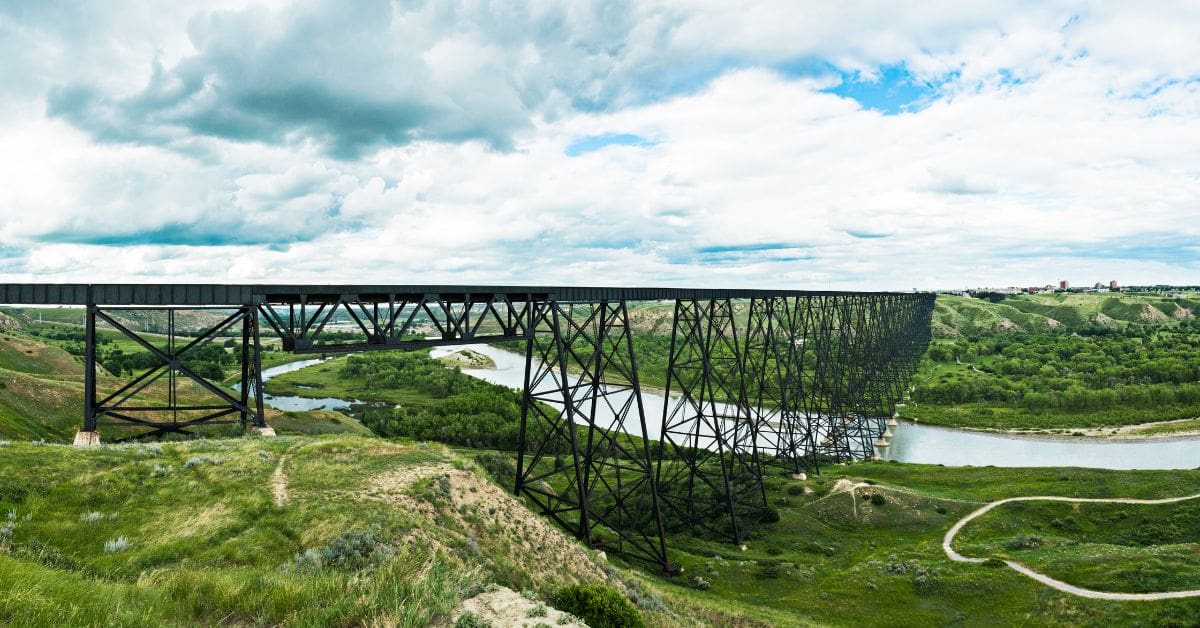
Lethbridge is located in Southern Alberta, about two hours south of Calgary and an hour north of the United States border. It started long ago as a coal mining town, but today it is a modern city with two post-secondary schools, clean parks, and a strong local economy. It is famous for its high railway bridge, bright sunny days, and friendly community.
What are the Top Industries for Jobs in Lethbridge for Newcomers?
Lethbridge is the main business, shopping, and health center for Southern Alberta. Its location near major highways makes it a key spot for shipping, farming, and food production.
Top Job Sectors
Healthcare and social assistance
Schools and post-secondary research
City and provincial government services
Farming, food processing, and agricultural tech
Factories, shipping, and supply stores
Shops, hotels, and restaurants
Major employers in the area include Alberta Health Services, the University of Lethbridge, Lethbridge College, the local school board, the City of Lethbridge, and the federal agricultural research center.
💡 Job Trends: In 2026, jobs in Lethbridge remain steady. Local health clinics, schools, construction trades, and food manufacturing plants frequently hire qualified newcomers.
Tips for Newcomers Seeking Jobs in Lethbridge
Connect with Local Settlement Agencies: Partner with community organizations like Lethbridge Family Services (LFS) to access free employment workshops, resume writing, and direct connections to local employers hiring newcomers.
Use Local Staffing Agencies: Reach out to local job agencies such as Select People Solutions, Positive Lifestyles Recruitment, or Hire Standard.
Check College and University Job Boards: The local college and university post open jobs and partner directly with local employers.
The 2026 Cost of Living in Lethbridge: Housing & Rent
Is Housing Expensive in Lethbridge?
No. Renting or buying a home in Lethbridge costs much less than the Canadian average. In fact, The Globe and Mail ranked Lethbridge 18th on its list of Canada’s 100 Best Cities for Renters, just ahead of Montreal, highlighting its combination of low average rent ($1,510/month) and strong local purchasing power.
Lethbridge Rent by Neighbourhood (Mid-2026)
Rent prices vary by area. Newer buildings on the West side cost more, while central areas offer great budget options.
Here are the average rent prices across different areas:
Neighbourhood
Average Rent (2-Bedroom)
Great For
Park Meadows
$1,350/mo
Budget-conscious renters and seniors
North Lethbridge
$1,420/mo
Industrial workers and affordable starter apartments
Downtown / Central
$1,500/mo
Living near shops, museums, and local culture
South Lethbridge
$1,560/mo
Established family neighborhoods near big shopping centers
West Lethbridge
$1,650/mo
College/university students, staff, and newer builds
When planning your monthly budget, look beyond basic rent figures and calculate what you can actually afford based on your real earnings after taxes.
💡 Why We Calculate Rent Based on Net (Take-Home) Income:
Traditional financial guides suggest spending no more than 30% of your “gross” income on rent. However, in Canada, provincial taxes, Canada Pension Plan (CPP), and Employment Insurance (EI) take 20-25% before your pay hits your bank account. You don’t pay rent with gross income; you pay with take-home pay.
Single Renter Example: Renting a typical 1-bedroom apartment at $1,300/month in Lethbridge requires a net take-home pay of $4,330/month to keep housing under 30% of your real income. Accounting for Alberta tax deductions, this translates to an individual gross annual salary of ~$63,000.
Family Example: Renting a 2-bedroom apartment at $1,550/month requires a net take-home pay of $5,165/month, equal to a combined household gross annual salary of ~$78,000.
If your starting household income falls below these levels, you may need to spend a higher percentage of your net income on rent.
🔢 Want to test if your landing income can cover Lethbridge rent? Before signing a lease or selecting a destination province, test your family’s budget using our free Rent Affordability Calculator. It factors in Alberta tax rates to give you a realistic target based on your household income.
3 Practical Tips for Renting in Lethbridge
Check What Utilities Are Included: Landlords in Alberta often charge heating and electricity separately from base rent. Ask what is included before signing a lease.
Pick the Right Side of the River: The Oldman River cuts through the city. Choosing a neighbourhood on the same side of the river as your work or school will shorten your daily drive.
🏠When applying for rentals, most landlords check credit scores. If you just arrived in Canada, you likely don’t have a local credit history yet. Don’t worry, most property managers accept alternative proof of funds while you are settling. To start building your credit history from day one, read How to Build Credit in Canada from Zero.
💡Ready to begin your housing search? Learn more about how to conduct your rental search as a newcomer.
Buying a Home in Lethbridge
The home-buying market in Lethbridge is stable and affordable, giving new buyers a chance to build equity without overspending.
Here is what local home prices look like by property type:
Property Type
Average Price (Mid-2026)
Price Trend
Condo Apartment
$195,000
Up 3.2%
Townhouse
$285,000
Up 4.5%
Half-Duplex / Semi-Detached
$335,000
Up 4.0%
Single-Family House
$485,000
Up 5.1%
(Source: Lethbridge & District Association of REALTORS®)
Tips for Newcomers Buying a Home in Lethbridge
Work with a Local Real Estate Agent: Use a local agent who knows the differences between North, South, and West Lethbridge.
Get Mortgage Pre-Approval: Speak to your bank first, so you know exactly how much you can spend.
Save for Closing Costs: You will also need to budget for legal fees, home inspections, and paperwork.
Setting up your bank account is one of the first steps to settling in Lethbridge. Major Canadian banks (such as BMO, CIBC, RBC, TD, and Scotiabank) and regional credit unions (such as ATB Financial) have branches across the city with special newcomer banking programs.
These programs let you open an account, get your first Canadian credit card without previous credit history, and start building your financial future. Meeting with a personal advisor early will help you set up a practical household budget.
💡 Planning your pre-landing finances? Explore our pre-arrival blueprint, Canadian Financial Tips Before You Move to Canada, to learn how to manage savings, arrange temporary stays, and organize your money before you land.
Community Support for Newcomers in Lethbridge, AB
According to Statistics Canada, more than 15% of people living in Lethbridge were born outside of Canada. The city is growing more diverse each year, with growing South Asian, Black, Filipino, Indigenous, and Latin American communities.
• Resettlement Help: Assistance for refugees and new immigrants. • Settlement Workers in School Support (SWIS): Workers who help newcomer children adjust to school. • Language Services: Translation and interpretation in over 20 languages.
• Community Inclusion: Programs that make workplaces and public spaces welcoming. • Resource Maps: Guides connecting newcomers to housing, jobs, and social services.
💡Tip: Joining settlement programs early helps you build social connections, learn about your neighbourhood, and access vital services. Read more in our guide: Essential Services to Help Newcomers Settle in Canada.
Driving and Transit in Lethbridge: Commuting While Living in Lethbridge
Public Transit
Lethbridge Transit operates local buses connecting all major neighbourhoods, shopping centers, downtown, Lethbridge College, and the University of Lethbridge.
Driving Tips
Simple Highway Connections: Highways 3, 4, 5, and 25 run straight through the area, making regional trips easy.
Short Driving Times: Driving from one side of the city to the other usually takes less than 20 minutes. There is very little gridlock.
Getting Your Driver’s Licence: Newcomers can visit an Alberta Registry Agent office to swap an existing licence or enter Alberta’s driver licensing program.
Winter Driving: Good winter tires are strongly recommended. While warm winter winds periodically melt the snow, roads can get icy between November and April. Read more in our guide, Winter Driving in Canada: 7 Essential Tips for Newcomers.
Air Travel
Lethbridge Airport (YQL): Located just south of the city limits, YQL offers daily feeder connections to Calgary International Airport (YYC) for national and international travel.
Healthcare & Medical Services
💡 Newcomer Tip: Apply for your provincial health card as soon as you move to Alberta. Read our complete guide on the Alberta Health Card | What it Covers and How to Apply to see the documents you require and application steps.
Provincial Health Insurance: Alberta Health Care Insurance Plan (AHCIP)
AHCIP pays for necessary doctor visits and hospital care. Permanent residents and eligible work permit holders can apply for coverage right away once they move to Alberta.
Standard provincial health insurance does not cover basic dental care, prescription medicines, eye care, or ambulance trips. Most people use private extended health insurance or workplace benefits to pay for these extras.
Resident Category
Waiting Period
Coverage Notes
Newcomers (PRs)
No Waiting Period
Eligible as soon as you establish your home in Alberta and apply.
Moving from Another Province
Up to 3 Months
Your old province covers you for the first 3 months until AHCIP starts.
Work Permit Holders
No Waiting Period
Eligible if your work permit is valid for at least 6 months.
International Students
0 to 12 Months
Eligible if your study permit is valid for 12 months or longer.
Returning Citizens/PRs
No Waiting Period
Immediate coverage when moving back to live in Alberta.
How to Find a Family Doctor in Lethbridge
CPSA Search Tool: Use the College of Physicians & Surgeons of Alberta online tool to search for local family doctors accepting new patients.
AHS Care Locator: Use the online Alberta Health Services locator tool to find open walk-in clinics near you.
Health Link (Dial 811): Call 811 anytime to speak with a registered nurse for free health advice.
Medical Emergency: For serious life-threatening emergencies, call 9-1-1.
Lethbridge has one major hospital, the Chinook Regional Hospital. It is located on the South side and operates a 24/7 emergency department, maternal care units, and specialized regional clinics.
Schools and Learning: A Guide for Families and Students
Elementary & High School
Lethbridge has three main school divisions:
Lethbridge School Division: Public, non-religious English schools (14 elementary, 4 middle, and 5 high schools).
Holy Spirit Catholic School Division: Publicly funded Catholic schools.
Palliser School Division: Public school board managing nearby rural schools and special programs.
💡 Newcomer Tip: Children attending Canadian schools for the first time complete a basic assessment to get English language support in class. Read more in our guide, Schooling in Canada | A Look at the Education System.
Colleges and Universities
University of Lethbridge: A respected research university known for science, business, and arts degrees, set on a beautiful campus by the river.
Lethbridge College: A public college offering hands-on career training in agriculture, skilled trades, nursing, and business.
Red Crow Community College: Offers Indigenous-focused higher education programs.
Pros and Cons of Living in Lethbridge
Here is a quick breakdown of the main advantages and challenges of living in Lethbridge.
Topic
Pros (The Benefits)
Cons (The Challenges)
Money & Jobs
High Affordability: Rent and daily expenses are much lower than in big cities.
Smaller Job Market: Fewer corporate head offices; most jobs are in health, education, and farming.
Housing
Easy Ownership: Lower prices make buying a home realistic for single-income families.
Slower Price Growth: Home values grow steadily rather than jumping up quickly.
Lifestyle
Great Parks: 16% parkland, river trails, and quick drives to Waterton Lakes National Park.
Windy Weather: The city gets frequent strong winds, especially during winter temperature shifts.
Transit
No Heavy Traffic: Drive times across town are usually under 20 minutes.
Car Friendly: Buses cover main routes, but having a car is more convenient for daily life.
Culture and Day-to-Day Life in Lethbridge, AB
Nikka Yuko Japanese Garden is one of the city’s most cherished cultural attractions.
The Heart of the City
Lethbridge combines small-town friendliness with city conveniences. The community has a lively local art scene with spots like the Southern Alberta Art Gallery, the Galt Museum, and the CASA Arts Centre.
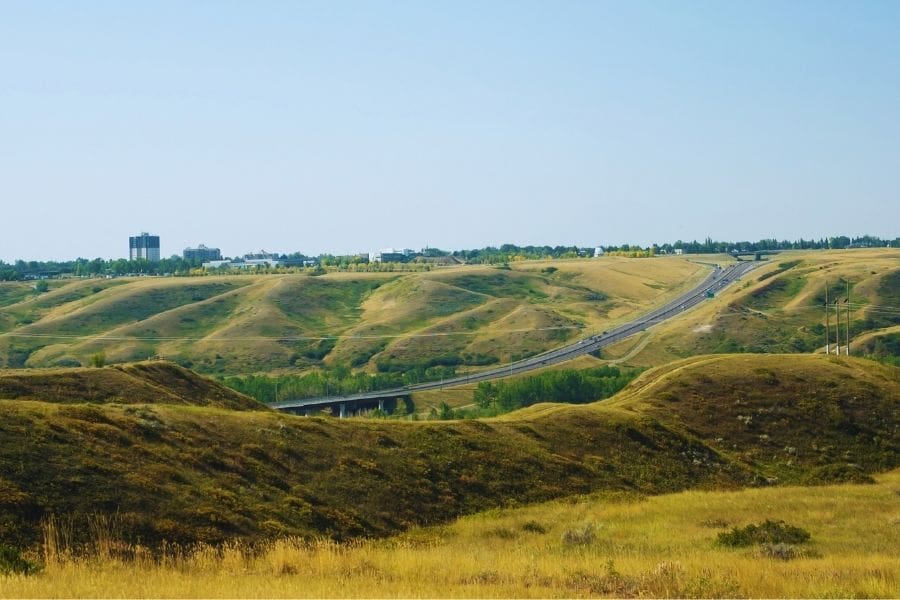
Parks and Nature: Over 16% of the city is open parkland. Favourite spots include Henderson Lake Park, Elizabeth Hall Wetlands, and Indian Battle Park.
Nikka Yuko Japanese Garden: A beautiful, peaceful garden next to Henderson Lake that hosts cultural events and winter light shows.
Sports and Entertainment: Catch live hockey games with the Lethbridge Hurricanes or see concerts at the VisitLethbridge.com Arena.
Places of Worship: Lethbridge features diverse places of worship, including historic churches, the Lethbridge Islamic Centre, a Hindu temple, and Buddhist centers.
Newcomer Community & Cultural Events
Cultural Festivals: The city holds annual multicultural events, including Heritage Day celebrations and international food events.
Indigenous Heritage: Lethbridge sits on Blackfoot Confederacy territory. Newcomers can learn about local Indigenous culture at the Galt Museum and at public community events.
Final Thoughts: Is Living in Lethbridge Right for You?
If you want an affordable, friendly city with great schools, sunny weather, and easy access to nature, Lethbridge is a fantastic choice. While the job market is smaller than Calgary’s, the low living costs and supportive community make it a great place to build your new life in Canada.
Common Questions About Living in Lethbridge
What is the population of Lethbridge in 2026?
As of 2026, Lethbridge has an estimated population of approximately 113,500 residents within the city proper, making it the 4th largest city in Alberta.
How far is Lethbridge from Calgary?
Lethbridge is located approximately 210 kilometers south of Calgary, which is about a 2-hour and 15-minute drive via Highway 2 and Highway 3.
Is it easy to live in Lethbridge without a car?
City buses connect major schools and shopping centers. However, because the city is spread across three areas divided by the river valley, most residents find owning a car more convenient.
What are Chinook winds?
Chinooks are warm, dry winds that blow down from the Rocky Mountains in winter. They can raise outdoor temperatures by 10°C to 20°C in just a few hours, melting snow quickly and bringing pleasant breaks from cold weather.
Is Lethbridge safe for young families?
Yes. Lethbridge has quiet residential neighbourhoods, very little traffic, clean public parks, and good schools, making it a safe place to raise a family.
WRITTEN BY
Corinna Frattini
Senior Editor and Content Writer, Prepare for Canada
Corinna researches and writes content to help newcomers make informed decisions about housing, employment, banking, and aspects of settling in Canada. With a background in human resources and leadership development, her articles focus on how newcomers can continue their careers in Canada. Her writing combines research, practical guidance, and clear language to support newcomers on their journey.