
Winter driving in Canada can be challenging, especially if you’ve never driven in snow or icy conditions before. Temperatures can drop below freezing, visibility can disappear in seconds, and storms can make roads slippery and unpredictable.
This guide explains how to stay safe on Canadian winter roads, offers actionable tips, newcomer-friendly advice, and safety information.
If you’re new to driving in Canada, our Driving Test Guide explains the process for newcomers, incluing tests, documents, and provincial requirements.
How to Prepare Your Car for Winter in Canada
Winter conditions are much harsher than many newcomers expect. Preparing your vehicle is the first, and most important, step to staying safe.
Winter driving checklist for newcomers
- Install four winter tires – improves grip and traction on snow and ice.
- Test your car battery – batteries lose up to 50% of their power in sub-zero temperatures.
- Check headlights, brake lights, and turn signals – visibility is key in snowstorms.
- Keep your gas tank at least half full – prevents fuel line freezing.
- Carry extra windshield wipers and fluids.
- Clean and check defrosters and heating system.
Pro tip: The Canadian Automobile Association, recommends switching to winter tires as soon as the temperature is consistently below 7°C. Most Canadian auto shops can install winter tires or offer tire changing services.
Why car maintenance matters in cold weather
Cold temperatures thicken fluids, drain batteries, lower tire pressure, and reduce visibility. Doing a winter safety check ensures your car performs reliably in freezing weather.
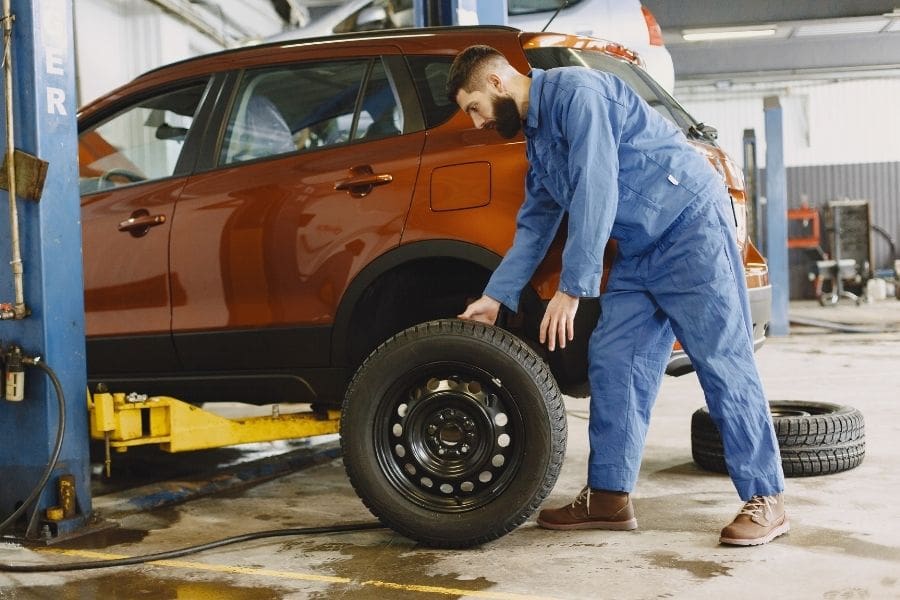
1. Install Winter Tires for Better Control
Winter tires are one of the most effective ways to reduce accidents in snow and icy conditions.
When to switch to winter tires in Canada
The Canadian Automobile Association (CAA) recommends installing winter tires once temperatures consistently drop below 7°C.
Most provinces do not legally require winter tires, but they are strongly recommended everywhere and mandatory in Quebec from December 1 to March 15.
How winter tires improve traction and braking
Winter tires use a softer rubber compound that stays flexible in cold temperatures, helping them:
- Grip snowy or icy roads
- Shorten braking distance
- Improve lane stability.
You’ll feel the biggest improvement when braking, accelerating, turning, or driving through slush.
2. Build a Winter Emergency Car Kit
Even a short drive can become dangerous if you get stuck, lose visibility, or slide off the road. Every newcomer should keep a winter safety kit inside their vehicle.
Essential safety items
First aid kit
Blanket
Water and non-perishable food such as granola bars, dried foods, and juice
Flashlight
Cell phone and charger
Ice scraper and snow brush.
Extra supplies for long drives or rural areas
- Portable battery booster
- Shovel
- Sand or traction mats
- Emergency candles
- High-visibility vest.
3. Check Road & Weather Conditions Before You Drive
Canadian weather changes quickly. A clear sky can turn into a whiteout within an hour.
Best apps and websites for winter road conditions
Check road conditions before leaving using:
- The Weather Network provides weather outlooks, warnings, and alerts for snowfall and freezing rain risks.
- Environment Canada alerts
- Mobile apps: Many provinces have a mobile app, like Ontario 511, which provides similar information to the website and includes features like live camera feeds and audio alerts.
Why you should avoid driving during storm alerts
If there is heavy snowfall, blowing snow, or freezing rain, consider delaying your trip. Reduced visibility and icy roads make it harder for vehicles to brake or stay in their lanes.
Understanding Canadian road signs, speed limits, and local driving etiquette can make winter driving safer. Review our 10 Essential Driving Facts for Canada
4. Clear Snow & Ice Before You Start Driving
Driving with snow on your car is dangerous—and in some provinces, illegal.
Why snow removal improves visibility & safety
Snow left on your roof can slide onto your windshield or blow onto other vehicles. Ice on your windows reduces visibility and reaction time.
How much snow to remove (legally & practically)
Clear:
- Roof
- Hood
- Headlights and taillights
- All windows and mirrors.
Plan an extra 5–10 minutes to remove snow before you leave.
5. Reduce Your Speed in Winter Conditions
Slowing down is the most important winter driving habit.
Why driving slowly prevents collisions
On snowy or icy roads, your stopping distance can double or even triple. Reducing your speed gives you more time to react.
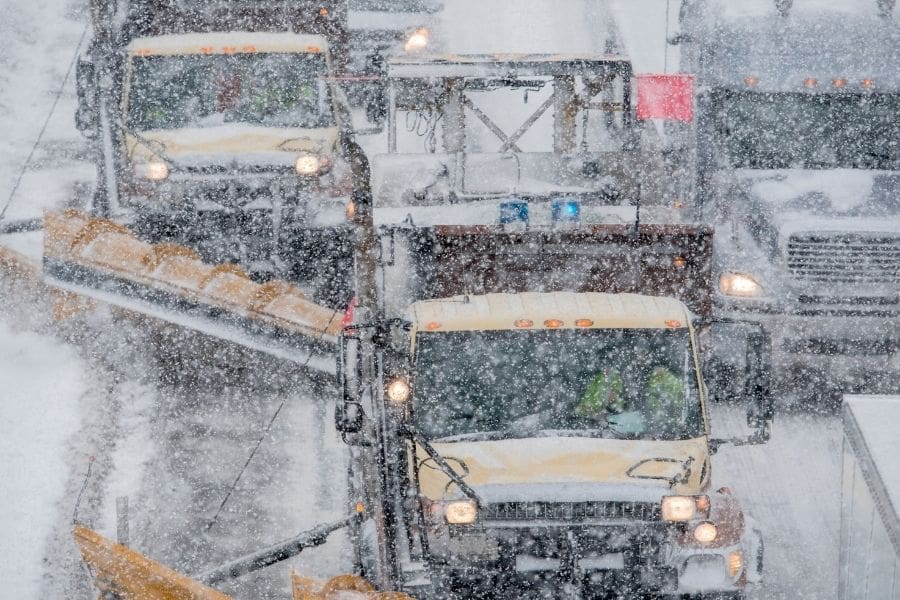
Snowplow safety rules newcomers should know
Snowplows drive slowly and create clouds of snow that limit visibility.
In Ontario and several provinces, it is illegal to pass a snowplow working side-by-side.
6. Leave Extra Space Between Cars for Safe Braking
Following too closely is one of the most common causes of winter collisions.
How to Use the 8–10 Second Rule
Pick a fixed object ahead—like a sign or tree—and count the seconds until your car reaches it. If you count fewer than 8 seconds, increase your distance.
Why Braking Takes Longer on Snow and Ice
Ice reduces traction, making it harder for your tires to grip the road. Even with Anti-lock Braking System (ABS) brakes, stopping too quickly can cause your car to slide.
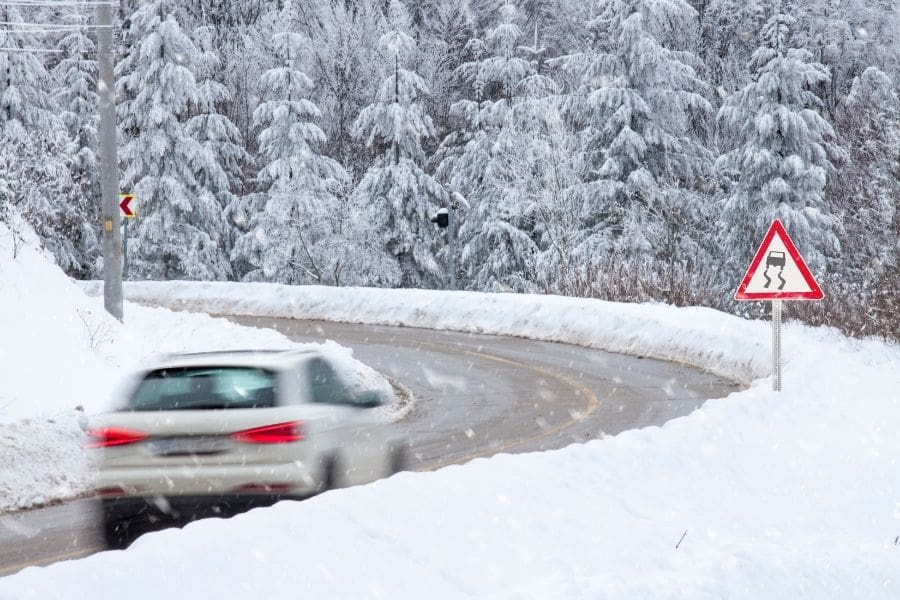
7. Know How to Stay Safe When You Hit Black Ice
Black ice is one of the most dangerous winter hazards because it is almost invisible.
What black ice looks like (and where it forms)
Black ice often looks like a shiny, wet patch on the road. It commonly forms on:
- Bridges
- Overpasses
- Shaded areas
- Roads at dawn or late at night.
What to do if your car slides
If you hit black ice:
Do not brake suddenly
Keep your steering wheel straight
Ease off the gas pedal
Allow the car to slow down naturally
Use gentle steering to regain control.
FAQs About Winter Driving in Canada
They are required in Quebec and on some highways in British Columbia. Other provinces strongly recommend them.
Anything below 0°C increases the risk of ice. Freezing rain is particularly dangerous.
Modern vehicles typically need 30 seconds to 2 minutes to warm engine components.
The battery may be frozen or drained. Use a booster pack, ask for a jump-start, or call roadside assistance.
Final Tips: Winter Driving Safety for Newcomers
When to avoid driving
Stay home when there are:
- Freezing rain warnings
- Heavy snowstorms
- Whiteout conditions
- Extremely cold temperatures (below −30°C with wind chill).
How to stay calm during winter conditions
Give yourself extra time, avoid rushing, and plan your route. With practice, winter driving becomes manageable—and even routine. Winter tires are one of the most effective ways to reduce accidents in snow and icy conditions.
New to Canada? Download our free Rental Application Guide to learn how to apply for your first home with confidence.