Join the ScotiabankStartRight® Program designed for Newcomers‡ and get up to $2,300* in value in the first year.
Are you planning a move to Calgary? Finding the best neighbourhoods in Calgary for your lifestyle and budget is one of the most exciting parts of your journey. But it can also feel overwhelming. If you are preparing to arrive in Canada within the next six months, or have recently landed, you likely have questions about finding your first home.
This guide can help you identify affordable and welcoming neighbourhoods in Calgary. While Calgary’s housing market expanded rapidly in recent years, 2026 data from the Canada Mortgage and Housing Corporation (CMHC) shows a major surge in purpose-built rental completions. This new supply has helped lower local rent prices and expand inventory, giving newcomers more options.
For a complete overview of local job opportunities, transit networks, and cost of living, read our comprehensive guide to Living in Calgary as a Newcomer ↗.
Is Calgary Affordable for Renters?
Modern residential towers along the Bow River pathwaysoffer easy walkability to downtown Calgary and Prince’s Island Park.
While Calgary has higher average rents than Edmonton, it remains much more affordable than major cities such as Toronto or Vancouver.
According to Canada Mortgage and Housing Corporation (CMHC) market benchmarks, average asking rents in Calgary sit roughly 8% below the national average. This makes Calgary an attractive city for newcomers working to establish financial stability.
💡 Budgeting Tip: Wondering how these local rent prices fit into your broader monthly budget? Read our complete breakdown on Rental Affordability in Canada: A Guide for Newcomers ↗ to learn how to apply the 30% income rule to your housing search.
Budget & Affordability: Choosing the Right Layout
Calgary offers different types of housing options based on your household budget and family size.
Bachelor / Studio Units: Ideal for students, single professionals, or single newcomers looking to minimize monthly expenses while living near downtown transit lines.
2-Bedroom Units: Great for roommates splitting rent, couples working remotely, or small families needing quick access to community parks and local schools.
Choosing a great area is a major milestone, but knowing how to navigate lease agreements, credit checks, and deposit rules in Alberta is just as important.
Best Calgary Neighbourhood Profiles
Is Marlborough a Good Neighbourhood to Rent in Calgary, Alberta?
Marlborough: Established Affordability in Northeast Calgary
Overview: Marlborough in Northeast Calgary offers some of the most competitive rental rates in the city. Best For: Newcomers on a tight budget, transit riders, and value-first households
Transit: Excellent connection via the Marlborough CTrain Station (Blue Line), offering direct access into downtown Calgary.
Vibe: Practical, access to local stores, diverse, and budget-friendly
Rental Range: Consistently ranks in the lower rent tiers for 1-bedroom and 2-bedroom walk-up apartments.
Marlborough offers immediate proximity to major ethnic grocery hubs, community health clinics, and large retail centers like Marlborough Mall. If your primary goal is to lower your monthly expenses during your first year in Canada, this area provides strong overall value.
Is Sunnyside a Good Neighbourhood to Rent in Calgary, Alberta?
Sunnyside & Kensington: Walkable Urban Culture Near Downtown
Calgary’s iconic Peace Bridge at twilight, connecting the walkable Sunnyside neighbourhood directly to downtown rental towers across the Bow River.
Overview: Sunnyside (alongside the Kensington commercial district) sits directly north of the Bow River, right across from the downtown core.
Best For: Post-secondary students (University of Calgary/SAIT), healthcare workers, and car-free professionals.
Transit: Features the Sunnyside CTrain Station (Red Line) and extensive dedicated bike pathways along the river.
Vibe: Lively, historic, pedestrian-friendly, and culturally active.
Rental Range: Mid-to-higher range modern high-rises mixed with moderately priced, older low-rise units.
Living in Sunnyside means walking to local coffee shops, international bakeries, and peaceful parks along the Bow River pathway. Its direct transit access to the University of Calgary and SAIT makes it a high-demand area for students.
Bankview borders the vibrant 17th Avenue SW retail district, offering access to dining and shopping while retaining a quiet neighborhood feel. It provides a practical compromise for newcomers who want to stay close to central city action on a moderate budget.
Is Shawnessy a Good Neighbourhood to Rent in Calgary, Alberta?
Shawnessy: Family-Focused Suburban Living in South Calgary
Overview: Located in Deep South Calgary, Shawnessy is a mature, master-planned suburban community built around parks and family services.
Best For: Families with children, remote workers, and renters seeking quiet, low-traffic streets.
Transit: Anchored by the Shawnessy CTrain Station (Red Line), connecting residents directly to central Calgary.
Vibe: Safe, suburban, family-centered, and practical.
Rental Range: Mid-range apartment condos up to full single-family home rentals.
Shawnessy features major shopping plazas, YMCA recreational facilities, and quick access to Fish Creek Provincial Park, one of North America’s largest urban natural parks. It is ideal for families seeking space and good school zones.
Is Evanston a Good Neighbourhood to Rent in Calgary, Alberta?
Evanston: Modern Suburban Design in Northwest Calgary
Overview: Situated in Calgary’s Northwest sector, Evanston is a contemporary suburban development designed with expansive green spaces and modern home layouts.
Best For: Families wanting newer rental inventory, multi-generational households, and remote professionals.
Transit: Primarily car-dependent, but supported by express bus routes to major transit terminals.
Vibe: Clean, peaceful, modern, and scenic.
Rental Range: Newly built basement suites, modern townhomes, and detached home listings.
Evanston offers newer build quality, energy-efficient building standards, and local village shopping centers. It offers a calm residential setting away from the city core for newcomers prioritizing modern home amenities.
Autumn foliage along the Glenmore Reservoir with the downtown Calgary skyline in the distance.
Mission & Altadore (Southwest): Ideal for young professionals who want upscale dining along 4th Street SW and Marda Loop, though rental prices trend higher ($1,800 – $2,100/month for a 1-bedroom).
Hillhurst & Bridgeland (Inner-City): Located right across the Bow River from downtown, these historic areas offer incredible walkability, local coffee shops, and CTrain access, with moderate-to-high rents.
Inglewood (East Core): Calgary’s oldest neighbourhood, famous for arts, live music, and boutique shopping along 9th Avenue SE.
Brentwood (Northwest): A top budget pick for University of Calgary students looking for direct transit access along the Red Line CTrain.
Signal Hill, West Springs & Lake Bonavista (Suburbs): Premier choice for families seeking master-planned suburban communities, higher safety ratings, and top-ranked schools.
🚨 Renter Alert: How to Avoid Rental Scams in Calgary
Because thousands of newcomers relocate to Calgary annually, local authorities routinely warn renters about online listing scams. Scammers often post fake photos of real properties at low rates to pressure anxious movers into sending advance deposits.
Protect your money during your housing search by following these rules:
Do Not Share Sensitive Personal Data Early: Never disclose your Social Insurance Number (SIN), bank passwords, or credit card info on standard introductory inquiry forms.
Never E-Transfer Money Before a Viewing: If a “landlord” claims to be out of the country or refuses an in-person or live video tour before demanding a deposit, stop communicating immediately.
Watch for Below-Market Prices: Scammers use low rent figures to lure budget-conscious movers. Compare prices against the Quick Stats Summary table above to verify real market rates.
Verify Property Ownership: Deal with established property management firms or request government ID when renting from private individuals.
How Can Long-Distance Newcomers Safely Rent in Calgary?
If you are moving to Calgary from abroad or another province, navigating the rental market remotely requires extra caution.
To secure housing safely from a distance, consider these steps:
Browse Pre-Screened Platforms: Use dedicated resources like Rentals for Newcomers to find landlord listings verified for incoming arrivals.
Book Verified Arrival Accommodation: Secure a short-term furnished rental for your first two to three weeks. This gives you time to inspect long-term properties in person before signing a lease.
Connect with Local Settlement Agencies: Settlement organizations such as the Calgary Catholic Immigration Society (CCIS) offer free guidance on housing searches and tenant rights in Alberta.
Final Thoughts: Choosing the Right Calgary Neighbourhood
Reducing financial stress starts with picking a neighbourhood that aligns with your household budget. Calgary offers diverse communities, from budget-friendly northeast areas to suburban south hubs, that allow you to build stability without overspending on rent. Focus on transit access, local schools, and realistic monthly costs as your primary guideposts.
Yes. Calgary combines a strong local economy with lower taxation (no provincial sales tax in Alberta) and proximity to the Rocky Mountains. While housing costs are higher than in Edmonton, Calgary remains more accessible than major cities in British Columbia or Ontario.
What is the average rent in Calgary in 2026?
As of mid-2026 CMHC rental market updates, the average asking rent in Calgary sits around $1,582 – $1,618 for a one-bedroom apartment and $1,837 – $1,924 for a two-bedroom unit. A surge in purpose-built rental construction has helped stabilize price growth across the city.
Where are the most affordable neighbourhoods to rent in Calgary?
The most budget-friendly rental prices are generally found in established Northeast and Southeast communities, such as Marlborough, Forest Lawn, Bankview, and Sunalta.
Which Calgary neighbourhoods are best for students?
Sunnyside, Kensington, and Brentwood are top choices due to their direct C-Train access to the SAIT campus and the University of Calgary.
Navigating a new city can feel overwhelming, but Calgary’s public transit network, managed by Calgary Transit, is clean, efficient, and cost-effective. Whether you are commuting to work, exploring downtown, or looking to lower your living expenses, understanding the transit system is vital for any newcomer.
This guide covers everything you need to know about Calgary’s trains (the CTrain), regular buses, Bus Rapid Transit (BRT) routes, ticket prices, payment options, and bike paths.
Primary Modes: CTrain (Light Rail Transit), local buses, and high-frequency Bus Rapid Transit (MAX BRT).
Standard Fares: $4.00 for single adult tickets (valid for 90 minutes of unlimited transfers); $126.00 for a monthly pass.
Free Travel: Free CTrain rides within the Downtown Free Fare Zone (along 7th Avenue) and pets ride for free!
Core App: Download the official My Fare app (iOS & Android) to purchase and activate digital passes on your phone.
Discounted Rates: Low-income newcomers can apply for heavily discounted monthly passes through Calgary’s Fair Entry Program.
1. The CTrain Network (Light Rail Transit)
The CTrain is Calgary’s primary electric light rail system. It is one of North America’s most eco-friendly transit systems, running on 100% wind power. Trains generally operate from 4:30 AM to 1:00 AM daily, with peak frequency every 5–10 minutes.
The Two Core Lines on Calgary Public Transit
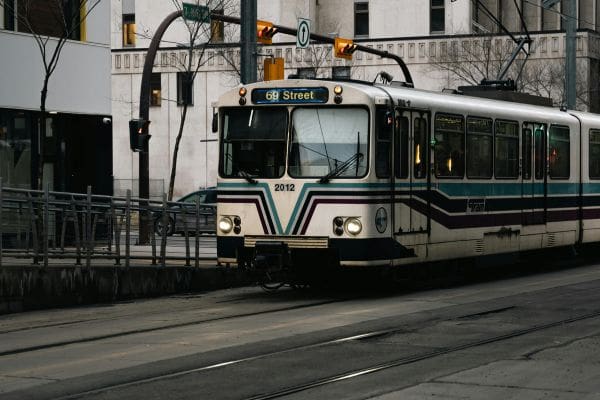
A Calgary Transit CTrain operating along the Blue Line corridor.
The Red Line (Line 201): Runs from Northwest Calgary (Tuscany/Crowfoot) through Downtown and down to South Calgary (Somerset-Bridlewood).
The Blue Line (Line 202): Connects Northeast Calgary (Saddletowne) through Downtown out to West Calgary (69 Street SW).
Green Line LRT Update: Calgary is building a third train line called the Green Line that is expected to open in 2031. It will connect the north and southeast parts of the city. Because the plans and timelines change, check the official Calgary Transit website for the newest updates.
Key CTrain Features for Newcomers
Downtown Free Fare Zone: You can ride the CTrain for free between 3rd Street East and 11th Street West along 7th Avenue downtown. No ticket is required within this zone.
Park and Ride: Many suburban stations offer free or low-cost parking so you can drive to the train and commute downtown without hassle. If you’re still deciding where to live, explore our breakdown of the Best Calgary Neighbourhoods for Newcomers: City to Suburbs to find communities located directly along these rail corridors.
Next Step: Finding Your Calgary Home
Using public transit makes exploring Calgary’s neighbourhoods simple and stress-free. Once you’ve toured a few areas on the CTrain, start browsing Calgary Rentals for Newcomers to find homes near major transit hubs.
When you’re ready to apply, stand out to local landlords using the Prepare for Canada Ultimate Rental Application Guide below:
2. Calgary Bus & MAX BRT System
Where the CTrain doesn’t go, Calgary public transit relies on an extensive network of over 160 bus routes to fill the gaps.
Regular Buses: Connect local residential neighbourhoods to suburban hubs and CTrain stations.
MAX Bus Rapid Transit (BRT): High-frequency routes (MAX Red, MAX Orange, MAX Teal, MAX Purple) featuring dedicated lanes, heated shelters, and transit-priority signals to bypass traffic.
Tip: Use Google Maps, Transit App, or the Calgary Transit NextRide planner for real-time arrival estimates and step-by-step route mapping.
3. Calgary Public Transit Fares, Passes & Discounts
Calgary Transit uses a unified fare system. A single ticket or fare validation is valid for 90 minutes across all buses and CTrains, allowing unlimited transfers within that window.
Standard Fare Breakdown
According to the official City of Calgary Transit Fee Schedule, standard adult single fares are set at $4.00. Below is the full breakdown of standard transit fares and multi-ride passes:
Rider Category
Single Fare (90-Min)
Day Pass
Monthly Pass
Adult (18 and older)
$4.00
$12.65
$126.00
Youth (13-17)
$2.65
$9.25
$86.00 ($92.00 starting September 2026)
Children (12 & under)
Free
Free
Free
Low-Income Discounts (Fair Entry Program)
Newcomers with permanent residency, refugee status, or low income can apply for Calgary’s Fair Entry Program, which provides discounted monthly transit passes (ranging from $6.30/month to $63.00 depending on the household income tier).
4. How to Pay Your Calgary Public Transit Fare
You have several convenient options to purchase tickets and passes:
My Fare App: Download the official app on iOS or Android to buy single tickets, day passes, or monthly passes directly on your smartphone. Activate the ticket right before boarding.
Ticket Vending Machines (TVMs): Located at all CTrain stations, these accept credit cards, debit cards, and cash.
Cash on Buses: Exact change is required when paying cash directly to a bus driver (drivers cannot provide change). Always ask for a paper transfer ticket if transferring to another bus or train.
Physical Retailers: Monthly passes and ticket books are available at Calgary Transit Customer Service Centers, major grocery stores (Sobeys, Safeway), and select convenience stores.
5. Cycling and Micro-Mobility in Calgary
If you like biking or walking, Calgary has the largest urban pathway network in North America, with over 1,000 kilometers of paved trails.
On Transit: CTrains allow bicycles on board during non-peak hours (and fold-up bikes at all times). All Calgary public transit buses are equipped with front bike racks.
Shared e-Scooters & e-Bikes: Seasonally available throughout downtown and inner-city neighbourhoods via app-based operators.
Final Thoughts on Navigating Calgary Transit
Getting comfortable with a new public transit system is one of the fastest ways to feel at home in Calgary. With clean trains, extensive bus coverage, and free downtown travel, getting around the city as a newcomer is both straightforward and budget-friendly.
Mastered your commute? From setting your banking to finding your first home, check off your next steps with our guide to the first things to do after landing in Canada.
Frequently Asked Questions
Is Calgary Transit safe at night?
Calgary Transit operates Help Buttons on all train platforms, designated “Waiting Areas” with enhanced lighting and cameras, and active Transit Peace Officers patrolling stations and trains.
How do transfers work between CTrains and buses?
Your ticket or digital activation lasts 90 minutes. If paying cash on a bus, ask the driver for a paper transfer. If using the My Fare app, your active digital ticket serves as proof of payment for transfers.
Does the CTrain go to the Calgary International Airport (YYC)?
Currently, there is no direct CTrain rail link to YYC Airport. However, you can take Route 300 (BRT) from Downtown or Route 100 from the Saddletowne / McKnight-Westwinds CTrain stations directly to the airport terminal.
Are pets allowed on Calgary Transit?
Yes. You must keep dogs on a leash, and small animals inside a secure carrier or cage during the entire trip. Pets ride for free!
What You Need to Know
Enjoy a stable housing Market: Calgary’s real estate market is balancing out. Home prices are levelling off, and rent prices are dropping, giving newcomers a predictable place to settle.
Work in a growing economy: Calgary is still Canada’s energy capital, but it is also a booming hub for tech, farming technology, aviation, and digital media. This strong mix keeps the local job market steady.
Live near the mountains: Calgary gets 333 days of sunshine a year, more than any other major Canadian city, and sits less than an hour’s drive from the Rocky Mountains.
Keep more of your money: Alberta has low income taxes and no provincial sales tax (you only pay the federal 5% GST), helping your paycheck go further.
Get plenty of local support: Dedicated community organizations offer free help to arriving families with finding jobs, learning English, and settling into school.
If you are planning your move and considering living in Calgary, Alberta? This complete 2026 newcomer guide covers everything you need to know about housing costs, high-paying jobs, and daily life.
Stabilized and trending lower, providing relief from 2024 peaks.
Benchmark Home Price
$568,800
Notably more accessible than Vancouver or Toronto.
Top Industries
Energy, Tech, Aerospace, Agribusiness, and Finance
The corporate head office capital of Western Canada.
Climate
Semi-arid, Humid Continental
Averaging the most annual sunshine hours in Canada, with winter Chinooks (passage of warm air over a mountain range)
*While these are market averages, prices fluctuate. You can view live, Calgary neighbourhood-specific listings right now at Rentals for Newcomers.
About Calgary, Alberta
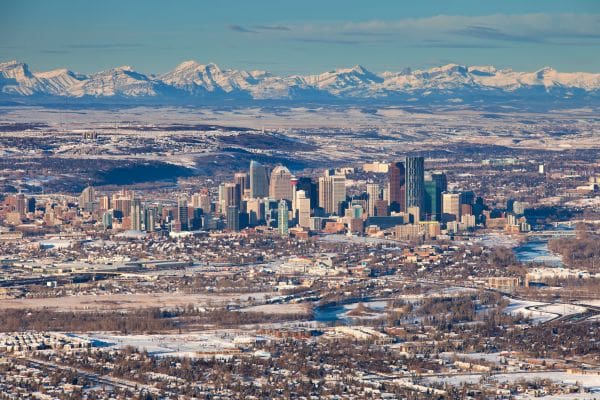
The downtown skyline of Calgary, Alberta, framed by the majestic Rocky Mountains on the horizon, a spectacular backdrop you will see regularly when living in Calgary.
A Mountain-Gateway Metropolis Built on Innovation and Diversity
Calgary is a welcoming and successful city located in Alberta, right where the Bow and Elbow rivers meet. It sits just under an hour’s drive from the famous Rocky Mountains and Banff National Park, giving you easy access to beautiful, open spaces and fresh mountain air.
Calgary is also the third-most diverse city in Canada, with neighbours from more than 200 different cultural backgrounds. This means newcomers can easily find community groups, familiar food, and a warm welcome. Moving here means you get the benefits of a big business city while enjoying clean air, massive parks, and safe neighbourhoods for your family.
If you want to compare Alberta’s two biggest cities before making your choice, you can also read our complete guide to Living in Edmonton, Alberta, to see which city is the best fit for your goals.
What Are the Top Industries and Jobs for Newcomers Living in Calgary for 2026?
Calgary’s bustling downtown business district is home to corporate head offices and a booming tech sector that draws many professionals to consider living in Calgary.
Calgary’s job market is rapidly diversifying beyond traditional oil and gas. In 2026, the top industries driving local employment are technology, aerospace manufacturing, logistics, green energy, and healthcare.
Many workers are moving here from expensive provinces like Ontario and British Columbia because Calgary offers a great balance: good wages combined with lower living costs. This means you get to keep more of the money you earn. In fact, Calgary ranks as a prominent “Rising Star” in our national overview of the best cities in Canada for immigrants due to this unique mix of economic growth and household value.
Top 5 Occupations in Demand
Software & Tech Developers: Calgary’s tech scene is booming and worth billions. There are many new jobs here for people who build software, apps, and financial technology (fintech)
Aerospace & Manufacturing: The aviation industry is growing fast in this region. Companies like De Havilland Canada are expanding their airplane manufacturing, creating a high demand for skilled technicians and builders. Logistics & Supply Chain Specialists: Because of Calgary’s international airport and major railway networks, the city has become the main shipping and distribution hub for Western Canada. Companies constantly need people to manage warehouses, track shipments, and coordinate delivery routes. Energy & Environmental Engineers: Calgary is famous for oil and gas, but local head offices are now hiring heavily for green energy roles. Engineers are in demand to work on clean power, hydrogen, and environmental technology. Healthcare Professionals: Hospitals and clinics across the province are hiring. There is a huge demand for registered nurses, lab technicians, and medical support staff.
💡 Calgary Job Trends: In 2026, Calgary’s job market is steady and strong, with a low unemployment rate of around 5.5%. Many workers are moving here from expensive provinces like Ontario and British Columbia because Calgary offers a great balance: good wages combined with lower living costs, meaning you get to keep more of the money you earn.
Tips for Newcomers Seeking Jobs in Calgary
Use Provincial Job Boards: Monitor the Government of Canada Job Bank to search for jobs in Calgary, and job portals such as LinkedIn and Indeed to target positions across southern Alberta.
Target the AAIP Pathways: The Alberta Advantage Immigration Program (AAIP) remains a fast, targeted pathway for permanent residency, actively selecting candidates with experience in tech, healthcare, agriculture, and skilled trades.
Connect with Local Recruiters & Agencies: Connect with local recruitment agencies such as the BOWEN Group, About Staffing, and Randstad Canada to align your international experience with corporate expectations.
A close-up look at an apartment building in downtown Calgary, showing the types of rental options available to newcomers who want to live in the city center.
Calgary is a great place to look for a home in 2026 because the housing market is settling down. While buying a standalone house is still a big investment, rental prices and condo prices have come down over the past year. This means newcomers have more choices and power to negotiate a better deal than in expensive cities like Toronto or Vancouver.
Calgary Rent Prices by Quadrant (June 2026)
Renting is usually the best first step when you arrive. Calgary is divided into four main sections (called quadrants), and each one offers safe, family-friendly neighbourhoods with easy access to public transit, schools, and shopping. To find the right area for your lifestyle and family safety, explore our guide, Best Calgary Neighbourhoods for Newcomers.
The good news for recent arrivals is that average rent prices across the city have dropped by 3% to 11% compared to last year. Right now, the average cost for a standard, unfurnished one-bedroom apartment is around $1,440 per month. This downward trend aligns with broader national shifts outlined in our recent Rental Market in Canada 2026 Spring Update, which highlights how cooling major markets are giving newcomers more bargaining power.
Here is a look at average rental expectations according to recent Rentals for Newcomers 2026 Tracking:
Urban: High-density, walkable, close to corporate offices, dining, and nightlife.
South West (Coach Hill, Marda Loop)
$1,600
Premium Suburban: Trendy corridors, established tree-lined streets, exceptional schools.
South East (Deer Ridge, Mahogany)
$1,490
Master-Planned: Lake communities, fantastic public parks, ideal for vehicle owners.
💡Ready to begin your housing search? Learn more about how to conduct your rental search as a newcomer and find up-to-date quadrant listings on Rentals for Newcomers.
Tips for Renting in Calgary
Condo/Apartment Buyer Advantage: If you want to rent a condo from an individual owner, the market heavily favours you right now. Supply is roughly 27% above long-term trends, meaning landlords are competing for high-quality tenants.
Vet Inner-City Pockets: While Calgary is a safe city overall, Rentals for Newcomers advises newcomers to physically tour properties near the immediate East Village and specific downtown LRT stations before signing long-term commitments.
Mandatory Tenant Insurance: Most corporate and private landlords in Calgary require proof of renter’s insurance before handing over the keys. To help budget for insurance, get a complimentary renters’ insurance quote.
Secure Short-Term Housing First: It is much safer to look for a permanent, long-term rental in person once you can tour Calgary’s neighbourhoods.
Use the Rentals for Newcomers search tool to find apartments specifically vetted for new arrivals. Find up-to-date listings and prices!
💡Renting in Calgary Tip: You’ll need tenant insurance to protect your belongings and most landlords require it. Read more about why newcomers need tenant insurance.
Buying a Home in Calgary
You can realistically move from renting to buying a home in Calgary. Current 2026 data shows that Calgary’s real estate market is now stable and balanced. The average price for all housing types combined sits at $568,800. This is a manageable 3.5% drop from record highs, creating an ideal window for first-time buyers.
Importantly, the market gives you two clear choices. Standard standalone houses are in high demand, and prices remain firm. However, the apartment and condo market features deep discounts, giving you excellent bargaining power to negotiate a lower price.
Here is how the Calgary real estate market benchmarks by property type:
Connect with local licensed real estate agents to help you navigate Calgary’s purchasing laws and understand how to find, finance, and close on a home.
Target the Condo Advantage: With over 4 months of available supply in the apartment sector, condo sellers are highly motivated. It represents the lowest financial barrier to homeownership in a major Canadian city.
Review condo documents to verify the health of the condo corporation’s reserve fund and calculate mandatory condo fees.
Explore Regional Micro-Markets: Prices vary drastically by district. For example, a standalone house in the exclusive West district averages $1,007,600, while a similar house in the East district averages just $487,500.
Get mortgage pre-approval from your bank before you start shopping. This proves to sellers that you have the financial strength to back up your offer.
Calgary offers helpful programs to welcome newcomers and support the city’s growing communities. Settlement agencies work hard to help you adapt smoothly to your new life in Canada.
Large South Asian, Chinese, and Filipino communities already call Calgary home. Because the city is so diverse, you can easily find cultural associations, people who speak your language, and local grocery stores that sell familiar food from back home.
Comprehensive resettlement, housing placement, and rural integration.
First-Home Finding: Get help finding short-and long-term housing options.
Banking & Personal Finances in Calgary, AB
Managing your money wisely is vital to living in Calgary and building a stable life. To make things easy, major banks across Calgary offer special newcomer packages, such as the Scotiabank StartRight™ Program.
Through these programs, you can open a Canadian bank account online before you even leave your home country. Once you arrive in Calgary, you can visit a local branch to activate your account. You can apply for a newcomer credit card (even if you do not have a Canadian credit history) and access tailored financial products such as savings accounts and specialized newcomer mortgages.
Driving in Calgary is straightforward because the roads are laid out in a clean, quadrant-based system that divides the city into North West (NW), North East (NE), South West (SW) and South East (SE). Avenues run east-west, while streets run north-south.
Deerfoot Trail (Highway 2): The major north-south expressway cutting directly through the city, connecting Calgary to Edmonton. It is fast, but it is congested during rush hours. Stoney Trail (Highway 201): Calgary’s massive, fully completed ring road freeway looping entirely around the city limits, allowing you to bypass inner-city traffic completely. The Trans-Canada Highway (Highway 1 / 16th Ave): The primary national east-west highway cutting straight through the northern half of the city, leading directly into the Rocky Mountains. Licensing Requirements: Newcomers must visit an authorized Alberta Registry Agent within 90 days of arrival to exchange an international or out-of-province driver’s license for a valid Alberta Class 5 license.
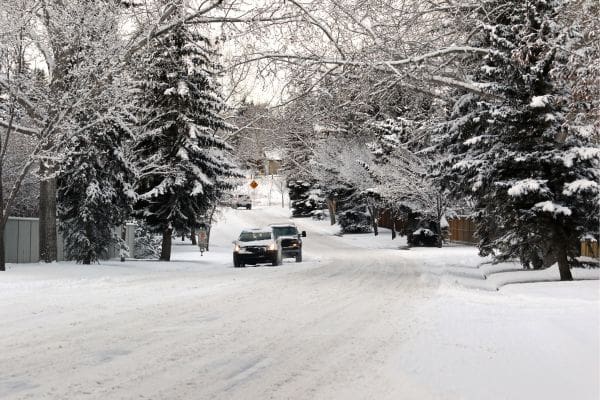
A typical winter day on a residential street, highlighting why winter tires are essential to driving safely.
Winter Vehicle Readiness: Winter tires are vital for driving in prairie snow. Because Calgary experiences true freezing temperatures, using a block heater overnight during deep winter snaps is vital to keeping engine oil fluid and ensuring smooth morning starts.
Calgary Transit makes it easy to get around the city using standard buses, neighbourhood shuttle routes, and the C-Train (the local Light Rail Transit) system. The C-Train is the main way people travel in Calgary. It runs along two major high-speed lines connecting the far northern and southern suburbs directly to the downtown core. To learn how to buy tickets and map out your daily commute, read our complete guide to Public Transit in Calgary.
Air Travel
Calgary International Airport (YYC): Situated in the city’s northeast, YYC is a world-class global hub. It is the primary base for WestJet, and connects Calgary directly to major global destinations across Europe, Asia, the United States, and South America.
Healthcare & Medical Services
Newcomer Tip: Newcomers must register for provincial healthcare immediately upon landing. To verify the documents your require and the application process, follow our step-by-step guide, How Can Newcomers Get Public Health Insurance in Canada?
Provincial Health Insurance: The Alberta Health Care Insurance Plan (AHCIP)
Alberta Health Services (AHS) runs the province’s healthcare system. When you show your valid Alberta Health Care (AHCIP) card, the government pays 100% of the cost for doctor visits, hospital stays, surgeries, and appointments with specialists.
However, the public plan does not cover dental work, prescription medicines, or eye care. Because of these gaps, many people choose to buy private extended health insurance or use employer benefit plans to help cover the costs of medications and extra care.
To see how quickly your coverage starts and what rules apply to your family, review the health insurance guidelines below:
Resident Category
Waiting Period
AHCIPEligibility & Coverage Notes
Newcomers (International PRs)
No Waiting Period
Eligible for full coverage starting the exact day you establish residency in Alberta. You must submit your application immediately upon arrival.
Moving from Another Province
Up to3 Months
Your “old” provincial plan covers you for the first 3 months (usually until the last day of the 2nd month following your arrival). Alberta coverage kicks in on the first day of the third month (e.g., if you move July 10, coverage begins on October 1).
Work Permit Holders
No Waiting Period
Eligible from arrival date, provided the permit is valid for at least 6 months, and you intend to live in Alberta for 12 months. Note: IEC (Type 58) holders now require proof of full-time employment and a 12-month permit.
International Students
Eligible
Fully eligible if holding a valid study permit issued for at least 12 months and maintaining full-time enrollment.
Canadian Citizens/PRs
No Waiting Period
Coverage is valid as long as you are physically present in Alberta for at least 183 days in any 12 months.
How to Find a Family Doctor When Living in Calgary
AHS “Find a Doctor” Tool: Use the online directory provided by the College of Physicians & Surgeons of Alberta or the Primary Care Network (PCN)registry to locate family physicians currently accepting new clients.
Walk-In Clinics: Dozens of non-emergency medical walk-in clinics operate city-wide, allowing individuals to receive medical evaluation without prior appointments.
Health Link (Dial 811): Dial 811 to speak directly with a registered nurse for 24/7 confidential, non-emergency health advice.
Major Hospitals in Calgary
Calgary features five major hospitals located across the city, each offering specialized emergency and medical care for you and your family:
Hospital
Primary Specialty & Location
Key Focus for Newcomers
Foothills Medical Centre
Adult Trauma & Cancer Care (North West)
One of Canada’s top medical campuses; features a massive 24/7 emergency department and the brand-new Arthur J.E. Child Comprehensive Cancer Centre.
Rockyview General Hospital
Urology & Eye Care (South West)
Located on the shores of the Glenmore Reservoir; specializes in urological surgeries and advanced eye care.
Peter Lougheed Centre
Emergency & Vascular Surgery (North East)
A very busy, large hospital that manages high-volume emergency cases and regional blood-vessel (vascular) surgeries.
South Health Campus
Modern Patient Care & Tech (South East)
A brand-new, high-tech hospital that focuses on green sustainability and innovative, patient-first treatment.
Alberta Children’s Hospital
Pediatric Emergency & Trauma (North West)
A world-famous hospital built specifically for kids, specializing in advanced children’s medicine and pediatric emergency care.
Schools: A Guide for Families & Students Moving to Calgary
Elementary & High School
Alberta’s public education system is widely regarded as one of the strongest in the world. Parents can select between two completely free, publicly funded school streams based on family preference:
Calgary Board of Education (CBE): The largest public school division in Western Canada, managing 238 schools and serving over 142,000 students.
Calgary Catholic School District (CCSD): The largest publicly funded Catholic separate school division in Western Canada, overseeing 117 schools and serving over 64,000 students.
Specialized & Newcomer Support: French Immersion, traditional language academies, and specialized fine arts or science curricula are accessible across both boards. High school students can pursue advanced academic pathways via widespread Advanced Placement (AP) or International Baccalaureate (IB) programming.
Early Childhood: Under the Canada-Wide Early Learning and Child Care agreement, Alberta continues to expand its $10-a-day licensed child care, daycare, and preschool spaces. To find Calgary daycares, pre-schools, family day homes, out-of-school care, or group family child care, the government has a great child care search tool.
💡 Newcomer Tip: If you are registering your children for school in Calgary for the first time while living in Calgary, you must visit the CBE’s welcome and assessment centre. The staff there will check your children’s English skills to make sure they get the right English language support (EAL) on their very first day at school. Read more in our guide, Schooling in Canada | A Look at the Education System.
Post-Secondary Schools
University of Calgary (U of C): A top-tier research university serving over 33,000 students. It is globally celebrated for its programs in engineering, geoscience, medicine, business (at the Haskayne School of Business), and law.
Mount Royal University (MRU): Located in the southwest, MRU emphasizes smaller class sizes and undergraduate excellence, specializing in nursing, business administration, aviation, and communication studies.
SAIT (Southern Alberta Institute of Technology): Situated prominently on the north inner-city ridge, SAIT is a premier polytechnic institution providing top-tier technical skills training, culinary arts, and heavy industry trades integrated with international employers.
Pros and Cons of Living in Calgary
To help you weigh your options, here is a look at the major upsides and downsides of moving to the city.
Feature
Pros (The Benefits)
Cons (The Challenges)
Money & Taxes
Keep more of your paycheck: Alberta’s lack of a provincial sales tax and low income taxes help you save more money each month.
Economic Shifts: While the city is diversifying into tech and aviation, the local economy can still fluctuate based on global oil prices.
Housing Market
Great apartment deals: A massive supply of new buildings gives you excellent bargaining power to rent or buy a condo affordably.
Premium Detached Market: Buying a standard standalone home in a highly desirable school district remains a major financial investment.
Transit & Driving
Easy cross-city travel: The Stoney Trail ring road and the efficient C-Train network make your daily commute easy.
Rush Hour Congestion: Major central roads, such as Deerfoot Trail, experience heavy traffic jams during morning and evening rush hours.
Climate & Nature
Sunlight & Mountains: You get 333 days of sunshine a year and live less than an hour’s drive from world-class mountain parks like Banff.
Intense winter cold snaps: Winters are long and can bring freezing drops below −25°C, along with sudden summer hail or autumn freezes.
Culture and Day-to-Day Life When Moving to Calgary, AB
A live rodeo performance at the world-famous Calgary Stampede, an annual celebration deeply intertwined with local culture.
The Heart of the City
People in Calgary are energetic, friendly, and very welcoming to newcomers. The city has an amazing arts and culture scene, featuring the Studio Bell (National Music Centre), the Arts Commons performance theatres, and the Calgary Philharmonic Orchestra.
The Calgary Stampede: Deeply intertwined with local identity, Calgary transforms every July for the world-famous Calgary Stampede. Attracting over 1.2 million global visitors annually, the 10-day exhibition celebrates western heritage with world-class rodeos, concerts, and free community pancake breakfasts, offering newcomers an electric, immediate way to experience local culture.
Urban Parks: Calgary features breathtaking urban parks. Nose Hill Park in the northwest is the largest municipal park in Canada, preserving massive expanses of native prairie hillside. Prince’s Island Park sits embedded in the downtown Bow River corridor, and is a green sanctuary where cultural festivals often take place.
Professional Sports: Local sports passion centers heavily around the NHL’s Calgary Flames (hockey) and the CFL’s Calgary Stampeders (football), bringing immense energy to the downtown red-mile corridor during competitive seasons.
Newcomer Community & Cultural Events
Multicultural Celebrations: Calgary loves diversity and celebrates with summer cultural festivals. You can enjoy GlobalFest (a multi-ethnic festival with international fireworks), Expo Latino, and Calgary Pride. These events are part of a larger nationwide energy highlighted in our cross-country guide to the most Exciting Summer Festivals in Canada in 2026. If you want to buy traditional foods and goods from back home, you can easily find them at the shops and street markets along International Avenue (17th Ave SE).
Indigenous Connections: Calgary is located on the traditional territories of the Blackfoot Confederacy (Siksika, Kainai, Piikani), the Stoney Nakoda, and the Tsuut’ina Nations, and is home to the Métis Nation of Alberta (Districts 5 & 6). Newcomers can meaningfully connect with Indigenous heritage by attending community educational forums, art showcases at local galleries, and public traditional Pow Wows held throughout the spring and summer months.
Embracing Winter Culture: Thriving in Calgary means stepping into the snow! Calgary embraces its identity as an Olympic city (1988 Winter Games), providing newcomers immediate winter access to world-class facilities like the WinSport (Canada Olympic Park) ski hills and the high-speed Olympic Oval skating facilities.
💡 Moving to Calgary soon? Use our step-by-step checklist to track your arrival tasks and ensure a smooth landing.
Final Thoughts: Is Living in Calgary Right for You?
A stunning winter twilight view of downtown Calgary and the Centre Street Bridge, one of the many beautiful urban sights you will experience when living in Calgary.
If you want to keep more of the money you earn, build a career in a growing industry, and buy a home in a stable housing market, Calgary is one of the smartest cities to choose in Canada. The winters are cold, and you will need to buy good winter clothes, but the bright sunshine, low taxes, and close drive to the Rocky Mountains make Calgary a wonderful place to call home.
Calgary experiences true continental winters when January daily averages land around −8.9°C. However, extreme winter cold snaps can drop temperatures below −25°C for brief intervals. Crucially, Calgary is famous for the Chinook, a warm, dry wind blowing over the Rocky Mountains that can raise temperatures by as much as 15 degrees in a matter of hours, providing refreshing winter melting periods unique to southern Alberta.
Do I need a car to live in Calgary?
Calgary is a very spread-out city, so having a car is highly useful for suburban families and weekend trips to the mountains. However, you can easily live here without a vehicle. If you choose to live in inner-city neighbourhoods like the Beltline, Mission, or Bridgeland, you can walk to most places. Combining that walkability with the local C-Train makes your daily commute simple and saves you money.
Is Calgary safe for young families?
Yes, Calgary is regularly ranked among the top 10 cities in the world because it is safe and family-friendly. Newer suburban neighbourhoods like Evanston, Rocky Ridge, and Mahogany are designed with quiet streets, local elementary schools, nearby medical clinics, and plenty of playgrounds. This makes the city an ideal place to raise children.
If you’re moving to Canada and plan to drive, it’s important to know what you need to drive legally. If you already have a licence in your home country, you can check if you can exchange that license for a Canadian driving licence. Or, you may need to take a driving test in Canada. Each province in Canada has slightly different rules. Discover the simple process to get your driving licence in Alberta, Canada.
Exchanging a Driving License from Another Country
Canada has a reciprocal license exchange agreement with many countries. If you have a valid driver’s licence, you can exchange your license for an Alberta license without taking a knowledge or road test. Canada has a reciprocal license exchange agreement with the following countries:
Australia, Austria, Belgium, France, Germany, Isle of Man, Japan, Republic of Korea, Switzerland, Taiwan, United Kingdom, United States.
To exchange your licence for an Alberta licence, you must:
Hand in your valid licence to a registry agent
Provide proof of two or more years of driving experience to receive a full license.
Exchange a licence with a country that doesn’t have a reciprocal licence exchange agreement
To exchange a licence from a country that doesn’t have an agreement, you’ll need to pass a knowledge and road test.
Step 1. Exchange your driver’s licence
Visit a registry agent and hand in your valid driver’s licence that is equivalent or higher to an Alberta Class 5 licence.The registry agent will check to see if you can apply for the Graduated Driver’s Licence (GDL) exemption program and will give you an application to complete.
Step 2.Pass a Class 7 knowledge test
Visit a registry agent and take a knowledge test.
Your licence, application for GDL exemption, and support documents will be sent to the Alberta Government for review.
Step 3. Get a full Class 5 licence
There are two ways you can get a full Class 5 licence:
If you can prove that you have more than 2 years of driving experience, you’ll need to pass an advanced road test
If you have less than two years of driving experience, you must pass a basic road test to get a Class 5 GDL licence.
When you have more than two years of driving experience, you’ll need to pass an advanced road test to get a full Class 5 driver’s licence.
Finding Quality Child Care
Choosing quality child care for your family is an important decision. You want to find a safe, healthy environment that supports the social, physical, intellectual, creative, and emotional development of your children.
There are many types of child care available:
Daycare programs serve infants, toddlers, and preschool-aged children.
Family day homes offer care in a private residence. There are typically six or fewer children, including the caregiver’s children, with one caregiver.
Group family child care programs offer care in a private residence. There are typically between seven and 10 children with two caregivers.
Out-of-school-care programs operate before and after school, during lunch hours, and sometimes when school is closed.
Pre-school program that offers child care for four or fewer hours per day for pre-school aged children.
Your First Weeks in Canada | Developing Your Action Plan
Arriving with an action plan for your first weeks in Canada can save you time and money. The quicker you settle into your new environment the faster you’ll feel at home! In this webinar, Your First Weeks in Canada, we discuss the important things to do to manage your first weeks efficiently.
Finding the best arrangement for your family takes time and planning, but it is worth the effort. You know your child best. Think about where they will be most comfortable. List your needs. For example, if your child needs quiet time, a large, busy centre may not be the best choice.
Here are things to consider to help you make a child-care decision:
Your child’s age
The types of activities your child enjoys
The number and ages of children your child enjoys being with
Any food allergies or food preferences to accommodate.
Also, each program will have different child care approaches and services such as snacks or meals. Other things to consider are your work hours, location, and cost. Do you require assistance with your childcare fees for your preschool children?
Locate a child care facility or family day home agency
The next step is to find a child care program. A good way to find a program is to ask friends and neighbours for references. You can also contact your local child and family services office for a list of child care programs or use our online tool to find a program.
Visit a child care program
You must visit each program that you are considering. This allows you to ask questions and observe the care they offer. During your visit, consider these questions:
Are the facility and equipment clean and in good condition?
Is space arranged for children to freely choose activities?
Are toys and equipment in reach of all children?
Do toys and equipment suit the ages and sizes of all children?
Are there enough toys for the number of children?
Is there a program listing daily activities?
Can children choose from a variety of activities?
Do activities suit the ages of the children?
Do children appear relaxed and involved in activities?
Is there room for outdoor play?
Nutrition
Does food for all children meet the standards in Canada’s Food Guide or Alberta’s Nutritional Food Guidelines?
Do caregivers sit with children during meals?
Health and Safety
Do staff and children wash their hands before and after diapering or toileting?
Are medications stored in a locked container, out of reach of children?
Is all indoor and outdoor equipment clean and safe?