
Canada is one of the largest countries in the world. Many new immigrants come to the country because of the vast opportunities and variety of unique cities to choose from. Many newcomers choose to move to the province of Alberta because of the more affordable living expenses and economic opportunities. While Calgary and Edmonton are typically the main destinations, moving to Lethbridge is worth considering.
When assessing a city, it’s helpful to research the job market, housing options, and community culture. Each one of these will influence your lifestyle. If you are considering moving to Lethbridge, Prepare for Canada can guide you.
About Lethbridge, Alberta
Lethbridge is located in the south-central region of Alberta. It’s located close to the Canadian Rocky Mountains and is known for its warm summers and mild winters. It’s an ideal location for people who enjoy exploring the outdoors.
The city’s prime location makes it a major hub for transportation and business in Southern Alberta.
The city is about a two-hour drive south of Calgary, and it’s just over one hour north of the United States border into the state of Montana.
The Lethbridge area was originally inhabited by First Nations and was created to support drift mining. It was incorporated as a town in 1890 and later as a city in 1906.
How Many People Live in Lethbridge, Alberta?
According to the 2021 Census, there are 98,406 residents. This is an increase of 6.1% since 2016. The city has experienced significant population growth since 2000. The Census Metropolitan Area has a population of close to 125,000. It’s the fourth-largest city in Alberta.
How to Find a Job & Build a Career in Lethbridge
Lethbridge’s Local Economy
Lethbridge was originally established on drift mining for coal and later developed into a primarily agriculture-based economy. However, it has become more diversified over the past few decades. It has become the industrial, commercial, distribution, and financial centre for southern Alberta. About half of the workforce is in hospitality, health, education, or retail.
The top industries in Lethbridge are:
- Health
- Education
- Wholesale and retail
- Hospitality and food services
- Construction
- Manufacturing
- Business and professional services.
Major Employers in Lethbridge
Lethbridge employs over 80,000 people, some of who commute from other close by towns. Most of the major employers in the city are government-based. Top employers in the area include:
- Alberta Health Services
- University of Lethbridge
- Lethbridge School District
- City of Lethbridge
- Lethbridge College
- Alberta Government
- Covenant Health
- Lethbridge Research Centre.
Career Pathways in Lethbridge
Lethbridge is an ideal location if you want to work in health, education, or government services. You can search for a job online through the Alberta job centre website. You can also connect with local recruiting agencies such as Select People Solutions, Positive Lifestyles Recruitment (PLR), and Hire Standard Inc.
The Lethbridge Housing Market
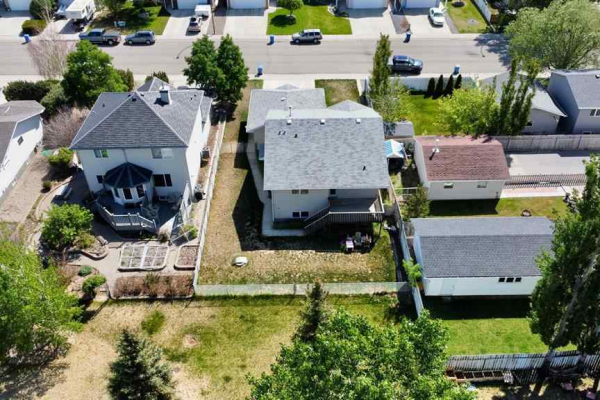
Finding the right home to fit your lifestyle and financial situation is an important decision to make. Lethbridge has lots of options. The city has close to 40 neighbourhoods spanning three main regions – North Lethbridge, West Lethbridge, and South Lethbridge. The west is the newest area and is home to Lethbridge University. This has been the main growth area for the city.
Is Housing Expensive in Lethbridge, Alberta?
Alberta is the main option for newcomers because of its more affordable real estate compared to other parts of Canada. Lethbridge is very affordable compared to other cities in the province and across the country. You can find the lowest prices in the Park Meadows neighbourhood.
Finding a Place to Rent in Lethbridge
Lethbridge rental rates are very affordable. About 30% of the population are renters. You can find a place to rent for as low as $750 per month. You can pay anywhere from $700 to $1,500 or more depending on the type of apartment you need. The average rent for an apartment in Lethbridge is $954 for a Bachelor, $1024 for a 1 Bedroom, $1163 for a 2 Bedroom, and $1323 for a 3 Bedroom.
Use Rentals for Newcomers to search for available rental units in Lethbridge. Here, you can also find current rental prices in Lethbridge. It’s a great resource to help you find a place to rent quickly. When looking for a place to live, consider buying  . This will give you protection for your family and personal belongings.
Read more about why newcomers need tenant insurance.
Buying a Home in Lethbridge
Lethbridge real estate prices are significantly more affordable than in other areas of the country. About 70% of the population own a home. Even though costs have increased by over 10% in the past year, you can pay hundreds of thousands of dollars less. According to the real estate website Zolo, the median price for a home is $399,000. The median price for a townhouse is $270,000 and the median price for a condo is $155,000.
Driving & Public Transit in Lethbridge
Driving in Lethbridge, Alberta
Four provincial highways pass through the city, Highway 3, 4, 5, and 25. The city is located along the CANAMEX Corridor. This freeway system connects Canada to Mexico through the United States. Therefore, the city sees a lot of commercial truck traffic.
The majority of people drive in Lethbridge. According to Statistics Canada, 91% of residents drive. You can get a learner’s licence at the age of 14. But you must complete the graduated licencing program to become fully licenced in Alberta.
Get more information about driving in Canada:
Driving in Canada: 10 Essential Facts to Know
Driving Test in Canada: A Full Guide
Tips for Winter Driving to Ensure Your Safety
Lethbridge Public Transit
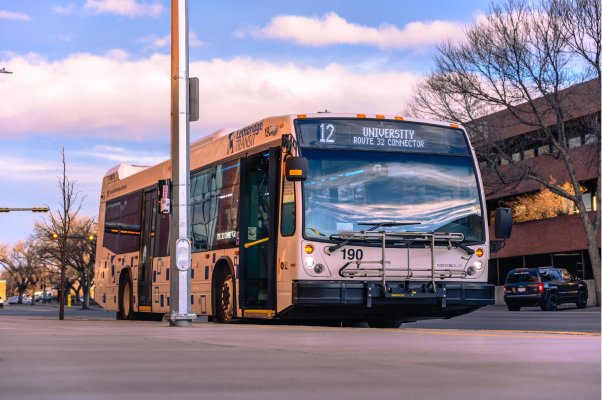
Lethbridge Transit operates a fleet of 40 buses for more than a dozen routes throughout the city. Lethbridge Airport is a commercial airport offering commercial flights to Calgary.
Community Support for Newcomers
Lethbridge is not known for being a diverse city. But it does have a strong support program for new immigrants moving to the city. Newcomers can get assistance with Resettlement, translation, and a variety of community support services through the Lethbridge Local Immigration Partnership (LIP) initiative. This is funded by Immigration, Refugee and Citizenship Canada (IRCC) and is in partnership with Lethbridge Family Services.
Language Support in Lethbridge
There are a variety of private and public resources newcomers can use to receive language support. Some include Lethbridge Family Services, Language Linx, and Southern Alberta Language Assessment Services. You can get Interpretation/translation services in over 20 different languages through the LIP program.
Personal Finance & Banking
Setting up a bank account and organizing your finances is important when you move to Canada. All local banks offer programs for new immigrants to open a bank account. There are also programs in place to help you get a line of credit, mortgage, and access to other financial products. Visit a bank close to your home or fill out an application online.
Get more banking tips for newcomers:
Top 10 Financial Steps to Take Before You Leave for Canada
Move to Canada | Transferring Cash & Valuables
How Much Money Will I Need to Move to Canada?
Lethbridge’s Education System
Lethbridge has a strong education system. Families can enroll their children in public, private, Catholic, or French language schools. You also have access to daycare and childcare programs for children who are not old enough to attend school.
Elementary and High School Education
Three school boards oversee the education system, the Lethbridge School Division, Holy Spirit Roman Catholic School Division, and the Palliser School Division, which oversees education in areas outside the city. In the public board, there are five high schools, four middle schools, and 14 elementary schools. In the Catholic board, there are 15 schools.
Post Secondary Institutions
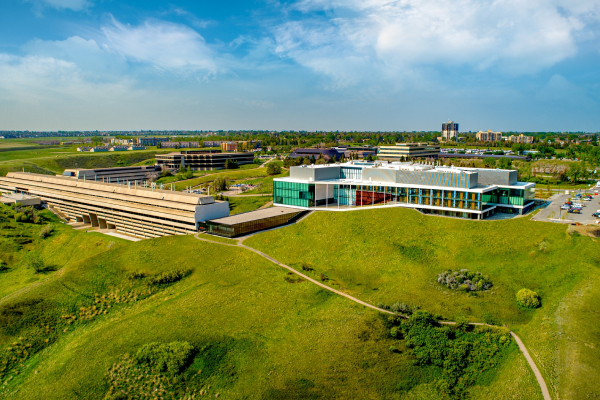
The city is home to two post-secondary institutions, University of Lethbridge and Lethbridge College. Red Crow Community College also has a campus in the city.
Read more about education in Canada:
Schooling in Canada | A Look at the Education System
Higher Education Offers Benefits to Newcomers
Where To Get Medical Care in Lethbridge, Alberta
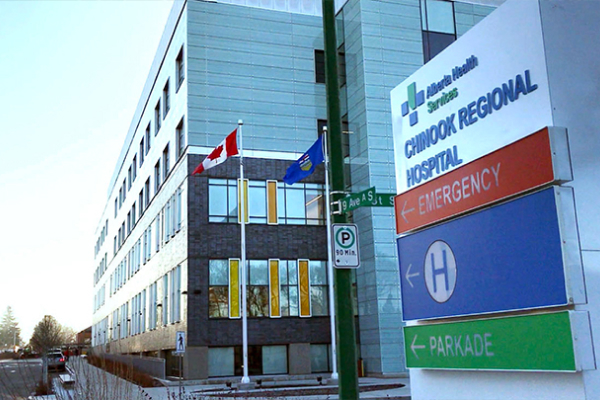
Lethbridge has one hospital, the Chinook Regional Hospital on the city’s south side and easily accessible from all parts of town. In case of an emergency call 9-1-1. This number is the same no matter where you live in Canada. The city also has many walk-in clinics you can visit for non-emergency care.
Many health services are free for people covered by the Alberta Health Care Insurance Plan (AHCIP). Newcomers can apply for the AHCIP three months before leaving their country of origin. If your employer doesn’t offer health benefits, you can purchase individual  .
.
How to Find A Family Doctor In Lethbridge
Finding a family doctor is important to ensure your family has access to proper health care. However, you may need to be put on a waiting list until a doctor accepts new patients. You can use this College of Physicians and Surgeons of Alberta online search tool to find a doctor.
What is Day-to-Day Life Like in Lethbridge?
Things to Do in Lethbridge
There is no shortage of things to do in the city. There are many parks, golf courses, shopping, eateries, and vast outdoor sites to explore. Lethbridge is known for its parkland. 16% of the city is designated as parkland for residents to enjoy.
Public Spaces & Attractions
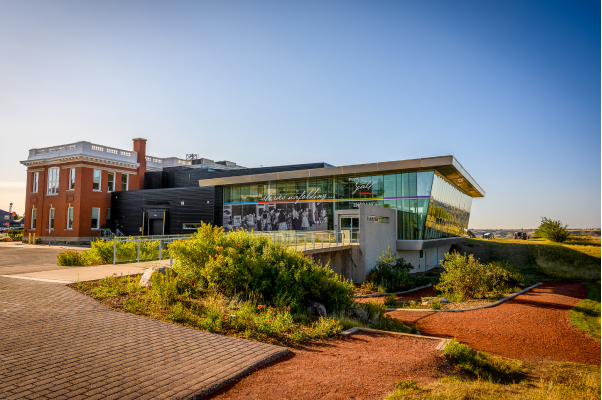
The south side of the city has the majority of attractions. Downtown is home to Park Place Mall and Galt Gardens. The city is home to art galleries, including the Southern Alberta Art Gallery (SAAG), Galt Museum, and CASA. You can also check out Fort Whoop-Up, Pure Casino, and the Helen Schuler Nature Centre.
Restaurants & Nightlife
There are many great restaurants, bars, and pubs in the city. If you are hungry check out Italian Table, Two Guys and A Pizza Place, Bootsma Bakery, and ITEA Express. If you are thirsty, check out The Penny Coffee House, Sonder Coffee Bar, Theoretically Brewing Company, and Spectrum Ale Works.

Nature & Natural Landscapes
There are a lot of natural landscapes to explore in the region. Some of the main attractions are Nikka Yuko Japanese Garden, Henderson Lake Park, Indian Battle Park, Park Lake Provincial Park, and Elizabeth Hall Wetlands.
Sporting Events & Concerts
The city is home to the Lethbridge Hurricanes of the Western Hockey League and other amateur sports teams. If you want to see live music or concerts, check out the local listings at The Geomatic Attic and Enmax Centre.
Culture & Diversity In Lethbridge
Diversity
Lethbridge has a large European community. 30% have English heritage, 23% are German, and 22% are Scottish.
Close to 13% of the population are immigrants and 2.3% are recent newcomers to Canada. So, the city is becoming more diverse as a higher number of immigrants move to the area. The most common minority language spoken in the city is Spanish.
The largest visible minority group is South Asian. They make up 2.3% of the population. Others include Black (2.1%), Filipino (1.9%), Latin American (1.7%), and Chinese (1.4%). 7.1% of the population are Aboriginal.
Worship
Two-thirds of residents identify as Christian. 32% of residents do not have a religious affiliation. The remaining residents are a combination of Buddhists, Sikhs, Muslims, Jews, and Hindus.
The Weather in Lethbridge
Lethbridge has a semi-arid climate. It is known for its warm summers and mild winter weather because of its southern location in the province. The city has one of the lowest amounts of precipitation in the country. It has an average high temperature of 26 degrees Celsius in July and August and an average low of -12 degrees in January.
Common Questions Immigrants Ask About Living in Lethbridge
Is Lethbridge a good place for new immigrants to Canada?
Even though it’s not as diverse as other Canadian cities, Lethbridge has much to offer newcomers. The city is actively seeking newcomers to fill many open job positions. So, you’ll be able to quickly find work. There are many affordable housing options, so you will have no trouble finding a place to live, making your transition easy.
What are the disadvantages of living in Lethbridge for new immigrants?
There are not a lot of significant disadvantages to moving to Lethbridge. It’s a smaller city and it is somewhat remote. So, if you want to live in a big city, this is not the place for you. The economy is not as diverse as in other regions, but there are still ample opportunities in a variety of fields.
What are the benefits of living in Lethbridge?
There are a lot of attractive features that make Lethbridge an ideal location to live. It has a low cost of living and much more affordable rental and real estate costs compared to other parts of the country. It also has a strong economy and education system.