Join the ScotiabankStartRight® Program designed for Newcomers‡ and get up to $2,300* in value in the first year.
Pharmacist jobs in Canada are popular among those who desire to work in the healthcare field. One of the attractive things about this profession is the demand and competitive salary. The Canadian Pharmacists Association (CphA) reports a national shortage of pharmacists in Canada. It’s a stable and growing field. And, as the Canadian population ages and healthcare demand evolve, pharmacists are taking on new roles and duties.
To become employed as a pharmacist in Canada, you require a university degree in pharmacy and a period of supervised practical training. Since community and hospital pharmacists belong to a regulated profession, you will need a license from the province or territory where you plan to reside. You can only call yourself a pharmacist or practice the profession if you are licensed as a full member in one of the provincial/territorial bodies. These bodies are represented by the National Association of Pharmacy Regulatory Authorities (NAPRA).
If you plan to continue your pharmacist career in Canada, it’s wise to research the profession before you move to Canada. This will ensure that you meet job requirements. Get yourself prepared for a pharmacist job in Canada by reading this helpful article.
How to Immigrate to Canada as a Pharmacist
Before You Move to Canada to Pursue a Pharmacist Career
When you take the time to research the field of pharmacy in Canada, you can pave the way to your career success. Below are steps that you can take before you move to Canada to improve your chances of working as a pharmacist when you arrive:
Improve your language skills and enroll in language classes in your home country and continue them after you move to Canada. You’ll need to prove your English or French (depending on your destination province) language competency or be tested.
Gather and arrange your official education, work, and identity documents while still in your home country. Check with your provincial or territorial regulatory body to find out what documents you will need and verify if they need to be translated. You may need to use a professional translation service in Canada.
What to Expect When Pursuing a Pharmacist Career in Canada
Working as a pharmacist in Canada can take you down many career paths. And, there are many specializations. Most pharmacists work in the retail and healthcare sector. You mostly see them working in pharmacies (local, regional, or national companies). This accounts for about 70% of licensed pharmacists.
You can also work in hospitals, clinics, long-term care and assisted living facilities, and for pharmaceutical companies, government agencies, or educational institutions. If you desire, you can also explore options to own a pharmacy.
Employment Outlook for Pharmacist Jobs in Canada
Understanding the job market and employment outlook will help you set realistic goals for your job search. There are about 45,000 pharmacist jobs across the country.
The Government of Canada lists pharmacists as an in-demand role with opportunities in every province. There will be close to 13,000 job openings in the field from 2019 to 2028.
The expansion to 24-hour retail services and the recently expanded role pharmacists play in administering vaccinations and health consultation, add to the need. In Ontario pharmacists can now prescribe treatments for many ailments.
Start Your Research with the NOC Code for Pharmacist Jobs in Canada
It’s important to research how pharmacy in Canada is practiced and to become familiar with provincial laws and legislation where you’ll settle. As well, Understanding the broader requirements of job market trends and trends specific to the pharmacy profession will place you in a strong position to achieve your career goals.
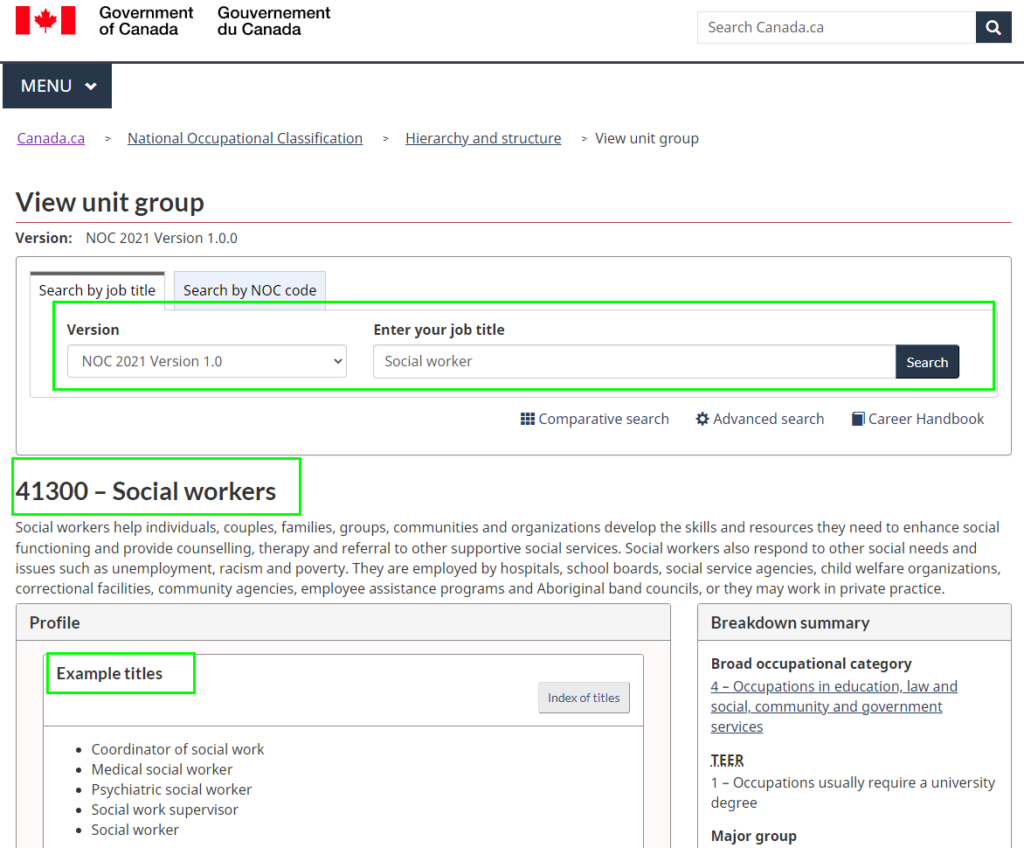
The National Occupational Classification (NOC) is a good place to start. Using the 5-digit pharmacist NOC code 31120, you can begin to understand the main duties, example job titles, and employment requirements. Another tip is to know the name of your job in Canada. This information will help you when you begin your job search.
Combined with using the NOC 31120, you can do further research to gather information about working as a pharmacist in Canada.
Vital information provided by the Government of Canada’s Job Bank outlines factors such as pharmacist wages, job prospects, requirements, and more. Since job prospects can vary across Canada, you need to identify where the prospects are good and use the information to inform you of important settlement decisions.
Requirements for Becoming a Pharmacist in Canada
Internally trained pharmacists must meet the licensing requirements in Canada to practice. International pharmacy graduates must enroll in NAPRA’s Pharmacists’ Gateway Canada program. Below, we explain the steps you will need to take to work as a pharmacist in Canada:
Credential Recognition to Meet Pharmacist Job Requirements in Canada
The first thing to do before you arrive is to find out the specific requirements to work as a pharmacist in Canada. You can start by contacting the regulatory body for pharmacists in the province or territory where you intend to settle in Canada. They will advise you about the process, the documents you require, and the assessment fees.
Alternatively, you may contact the National Association of Pharmacy Regulatory Authorities (NAPRA). NAPRA serves as the national voice for the province and territory regulatory bodies.
It’s also important to become fully aware of the licensing procedure and what the regulatory body will expect of you. For example, regardless of your education or experience, you need to have a license in Canada to practice as a pharmacist.
You will have to complete the PEPC evaluating exam, in addition to a two-part qualifying exam. Information on the evaluating and qualifying examinations can be obtained from PEBC.
You need to gain practical experience in a Canadian pharmacy workplace to get your pharmacist license. The provincial/territorial regulatory body will determine the period for the structured practical training under the supervision of a licensed pharmacist that you require. If you’re immigrating to Quebec, you must follow the requirements set by the Ordre des pharmaciens du Quebec.
Credential Assessment Services
If you plan to attend college or university to upgrade your skills, contact the school to find out what steps to take and what credential assessment agency you should use. Here are some resources to consult:
To find more organizations and agencies providing credential evaluation, assessment and qualification recognition services click here.
Upgrading Your Skills to Meet Pharmacy Job Requirements
In addition to accreditation, another part of your journey to becoming a pharmacist in Canada is to upgrade your skills. You can upgrade your skills through bridging programs or other courses.
As a pharmacist, you must continue to update your knowledge and skills on new pharmaceutical procedures and practices. You can benefit from ongoing learning and professional growth through continuing education courses and seminars.
Skills Upgrading to Qualify for Pharmacist Jobs in Canada
You may have strong technical skills, but often that is not enough to get a job or maintain it afterward. As a pharmacist, you are expected to have an interest in helping people. Other vital skills include strong communication and critical thinking skills, and you must understand:
Biochemical mechanisms of action of drugs
Drug uses and therapeutic roles
Side effects and potential interactions.
Language Training for Pharmacists in Canada
You may need more training or skills upgrading, especially regarding your soft skills. Pharmacists require advanced reading, writing, and speaking abilities. Having strong skills in one or both of Canada’s official languages – English or French – is important for your future in Canada. Whether you choose to focus on learning or improving English or French will depend on which of the two languages is most spoken in the area where you intend to live.
You may be eligible for the Language Instruction for Newcomers to Canada (LINC) program. Otherwise, you can find other free or affordable classes in English as a Second Language (ESL) or French as a Second Language (FSL) classes through school boards or settlement agencies.
If you intend to be self-employed you may require advanced business skills as well as financial resources to establish and maintain the practice.
Bridging Programs for Pharmacist Careers in Canada
Bridging programs are an effective way to transition from your international experience and training to the Canadian workplace. Many colleges, universities, and immigrant-serving agencies offer pharmacy-related bridging programs or workshops. You may be eligible for one. Do some research to find a program that’s suitable for you. Here are a few to consider:
This bridging program is designed for internationally trained pharmacists to achieve the competencies for practice in Canada, and for Canadian-trained pharmacists to re-enter pharmacy practice in Alberta after a prolonged absence or provide updates on core competencies for practicing pharmacists.
This program helps internationally trained pharmacists meet Canadian practice standards. The program includes practical courses, opportunities for mentoring, and licensing exam preparation.
Pharmacist Schools in Canada
There are 10 schools of pharmacy in provinces across Canada:
The following associations provide information about licensure and certification and offer professional development, education, and networking opportunities.
Professional immigrant networks are organized, volunteer-run member-based associations or networks created by and for immigrant professionals that seek to:
Create a forum to contribute to and enrich their respective communities
Provide opportunities for their members to find meaningful employment and achieve their professional goals.
Activities include networking events, mentoring, information sessions, professional development and connections to employment opportunities.
Canada has one of the highest average salaries for pharmacists in the world. The average annual salary for a pharmacist in Canada varies based on your experience, where you work, specializations, and other considerations. You can make from $54,112 to $144,300 per year, with the median salary being $104,646, according to Job Bank Canada.
Quebec, Alberta, and Manitoba have the highest median salary, which is just over $110, 000 annually. Manitoba also has the highest average starting salary, $75,699. Quebec has the highest earning potential, with a cap of $161,891.
Pharmacist Salary in Canada
Here are the most recent pharmacist salary numbers in Canada (as of November, 2022):
Province
Low ($/year)
Median ($/year
High ($/year)
Alberta
60,529
111,536
138,040
British Columbia
68,708
98,725
127,387
Manitoba
75,699
110,436
141,059
New Brunswick
75,256
98,894
135,958
Newfoundland and Labrador
72,744
97,557
130,905
Northwest Territories
N/A
N/A
N/A
Nova Scotia
64,830
93,743
123,079
Nunavut
N/A
N/A
N/A
Ontario
40,188
101,646
143,978
Prince Edward Island
N/A
N/A
N/A
Quebec
63,924
112,199
161,891
Saskatchewan
72,847
109,108
145,484
Yukon
N/A
N/A
N/A
Average Pharmacist Salary by Province: Source Jobbank Canada
Best Provinces to Work in Canada as a Pharmacist Based on Salary & Lifestyle
It’s vital to gather as much information as possible about job prospects, especially since labour market conditions for 2019-2028 reveal that pharmacists are expected to face labour surplus conditions. However, you will discover provinces and regions where the demand for pharmacists is good such as Calgary and Edmonton in Alberta, and Hamilton, Ottawa, and Windsor in Ontario.
Pursuing a Pharmacist Career in Canada
Becoming a pharmacist in Canada follows a similar path as many other healthcare careers. You need to have the right academic credentials, relevant work experience, and a plan for where you want to work in Canada. Below is valuable information to help you pursue a pharmacist career in Canada:
Major Employers for Pharmacy Jobs in Canada
The number of pharmacist employers across Canada has risen over the years as the population ages. There is a whole new range of career opportunities in homecare operations as well as in grocery stores, big-box retail stores, health management organizations, and government and third-party insurance payers. Pharmacists also find employment in the biotech, insurance, and pharmaceutical industries (such as in research, marketing, or sales).
Some of the top employers of pharmacists in Canada include:
Shoppers Drug Mart
Guardian and IDA
Pharmasave
PharmaChoice
London Drugs.
You can visit Canada’s Best Diversity Employers website to check for pharmaceutical or healthcare firms that you might be interested in. This special designation recognizes Canada’s best employers for diversity, inclusion, and equity.
There are career opportunities in homecare operations as well as in grocery stores and big-box retail stores.
How to Become a Registered Pharmacist in Canada
If you are a new immigrant to Canada and have an interest in becoming a pharmacist, you will need to complete the same steps as other native Canadians. You must meet the following requirements and:
Have a bachelor’s or Doctor of Pharmacy degree from a Canadian university
Complete the national board examination through the Pharmacy Examining Board of Canada (except Québec)
Complete an apprenticeship or intern program to gain practical experience
Be fluent in English or French.
Meet provincial/territorial regulations in the region you reside.
How to Find Your First Canadian Pharmacist Job
Searching for a pharmacist job in Canada can be different than in your home country. The job market can in Canada is competitive. Employers may also have different job application requirements. Use these tips to help you with your job search:
Job Search Techniques for Pharmacists in Canada
You must register to work as a pharmacist in the province or territory where you intend to settle. And, you must look for jobs in the region where you register. Therefore, take your time to research job requirements in that region and develop a plan to find work.
There are many ways to search for jobs in the pharmacy sector.
Broaden your search and include alternative careers.
Seek a mentor in the pharmacy sector who could share their insights and introduce you to their professional network.
Join pharmacy or healthcare job-finding or networking clubs through immigrant-serving agencies.
Attend pharmacy or healthcare job fairs and regularly check online job boards.
Some pharmacy colleges or associations may maintain a job bank or suggest a commercial job site. Also, hospitals and other health institutions post vacancies on their websites.
Use Immigrant Settlement Agencies
You may need help to find jobs, update your resume, write cover letters, prepare for interviews, and understand what Canadian employers look for. Most settlement agencies offer free job search services that can reduce the stress and anxiety of navigating your job search.
You need a resume that helps you stand out from other applicants. With the right resume, you’ll be able to continue your pharmacist career in Canada and improve your chances of getting job interviews.
Use these resume writing tips:
Objective
Write a solid objective on your resume to help your prospective employer know what kind of career you’re looking for. If you’re licensed, state that in your objective. For example, write, “Licensed pharmacist with three years of professional study.”
Experience
Include any internships and volunteer placements you had or currently have in Canada. Also mention the name and city of the pharmacy college you attended, along with your degree and courses, such as compounding or ambulatory care. Also, mention the Canadian province where you got your license.
Accomplishments
Step away from just describing what you did and where. Start by thinking about what value you add to your current or previous organization. How did you help them reduce medication errors, or potentially save money? Did you develop any innovative programs or projects that changed the way your department did things? Don’t be afraid to give specifics.
Action Words
Action words best describe your work experience. For example, write, “Dispense and compound prescriptions, inform patients of dosing information and directions for use, and interact with XYZ and other insurance providers regarding billing or reimbursement issues.”
Key Skills
Make a list of skills that are relevant to your pharmacy career. List your most relevant skills at the top. You may include skills such as distributing prescription drugs, compounding, and counselling patients. If you have any pharmaceutical specialties, add them (i.e., acute/critical care, ICU, retail, nuclear pharmaceuticals). For an online resume, you should include keywords relative to your pharmacist career. This can help employers find you on the Internet.
Techniques for Pharmacist Job Interviews
Pharmacy is one of the most unique job types available. As the job market is competitive, you need to practice answering common pharmacy interview questions.
The interviewer may ask technical questions. But, they may assume that you meet the technical requirements of the job, otherwise you wouldn’t have completed your pharmacy degree. Brushing up on your technical knowledge before your interview may be a good idea. However, you should practice responding to common interview questions.
Here are some sample pharmacist job interview questions to help you prepare for your next interview.
Why did you decide to pursue a career in pharmacy?
Here is a case describing a common drug interaction. How would you resolve the problem?
How do you spot drug-seeking behaviour?
How do you combine business requirements with the pharmacy profession?
Informational Interviews
While the job outlook looks positive for pharmacists, landing that next opportunity – especially for newcomers – requires extra effort and outreach. Informational interviewing can put your communication skills, research skills, and time management talents to work for your benefit.
An informational interview is a brief (20–30-minute) meeting that you schedule with someone currently employed as a pharmacist to learn more about the industry in Canada.
You should not try to get a job during an informational interview but find out more about the field. Doing so can help you to assess what skills, knowledge, or experience you may need, and which ones are highly valued and in demand. An informational interview with a contact from your network can be an excellent source of career information. In addition to basic information about the industry, someone who works in the industry can provide first-hand experience.
Make a list of the pharmacies, hospitals, pharmaceutical companies, and public health agencies that operate in your area.
Use resources such as professional organizations, LinkedIn, and other networking tools to identify organization insiders, pharmaceutical recruiters, and other professionals to connect with.
Create 5 – 10 open-ended questions that you would like to know more about.
Networking
Networking can provide job leads and information about a specific firm or industry. It can also help you meet other people to expand your network. As many job vacancies are not advertised, you must make connections with practicing pharmacists and others in your field.
Good places to network include pharmaceutical conferences, associations, or places where people meet to share information and build professional relationships.
LinkedIn is another tool for networking. It is great to connect with former colleagues and employers, search for companies and jobs, and get introductions. You can also connect with people in the pharmaceutical sector and join related professional groups.
But remember, that it takes time to grow the ties you establish through networking.
With a positive outlook for pharmacist jobs in Canada, now is the time to check out your options.
The healthcare field in Canada is experiencing significant job shortages, including medical doctors. Hospitals, long-term care facilities, and many other medical organizations need doctors and healthcare practitioners. This has created a great opportunity for internationally trained doctors. To work as a medical doctor in Canada, you require a bachelor’s degree and a graduate from an approved medical school. This includes completing two to three years of family medicine residency training. You must also complete the Medical Council of Canada qualifying exams.
Healthcare organizations in Canada refer to physicians who have received their medical education outside of Canada and the United States, as international medical graduates (IMGs). Because Canada is facing a labour shortage of medical doctors, continuing your career in Canada may hold great interest to you.
If you’re an IMG, learn about job requirements for doctors in Canada, credentials assessment, job search techniques, and more.
How to Immigrate to Canada as a Medical Doctor
It’s vital to research the medical profession and its requirements before you come to Canada. These requirements are different than what you are accustomed to in your home country. It can be time-consuming and expensive to become a licensed medical doctor, so it’s helpful to know what to expect.
There are steps that you can take before you immigrate to Canada to improve your chances of practicing your profession.
Before You Move to Canada to Pursue a Medical Doctor Career
Attend the webinar How to Find Your First Job as a Newcomer in Canada.
Confirm that your medical degree is from a recognized medical school at the FAIMER International Medical Education Directory (IMED). Your medical school and qualification must be listed on the directory to be accepted in Canada.
Contact the medical regulatory association in the province where you’ll settle in Canada to learn about:
Procedures you must follow, and the cost and time required to obtain a physician’s permit
Steps you can take to become licensed before and after you immigrate to Canada
Programs for International medical graduates.
Start the licensure process for international medical graduates while still in your home country.
Improve your language skills, and enroll in language classes in your home country and continue them after you move to Canada. You’ll need to prove your English or French (depending on your destination province) language competency or be tested.
Gather and organize your official education, work, and identity documents while still in your home country.
Check with your provincial or territorial regulatory body to find out what documents you need to bring and verify if they need to be translated. You might need to use a professional translation service in Canada.
Understand how the medical profession is practiced in Canada and familiarize yourself with provincial laws and legislation where you’ll settle.
Know the name of your job in Canada (for example, family physician, general practice resident, general practitioner, medical doctor).
What to Expect When Pursuing a Medical Doctor Career in Canada
Medical doctors belong to a regulated profession in Canada, so you must be licensed by the provincial or territorial licensing authority in the province where you plan to settle. With a license, a medical doctor can work in private practice, including group or team practices, hospitals, and clinics.
Employment Outlook for Medical Doctor Jobs in Canada
If you have international medical qualifications, it’s vital to understand what you require to work in Canada as well as the labour market conditions.
According to the Government of Canada’s Job Bank, job prospects for medical doctors are very good in all provinces. There are opportunities for general practitioners and family physicians in all regions of Canada.
By researching the job prospects, you can find labour market conditions for 2019-2028 that show Canada medical doctor shortages. Estimates reveal that Canada will be short about 44,000 doctors by 2028. The country will need to train and hire about 30,000 more by 2028 to have an average number of doctors per capita on par with Organization for Economic Co-operation and Development (OECD) countries. Family doctors are in the highest demand. They account for 72% of the doctor shortage.
This is good news for medical doctors with international qualifications because there will be ample job opportunities in the coming years.
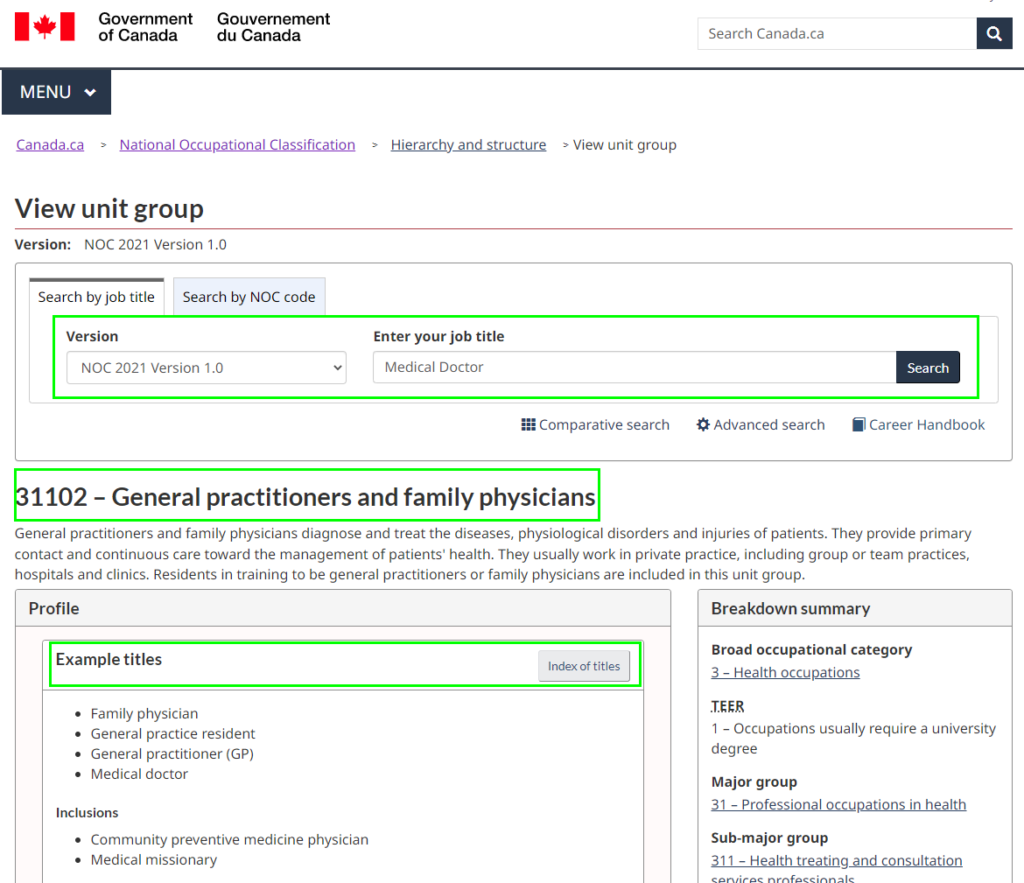
Start Your Research with the NOC Code for Physician Jobs in Canada – NOC: 31102
A good place to start your research is by using the National Occupational Classification (NOC) 31102 (NOC 2021 Version 1.0) for medical doctors. The NOC provides a standard definition of the role of general practitioners and family physicians. Here you can get a sense of the role, job titles, main duties, and job requirements.
Use the NOC 31102 to learn more about the role of medical doctors in Canada.
Requirements to Become a Medical Doctor in Canada
Internationally trained medical doctors must meet the licensing requirements in Canada to practice. International graduates must enroll in NAPRA’s Medical doctors’ Gateway Canada program. Below we explain the steps you must follow to work as a Medical doctor in Canada.
Credential Recognition to Meet Medical Doctor Job Requirements in Canada
Regardless of your education or experience, you must have a license to practice as a medical doctor in Canada. One of the first things to do is learn about the specific requirements to work as a doctor in Canada. To do this, you can contact the provincial or territorial regulatory body where you plan to settle. They can advise you about the documents that you require, licensing fees, and more. It’s a good idea to take this step before you arrive in Canada and accordingly decide your departure date to Canada.
Depending on the province you intend to settle in, your licensing process may include completing:
Exams (eligibility, program selection, qualifying, certification)
Language proficiency tests
Credentials assessment
Postgraduate training/assessment
Return-of-service agreements (commitment to practice in an underserved community for an agreed period).
The licensing process has many stages and may seem complicated. But once you know what the regulatory body expects and the licensing procedure, you can carefully complete your application. The process can also be expensive. So, you’ll also require a large financial and personal commitment to pursue the process.
Some immigrant-serving organizations offer study groups for the Medical Council of Canada (MCC) Evaluating Exam (MCC EE), Qualifying Examination Part I, and Qualifying Examination Part II. These study groups aim to facilitate focused learning and provide a learning environment to explore, discuss, and model Canadian medical content with practicing Canadian physician educators and senior residents.
Credential Assessment Services
If you plan to enroll in a college or university program to upgrade your skills, contact the school to find out the steps you should take and the credential assessment agency you should use. Be sure to check if the school requires you to use a specific credential agency before you proceed. This will help you to avoid paying extra fees and save money.
To find more organizations and agencies providing credential evaluation, assessment, and qualification recognition services click here.
Skills Upgrading to Qualify for Medical Doctor Jobs in Canada
In addition to becoming accredited, another activity to become a medical doctor in Canada is to upgrade your skills through a bridging program or other courses and workshops.
As a physician, you must continually update your knowledge and skills on new medical procedures and practices. You can benefit from ongoing learning and professional growth through continuing education courses and seminars.
You may have strong technical and practical skills, but often that is not enough to get a job or maintain it afterward. As a medical doctor, you are expected to know how to handle patients with strong listening, interpersonal, and communication skills, and empathize with them to understand their illness clearly. You must also know how to deal with the patient’s relatives with patience.
If you intend to be self-employed you may require advanced business skills as well as financial resources to establish and maintain the medical practice.
Language Training for Medical Doctors in Canada
Having strong skills in one or both of Canada’s official languages – English or French – is important for your future in Canada. Whether you choose to learn or improve your English or French will depend on which of the two languages most people speak in the area where you intend to live.
You may be eligible for Language Instruction for Newcomers to Canada (LINC) program. Otherwise, you can find other free or affordable English as a Second Language (ESL) or French as a Second Language (FSL) classes offered through school boards or settlement agencies.
There are language courses to teach you professional terms, such as job-specific language training and Occupation Specific Language Training (OSLT) in Ontario. And, if you already speak one of Canada’s two official languages at a high level, learning the other may be helpful, as it may offer you better employment options.
Bridging Programs for Medical Doctor Careers in Canada
International Medical Graduates can take advantage of programs that help them to practice as medical doctors in Canada.
Bridging programs are a good way for International Medical Graduates (IMGs) to transition their international experience and training to the Canadian workplace. Many colleges, universities, and immigrant-serving agencies offer bridging programs or workshops that you may be eligible for. Explore the following medical bridging programs to see if any may be suitable for you.
This program is designed to assess IMG applicants, and prepare them for application to UBC Faculty of Medicine Residency Training programs, which are available to IMGs in the first iteration of the Canadian Residency Matching Service (CaRMS).
This program offers informational, learning, and other types of support, services, and resources to support entry into the Canadian healthcare system for IMGs.
The IMG Clerkship Program will prepare IMGs for residency training. Upon completion of the program, participants will be eligible to enter the first round of the CaRMS match as Dalhousie graduates.
This program helps internationally educated health professionals connect with employers and community partners. The program includes workshops on transferable skills and healthcare sector orientation. It also provides occupation-specific language education, workplace culture and communications training, and employment opportunities.
This program provides training in medical communication, healthcare culture, familiarity with Objective Structured Clinical Examination (OSCE) and exposure to Canadian medical practice through observership. This focused training broadens knowledge of Canadian medical practice and improves the success rate of IMDs as they pursue medical exams and residency.
College of Physicians and Surgeons of Ontario (CPSO)
This project is developing a website that illustrates the Considerations of Legal, Ethical and Organization (CLEO) aspects of the practice of medicine, which are a component of the Medical Council of Canada’s (MCC) evaluating exam. The project provides web-based medical literacy and educational tools to address the communication needs of IMGs who apply to one of Ontario’s programs for entry to medical practice.
How to Become a Doctor in Canada
If you’re an international student interested in attending medical school in Canada, it requires years of education and training. And, not all medical schools accept international and U.S. students. So, it’s important to do your research. Here are the most common steps to becoming a doctor in Canada:
Complete a university degree: Get a bachelor’s degree in a science-based subject.
2. Apply to medical school and get accepted: Getting into medical school is extremely competitive. It’s estimated that one-quarter of applicants get accepted. Medical school takes about four years to complete. Two years of in-class learning and two years of practical training.
3. Pass the MCCQE1 Exams: You need to pass the Medical Council of Canada Qualifying Examination to practice medicine in Canada.
4. Apply for and complete your medical residency: Apply for positions through the Canadian Resident Matching Service (CaRMS). The length of your residency depends on your area of specialization. It’s two years for family doctors.
5. You’re a doctor! Once you complete your residency, you have completed all the steps to practice medicine in Canada.
Medical Schools in Canada
There are 17 medical schools in Canada with over 11,500 students. Each year they produce 2,700 new graduates. Ontario has the most schools with six, followed by 4 in Quebec. Here’s a list of medical schools in Canada:
Province
Medical School
Alberta
University of Alberta Faculty of Medicine and Dentistry
Cumming School of Medicine at the University of Calgary
British Columbia
University of British Columbia Faculty of Medicine
Manitoba
University of Manitoba Max Rady College of Medicine
Newfoundland & Labrador
Memorial University Medical School
Ontario
Michael G. DeGroote School of Medicine (McMaster University)
Northern Ontario School of Medicine (NOSM)University of Ottawa Medical SchoolQueen’s University Medical SchoolUniversity of Toronto Medical SchoolSchulich School of Medicine and Dentistry (Western University)
Québec
Université de Sherbrooke Medical School
McGill Medical SchoolUniversité de Montreal Faculty of MedicineUniversité Laval Medical School
Saskatchewan
University of Saskatchewan College of Medicine
The Association of Faculties of Medicine of Canada (AFMC) maintains a list of medical schools in Canada.
Medical Doctor Associations in Canada
The following associations provide information about licensure and certification and offer professional development, education, and networking opportunities.
Professional immigrant networks are organized volunteer-run member-based associations or networks. They are created by and for immigrant professionals who seek to
Create a forum to contribute to and enrich their respective communities
Provide opportunities for members to find employment and achieve their professional goals.
Activities of these networks include networking events, mentoring, information sessions, professional development opportunities such as workshops, speaker events, and training and connections to employment opportunities.
Here are some immigrant networks to research across Canada:
Alberta
This non-profit organization consists of doctors trained or educated in countries other than Canada. It also includes individuals and organizations interested in the challenges facing International Medical Graduates (IMGs) in Canada.
Alberta International Medical Graduates Association (AIMGA)
Nova Scotia
isans: Immigrant Services Association of Nova Scotia:
isans helps newcomer professionals with their full economic and social integration in the province of Nova Scotia.
Ontario
Association of International Physicians and Surgeons of Ontario (AIPSO)
This association is an independent professional non-profit that represents physicians and surgeons trained and licensed in jurisdictions outside Canada.
This network is a support group for immigrant Filipino doctors. It provides support to prepare for medical licensure and job search assistance.
How Much Do Medical Doctors Make in Canada?
Medical doctors in Canada can earn between $76,759 and $451,997 per year depending on their level of experience and location. The average salary in Canada is $216,833.
The province with the highest average salary is Manitoba at $252,974. The province with the lowest average salary is British Columbia at $164,939.
Medical Doctor Salary in Canada
Here are the most recent medical doctor salary numbers in Canada (as of November, 2022):
Best Provinces to Work in Canada as a Medical Doctor Based on Salary & Lifestyle
Medical doctors have different job prospects depending on where they work in Canada. So, it’s helpful to research job prospects across Canada. According to the Canadian Occupation Projections Systems, labour shortage conditions will persist from 2019 – 2028. And as Canada’s population ages, there will be greater demand for health services. In fact, employment growth for medical doctors is projected to be the second highest of all occupation groups.
To research job prospects by province, click here. From here, you can also search for job prospects by region within the province. Once you identify which locations offer job prospects, you can begin to research cities and determine what cities would meet your personal, professional, and practical needs. For example, cities in the province of Alberta that have a good outlook for medical doctors include Calgary, Edmonton, and Lethbridge. Cities across Canada with a good outlook include Fredericton, New Brunswick, Windsor, Ottawa, and Hamilton in Ontario.
Pursuing a Medical Doctor Career in Canada
Becoming a Medical doctor in Canada follows a similar path as many other healthcare careers. You need to have the right academic credentials, relevant work experience, and a plan for where you want to work within the country. Below is valuable information to help you pursue a medical doctor career in Canada:
Major Employers for Doctor Jobs in Canada
Medical doctors usually work in private practice, including group or team practices, hospitals, and clinics. Look for opportunities with your local medical community.
You can visit Canada’s Best Diversity Employers website to locate hospitals and healthcare centres that you might be interested in. Employers receive this special designation for their commitment to workplace diversity, inclusion, and equity.
How to Find Your First Canadian Medical Doctor Job
Searching for a medical doctor job in Canada can be different than in your home country. For example, the job market can be quite competitive, and employers may have different job application requirements. So you need to prepare and understand how to gain employment.
Job Search Techniques for Medical Doctors
Once you have completed the licensing process, you can look for jobs in the province or territory where you are licensed. Therefore, take your time to research job requirements in that region and develop a plan to find work.
There are many ways to search for jobs including:
Broadening your search and including alternative careers.
Seeking a mentor in the medical field who would give you valuable insight and advice and introduce you to their professional network.
Joining healthcare job-finding or networking clubs through immigrant-serving agencies.Attending medical or healthcare job fairs and regularly checking online job boards.
Immigrant Settlement Agencies
Most settlement agencies and other immigrant-serving organizations can provide help with your job search including:
Finding job vacancies
Updating your resume
Writing cover letters
Preparing for interviews, and
Understanding what Canadian employers are looking for.
To find immigrant services in your area click here.
Resume Writing for Medical Doctors
A medical resume is a unique document. It’s important you understand what Canadian employers expect and you follow up-to-date medical resume formats. A strong resume familiarizes a prospective employer with your expertise and achievements in the medical field, as well as your language skills.
Like many medical professionals, you may decide to use a professional resume writer to stand out from the crowd. Regardless, it pays to understand what makes a quality resume no matter who writes it.
Here are tips to make your resume cleaner, easier to read, and more likely to get you interviews.
List your medical degree following your name as in – NAME SURNAME, M.D.
Give details about your medical license and certification status. Specify the date (month, year) you received your license. List your certifications in your specialty; use bullet points.
List any academic scholarships, honours bestowed by prestigious medical associations or any academic accomplishments.
Identify the institutions where you completed your fellowships, residencies, and internship.
Highlight, don’t elaborate. For example, if you are a physician with an extensive research background in your respective field, naturally you’d like to explain each study. Remember, a resume is designed to highlight professional experience, not to explain it in detail.
Provide any private practice experience, along with the location and duration of the practice. Include details about any academic positions you held.
List your memberships or affiliations to any medical boards or societies.
Interview Techniques for Medical Doctors
Working as a doctor requires you to have great intelligence, integrity, competence, social skills, and so much more. Be prepared for a thorough interview that will test you on many levels.
Here are some common questions that you can prepare to answer in an interview:
Why did you choose this career? Why did you choose this specialty?
Your professional experience: Tell us about your background as a doctor: education and experience. What are your specialties/ expertise?
Why are you interested in this hospital/department?
How do you handle workload stress and emergencies?
Describe your day-to-day activities, priorities, and tasks.
Describe your most successful accomplishments.
What are the key challenges of this (field of medicine)?
You can prepare for an interview by consulting with colleagues and friends. Rehearse an interview situation with them and consider the feedback that you receive to succeed in interviews. Do not memorize your responses but be very familiar with them. Be succinct in your replies, and emphasize your strengths.
Informational Interviews
While there’s a shortage of physicians in Canada, landing that next opportunity, especially for newcomers, requires extra effort and outreach. Informational interviews are a great way to demonstrate your empathetic and professional communication abilities, research skills, and time management talents.
An informational interview is a brief (20–30-minute) meeting that you schedule with a person who is currently working in an industry to learn more about that industry.
You should not try to secure a job during an informational interview, but rather determine whether a particular position or industry aligns with your interests and personality. An informational interview with a contact from your network can be an excellent source of career information because, in addition to basic information about a particular type of industry (such as you might find on a company website), it also offers you the benefit of a professional’s first-hand experiences and impressions.
Make a list of the hospitals, clinics, public health agencies, and others, as desired, that operate in your area.
Use your resources, including professional organizations, LinkedIn, and other networking tools, to identify organization insiders, such as pharmaceutical recruiters, health unit coordinators, etc.
Create 5-10 open-ended questions that will yield useful information to help your job search.
Networking is Important for Medical Doctors
It’s helpful to connect with practicing medical doctors to discover jobs in the “hidden” job market.
Networking is a vital activity to help you find job leads, gain professional advice and guidance, and meet others to expand your network. In Canada, many job vacancies are not advertised. Also known as the “hidden” job market, you can discover these jobs through networking with other medical professionals. So, it’s helpful to make connections and build relationships with others in your field who can help you discover these jobs. Good places to network include conferences, associations, and other settings.
LinkedIn is another vital tool for networking. Using LinkedIn, you can connect with former colleagues and employers, search for jobs, and get introductions to others in the medical community. You can also join some relevant groups to learn more about the medical profession in Canada.
However, remember that you must allow time to cultivate and grow the ties you establish through networking. Nothing will happen overnight, and you need to be patient.
Are you thinking about continuing your career as a dental hygienist in Canada? It’s a popular career choice that pays well within the dental field. Job prospects are good in most provinces and there is the opportunity to specialize in other areas within the dental field as you acquire more experience.
The employment requirements for a dental hygienist in Canada include completion of a two to three-year dental hygiene program. The program must be approved by the provincial or territorial governing board where you intend to settle. Also, you must have a license from the provincial or territorial regulatory body. Dental hygienists belong to a regulated profession in Canada, so you must also register with the appropriate regulatory body to use the title of dental hygienist.
If you are interested in continuing your dental hygiene career in Canada, learn more about the licensing process, dental hygienist job search techniques, and more! Prepare to work in a dental hygienist job in Canada by reading this helpful overview.
How to Immigrate to Canada as a Dental Hygienist
Before You Move to Canada to Pursue a Dental Hygienist Career
It’s important to take the time to research dental hygiene careers in Canada before moving to the country. These steps can help you to research your profession and improve your chances of continuing your career in Canada.
Attend the webinar How to Find Your First Job in Canada as a Newcomer to learn more about job search strategies.
Contact the regulatory body for dental hygienists in the province or territory where you plan to settle to learn about the:
Improve your language skills and enroll in language classes while you are in your home country and continue them after moving to Canada.
Gather and organize your official education, work, and identity documents while still in your home country. Find out what documents you need to bring for employment purposes or to continue your education. Verify if any documents need to be translated. You may need to use a professional translation service in Canada.
Understand how the dental hygienist profession is practiced in Canada and familiarize yourself with the procedures, laws, and legislation that govern your profession in the province where you’ll settle.
Know the name of your job in Canada and example titles to assist with your job search.
What to Expect When Pursuing a Dental Hygienist Career in Canada
It’s important to research your profession before you arrive in Canada. Ideally, you want to have a general overview of what you require to work in Canada and how your international qualifications will be assessed. It’s also helpful to understand the Canadian labour market and what the demand is for dental hygienists.
Employment Outlook for Dental Hygienist Jobs in Canada
There are more than 30,000 registered dental hygienists in Canada. Close to half work in Ontario. About half of all job posts for this job are in Ontario, followed by other heavily populated provinces such as British Columbia, Quebec, and Alberta.
Even though the job market is competitive, dental hygienists are always in demand. With more immigrants moving to Canada and with a growing population, the demand for dental care continues to increase. The demand for dental care is also increasing because of the aging population and companies and government programs offering more dental insurance coverage. The aging population is also creating job opportunities as a portion of existing hygienists are retiring. Since about one-third of hygienist jobs are part-time, there is flexibility to work full or part-time.
The overall employment outlook for dental hygienists is good, with the most opportunities in Ontario.
Start Your Research with the NOC Code for Dental Hygienist Jobs in Canada
The National Occupational Classification (NOC) provides a general overview and standard definition of the dental hygienist’s role in Canada. The five-digit NOC code 32111 applies to dental hygienists and dental therapists. Review this information to understand the main duties and employment requirements.
Requirements for Becoming a Dental Hygienist in Canada
Dental hygiene job requirements vary depending on where you live in the country. Licensing and requirements are set at the provincial level.
To explore future job prospects by province and territory, you can check out prospects for the next three years. You can even get local information for each province. This information can help you choose a city based on the expected job prospects. Below we explain the steps you will need to take to work as a Dental Hygienist in Canada:
Credential Recognition in Canada to Meet Dental Hygienist Employment Requirements
All foreign-trained dental hygiene graduates should contact the Federation of Dental Hygiene Regulators of Canada (NDHCB) for credential assessment. You can contact the appropriate regulatory body directly to find out about assessment procedures but note that most are not set up to assess foreign credentials before you arrive in Canada. The standards for entry into the profession and registration of qualified practitioners are set by the regulatory bodies of dental hygienists.
Some regulatory bodies have arrangements with evaluation services that offer expert advice on how qualifications obtained abroad compare to Canadian credentials.
Credentials Assessment Services
If you are planning to enroll in a college or university program to upgrade your skills, contact the institution in which you plan to study and find out the steps you should take and the credential assessment agency you should use.
Be sure to highlight your international education and skills. Build on existing knowledge and skills and explore university and college options thoroughly before you decide if it’s necessary to return to school. You might be able to get advanced standing, transfer some of your credits, and benefit from prior learning assessment options by using your international credentials and experience. If you can get course credits or exemptions, you can complete your program faster and save money if you don’t have to repeat the education you already have.
The NDHCB uses the following foreign credential assessments, which are advisory only and do not guarantee recognition of your qualifications for employment or licensure in Canada.
To find more organizations and agencies providing credential evaluation, assessment and qualification recognition services click here.
Upgrading Your Skills to Meet Dental Hygiene Job Requirements
Skills Upgrading to Qualify for Dental Hygienist Jobs in Canada
Canadian employers place emphasis on soft skills, which are personal attributes that enhance your interactions, job performance, and career prospects. Unlike your hard skills, you can apply your soft skills broadly.
Soft skills, such as oral communication, decision-making, and critical thinking are important for dental hygienists. In addition, Canadian employers expect you to have the following skills and attributes:
Strong English language and communication skills
Excellent interpersonal skills
Ability to assess patient needs, explain procedures and make patients comfortable
Excellent organization skills
Detail-oriented
Ability to solve problems and make decisions
Enjoy working with people and working as part of a team.
Though not necessary, upgrading your education and skills through a bridging program or more education may be an important part of your journey to becoming a successful medical radiation technologist in Canada. Therefore, you need to participate in lifelong learning and demonstrate your professional growth.
You may have strong technical skills, but often that is not enough to get a job or maintain it afterward. Other equally important skills are language, communication, and interpersonal skills. This may require additional skills upgrading.
Language Training for Dental Hygienists in Canada
You need to have strong English or French (depending on your destination province) language competency and you may be tested. Even if you speak fluent English or French, it’s helpful to improve your language skills. Having strong communication skills in one or both of Canada’s official languages, English or French, is important for your future in Canada. Whether you choose to focus on learning or improving English or French will depend on which of the two languages most people speak in the area where you intend to live.
Find out about language requirements if you have completed your dental hygienist education in a language other than English and French. Contact the dental hygienist regulatory body in the province where you will settle to find out about specific language requirements to work. If your professional training was in English or French, they may require you to send confirmation from your training institution that the language of instruction and assessment in your program was English or French.
You may be eligible for Language Instruction for Newcomers to Canada (LINC) program. Otherwise, you can find other free or affordable classes in English as a Second Language (ESL) or French as a Second Language (FSL) classes through school boards or settlement agencies. There are even language courses to teach you professional terminologies, such as job-specific language training and Occupation-Specific Language Training (OSLT) in Ontario. And, if you already speak one of Canada’s two official languages at a high level, learning the other one is a good option, as it may offer better job opportunities.
Bridging Programs for Dental Hygienist Careers in Canada
Bridging programs are an effective way to transition from your international experience and training to the Canadian workplace. Many colleges, universities, and immigrant-serving agencies offer bridging programs or workshops. You may be eligible for one. Do some research to find a program that’s suitable for you.
The Canadian Dental Hygiene Association provides a list of schools that offer credit and transfer agreements between Canadian dental hygiene programs and international universities. See the list for more information.
Dental Hygienist Schools in Canada
There are 35 accredited dental hygiene programs in Canada. Ontario has the most with 12 schools. We’ve included links to some of the dental hygiene programs across Canada.
The associations listed below provide additional information about licensure and certification and offer a variety of professional development, education, and networking opportunities.
Professional immigrant networks are organized, volunteer-run member-based associations or networks created by and for immigrant professionals that seek to:
Create a forum to contribute to and enrich their respective communities
Provide opportunities for their members to find meaningful employment and achieve their professional goals
These groups offer networking events, mentoring, information sessions, professional development, and connections to job opportunities.
The salary of a dental hygienist in Canada is based on your experience, specialization, job title, and even the city where you work. Dental hygienists are typically paid on an hourly basis. This is because many roles are part-time. The median wage is $39 per hour. The national hourly range is from $27 to $55 per hour. In a full-time role. Based on the national average, the salary of a dental hygienist in Canada would be between $51,948 and $105,820 per year (if working a 40-hour work week).
Dental Hygienist Salary in Canada
Using wage information from the Government of Canada, you can research the salary of a dental hygienist in Canada. Here are recent Dental Hygienist wages/hour in Canada (as of Nov, 2022) :
PROVINCE
LOW ($/HOUR)
MEDIAN ($/HOUR)
HIGH ($/HOUR)
Canada
27.00
37.00
55.00
Alberta
21.00
55.00
60.00
British Columbia
37.50
45.18
55.00
Manitoba
37.00
42.00
49.45
New Brunswick
24.73
35.00
40.00
Newfoundland and Labrador
35.00
45.09
64.58
Northwest Territories
N/A
N/A
N/A
Nova Scotia
32.27
35.00
39.00
Nunavut
N/A
N/A
N/A
Ontario
30.00
37.50
44.00
Prince Edward Island
29.00
35.00
40.00
Quebec
25.00
32.00
40.00
Saskatchewan
39.00
46.50
60.00
Yukon
N/A
N/A
N/A
Average Dental Hygienist Salary by Province: Source, Government of Canada Job Bank
Best Provinces to Work in Canada as a Dental Hygienist Based on Salary & Lifestyle
There is currently a growing need for dental hygienists and dental therapists in Canada mainly because of the increased public awareness about oral health and dentists’ preference for dental hygienists over dental assistants. This trend is expected to continue, with the number of hygienists and dental therapists continuing the sharp rise over the next few years.
Ontario has the highest population, most schools, and most jobs, making it one of the best locations in all of Canada to work in dental hygiene.
Most Canadian cities have job opportunities for dental hygienists. However, when looking for jobs, broaden your geographic area to include smaller cities and towns close to your target city. For example, if you intend to live in Toronto, you might find a job opportunity in nearby Markham, Richmond Hill, or Hamilton. All these cities are within an hour’s drive from Toronto. Research and find out where there is a good demand for dental hygienists in Canada to help you decide where you would like to settle in Canada.
Pursuing a Dental Hygienist Career in Canada
Becoming a Dental Hygienist in Canada follows a similar path as many other careers in healthcare. You need to get the right academic credentials, relevant work experience, and a plan for where you want to work within the country.
In Canada, there is an opportunity to work in a variety of roles within the dental hygiene field. Consider this when looking for a job. Here are some of the job titles and specializations to research:
Community dental hygienist
Dental hygiene technician
Dental hygienist technician
Dental nurse
Dental Therapist
Expanded-duty dental hygienist
Expanded-duty dental nurse
Licensed dental therapist
Orthodontic hygienist
Periodontal hygienist
Registered dental hygienist
Registered dental therapist
Restorative dental hygienist.
Major Employers for Dental Hygiene Jobs in Canada
In Canada, dental hygienists are employed in dentists’ offices, hospitals, clinics, educational institutions, government agencies, and private industry. Most employers are from local offices or regional franchises.
You can visit Canada’s Best Diversity Employers website to check for immigrant-friendly corporations and organizations you might be interested in. This special designation recognizes Canadian organizations committed to diversity, equity, and inclusion.
How to Become a Registered Dental Hygienist in Canada
If you are a newcomer to Canada and don’t have formal dental hygienist training, you will need to follow the same steps as Canadians. You will need to complete the following steps:
Research dental hygiene careers to make sure it’s what you want to pursue
Get accepted to an accredited dental hygiene program in the province you reside
Complete the 2 or 3-year dental hygiene program
Write and pass the dental hygiene certification examination process
Start your job search.
How to Find Your First Canadian Dental Hygienist Job
Searching for a dental hygienist job in Canada can be different than in your home country. The job market can in Canada is competitive and you may be up against other experienced dental hygienists.
Job Search Techniques for Dental Hygienists in Canada
You must look for dental jobs in the region where you will settle. Therefore, take your time to research job requirements in that region and develop a plan to find work.
Here are some tips to help you search for a dental hygienist job:
Broaden your search and include alternative careers and sectors.
Seek out a mentor in the dental sector who would give you valuable insight and advice and probably introduce you to their professional network.
Join dental-related job-finding or networking clubs through immigrant-serving agencies. Attend industry job fairs and regularly check online job boards. Some colleges or associations may maintain a job bank or suggest a commercial job site.
Work with Immigrant Settlement Agencies
Because finding a job in Canada may be different than in your home country and you may need help with your job search. Most settlement agencies provide job search services that include helping you to find job vacancies, updating your resume, writing a Canadian-style resume, and preparing for interviews. Click the link to find immigrant services in your area.
Writing Your Resume for a Dental Hygienist Job
Writing a strong resume is important because it’s the first impression that you give to potential employers. This is your first chance to market yourself and shine. Having said that, it is important to include in your resume only the details that are important to the position you are applying for. Here are a few tips to get your resume noticed by employers:
Objective
Briefly explain what you are looking for and what you have to offer. The position you are applying for is for a dental hygienist so be brief and specific.
For example, rather than stating that you are seeking full-time employment at a great dental office, you could state “I am looking forward to being part of a dynamic pediatric dental team.” You need to be specific and tailor each resume that you send.
Experience
List your work experience and emphasize your experience and the results that you achieved. This section should immediately follow your objective.
Education
List the name of the dental hygienist program you have completed, the year of graduation, and the license obtained. If you have completed specific courses that fit some of the requirements of the dental practice, list them as well.
Qualifications
Use bullet points to describe your proficiency to make your dental hygienist qualification stand out. You don’t need to use a lengthy paragraph to describe everything that you know how to do, and bullet points are easy to read.
If you have unique skills that you gained while attending your dental hygienist program, list them in this section. Again, gear these skills to those that the dental practice will value.
List specific technology that you have worked with such as digital X-ray equipment, as well as any awards or honours you have received to show that you are hardworking and want to excel.
Research the Dental Practice
Although most dental hygienists work in dental practices, the job duties and work requirements may not necessarily be the same.
Take time to investigate the dental practices in which you want to work. This way you will increase your chances of being hired by one of them. And, you’ll be able to target your resume to the exact job requirements of a specific practice.
Use the internet or conduct informational interviews to get information about the practice, such as the location and size of the practice, the specialty of the dentist, and even specific dental techniques that the practice offers the patients. Some of the questions you can ask include:
What are some of the main duties of dental hygienists in this dental office?
What are their specific hiring requirements for their dental hygienists (i.e., education, training, experience level)?
How many patients does the dental practice have?
What is the ratio of patient groups (i.e., children, adults, people older than 65, etc.) in this dental practice?
The answers to these questions will help you to decide if you would like to work there — and how you should write your resume to fit that dental office. Naturally, some practices may not want to give this information over the phone — in that case, wait until your job interview to ask your questions.
Techniques for Dental Hygienists Job Interviews
Though it is impossible to prepare for every single question that you may be asked during the job interview, it is helpful to review and prepare for some of the frequent questions:
Why should we hire you (what makes you right for the position)?
What would you say are some of your strengths and weaknesses? Avoid saying that you don’t have any weaknesses!
What did you like most about working in your previous dental hygienist role?
What are your salary expectations? Do some research so that you know the average wages for your level and area in Canada.
What questions do you have? Always prepare at least two or three questions.
During your first interview, avoid asking immediately about salary and benefits. It’s also important that you speak positively about your previous employers.
Informational Interviews
An informational interview is a 20 or 30-minute meeting that you schedule with a person who is currently working in the dental hygiene field. The purpose of the meeting is to learn more about the profession in Canada, and some of the issues affecting the profession.
You should not try to get a dental job during an informational interview but gain insights about the profession in Canada. An informational interview with a contact from your network can be an excellent source of career information because, in addition to gathering information about the dental field in Canada, you’ll gain your contact’s first-hand experience and impressions of the field.
Networking within the Dental Hygiene Profession
Networking is an essential tool that may give you job leads, gain information about a particular dental job or practice, and expand your network. As many job vacancies are not advertised, you must make connections with practicing dental hygienists and others in your field.
Good places to network include conferences, associations, and schools. These are ideal settings to meet other people, build professional relationships, and share information.
LinkedIn is another important professional tool for networking. It is great to connect with former colleagues and employers. You can also research companies and dental jobs and get introductions and recommendations. You can also join some related professional dental groups.
But remember, that you must allow time to cultivate and grow the ties you establish through networking. Nothing will happen overnight, and you need to be patient.
With a growing demand for dental hygienists, now might be the time to explore your options to continue your career in Canada. From the job requirements to the salary of a dental hygienist in Canada, researching the profession before you arrive, can help you to make the right decision.
Canada is a great country to look for biotechnology jobs. Why? Canada is a world leader in biotechnology (bio-economy) with a large network of research hospitals, universities, laboratories, and companies. BioTalent Canada is the national sector council for the biotechnology industry. If you are a newcomer or plan to move to Canada and have experience in this industry, you will have opportunities. Biotechnology careers in Canada for technologists and technicians are available in both laboratory and field settings. Biotechnology salaries offer a good living. Learn more about biotechnology job requirements in Canada with this helpful overview.
How to Immigrate to Canada as a Biotechnology Professional
Before You Move to Canada to Pursue a Biotechnology Career
Taking steps to prepare yourself before you move can give you a head start on your biotechnology career when you arrive in Canada. To improve your chances of successfully finding a biotechnology job, here are some steps you can take before you move:
Research the Canadian labour market to learn what skills, experience, and qualifications you require.
Attend the free webinar What to Know About the Canadian Job Market to learn about labour market conditions.
Check out BioTalent Canada resources to learn how to showcase your experience to employers and determine how ready you are to work in Canada’s biotechnology sector.
Improve your language skills. To practice the profession, you must have advanced English language skills, as it’s the working language in the bio-economy sector.
Enroll in language classes while in your home country and continue them when you arrive in Canada. Even if you speak fluent English or French, it’s helpful to improve your language skills.
Gather and organize your official education, work, and identity documents while still in your home country. You may need to use a translation service if your documents are not available in English or French. Contact BioTalent Canada to identify what they require.
Familiarize yourself with the procedures, laws, and legislation that govern the biotechnology profession in the province where you’ll settle.
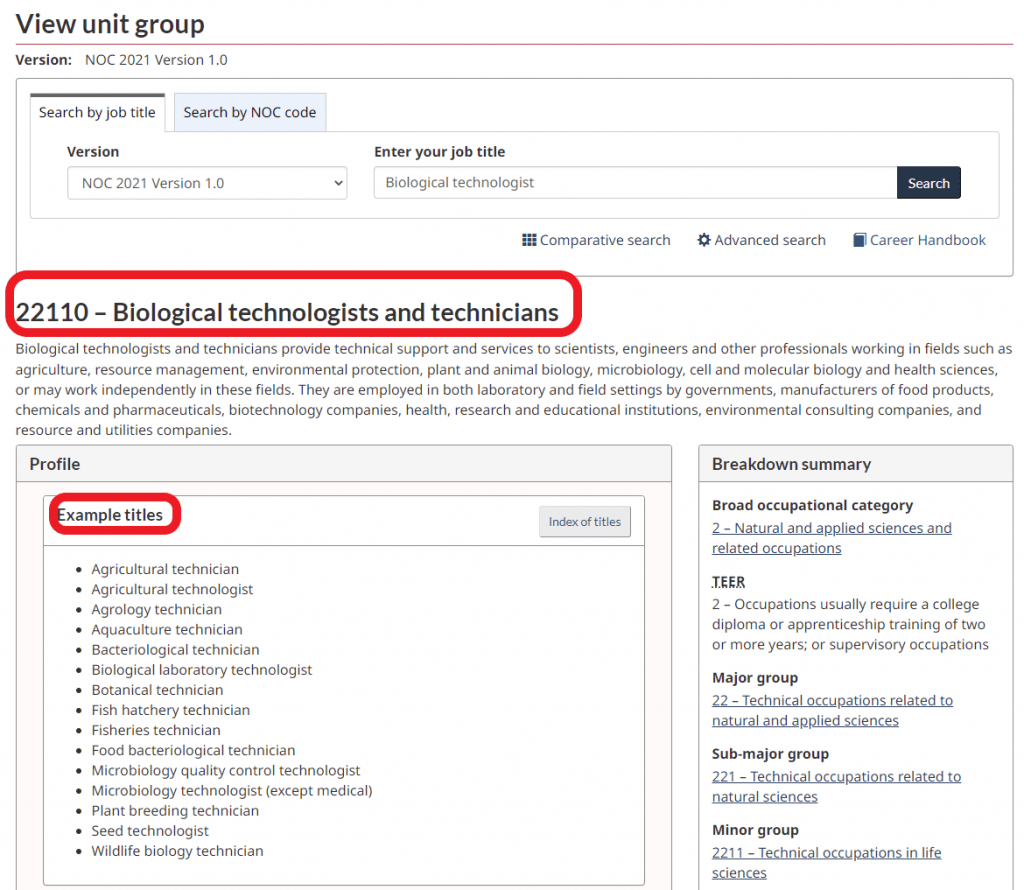
Know the name of your job in Canada (see example titles in the NOC 22110 (description below) and make a list of potential employers.
Check out biotechnology salary and benefits information. Biotechnology salary and compensation plans can vary greatly by location, company, and other considerations.
What to Expect When Pursuing a Biotechnology Career in Canada
To work in biotechnology jobs in Canada, there are certain requirements you will need to meet that include:
Completion of a two- to three-year college program related to agriculture, biology, microbiology, wildlife, or resource management is usually required to work as a biological technologist
Completion of a one- to two-year college program in a related field to work as a biological technician.
For more advanced biotechnology jobs, you may require a university degree or master’s degree. Certification with provincial associations is voluntary.
Employment Outlook for Biotechnology Jobs in Canada
According to a national study, Close-up on the bio-economy, the demand for talent in all sectors of Canada’s bio-economy will exceed supply by 2024. And the study predicts that by 2029, 65,000 additional employees will be needed. Given the skills shortage, internationally educated professionals will be an invaluable source of talent. This could be a great opportunity for future and recent immigrants to Canada with the right skills and background.
The bio-economy workforce in Canada covers many occupations, and research and development account for nearly half of all jobs. While Canada expects to see labour shortages for all bio-economy jobs, three areas will experience severe shortages until 2029:
Manufacturing and production jobs
Distribution and logistics
Management, finance, and administration jobs.
However, you must research the national, regional, and local biotechnology job markets before you move to Canada. Make sure that you understand the job requirements and licensing requirements. You may need a certification before you can work in Canada if your job title belongs to a regulated occupation.
You can find out if your biotechnology job is regulated, and the name of the professional certification and licensing body here.
Start Your Research with the NOC Code for Biotechnology Jobs in Canada
The National Occupational Classification (NOC) code for biological technologists and technicians is NOC 22110. Check out the NOC description for an overview of the role in Canada. It’s also helpful to know the various titles that biotechnologists use in Canada. This is helpful information to know when you begin your job search.
Biotechnology job titles in Canada
Requirements to Become a Biotechnology Professional in Canada
Biotechnology career requirements can vary based on your career goals. You may need to go through credential recognition, skills upgrading, or complete a bridging program. Below are steps you will need to take to work in the biotechnology field in Canada.
Credential Recognition to Meet Biotechnology Job Requirements in Canada
It’s vital to research, develop a plan to find work and understand the specific skill requirements for your occupation. BioTalent Canada’s website is a smart starting point.
The BioSkills Recognition Program helps internationally trained professionals bridge any gaps and meet Canadian standards. The program will recognize your competencies and connect you with employers within the sector.
You can participate in this program if you can legally work in Canada and know English fluently. While still in your home country, you can start the process by listing a summary of your competencies, credentials, and skills, and once you arrive in Canada, you may be asked to do a practical test observation.
Once your skills are recognized, you will be informed that you are BioReadyTM: that means you have demonstrated the required skills for a specific job function and have the competencies to work in the Canadian biotech industry. If for some reason, your skills are not recognized, you will be informed on how to upgrade your skills and join the program afterward.
You can also take an online BioSynergy Program that helps you integrate into the workplace. The program includes modules on effective communication, building interpersonal relationships, lifelong learning, and leadership skills. If you want a mentor, you can access a coaching module.
Credentials Assessment Services
If you plan to enroll in a college or university program to upgrade your skills, contact the school that you plan to attend. The school can guide you through the application process and identify the credential assessment agency you should use.
Make sure you highlight your international education and skills. Try to build on your existing knowledge and skills and explore university and college options thoroughly before you decide to continue your education. You might be able to get advanced standing, transfer some of your credits and benefit from prior learning assessment options.
Your international credentials and experience may allow you to gain credit or course exemptions. This way you will complete your program more quickly, without spending more money or repeating the education you already have.
Here are some credentials assessment services that you can consider:
To find more organizations that provide credential evaluation, assessment and qualification recognition services click here.
Upgrading Your Skills to Meet Biotechnology Job Requirements
Soft skills such as leadership, teamwork, communication, and collaboration are important for biotechnology jobs in Canada.
Upgrading your education and skills through a bridging program or other courses and workshops may be an important part of your journey to get into the bio-economy sector in Canada.
Canadian employers put a high emphasis on soft skills, which are personal attributes that enhance your interactions, job performance, and biotechnology career prospects. Unlike your hard skills, you can apply your soft skills broadly.
Soft skills, such as leadership, teamwork, and communication are important for biotech professionals. As an individual working in biotechnology, you are expected to work well with others in a team, have strong verbal and written skills, and collaborate with others from many different groups.
In addition to your technical knowledge, you’ll be judged on your listening, writing, and basic communication skills. If your hard skills will get you an interview, most probably it is your soft skills that will get you the job and help you to succeed in the job.
Language Training for Biotechnology Careers in Canada
You may have strong technical skills, but often that is not enough to get a job or maintain it afterward. You may need more training or skills upgrading, especially with regard to your communication skills and team dynamics.
Having strong skills in one or both of Canada’s official languages – English or French – is important for your future in Canada. Whether you choose to focus on learning or improving English, which is the working language in the sector, or French, which is the country’s other official language, will depend on which of the two languages most people speak in the area where you intend to live.
You may be eligible for Language Instruction for Newcomers to Canada (LINC) program. Otherwise, you can find other free or affordable classes in English as a Second Language (ESL) or French as a Second Language (FSL) classes through school boards or settlement agencies.
Bridging programs can help you “bridge” your international experience to the Canadian work setting and help you to obtain a job and advance your biotechnology career.
These programs can help you to “bridge” your international experience and training to Canadian workplaces. Many colleges, universities, and immigrant-serving agencies offer bridging programs. You may be eligible for one. Do some research to find a program that’s suitable for you.
This program offers an intensive certificate in Canadian Biotechnology Enterprise. Courses include Canadian biotechnology and bio-policy, occupation-specific language training, and workplace culture and communications training. The program also offers employment services, mentoring, and personal coaching.
Biotechnology Schools in Canada
As a world leader in biotechnology, Canada has some of the top schools in the world. Many immigrants take further education after coming to Canada. Some even want to change careers or enhance their biotechnology careers with a Ph.D. or MBA.
There are over 30 schools that offer biotechnology courses and programs in Canada. Many of these schools offer multiple biotechnology programs and areas of specialization. You can enroll in programs and courses at the diploma, degree, master’s, and Ph.D. level.
Here are some of the top universities to consider:
University of Toronto
University of British Columbia (UBC)
McMaster University
University of Waterloo
University of Calgary
Queen’s University
Simon Fraser University
University of Manitoba.
Here are some colleges to consider:
Fanshawe College
Durham College
Loyalist College of Applied Arts and Technology
Centennial College of Applied Arts and Technology
Fleming College
Algonquin College
Seneca College.
Click here for a list of Canadian Universities and Colleges.
Biotechnology Associations in Canada
BioTalent Canada is a national sector council that provides information about licensing and certification. It also offers professional development, education, networking opportunities, and resources.
You’ll find resources related to understanding the Canadian workplace, occupation-specific language skills, understanding of document use, and critical thinking skills. The website also includes labour market studies and news to help you understand the industry in Canada, opportunities, and challenges.
Professional Immigrant Networks
Professional immigrant networks are organized, volunteer-run member-based associations or networks created by and for immigrant professionals that seek to:
create a forum to contribute to and enrich their respective communities
provide opportunities for their members to find meaningful employment and achieve their professional goals.
These associations offer networking events, mentoring, information sessions, professional development opportunities, and connections to jobs. Here are some you can use:
The salary for biotechnology jobs in Canada can vary based on your location, knowledge, skills, experience.
The national biotechnology salary per hour ranges from a low of $17.28 to a high of $37.95/hour (based on 2022 figures) according to the Government of Canada Job Bank. Based on a 40-hour workweek, this means that a yearly salary could range from $35,942 – $78,936/year.
Biotechnology salaries are affected by many factors such as your job title, credentials, education, experience, and where you live. The lowest median biotechnology salary is in British Columbia. The highest is found in Yukon and Saskatchewan.
Biotechnology Salary in Canada
Here are the most recent Biotechnology salary numbers in Canada. Biotechnology salary information is not available for all provinces:
Best Provinces to Work in Canada as a Professional Based on BiotechnologySalary & Lifestyle
Biotechnology is an exciting growing field combining biology with technology and engineering. Canada’s bio-economy is likely to require 65,000 additional workers by 2029. Its applications in medicine, agriculture, and other fields put biotechnologists in high demand. Before deciding where you want to settle in Canada, research and find out where there is a higher demand for your specific biotech expertise.
While jobs may be available across Canada, you may find specific regions or cities where the demand is greater. Typically, there will be more job opportunities in larger cities. Vancouver is a top option because it has over 70 local biotech companies. Montreal, Toronto, and Ottawa are also good options.
You can find biotechnology labour market information on Bio-talent Canada’s website. It will help you target your job search by identifying the best locations for biotechnology jobs and where you can offer your skills.
Pursuing a Biotechnology Career in Canada
With a skills shortage in Canada, you can find biotechnology career opportunities in biosciences, health, genomics, and other areas.
In Canada, most biotechnology companies are small or medium-sized businesses. They are cross-sectoral and may be involved in various stages of product development, like research, clinical and regulatory trials, production, and marketing.
With a skills shortage in Canada, you can find biotechnology career opportunities in agriculture, biosciences, environment, health, industrial applications, natural resources, nanotechnology, and genomics.
Major Employers for Biotechnology Jobs in Canada
Some of the top biotechnology employers in Canada include:
BELLUS Health
Amgen
Fusion Pharmaceuticals
Zymewire
Altis Labs
Nplex biosciences
Deep Genomics
AstraZeneca
NervGen Pharm
ESSA Pharma
Visit Canada’s Best Diversity Employers to look for employers hiring in your field. This special designation recognizes Canada’s best employers for their commitment to diversity, equity, and inclusion in the workplace.
How to Find Your First Biotechnology Job in Canada
The outlook for biotechnology jobs in Canada is positive, with more than a third of companies currently experiencing a labour shortage. However, the Canadian job market is competitive, so you need to prepare for your job search. As well, finding biotechnology jobs in Canada may be different than in your home country. The following tips can help prepare you for a successful job search:
Biotechnology Career and Job Search Strategies
It’s best to search for jobs in the province and city when you plan to settle. And it’s important to carefully research biotechnology job prospects in the region and develop a plan to find work. When searching for biotechnology jobs, consider these tips:
Broaden your search and include alternative biotechnology careers and sectors.
Seek a mentor in the biotechnology sector, such as a retired biotechnology professional, who would give you valuable insights and advice, and probably introduce you to their professional network.
Join business-related job-finding or networking clubs through immigrant-serving agencies.
Attend industry job fairs and regularly check job boards.
Ask your contacts in the industry for help. Let them know you are job searching and would like to make industry connections. If someone well-established in biotech can forward your resume to a potential employer (instead of you forwarding it yourself), that gives you a leg up.
Check out BioTalent Canada’s job bank called The PetriDish. Here you can post your resume, view job postings and subscribe to job alerts.
Some colleges or associations may maintain a job bank or suggest a commercial job site.
Check company websites for job openings. Depending on the size of the company, it may be helpful to connect with someone you know who works in the company (or someone who knows someone) to help you get your resume fast-tracked to the hiring manager.
Work with Immigrant Settlement Agencies
Most settlement agencies offer free help to find job openings, update your resume, write a Canadian-style resume, and prepare for interviews. Learn more about Services in Canada to Help Newcomers Settle.
To find immigrant services in your area, click here.
Tips for Writing a Biotechnology Resume
There are different ways to write a resume for the biotech sector. However, most professionals working in the industry will agree on a few guidelines to write the ideal resume. This can affect your career opportunities, how many interview calls you receive, and even your biotechnology salary.
Accomplishments
Like most scientists, you may be very modest and not see your accomplishments as highly as the rest of the world. When you write your resume, list your most relevant accomplishments and strengths related to biotech.
Make sure to list your accomplishments early on in your resume: the top-tier school, or your education; any articles you may have published in any top-tier biotechnology journals; your patented work and awards received.
Experience
Biotech industry resumes are ordered chronologically, with your most recent experience first. Mention your job experience, including your internships, consulting jobs, and volunteer work.
Generally, with science industry jobs, hiring managers look for people who have achieved unique things. Therefore, it is important for you to list not only things you’ve done but also things you have achieved.
Consult with Different People
When meeting biotechnology career counsellors, or people who work at a biotech company, ask them for their best advice regarding resume requirements for the industry.
Informational Interviews
While job prospects look positive for biotechnologists, landing that next opportunity, especially for newcomers, may require extra effort and outreach. One way to do this is by requesting an “informational interview.” This is a brief (20–30-minute) meeting that you schedule with a person who is currently working in the biotechnology industry to learn more about the field in Canada.
Informational interviewing can be a great way to put your communication, research, and interpersonal skills into practice for your job search.
You should not try to get a job during an informational interview but rather find out whether a particular position or employer might be a good fit for you. An informational interview with a contact from your network can be a great source of career information. In addition to basic information about a particular type of industry (such as you might find on a company website), it also offers you the benefit of a professional’s first-hand experiences and impressions.
Make a list of the biotechnology companies that operate in your area. Then, use professional organizations, LinkedIn, and other networking resource tools to identify people that you can connect with to request an informational interview.
Biotechnology Career Networking Tips
Networking is a vital activity that can help you discover job leads, gain industry insights, and meet others in your field in Canada. And because many job vacancies are not advertised, people in your network can help you discover jobs in this “hidden job market.” This also applies to biotechnology careers.
You’ll benefit by meeting other professionals, building relationships, and sharing information, you might even hear about job opportunities you wouldn’t have found online. It could even lead to a higher biotechnology salary.
Good places to network include conferences, professional associations, and online spaces such as LinkedIn. LinkedIn is a great site to reconnect with former colleagues and employers, search for companies and jobs that you have an interest in and make connections with others in your field. You can also join related professional groups. But remember, you must allow time to cultivate and grow the ties you establish through networking.
Interview Techniques for Biotechnology Jobs in Canada
The outlook for the biotech industry looks good and whether you’re interested in agriculture, pharmacy, medicine, or bioengineering, you will find opportunities. However, before you land the job, you’ll need to ace the interview. Here are helpful tips to prepare for an interview in biotechnology.
Look for Job Opportunities
To be invited to an interview, you must first find a job opening. Regularly check online classified ads and other specialized sites, such as The PetriDish, which only list biotech job openings. Also, check the websites of medium to large pharmaceutical companies. Once you find an opening, check if you know someone at the company – your application will likely be given more attention if you reach out.
Stay Current with Industry News
Staying current about the industry in Canada will allow you to showcase your knowledge in interviews comfortably. Subscribe to the biotech newsletters or blogs to stay informed.
Highlight Your Technical Knowledge
As your potential employer has never seen you at work in the lab, they’ll ask you questions to figure out how you’d perform on the job. You may be asked to solve a hypothetical question so they can assess your depth and technical knowledge.
Hone Your Interdisciplinary Skills
Biotech intersects with many disciplines, so it’s important to know about the other related disciplines as well. So, when you’re studying or working, make sure to talk to people in other disciplines and with different backgrounds.
With a positive outlook for biotechnology jobs in Canada, now is the time to check out your options.
Interested in learning more about working in Canada?
Are you interested in a truck driving career in Canada? With a current shortage of about 20,000 truck drivers, it’s a high-demand occupation in Canada. Truck driving is an exciting career within a $67 billion industry and is essential to the country’s economy. To respond to the truck driver shortage, Immigration, Refugees and Citizenship Canada (IRCC) created a new transportation category and process for Canada’s Express Entry program. This focus on candidates with transport experience, including commercial truck drivers, will make it easier for you to immigrate to Canada. The new selection process also helps Canada to invite newcomers with driving experience to fill labour gaps and ensure the success of the transport sector. This overview provides information to research job requirements, learn about a truck driver salary in Canada, and much more!
How to Immigrate to Canada as a Transport Truck Driver
It’s vital to know and understand the steps you will have to take before you can work as a truck driver in Canada.
Before You Move to Canada to Pursue a Truck Driving Career
These are some general steps to take before you arrive in Canada:
Improve your English or French language skills (depending on your destination province). You will need to prove your language competency or be tested.
Take language classes while you’re in your home country and continue them when you arrive in Canada.
Research wage and compensation information to learn how much you can expect to make.
Research Canadian trucking companies and learn about the industry in Canada.
Join Canada’s Construction Workforce | BCCA
Do you want one-on-one coaching to help you continue your construction career in Canada before you arrive?
The Integrating Newcomers program is for you if you’re a technical professional e.g. tradesperson, engineer (in any discipline), architect, technician, technologist, project manager, estimator, or analyst. This Canada-wide service can help you get started!
What to Expect When Pursuing a Transport Truck Driver Job in Canada
It’s vital to know what you need to work as a truck driver. In Canada, you’ll need a Commercial Driver’s License (CDL). And employers usually require:
High school completion
Driver training from an accredited vocational school or community college.
A Class 3 or D license to drive straight-body trucks
A Class 1 or A license to drive long combination vehicles
Air brake endorsement (Z) to operate vehicles equipped with air brakes.
Canadian employers will also provide on-the-job training.
How to Obtain a Commercial Driving License in Canada
To get your CDL, you have to take driver training and meet the minimum age requirement in the province where you want to live. Generally, the minimum age to obtain a CDL in Canada is 18. However, in some provinces such as Ontario and Quebec, you must be 21. You will also have to pass a:
Medical exam to ensure you are physically fit to operate a commercial vehicle
Knowledge test that covers driving laws, traffic signs, and safe driving practices
Practical driving test that assesses your ability to operate a commercial vehicle safely.
Employment Outlook for Truck Drivers in Canada
According to Transport Canada, over 350,000 people work in the country’s trucking and logistics sectors and most are truck drivers. Even so, the Government of Canada Job Bank, predicts a labour shortage from 2022-2031. This means there will be job opportunities for newcomers with the right skills, experience, and qualifications.
Start Your Research with the Transport Truck Driver NOC Code 73300
The National Occupational Classification (NOC) provides a general overview and standard definition of truck driver jobs in Canada. The five-digit NOC code 73300 applies to drivers such as:
Bulk goods truck driver
Flatbed truck driver
Heavy truck driver
Long haul truck driver, and more.
You can review this information to understand the main duties and transport driver job requirements.
Communication Skills Required for Trucking Jobs in Canada
Truck drivers need to be excellent drivers, but they also have to have strong communication skills. Foreign truck drivers require a minimum of Level 7 Canadian Language Benchmark score (CLB 7) in a language proficiency exam. Canadian employers look for friendly and assertive drivers who can communicate with customers and clients, dispatchers, and others.
You may need to upgrade your skills, including your soft skills for trucking jobs in Canada.
Language Training in Canada
Having strong skills in one or both of Canada’s official languages, English or French, is important for your success. Whether you choose to focus on improving English or French will depend on which of the two languages is most spoken in the area where you live.
You may be eligible for the Language Instruction for Newcomers to Canada (LINC) program. Or you can find other free or affordable classes in English as a Second Language (ESL) or French as a Second Language (FSL) classes through local school boards or settlement agencies.
Truck Driver Training Programs in Canada
Some colleges in Canada offer truck driving programs, or you can attend a program that private companies offer. However, be sure to verify that the program is government-approved to that you’re eligible to apply for your truck driving license once you graduate.
Trucking associations can be a valuable resource to help you advance your truck driving career. The following associations provide information, education programs, training materials, and webinars to help truck drivers stay informed about the ever-changing trucking industry in Canada.
The truck driver salary in Canada is based on your experience, qualifications, and the province where you work. On average, truck drivers make about $24.00 per hour (national average., according to Government of Canada Job Bank information.
The average base salary is about $61,468. But the yearly truck driver salary varies based on where you live in Canada. In addition to their yearly salary, truck drivers can also earn additional cash compensation and bonuses.
Long-haul truck driving typically pays the highest rates because of the extended hours on the road to cover large distances.
Transport Driver Salary in Canada
The provincial median wages are higher in Alberta, British Columbia, Northwest Territories, Saskatchewan, and Yukon Territory. Here are the most recent wages for transport drivers across Canada (click on the links in the table to see wage information by provincial regions.)
Best Provinces to Work as a Transport Driver in Canada
You can find transport driver jobs in most provinces and Canadian cities. However, the truck driver shortage is the greatest in Saskatchewan, and it has the highest number of trucking jobs per capita of any province.
Canada’s biggest provinces, including Ontario, Quebec, Alberta, and British Columbia, also have many trucking jobs available. You can explore job prospects by province or territory to determine where to find the greatest demand for drivers.
Pursuing a Transport Driver Career in Canada
Canada offers different jobs to licensed truck drivers within two broad categories:
Long-haul drivers
Regional drivers.
Long-haul drivers transport goods between provinces and across the Canada-U.S. border. They usually drive across Canada and farther distances than regional drivers. For those with international truck driving experience, long-haul driving is a great opportunity to explore Canada’s different regions and cultural differences.
Regional drivers transport goods from one city to another within the province. A benefit for regional truck drivers is that they usually are not away from their families for long periods. Most regional drivers can return home each day, allowing for more time to spend with family and a greater work-life balance.
Truck drivers are the backbone of the global supply chain.
Trucking Companies in Canada
According to the Canada Trucking Alliance, There are about 4,500 carriers, owner-operators, and industry suppliers.
Some of the top trucking companies in Canada include:
Bison Transport (based out of Winnipeg with terminals in Ontario, Quebec, Saskatchewan, British Columbia, and Alberta.
Mullen Trucking Corp (based out of Adrie, Alberta)
Maritime Ontario (based out of Brampton, Ontario, with terminals in Newfoundland, New Brunswick, Nova Scotia, British Columbia, Alberta, and Quebec).
In addition to transportation companies, truck driver jobs are also available in manufacturing, distribution, and moving companies, and trucking employment service agencies. Truck drivers can also be self-employed.
How to Find Your First Transport Driver Job in Canada
Searching for a job in Canada may be different than how you would search in your home country. So, you may need help with your job search. Fortunately, there are settlement services to help you search for jobs, update your resume, write cover letters, and prepare for job interviews.
Here are additional tips to search for trucking jobs in Canada:
Broaden your search and include cities across Canada
Join job-finding or networking groups through settlement agencies.
Attend career/job fairs, info sessions, and related conferences.
Browse online job boards to understand job requirements and current skills that employers are seeking.
Volunteer to gain Canadian work experience.
Seek out a mentor who could give you valuable advice and introduce you to their professional network.
Networking and building relationships with others will play an important role when searching for a job in Canada. So, take advantage of opportunities to network with others in the trucking industry. For example, when taking driving training, participate in class discussions and build relationships with classmates and instructors.
Networking plays a crucial role in learning about the trucking industry in Canada and tapping into job opportunities. Often, many companies do not advertise job vacancies, so networking is an effective way to tap into this ‘hidden job market.’ Connecting with others in the trucking industry will help discover jobs in the hidden job market.
LinkedIn is another valuable tool for networking. It allows you to reconnect with former colleagues and employers, search for companies and job openings, and receive introductions to others in the field.
When networking, it’s better if you avoid asking directly for a job. However, if your contacts are aware of any job leads, they will likely share that information with you. Your network can serve as a valuable resource to learn about job vacancies.
Resume Writing Tips for Transport Driver Jobs
When crafting your resume, it’s helpful to keep the needs of hiring managers in mind. Your resume should demonstrate your strong driving track record, time management skills, customer service skills, and technical skills and licenses.
Consider these resume writing tips to showcase your qualifications and stand out as a strong candidate:
Highlight both your technical skills and soft skills such as teamwork, leadership, and communication skills.
List relevant skills, such as technical repair knowledge, and relevant licenses
Ask someone to review your resume and provide constructive input.
Here are some examples of phrases that you might include in your resume:
Completed regular truck maintenance, and created and updated a daily mileage schedule to improve vehicle reliability by 45%
Operated commercial vehicles for long-haul deliveries, maintaining an accident-free record across 100k+ km
Ensured all pick-up, delivery, and vehicle condition reports were completed accurately and timely.
Recorded routine truck and equipment maintenance, to reduce the risk of injury or malfunction.
Organized deliveries with manufacturers and supervisors to ensure cost-effective and efficient delivery.
Interview Techniques for Transport Driver Jobs
Driving a truck is a demanding job and can be stressful. Employers will want to assess your work history and safe driving skills. In addition, employers look for drivers with strong customer service skills and value the importance of road safety. You can expect to answer some of the following questions:
Describe your experience as a commercial truck driver. Your response can include any special licenses you have, the number of years that you have been driving, the distances you travelled, and any incidents that you had.
How do you maintain a safe driving environment? Your response can include driving practices that you follow to ensure that you drive safely. You can also talk about how you keep up with safe driving procedures.
How would you handle a major problem with a shipment? Your response can include how you responded to a shipment problem that you had in the past, and what actions you took to resolve it. This is also an opportunity to highlight your customer service skills, and your ability to deal with stressful situations.
Transport driver jobs are key to manufacturing, agriculture, and mining industries and linking Canadian businesses with the world. With a current shortage of about 20,000 drivers, trucking in Canada is a high-demand occupation. And, with an understanding of job requirements, career options, and a truck driver’s salary in Canada, this could be a great opportunity for you!
Looking for chiropractor jobs in Canada? Many people prefer chiropractors in Canada and embrace alternative forms of health care and relief from physical ailments. As the field continues to grow in popularity, there is ample opportunity for internationally trained chiropractors who want to continue their careers in Canada.
Even though there is a labour shortage for chiropractors in Canada, you still need to meet specific chiropractic job requirements. Typically, employers require a minimum of two years of university undergraduate studies in science and licensing by a provincial chiropractic regulatory body, in addition to other requirements.
If you plan to work as a chiropractor in Canada, you need to plan ahead and understand job requirements and licensing requirements. Prepare to continue your chiropractic career in Canada with this helpful overview.
How to Immigrate to Canada as a Chiropractor
Before You Move to Canada to Continue Your Chiropractor Career
There are steps that you can take before you move to Canada to improve your chances of practicing chiropractic when you arrive. Following these steps can help you prepare to work in Canada, and save time, money, and energy.
Attend the webinar How to Find Your First Job as a Newcomer in Canada to learn about labour market and job trends.
Contact the chiropractic regulatory body in the province where you will settle in Canada and inquire about:
Specific procedures to follow
Steps involved in the licensing process before and after you move to Canada
Documents you need to bring to Canada and verify if they need to be translated
Potential costs and time required to obtain a license.
Improve your language skills and enroll in language classes while you’re in your home country. You will need to prove your English or French (depending on your destination province) language competency or be tested.
Take language classes and continue them after you move to Canada.
Gather and organize your official education, work, and identity documents while still in your home country. It will be easier to gather them while in your home country.
Understand how chiropractic in Canada is practiced in Canada and familiarize yourself with the laws and legislation that govern your profession in the province where you will settle.
Know the name of your job in Canada and make a list of potential employers.
What to Expect When Pursuing a Chiropractor Career in Canada
Researching your profession is a vital first step before you move to Canada. Because chiropractors belong to a regulated profession in Canada they must register as members of a provincial College of Chiropractors in the province where they plan to settle. Internationally trained chiropractors must become familiar with accreditation policies and processes set by the FCC.
Employment Outlook for Chiropractor Jobs in Canada
The job outlook for the chiropractic profession in Canada is positive. There are currently 33,700 professionals working in chiropractic. However, the Canadian Occupational Projections System projects a labour shortage for chiropractors until 2028. Many jobs are expected to open over the next few years because of Canada’s ageing population and increased public awareness of health issues. Job opportunities will also be available as more chiropractors retire. As a result, chiropractors in Canada can expect to see employment growth above the average for all occupations.
Start Your Research with the NOC Code for Chiropractor Jobs in Canada
To research the profession, you can start by reviewing the National Occupational Classification (NOC) for chiropractors, NOC 31201. Here you will get an overview of the job requirements, main duties, and example titles. This information will help you to understand what Canadian employers seek. You can search for example titles to help you when you conduct your job search.
Refer to the NOC for an overview of main duties, job requirements, and example titles for chiropractors.
In addition to using the NOC, you can also research the chiropractic profession at the Government of Canada Job Bank site. This site provides vital information about working in chiropractic jobs in Canada including wages, job prospects, skills, and general labour market information. The information on the site can help to inform your career and settlement decisions when choosing a city in Canada. Below we explain the steps you will need to take to work as a Chiropractor in Canada.
How to Become a Registered Chiropractor in Canada
There are several ways to begin your journey to becoming a registered chiropractor in Canada. To begin, foreign-trained chiropractors should contact the relevant provincial or territorial regulatory body and get information about assessment and licensing procedures.
This is essential because employers require a minimum of two years of university undergraduate studies in science and licensing by a provincial chiropractic regulatory body. You must also complete:
A four- or five-year program at an institution accredited by the Accreditation Commission of the Council on Chiropractic
Canadian Chiropractic Examining Board exams
Provincial licensing body exams.
Credential Recognition to Meet Chiropractor Job Requirements in Canada
Some jobs in Canada, including chiropractors belong to a regulated occupation. You can only call yourself a chiropractor and practice the profession if you have a license from a regulatory body. As a result, internationally trained chiropractors must have their foreign licenses and certificates recognised. This process is known as credentials recognition.
Regardless of your international education or experience, to practice as a chiropractor you will need a license to practise in Canada. So, it’s important to become familiar with the provincial licensing process and what the chiropractic regulatory body expects of you. The regulatory body can advise you on the documents you require and assessment fees. Once you have all the information you can carefully complete your application.
The Federation of Canadian Chiropractic (FCC) is the national organization that governs the practice and assesses the academic credentials of chiropractic programs in Canada. There are also provincial and territorial regulatory bodies (links provided below). Licensure requirements may vary from one province to the other, but usually, internationally educated chiropractors must follow these registration steps:
Complete the graduation requirements from a chiropractic education program accredited or recognized through reciprocal agreement by the FCC and Council on Chiropractic Education Canada.
Submit official copies of all transcripts from an accredited chiropractic educational institution
Provide proof of Canadian citizenship, Permanent Resident Status, or Employment Authorization
Complete the application and pay the fee
Complete the following exams:
Canadian Chiropractic Examining Board (CCEB) knowledge-based exams
CCEB Clinical Competency Exams, and
CCO Legislation and Ethics Exam.
Credential Assessment Services for Chiropractors
If you plan to attend college or university to upgrade your skills, contact the school you want to attend to find out how to apply and what credential assessment agency to use. Some schools request that you use a specific assessment service. So be sure to ask if they have a preferred service to avoid paying extra fees.
Here are some credential assessment services that a chiropractic school may recommend:
To find more organizations and agencies that provide credential evaluation, assessment and qualification recognition services click here.
Upgrading Your Skills to Meet Chiropractor Job Requirements
In addition to accreditation, you may need to upgrade your skills through a bridging program or other courses to become a chiropractor in Canada.
You can benefit from ongoing learning through continuing education courses, attending seminars and training conferences, and reading professional periodicals.
You may have strong practical skills, but often that is not enough to get a job and succeed. If necessary, you may need more training or skills upgrading, especially related to soft skills.
Chiropractors must possess patience, excellent oral and written communication skills, the ability to maintain precise and confidential clinical records, good observation skills, and problem-solving and analytical skills. Importantly chiropractors must be able to handle patients and empathize with them and explain things in simple terms. You also require strong business skills. Many chiropractic offices operate as small businesses. Strong business knowledge is necessary if you plan to run a private practice.
Language Training for Chiropractors in Canada
Having strong skills in one or both of Canada’s official languages – English or French – is important for your future in Canada. Whether you choose to focus on learning or improving English or French will depend on which of the two languages most people speak in the area where you intend to live.
You may be eligible for Language Instruction for Newcomers to Canada (LINC) program. Otherwise, you can find other free or affordable classes in English as a Second Language (ESL) or French as a Second Language (FSL) classes through school boards or settlement agencies.
There are even language courses to teach you professional terminologies, such as job-specific language training and Occupation-Specific Language Training (OSLT) in Ontario. And, if you already speak one of Canada’s two official languages at a high level, learning the other one is a good option, as it may offer you more job options.
Chiropractor Schools in Canada
Chiropractic colleges offer programs that allow you to specialize in specific areas.
There are two programs that offer chiropractic degrees in Canada accredited by the FCC:
So, if you plan to continue your studies in Canada, you can research your options at these chiropractic schools.
There are also a select number of specialty chiropractic colleges that offer programs that allow you to specialize in specific areas. Specialties can include pediatric, clinical sciences and diagnostic imaging, spinal stenosis, sports sciences, rehabilitation, and animal chiropractic care.
Here’s a list of the chiropractic colleges in Canada:
The following associations provide information about licensing and certification and offer professional development, education and networking opportunities.
Internationally trained chiropractors can benefit from joining immigrant networks. Professional immigrant networks are organized, volunteer-run member-based associations or networks created by and for immigrant professionals that seek to:
Create a forum to contribute to and enrich their respective communities
Provide opportunities for their members to find meaningful employment and achieve their professional goals
Immigrant networks provide activities such as networking events and mentoring. They also host information sessions, provide professional development, and facilitate connections to job opportunities. For example, isans: Immigrant Services Association of Nova Scotia, helps newcomer professionals with economic and social integration in the province of Nova Scotia.
How Much Do Chiropractors Make in Canada?
Chiropractor salaries in Canada vary based on many factors. Your location, the number of hours you work, how much you charge patients, and many other factors affect your income. Chiropractors make about $45 per hour. Salaries typically range between $87,750 and $125,438 according to Talent.com.
Chiropractor Job Salary in Canada
Here are the most recent Chiropractor salary numbers from the Government of Canada Job Bank. Data is not available for all provinces.
Best Locations to Find Work in Canada as a Chiropractor
You can find chiropractor jobs in Canada in almost any province or territory. The best locations to find work are in the provinces with the largest population including Ontario, Alberta, and British Columbia. The same is relevant at the city level. Top locations include cities such as:
Pursuing a career in chiropractic begins with having the right academic credentials based on the province where you plan to work. The following information can help you to continue your chiropractic career in Canada.
Major Employers for Chiropractic Jobs in Canada
Chiropractors in Canada usually work in private practice or clinics with other health practitioners. You can visit Canada’s Best Diversity Employers website to check for hospitals or healthcare centres that you may be interested in. This special designation recognizes Canada’s best employers for diversity, inclusion, and equity in the workplace.
Many chiropractors have a private practice in Canada.
How to Find Your First Canadian Chiropractor Job
The Canadian job market is competitive, so it’s necessary to understand the steps to gain employment. As well, finding a chiropractic job in Canada may be different from in your home country.
There are many ways to search for chiropractic jobs.
Broaden your search and include alternative careers.
Seek out a mentor in the chiropractic sector who could give you valuable insight and advice and introduce you to their professional network.
Join chiropractic or healthcare job-finding or networking clubs through immigrant-serving agencies.
Attend chiropractic or healthcare job fairs and regularly check online job boards.
Search job banks at chiropractic colleges or associations. Also, hospitals and other health institutions generally post vacancies on their websites.
Connect with Immigrant Settlement Agencies
Finding a chiropractic job in Canada may be different than in your home country. You may need help updating your resume, writing cover letters, and preparing for interviews to work as a chiropractor in Canada. Most settlement agencies offer job-search services that can help you find a job in Canada. To find immigrant services in Canada, click here.
Write a Resume
When you apply for a chiropractor job you will have to submit a well-written resume. A Canadian-style resume plays an important role in getting you a job. Consider the following tips to write your resume for chiropractic jobs.
List only relevant job experiences, or that were similar, such as working as a Chiropractor for ABC Healthcare clinic, or Assistant Chiropractor with ABC Hospital.
Describe the nature of the job which you were required to do. Mention only those jobs related to the chiropractic job.
List your license and educational qualifications. Here too, mention only those qualifications, related to chiropractic, such as a Bachelor of Science in Chiropractic Medicine from ABC University.
List specific job duties and outcomes such as maintaining records of the case history of the patient, conducting a physical diagnosis, interpreting medical images like X-rays and scans, making adjustments to the spinal cord of the patient, adjusting the spinal column, conducting sports chiropractic activities, or providing advice on general health.
Prepare for Chiropractic Job Interviews in Canada
To prepare for your chiropractor job interview:
Think of interview questions and answers that are relevant to the field and position that you have applied for.
Visit specialized chiropractic forums or blogs to ask for interview help and advice.
Understand Canadian chiropractic industry trends and how they are affecting the profession.
Identify attributes/traits/abilities for chiropractors that are related to this job and how to get them.
Research the employer profile thoroughly for chiropractor vacancies to identify: the client base, the company’s value proposition, and what sets it apart. Identify how your experience and talent make you an ideal candidate for the role.
Sample Chiropractic Job Interview Questions
Below are sample interview questions that you can prepare to respond to:
Why are you interested in this role? Demonstrate that you have researched the organization and highlight why you are attracted to both the role and the organization.
What do you like the most or least about your role as a chiropractor? Be sure to emphasize the elements that you like most that align with the job description.
What is the most recent skill you have learned and how did you learn it? This is an opportunity to showcase your commitment to professional development. Indicate whether you completed additional training, wrote a research paper, or read about the skill in trade publications.
Request Information Interviews with Practicing Chiropractors
While the job outlook is positive for chiropractors in Canada, landing that next opportunity requires extra effort and outreach.
Informational interviewing can be a way to demonstrate your communication skills, research skills and time management skills.
An informational interview is a brief (20–30-minute) meeting that you schedule with a person who is currently working in the field to learn more about the industry in Canada.
You should not try to get a job during an informational interview but rather learn more about working as a chiropractor in Canada.
An informational interview with a contact from your network can be an excellent source of career information. In addition to basic information about a particular type of industry (such as you might find on a company website), it also offers you the benefit of a professional’s first-hand experiences and impressions.
Make a list of the hospitals, chiropractic practices, public health agencies, and others, as desired, that operate in your area.
Use your resources including professional organizations, LinkedIn, and other networking tools to identify organization insiders, health unit coordinators, etc.
Create 5 – 10 open-ended questions that will yield useful information to help with your job search.
Networking Opportunities for Chiropractors
Networking is an essential tool that may give you job leads, gain information about a particular firm or industry, and meet others to expand your network. As many job vacancies are not advertised, you must make connections with practicing chiropractors and others in your field.
Good places to network are gatherings such as conferences, association luncheons, and industry get-togethers to meet people, build relationships, and share information.
LinkedIn is another important professional tool for networking. It is great to connect with former colleagues and employers, search by company or jobs, and get introductions and recommendations.
You can also connect with people in the healthcare sector and join some related professional groups.
But remember, that you must allow time to cultivate and grow the ties you establish through networking. Nothing will happen overnight, and you need to be patient.
With a positive outlook for chiropractor jobs in Canada, now is the time to check out your options. Interested in learning more about working in Canada?
Thinking about searching for a medical radiation technologist (MRT) job in Canada? Like many other healthcare professionals, MRTs are in demand because the healthcare industry is experiencing shortages. So, if you want to continue your career in Canada, continue reading! You’ll learn about medical radiation technologist job requirements, salaries, career options, job search techniques, and more!
To work as a medical radiation technologist, employers usually require that you have completed a two- to three-year college or other approved program in diagnostic or magnetic resonance imaging (for radiological technologists and magnetic resonance technologists), nuclear medicine technology, or radiation therapy. Or, you must have completed a Bachelor of Health Sciences in radiography, nuclear medicine, or radiation therapy along with a period of supervised practical training.
In addition, licensing is required by a regulatory body in some provinces. However, membership with a provincial association is required by other provinces. Medical radiation technologists must be certified by the Canadian Association of Medical Radiation Technologists in all provinces except Quebec and British Columbia.
How to Immigrate to Canada as a Medical Radiation Technologist
It’s important to research medical radiation technologist job requirements before you move to Canada. This will make it easier to continue your career when you arrive. There are some steps that you can take before you arrive that will help you find a job faster.
There are steps that you can take before you immigrate to improve your chances of practicing your profession in Canada.
Before You Move to Canada to Pursue a Medical Radiation Technologist Career
Contact the Canadian Association of Medical Radiation Technologists to learn about the:
Process to follow
Cost and time required to obtain a license
Steps in the licensing process before and after you move to Canada.
Contact the provincial regulatory body in the province where you plan to settle to determine:
International qualifications that they recognize
Language requirements
Documents required for employment or to continue your education in Canada. Verify if the documents need to be translated and if you have to use a professional translation service in Canada.
Improve your language skills, enroll in language classes while you are in your home country, and continue when you arrive in Canada. You need to have strong English or French (depending on your destination province) language skills and you may be tested.
Gather and organize your official education, work, and identity documents while still in your home country.
Research medical radiation technologist salaries in different cities (wages may vary across Canada).
Understand how the medical radiation technology profession is practiced in Canada. Familiarize yourself with the procedures, laws, and legislation that govern the profession in the province where you will settle.
Know example job titles that are used in Canada for medical radiation technologists.
What to Expect When Pursuing a Medical Radiation Technologist Career in Canada
Medical radiation technologists require a license to work in the provinces of Alberta, New Brunswick, Nova Scotia, Ontario, Quebec, and Saskatchewan. So, you need to register with the relevant provincial authority to practice and use the professional designation.
Membership with a provincial association is required in the provinces of Newfoundland and Labrador, Prince Edward Island, Manitoba, and Northwest Territories.
The Canadian Association of Medical Radiation Technologists (CAMRT) is the national professional association and certifying body. CAMRT represents four disciplines:
Employment Outlook for Medical Radiation Technologist Jobs in Canada
Job prospects for medical radiation technologists are good for the next few years. With the healthcare system experiencing a significant shortage of workers, there is a great opportunity for internationally trained professionals to continue their MRT careers in Canada. Depending on your location and qualifications, both full-time and part-time opportunities are available.
Researching Medical Radiation Technologist Jobs in Canada
It’s smart to research your profession before you arrive in Canada. And, a good place to start researching job requirements is with the National Occupational Code (NOC) 32121 (NOC 2021 Version 1.0). The NOC provides a standard definition of the role of medical radiation technologists, along with example titles, main duties, and job requirements. This information will also help you when you begin your job search in Canada.
Use the NOC 32121 to learn about the role of medical radiation technologists in Canada.
Requirements to Become a Medical Radiation Technologist in Canada
Internationally trained medical radiation technologists must meet the licensing requirements in Canada to practice. International graduates must take part in a credential recognition process. Some can benefit from bridging programs offered by local colleges and universities.
Credential Recognition to Meet MRT Job Requirements in Canada
Credential recognition is the process of verifying and assessing your skills, competencies, and international credentials fairly and rigorously. The best way to learn about the credential recognition process is to contact the provincial or territorial regulatory body where you plan to settle. They can advise you about the documents that you require, licensing fees, and more. It’s a good idea to take this step before you arrive in Canada and then decide the date that you will depart for Canada.
Depending on the province you intend to settle in, your licensing process may include:
Exams (eligibility, program selection, qualifying, certification)
Language proficiency tests
Credentialing
Postgraduate training/assessment
Return-of-service agreements (commitment to practice in an underserved community for an agreed period).
When you know the licensure procedure and understand what the MRT regulatory body expects, you can carefully complete your application. The licensure process has many stages and can seem complicated. And you’ll also require a significant financial and personal commitment to pursue the process. Preparing financially for this reality is important.
Credential Assessment Services
If you plan to enrol in a college or university program in Canada, you may require an education evaluation. Contact the school that you plan to attend to find out what’s required and if there is a specific credential assessment agency that you should use to verify your international education.
To find more organizations and agencies providing credential evaluation, assessment and qualification recognition services click here.
Upgrading Your Skills to Meet MRT Job Requirements
Skills Upgrading to Qualify for Medical Radiation Technologist Jobs in Canada
Canadian employers put a high emphasis on soft skills. These are the personal attributes that enhance your interactions, job performance, and medical radiation technologist career prospects. Unlike your hard skills, such as technical, analysis, and science skills, you can apply your soft skills broadly.
Soft skills like communication, collaboration, and interpersonal skills are important for medical radiation technologists. As a medical radiation technologist, you must be sensitive to the patient’s physical and psychological needs and have the necessary technical skills. If your hard skills get you an interview, most likely it’s your soft skills that will help you get the job and succeed in the role.
Though not a must, upgrading your education and skills through a bridging program or other educational courses can be an important part of your journey to work as an MRT in Canada. You will constantly face changing technology and varied demands from patients, employers, the government, and the general public. Therefore, it’s vital to commit to lifelong learning to demonstrate professional growth.
Language Training for Medical Radiation Technologists in Canada
You may have strong technical skills, but you need to upgrade your communication skills. Strong skills in one or both of Canada’s official languages, English or French – are important for your future in Canada. Whether you choose to focus on learning or improving English or French will depend on which of the two languages is most spoken in the area where you intend to live.
You may be eligible for the Language Instruction for Newcomers to Canada (LINC) program. Otherwise, you can find free or affordable classes in English as a Second Language (ESL) or French as a Second Language (FSL) classes through school boards or settlement agencies.
There are even language courses to teach you professional terminologies, such as job-specific language training and Occupation Specific Language Training (OSLT) in Ontario. And, if you already speak one of Canada’s two official languages at a high level, learning the other one is a good option, as it may offer you better job opportunities.
Bridging Programs for Medical Radiation Technologist Careers in Canada
Internationally educated professionals can take advantage of bridging programs to get ready to work in the Canadian workplace.
Bridging programs can help you transition more quickly into the Canadian labour market. They help to “bridge” your international experience and training to the Canadian workplace. Many colleges, universities, and immigrant-serving agencies offer bridging programs you may be eligible for. The following programs may be suitable for you:
The program assists foreign-trained, qualified health professionals in certification and registration within Canada. An individualized program will be developed to prepare internationally trained medical radiation technologists to write the CAMRT certification examination.
Northern Alberta Institute of Technology (NAIT) – Edmonton
The program provides tools to assess and enhance the practical readiness of internationally educated medical radiological (x-ray) technologists for the Alberta workplace.
Medical Radiation Technologist Schools in Canada
Continuing your education after you arrive in Canada can also boost your career options. Medical radiation technology programs are offered at the college and university level in schools across Canada. There are over 20 colleges and universities that offer medical radiation technology programs including:
Alberta
Northern Alberta Institute of Technology
Southern Alberta Institute of Technology
British Columbia
Anderson College of Health, Business and Technology
British Columbia Institute of Technology
Camosun College
College of New Caledonia
Manitoba
Red River College Polytechnic
New Brunswick
Collège communautaire du Nouveau-Brunswick
Horizon Health Network (University of New Brunswick Saint John)
Newfoundland
College of the North Atlantic
Nova Scotia
Dalhousie University
Ontario
Algonquin College of Applied Arts and Technology
Cambrian College
Collège Boréal
Confederation College
Fanshawe College of Applied Arts & Technology
Mohawk College-McMaster University
The Michener Institute of Education at UHN
Prince Edward Island
UPEI School of Radiography
Saskatchewan
Saskatchewan Polytechnic
For a complete list of accredited and registered health education programs, visit Accreditation Canada.
Medical Radiation Technology Associations in Canada
The following associations provide information about licensure and certification and offer professional development, education, and networking opportunities.
National Medical Radiation Technology Associations
Immigrant Networks For Medical Radiation Technologists
Professional immigrant networks are organized, volunteer-run member-based associations or networks created by and for immigrant professionals that seek to:
Create a forum to contribute to and enrich their respective communities
Provide opportunities for their members to find meaningful employment and achieve their professional goals
The groups offer networking events, mentoring, information sessions, and professional development opportunities to help increase your employment opportunities. Here are a couple of resources to consider:
For more information about working in Canada, visit our Finding a Job in Canada page. We’ll help you to achieve your goals in Canada!
How Much Do Medical Radiation Technologists Make in Canada?
Researching MRT salaries in Canada will help you to understand what is a fair market value for your skills and experience.
According to the Government of Canada Job Bank, Medical radiation technologist salaries fall between $25 to $50 per hour. The national average hourly medical radiation technology salary is $36.22 per hour.
To give you an example, if you worked a full-time role and worked 40 hours per week you could make between $52,000 and $104,000 per year. How much you make depends on where you live, your skills, experience, areas of specialization, and if you work full-time or part-time.
Medical Radiation Technologist Salary in Canada
Medical radiation technologist salaries differ based on where you live. Here are the most recent Medical Radiation Technologist salary numbers in Canada as of 2022:
Best Provinces to Work in Canada as a Medical Radiation Technologist Based on Salary & Lifestyle
Job prospects for MRTs depend on where they work in Canada. So, it’s helpful to research job prospects across Canada. Labour shortage conditions in healthcare are expected to persist from 2019 – 2028. And as Canada’s population ages, there will be greater demand for health services.
Job prospects are considered good in almost all provinces. To research job prospects by province, click here. Within each province, larger cities typically offer the best opportunities because there are larger healthcare networks, more hospitals, and a greater demand for MRTs.
Pursuing a Medical Radiation Technologist Career in Canada
To work as a medical radiation technologist in Canada you will follow a similar path as many other healthcare careers. You need the right academic credentials, relevant work experience, and a plan for where you want to work within the country. Below is valuable information to help you pursue a medical radiation technologist career in Canada:
Major Employers for MRT Jobs in Canada
In Canada, medical radiation technologists are employed in hospitals, private clinics, cancer centres, research laboratories, industry, education, and administration. Hospitals and clinics employ MRTs in the specialties of magnetic resonance and radiography. Major clinics, cancer centres, and hospitals in large urban centres employ medical radiation technologists in the specialties of radiation therapy and nuclear medicine. Very few medical radiation technologists are self-employed.
Many medical radiation technology professionals work full time, with a forty-hour work week including weekend, evening, and standby work. However, some do work part-time, as there is a growing number of part-time, casual, and contract employment positions available.
For information on jobs for medical radiation technologists in Canada, see the CAMRT, where you will find a “job bank.” You may find information about available jobs on provincial organizations’ websites.
You can also visit Canada’s Best Diversity Employers website to search for hospitals and other healthcare settings where you may be interested in working. This designation recognizes employers with exceptional workplace diversity and inclusion programs.
How to Find Your First Medical Radiation Technologist Job in Canada
Becoming familiar with the Canadian workplace through volunteering, paid internships, and mentoring can help you to continue your medical radiation technologist career in Canada.
Canadian employers may not know how to assess your international education and work experience or prefer you to have experience working in Canada. Lack of local market experience can pose a challenge for newcomers, but there are ways to overcome some of these challenges.
When an employer tells you that you have no “Canadian experience,” often they mean that they’re not sure if you will fit into their workplace. They are not sure that you are familiar with Canadian codes and standards of practice or that you have the communication skills or interpersonal savvy to be an asset to their organization. Employers want professionals who possess the skills that will allow them to fit right in and, over time, become leaders.
You can overcome this barrier and acquire an understanding of Canadian workplaces by volunteering, networking, finding a mentor, and even job shadowing. This experience may even help you to get a higher medical radiation technologist salary.
Volunteering
Volunteering is an important part of Canadian society and lifestyle. It can help you settle in faster, make friends, practice communication skills, or learn new technical skills. In some cases, it may even lead to a job at the organization where you are volunteering. You can find volunteer opportunities in non-profit organizations and community centres where you can use your knowledge and expertise. Look for opportunities in the health sector, technical work, lab work, or other jobs involving contact with people. You can even use your volunteer work to help you gain “Canadian experience” and add it to your medical radiation technologist resume.
To learn about opportunities, you can contact Volunteer Canada or other community organizations in your area. As well, you can ask your relatives, friends, or colleagues about volunteer opportunities that match your skills and interests.
MRT Internships
Another good way to acquire Canadian experience is with an internship. Career Edge is an innovative internship program that allows you to apply for paid internships at Canada’s leading private, public, or non-profit sector employers. The program regularly posts internship opportunities and offers paid internships of four, six, nine, or 12 months for recent immigrants who:
Are fluent in English
Have a Bachelor’s level education (at least)
Have a minimum of three years of international work experience.
Career Edge is a not-for-profit social enterprise that has managed over 9,200 paid internships across Canada since 1996.
Mentoring
A mentor can help you to advance your medical radiation technologist career and help you to understand the Canadian workplace.
A mentor is someone who can coach or mentor you and share information about working in your profession in Canada. It’s helpful to find someone such as a practicing medical radiation technologist or with a background in healthcare, who can help you navigate the Canadian work environment.
Many professional associations or firms offer this type of “buddy” program, where a seasoned member guides a junior one. Contact the relevant associations in your area to learn about mentorship opportunities.
As well, many bridging programs and immigrant-serving agencies have mentorship programs where they match a newcomer with someone in their professional field. The Mentoring Partnership brings together recent skilled immigrants and established professionals in occupation-specific mentoring relationships. Toronto Region Immigrant Employment Council manages this program.
Informational Interviews for Medical Radiation Technologist Jobs
An informational interview is a brief (20–30-minute) meeting that you schedule with a person who is currently working in your field.
You should not try to get a job during an informational interview, but rather find out more about the profession in Canada. For example, you may want to learn more about industry trends, regulatory, or technological changes affecting the field.
An informational interview with a contact from your network can be an excellent source of medical radiation technologist career information. In addition to getting information about the industry, you can benefit from their first-hand experiences working in the field in Canada.
Networking Can Help Your Job Search and MRTCareer
Networking is about meeting people, building relationships, and sharing information.
An essential activity to help you discover job leads, gain information about a particular firm or industry, and meet others in your field is networking. As many job vacancies are not advertised, networking with others can help you to discover available jobs in this “hidden job market”. These jobs also offer very competitive medical radiation technologist salaries and benefits.
Networking is about meeting people, building relationships, and sharing information. Ideal places to network include conferences and professional associations.
LinkedIn is also helpful for networking.is another important professional tool for networking. It is great for reconnecting with your ex-colleagues and employers, searching by company or job, and getting introductions and recommendations. You can also join some related professional groups. But remember, you have to allow time to cultivate and grow the ties you establish through networking.
MRT Job Shadowing
Not exactly a mentorship or a volunteer opportunity, job shadowing is an interesting way to learn about the industry in Canada and make professional contacts. Job shadowing can last anywhere from an hour to an entire day, and it’s a great way to learn and understand the Canadian workplace.
As in volunteering, identify 5-10 companies or organizations you wish to work for and try to use your network to approach medical radiation technologists – or other employees in a healthcare role – who work there. Contact them, explain that you are a newcomer, and ask if it’s possible to job shadow them for some time to get familiar with the work culture.
Job Search Techniques for Medical Radiation Technologists in Canada
While there is a demand for medical radiation technologists in Canada, the job market is competitive. So, you need to prepare yourself to succeed in the job search. You must look for jobs in the region where you will settle and take time to develop a plan to find work. There are many ways to search for jobs within the healthcare field. Consider these tips to gain employment:
Broaden your search and include alternative medical radiation technologist careers and sectors.
Seek out a mentor in the healthcare profession that could give you valuable insight and advice and introduce you to their professional network.
Join job-finding or networking groups through settlement agencies.
Attend industry job fairs and regularly online job boards.
Check the CAMRT job bank for available jobs and the provincial regulatory bodies.
Immigrant Settlement Agencies
Finding a job in Canada may be very different than in your home country. Most settlement agencies and other immigrant-serving organizations can help you to find job vacancies, update your resume, write cover letters, prepare for interviews, and understand what Canadian employers are looking for.
To find immigrant services in your area,click here.
Resume Writing for Medical Radiation Technologist Jobs
Your resume must showcase your technical excellence, proficiency, and accomplishments as a medical radiation technologist.
To show you’re the best candidate for the job, your resume should highlight how your abilities and skills contributed to your accomplishments.
Here are some additional tips to consider when writing your medical radiation technologist resume:
Create a professional resume format using medical resume templates available online.
Identify your experience working with specialized radiation therapy equipment and performing diagnostic procedures, and your related accomplishments
Highlight your understanding of the required safety measures to provide effective services, and specify your knowledge of advanced technological developments in the field.
List skills, qualifications, and specialized training that you have received.
Interview Techniques for Medical Radiation Technologist Jobs
While the future looks bright for medical radiation technologists in Canada, you need to prepare well for your job interview.
Before your job interview, review your qualifications for the medical radiation technologist position so you can speak to your qualifications with confidence. Assess your experience to determine how you can contribute high value to the position. And, finally, prepare responses to some questions that a hiring manager may ask you.
Here are some questions to consider:
What are your strengths?
Don’t be shy. Identify three to five key strengths that directly relate to the position such as your organizational skills, collaboration skills, and leadership skills.
Describe a time when you had to manage multiple priorities. How did you manage your time?
This is the time to demonstrate your organizational and time management skills.
Describe how you keep your MRT skills and knowledge up to date.
The hiring manager wants to know that you actively pursue continuous learning. You can discuss a recent conference you attended, professional journals you regularly read, or specific training you have or will receive.
During the interview, you will also have to respond to standard technical questions. While you can never know exactly what to expect in an interview, research and being well-prepared can make all the difference.
With a positive outlook for Medical Radiation Technologist jobs in Canada, and an understanding of job requirements, careers, salaries, and job search techniques, now is the time to start building your plan!
If you are looking for engineering jobs in Canada, you have come to the right place! The country needs more engineering professionals, and the job outlook is positive over the next few years. Engineers are in high demand in Canada due to its aging workforce, projected retirements, population growth, and the need to complete large-scale infrastructure projects in progress. Knowledge of the professional environment is vital if you want to continue your engineering career in Canada.
Engineering is a regulated profession in Canada and requires a license from one of Canada’s provincial or territorial engineering regulators. With a license from a regulating body, you can call yourself an engineer and use the title for your specific engineering career path.
Canadian employers place a high value on the professional engineer (P. Eng.) designation, which can open many career options. The regulating bodies have five requirements that engineers must meet including an engineering degree. Some jobs may require a master’s degree. However, if you are planning to immigrate to Canada and work as an engineer, there may be additional bridging steps to complete.
How to Immigrate to Canada as an Engineer
Canada offers a few immigration programs for internationally qualified engineers. These programs allow you to work in the country and gain permanent residency. The main programs are:
Unlike other professionals, you can start working in an engineering role as soon as you move to Canada. You will work under the supervision of a licensed engineer once you’ve started the licensing process.
How Can I Improve My Chances of Working as an Engineer Before Moving to Canada?
Newcomers looking for jobs in Canada often discover that they struggle to find work in their chosen field after they arrive. This is also true for engineers seeking recognition for their international qualifications and gaining Canadian work experience. However, there are steps that you can take before you move to Canada that can improve your chance to work and reduce the time it will take to get your engineering license:
Attend the free webinar How to Find Your First Job in Canada as a Newcomer to gain an overview of labour market conditions.
Contact the provincial regulatory body in the province or territory when you plan to settle in Canada to determine the:
Process to obtain a license and the steps to take before and after you move to Canada
Documents you will need to provide such as degrees, certificates, and diplomas. Ask if the documents require translation.
Specific education credential assessment that they require.
Gather and organize your official education, work, and identity documents while still in your home country.
Improve your language skills to meet licensing requirements. Enroll in language classes while in your home country and continue them after you move to Canada.
Understand how your profession is practiced in Canada and familiarize yourself with provincial laws and legislation that govern engineering in the province where you plan to settle.
Know the name of your job in Canada and make a list of potential employers.
What to Expect When Pursuing an Engineering Career in Canada
Canada employs engineers across many industries. Roles are available in a variety of engineering disciplines. You can find jobs for construction and infrastructure and other specialized engineering projects. And these projects fuel the demand for talent from different engineering disciplines. Other factors that contribute to the labour demand include Canada’s economic performance and tight labour supply. As a result, engineers from around the world will play a vital role to meet Canada’s labour needs.
Employment Outlook for Engineering Jobs in Canada
A report from Engineers Canada revealed that Canada will need to fill more than 100,000 engineer jobs by the end of 2025 as engineers retire and the economy grows. As the demand for engineers continues to be strong, immigration will be essential to fill positions. To meet the growing need, Canadian universities are granting more degrees to international students. As well, the federal government’s Express Entry system is an example of a program intended to meet Canadian labour market needs for skilled workers.
Requirements for Becoming an Engineer in Canada
How to Get an Engineer License in Canada?
You need to apply directly to the appropriate regulatory body to become licensed to work in Canada. To learn about the specific licensing requirements, you can contact the provincial engineering body where you plan to settle and work in Canada. While licensing requirements may vary by province, you must meet these five requirements:
Academic
Have obtained an engineering degree
Work experience
Have supervised work experience that shows your ability to apply engineering knowledge
Language
Have language competence in one of Canada’s two official languages
Character
Demonstrate truth, honesty, and trustworthiness
Professionalism & ethics
Have passed the Professional Practice Exam (PPE)
Five Engineering Licensing Requirements
The licensing process can be complex, but you can take advantage of free pre-arrival services that can help you navigate the process and help you to make valuable connections.
How to Become a Registered Engineer in Canada
Your process to becoming a registered engineer in Canada depends on your status. Are you a new graduate from an international school? Do you have foreign engineering work experience? Are you licensed in another country? Your current status will determine your next steps.
What is Required to Work as Engineer in Canada?
Before you can work as an engineer in Canada, the provincial regulator must evaluate your engineering background before they will issue a license to practice. And this can be a lengthy process. However, in some cases, you may be able to start the process before you arrive and connect with pre-arrival services to guide you. These vital steps can save you time, money, and effort.
You may receive a provisional license if you lack Canadian (or international) work experience. This is commonly given to newcomer engineers with three or more years of international experience.
New graduates or new immigrants without enough work experience can apply for the Engineer-in-Training (EIT) program. This allows you to accumulate enough hours to qualify for a full engineering license.
Credentials Recognition for Engineering Jobs
Credential recognition verifies that your international education and credentials meet the high engineering standards in Canada. The provincial regulator can provide information about the documents you require as well as the cost and amount of time it will take. It’s important to consider this information before you arrive in Canada so that you can decide if this is the path you want to follow.
You may be asked to submit some or all of the following:
Original diplomas, degrees, transcripts, and the official program syllabuses or course descriptions
Addresses of the schools where you obtained your engineering qualifications
Employment and character references.
The provincial regulator will review your university background, assess your academic qualifications, and may assign an exam program to ensure that you meet all academic requirements. The assigned exams will be based on your claim discipline or specialty of intended work. Exams are held once or twice a year, depending on the jurisdiction. You can get the exam schedule to help you decide the best time for you to depart for Canada.
If you are an engineering technician or technologist, you do not require a license but rather require a certificate. In this case, the regulator may ask for a Technologist/Technician Certificate.
Once you understand the licensure process and what the regulatory body requires, you can begin your application process.
Credentials Assessment Services
If you plan to attend college or university in Canada to upgrade your skills, contact the school where you plan to study to see if they require an education assessment from a specific agency. Using the correct agency will save you time and money.
To find more organizations that provide credential evaluation, assessment, and qualification recognition services, click here.
Pursuing an Engineering Career in Canada
Pursuing a career in engineering starts with education, registration, and then selecting a province to work in. Below is valuable information to help you pursue an engineering career in Canada:
Major Employers for Engineering Jobs in Canada
Professional engineers can work at construction companies, manufacturing companies, public power generation and utility companies, mining companies, various levels of government, and consulting firms. Engineers can also be self-employed.
Some of the largest engineering firms in Canada are:
Aecon Group Inc.
Bantrel Co.
Canadian Natural Resources (CNRL)
CIMA+
GHD Group
EllisDon
EXP
WSP Global Inc.
Golder Associates Inc.
Hatch Group
SNC-Lavalin
Stantec.
Companies are facing challenges in finding senior-level engineers. Though you might not get a senior-level job immediately, it’s good to start at a lower level and work your way up in the organization. BCCA-IN can also help you to connect with employers across Canada.
Skills Upgrading to Meet Engineering Job Requirements
To become licensed, you will have to complete an accredited program of study, supervised work experience, and a professional ethics exam. Skills upgrading courses and bridging programs can help you to obtain your license.
Employers in Canada expect engineers to have advanced math and science skills, strong communication and interpersonal skills, business writing and report writing skills, teamwork, critical thinking problem-solving, and project management skills. And while you likely possess strong technical skills, you may need training or skills upgrading to enhance your “soft skills”.
Soft skills can help you to get a job and successfully achieve your career goals. For example, in Canada, effective communication skills are essential and are as important as hard skills. And, if you are applying for a management position, soft skills are even more valuable than technical skills.
You may be eligible for Language Instruction for Newcomers to Canada (LINC) program. Otherwise, you can find free or affordable classes in English as a Second Language (ESL) or French as a Second Language (FSL) classes through school boards or settlement agencies. There are even language courses to teach you professional terminology, such as job-specific language training. And, if you already speak one of Canada’s two official languages at a high level, learning the other one is a good option, as it may offer you better job opportunities.
Bridging Programs for Engineering Jobs
Bridge training programs help eligible immigrants to continue their engineering careers when they arrive in Canada. The programs “bridge” international experience and training with the requirements to work in Canada. Many colleges, universities, and settlement agencies offer free bridging programs you may be eligible for.
Some programs offer general job search help while other programs offer engineering-specific language training, technical courses, and help to prepare to write the Professional Practice Exam. Some programs also provide the opportunity to gain Canadian work experience.
Explore some of the bridging programs to find one suitable for you.
Bridging programs help newcomers to continue their careers in Canada.
Engineering Schools in Canada by Province
There are over 100 post-secondary schools and 220 accredited programs offered across all engineering types. This includes civil, electrical, mechanical, chemical, computer, BioSource, environmental, mining, and many other engineering specializations.
Rank
School
#1
University of Toronto
#2
University of Waterloo
#3
University of British Columbia
#4
University of Alberta
#5
McGill University
#6
University of Montreal
#7
Concordia University
#8
University of Calgary
#9
University of Ontario Institute Technology
#10
University of Ottawa
Top 10 Engineering Schools in Canada
Engineering Associations in Canada
The associations listed below provide information about licensure and certification and offer professional development, education, and networking opportunities.
National Engineering Regulator
Engineers Canada: is the national organization that represents the 12 provincial and territorial engineering regulators in Canada. For over 80 years they have worked with provincial and territorial regulators to regulate and license engineering in Canada. Today, there are over 300,000 members of the engineering profession in the country.
Provincial and Territorial Regulators for Engineers in Canada
Each province and territory have a regulatory body to license engineers who meet professional standards, govern the practice, and integrate skilled immigrants. Regulators provide information about licensure and certification and offer professional training, education, and networking opportunities.
These societies play a key role in helping engineers learn about new theories, advanced techniques, and modern equipment through conferences, seminars, and publications:
Contribute to and enrich their respective communities
Provide opportunities for members to find meaningful employment and achieve their professional goals
These groups organize networking events, mentoring, information sessions, professional development opportunities, and connections to job opportunities.
Best Provinces to Work in Canada as an Engineer Based on Salary & Lifestyle
Engineering jobs in Canada are in demand and you can find work in any province. Where you choose to live will affect your earning potential. The average salary for an engineer in Canada is about $81,000 annually. This is over $41 per hour. The average salary for entry-level jobs starts at $60,000. Experienced engineers can make up to $125,000 per year.
Your starting salary may be higher or lower than the provincial average based on your skills, credentials, and experience. It’s important to research salary information to understand how much you can expect to earn and ensure you receive a fair market rate for your skills and experience.
In addition to a yearly salary, employers may also provide a benefits package. And these benefits contribute to your total annual compensation package, and a healthy engineer salary in Canada.
Common benefits may include:
Dental insurance
Supplemental medical insurance
Short-term and long-term disability insurance
Pension plan for your retirement
Bonus pay
Stock options
And other incentives.
Province
Average Salary
Alberta
$87,450
British Columbia
$80,421
Manitoba
$72,397
New Brunswick
$58,320
Nova Scotia
$61,532
Ontario
$90,702
Prince Edward Island
$47,500
Quebec
$70,903
Northwest Territories
$116,069
Nunavut
$114,182
Yukon
$72,579
Average Annual Engineering Salary by Province, 2022
Tips for Choosing a City When Looking for Engineering Jobs in Canada
When looking for jobs, broaden your search beyond Toronto and Vancouver, Canada’s gateway cities. While these cities may have a high number of jobs, they are also costly cities to live in. Consider if you prefer to live in a large, fast-paced city, or a small city. Many small and mid-sized cities in Canada want to attract newcomers to help grow their cities and economy. In addition, small cities can provide an employment advantage because the job market may be less competitive.
Housing in smaller cities also tends to be more affordable than in Canada’s largest cities. With lower housing costs, you can likely rent or buy a larger home for a more affordable cost. Finding a job in a city that offers affordable housing can greatly influence your economic success in Canada.
The point is, be sure to research where the greatest demand is for your engineering type and research cities to ensure they meet the needs of you and your family.
Best Locationsfor Engineering Jobs in Canada Based on Engineering Type
Career opportunities in Canada vary according to your engineering type, the industries you wish to work, and the province where you plan to settle. For example, electrical engineers can find plenty of jobs in Quebec and Ontario where there is a high volume of manufacturing activity. Chemical engineers are most in demand in Western Canada where energy production is concentrated. Given technology and innovation changes, software and computer engineers are in high demand in almost all geographic regions.
The point is that demand can vary. So, it’s important to understand the labour market. Ideally, you want to identify where Canada needs your specific engineering type.
Engineering Type
National Job Market Outlook Source: Job Bank Canada
Research job prospects in provinces and local regions for your specific engineering type before you move to Canada.
How to Find Your First Canadian Engineering Job
Looking for an engineering job in Canada may be different than in your home country. Settlement agencies can help you with your search.
Getting your engineering degree and getting your registration requirements are the first steps to starting an engineering career. The next step is to look for an engineering job in Canada. However, looking for an engineering job in Canada may be different than in your home country. The Canadian job market can be competitive. Use these tips to help you with your job search:
Engineering Job Search Techniques
It’s important to research jobs by province and local region and develop a plan to find work.
There are many ways to search for jobs including:
Broadening your search and including alternative careers
Seeking a mentor who could give you insights into Canada’s construction industry and introduce you to their network
Joining job-finding or networking clubs through settlement agencies
Attending job fairs and regularly checking online job boards.
You do not need a license to work in the many different professions within the field of engineering or applied science and technology. While you are obtaining your license, you may want to register as an engineer-in-training to receive guidance from the provincial regulatory body.
Settlement Agencies
Finding a job in Canada may be different than in your home country and you may need help with your job search. Most settlement agencies offer free services to help you:
Find job vacancies
Update your resume
Write cover letters
Prepare for interviews, and
Understand what Canadian employers are looking for.
These services can help you avoid the stress and anxiety of conducting your engineering job search in Canada. Find out more about the free services that settlement agencies offer to newcomers here.
Informational Interviews for Engineering Careers
An informational interview is a brief (20–30-minute) meeting that you schedule with someone who is currently working in the profession.
You should not try to get a job during an informational interview but rather learn more about the engineering profession in Canada. For example, you may want to learn more about trends, regulatory changes, or technology changes that are affecting the field.
An informational interview with a contact from your network can be a great source of engineer career information. In addition to getting information about the industry, you can benefit from their first-hand experiences working in the field in Canada.
Networking for Engineering Jobs
Networking is vital to help you find job leads, gain professional advice, and expand your network. In Canada, many job vacancies are not advertised. Also known as the “hidden” job market, you can discover these jobs through networking. So, it’s helpful to connect and build relationships with others in your field who can help you discover these jobs. Good places to network include conferences, associations, and other settings.
LinkedIn is another vital tool for networking. Using LinkedIn, you can connect with former colleagues and employers, search for jobs, and get introductions to others. You can also join some relevant groups to learn more about engineering in Canada.
But remember, that you must allow time to cultivate and grow the ties you establish through networking. Nothing will happen overnight, and you need to be patient.
Interview Techniques for Engineering Jobs
Engineers work in many fields, including aeronautics, biomedicine, manufacturing, chemicals, computers, and more. So how you prepare for your engineering job interview will depend on your engineer type.
Create a Portfolio
One way you can separate yourself from other job seekers is to create a work portfolio that you can take to interviews. Or you can even share a link to your online portfolio with the interviewer ahead of time. This way, they can review your portfolio and you can discuss it during the interview.
Practice Interview Questions
Before your interview, you can prepare and practice responses to common interview questions. And, while it’s difficult to predict every interview question, here are some common questions that you can prepare to answer:
Describe a major project you worked on in your most recent position and what you did to ensure the project’s success.
What do you enjoy most/least about engineering?
Describe how you stay current on industry trends and developments. Respond by discussing professional associations you belong to, trade publications you read, or recent education you completed.
Describe when you confronted a problem that tested your engineering know-how.
Ask the Interviewer Questions
You’ll have an opportunity to ask questions at the end of the interview. Use this chance to show your genuine interest in the engineering job and the company. Prepare two or three questions to help you assess if this is your desired job, and company to work for. It will be helpful if you are current on recent research and information about your prospective employer when posing your questions. Here are some questions to consider:
What new products or initiatives are on the horizon?
How do you help your staff grow professionally?
How would you describe the culture of the organization?
Social worker jobs remain a good career choice in Canada. Social workers play an important role in assisting people in many different settings, such as schools, hospitals, health clinics, and government-run social programs. If you have international experience working as a social worker, you’ll need to meet certain qualifications to work in Canada. These qualifications can help you improve your standing, get a better job, and even find a higher social worker salary. If you’d like to continue your social work career in Canada, find out more about requirements, licensing, job search techniques, and even the salary of a social worker in Canada.
There are specific job requirements and qualifications that you must have to work in the field of social work in Canada. And to find a job, it’s vital to know the employment and social work job requirements in Canada. Learn how to prepare for a social worker job in Canada by reading this helpful overview.
How to Immigrate to Canada as a Social Worker
It’s essential to research the social work profession before you come to Canada. Requirements to be a social worker may be different than in your home country. There are different skills, qualifications, and expectations. Fortunately, there are steps that you can take before you immigrate to improve your chances of continuing your social work career in Canada.
Before You Move to Canada to Pursue a Social Worker Career
To achieve social worker career success, it’s important to understand the skills that the Canadian labour market requires. And you need to know if your international qualifications will meet the social work job requirements. To learn what you require to work as a social worker in Canada, you can take these preliminary steps:
Contact the provincial association that regulates social workers in the province where you plan to settle in Canada.
Learn what licensing procedures to complete before and after you move to Canada.
Find out what documents you need to bring to Canada and verify if they need to be translated. You might need to use a professional translation service in Canada.
Gather your education, work, and identity documents when in your home country.
Learn about social worker salary scale, compensation, and benefits options.
Improve your language skills and enroll in language classes in your home country and continue them after you move to Canada. You’ll need to prove your English or French (depending on your destination province) language competency or be tested.
Learn about social work job requirements and become familiar with provincial laws and legislation.
Know the name of your job in Canada and make a list of potential employers.
What to Expect When Pursuing a Social Worker Career in Canada
Social work is a regulated profession in all provinces in Canada. And, only those who meet the standards set by the provincial regulatory bodies can use the titles of “Social Worker” and “Registered Social Worker.” These bodies issue licenses or certificates to individuals who meet their registration requirements.
The Canadian Association of Social Workers (CASW) is the national organization that represents social workers from across Canada. You need to apply directly to the appropriate provincial regulatory authority to become licensed as a social worker or registered social worker in Canada.
Before You Move to Canada to Pursue a Social Worker Career
Understanding the current status of social work jobs and career opportunities is an important thing to understand before moving. Labour market conditions change over time.
As of 2021, there are about 68,000 people working in this field. According to the Government of Canada’s Job Bank, the supply and demand for social work jobs are balanced currently, and this trend is expected to continue until 2031. This means there could be much competition for jobs. As an international applicant, you’ll need to have strong qualifications and experience.
Start Your Research with the NOC Code for Social Worker Jobs in Canada
The National Occupational Classification (NOC) is Canada’s reference to occupations. You can use this tool to find social worker (NOC 41300) job requirements and labour market information. It’s a helpful place to start researching the social work occupation in Canada.
Social workers may have job titles such as:
Coordinator of social work
Medical social worker
Psychiatric social worker
Social work supervisor or
Clinical social worker.
Refer to NOC 41300 to gather more information about job requirements.
Social workers in Canada, including those internationally trained must meet certain academic and professional standards. You’ll need to meet the education, work experience, and certification needs of the job based on provincial standards. Below are the steps to follow to work as a social worker in Canada:
Credential Recognition to Meet Social Worker Job Requirements in Canada
One of the first things to do is to learn the employment and job requirements to work as a social worker in Canada. This will help you to understand if you meet the job requirements, or if you must take steps to meet the requirements. This could include getting recognition for your credentials.
To find out what you need, you can contact the regulatory body in the province or territory where you intend to settle in Canada. They will advise you on what documents and assessments you require. You may have to submit:
Original diplomas, degrees, or full transcripts recording your course and marks, and the official program syllabi or course descriptions
Names and addresses of the schools you attended and obtained your social work qualifications
Employment and character references
Work descriptions and letters from professional agencies.
All documents must have certified English or French translation (depending on the province).
Contact the professional association in the province or territory you will settle in before you move to get more information about the schedule of exams and consider that when deciding the actual date of your departure to Canada.
Knowing the licensure procedure and what the regulatory body expects from you is vital. So be sure to take time to complete the application process properly. The Canadian Association of Social Workers (CASW) assesses your credentials. Learn more about the CASW application procedure The CASW assessment is accepted in all Canadian provinces, except for British Columbia and Quebec. These two provinces have their own assessment process.
Credential Assessment Services
If you plan to enroll in a college or university program to upgrade your skills, you may need an education evaluation. You can contact the school you plan to attend to find out what credential assessment agency you should use and the steps to follow.
Make sure to showcase your international education and skills. As well, build on your existing knowledge and skills and explore university and college options thoroughly before deciding. You might be able to have advanced standing, transfer some of your credits, and benefit from prior learning assessment options by using your international credentials and experience to gain credit or course exemptions. This way, you will complete your program more quickly, without wasting money and repeating the education you already have.
Upgrading Your Skills to Meet Social Worker Job Requirements
In addition to accreditation, you may have to upgrade your skills to meet social work job requirements and get a job. So, you may have to:
Take courses
Enroll in a bridging program, or
Upgrade your language skills to become a certified social worker.
Canadian employers expect social workers to have strong professional ethics, computer skills, and the ability to work in difficult situations. And equally important are your soft skills, such as empathy, understanding, and communication skills. These skills can also help you increase your social worker’s salary.
Language Training for Social Workers in Canada
Having strong skills in one or both of Canada’s official languages – English or French –is extremely important for your future in Canada. Whether you choose to focus on learning or improving English or French will depend on which of the two languages most people speak in the area where you live.
You may be eligible for the Language Instruction for Newcomers to Canada (LINC) program. As well, many settlement agencies offer free English as a Second Language (ESL) or French as a Second Language (FSL) classes.
There are even language courses to teach you professional terminologies, such as job-specific language training and Occupation Specific Language Training (OSLT) in Ontario. And, if you already speak one of Canada’s two official languages at a high level, learning the other one is a good idea. And, it may offer you more employment options.
Bridging Programs for Social Worker Careers in Canada
Bridging programs are a good way to transition from your international experience and training to the Canadian workplace. Though there are not many bridging programs for internationally trained social workers, many colleges, universities, and immigrant-serving agencies offer courses or workshops related to the social work sector. You may be eligible for one. Do some research to find a program that’s suitable for you based on your social worker career aspirations.
This program helps internationally educated social work professionals to work in their field in Ontario. Program participants can access training, workplace experience, employment support, and an occupation-specific communications course. In addition, this program will develop a peer support program for the effective workplace integration of participants.
Most Canadian colleges and universities offer a social work program. These programs are offered at the undergraduate and graduate levels with many areas of specialization. Some of the top schools for social work education in Canada are:
University of Windsor
Carleton University
Toronto Metropolitan University (TMU)
University of Regina
Western University
University of Manitoba
Dalhousie University
McMaster University
Simon Fraser University.
Learn more about program offerings by visiting university websites.
Social Work Associations in Canada
Each Canadian province has its own regulatory body to license social workers. Each body governs the social work profession and ensures members meet professional standards. The associations listed below can provide information about licensure and certification and offer professional development, education, and networking opportunities.
Professional immigrant networks(PINS) are volunteer-run member-based associations or networks created by and for immigrant professionals. PINS exists to:
create a forum to contribute to and enrich their respective communities
provide opportunities for members to find employment and achieve their professional goals.
PINs organize networking events, mentoring, and job information sessions. As well, they provide professional development workshops, training, and connections to job opportunities.
While PINS may not exclusively serve the social work sector, they may have social workers among their membership:
Social worker salaries can range between $22 and $59 per hour. A full-time job working 40 hours per week could earn a social worker salary between $45,760 and $122,720 per year. The average hourly wage for a social worker in Canada is $36 per hour ($74,880 per year).
The region with the highest average hourly rate is Northwest Territories and the province with the lowest hourly wage is New Brunswick. Where you choose to live will play a big role in your social worker’s salary.
Social Worker Salary in Canada
The salary of a social worker in Canada can vary based on your level of experience, skills, and knowledge. Using the information from the Canada Job Bank, you can research how much you can expect to earn in different cities and provinces across Canada. For your reference, here are the most recent social worker salary numbers in Canada (as of November 2022):
Best Provinces to Work in Canada Based on Social Worker Salary & Lifestyle
There are thousands of social organizations across Canada that employ social workers. However, it’s best to research the labour market to determine what provinces and cities have the greatest demand for social workers. You’ll have better success finding a job in the cities with a high demand for your skills and experience.
According to the Canadian Occupation Projections Systems, job prospects are good in many provinces including New Brunswick, Nova Scotia, Ontario, Prince Edward Island (PEI), Quebec, Yukon Territory, and Nunavut.
Pursuing Social Worker Careers in Canada
Becoming a social worker in Canada follows a similar path as many other professions. You need the right academic credentials, relevant work experience, and a plan for where you want to work within the country. Below is valuable information to help you pursue a social worker in Canada:
Major Employers for Social Worker Jobs in Canada
Social workers can find employment in many organizations in Canada. Here’s a general list of places where social workers can work:
Family service agencies
Social housing agencies
Hospitals
School boards
Welfare administration agencies
Child welfare agencies
Community health centres
Employee assistance programs
Addiction services and government departments
Private practice.
You can view a directory of Canadian organizations and job postings in the social sector by visiting Charity Village. The directory contains information about the non-profit sector in Canada. You can also learn about the companies that hire recent immigrants by visiting Canada’s Best Diversity Employers website. These employers offer programs to help newcomers transition to a new workplace and a new life in Canada.
Job Search Techniques for Social Workers in Canada
Searching for a job in Canada may be different than how you would find a job in your home country. The Canadian job market is competitive, and it can be hard to find a job. And, it can take some time to find full-time work as a social worker, so you need to understand how to find a job and prepare for your job search.
Settlement agencies can help you with your job search. For example, they can help you broaden your search, identify other career options, or even other locations to consider. As well, they can suggest job-finding or networking groups in the social work field that you could join. Other job search techniques include:
Attending career/job fairs, info sessions, and conferences related to the social sector
Volunteering with social agencies and centres in your community
Seeking a mentor in the social work sector who could give you insight and advice about working in Canada.
Use Immigrant Settlement Agencies to Find Social Worker Jobs
Most settlement agencies can help you to:
Find job vacancies
Update your resume and cover letter
Prepare for interviews, and
Understand social work job requirements in Canada and what Canadian employers look for.
Informational Interviews to Gain Understanding of Job Requirements in Canada
An informational interview is a brief (20–30 minute) meeting with someone in your field. The purpose of the meeting is to learn more about working in the field in Canada. You can also use this interview to learn about social work job requirements.
You should not try to get a job during an informational interview. Instead, you want to explore whether a particular position or employer might be a good fit for your interests, skills, and knowledge. An informational interview with a contact from your network can be a helpful source of career information.
Networking for Social Worker Careers
Networking is an essential tool that may give you job leads, and offer you advice and information about a particular company or industry that can strengthen your resume, cover letter, and interview skills. As many job vacancies are not advertised, you must connect with social workers and others within your field.
Good places to network include conferences, associations, and social mixers to meet people, build relationships, and share information.
LinkedIn is another important professional tool for networking. It is great to connect with former colleagues and employers, searching by company or job, and getting introductions and recommendations.
Note that it’s not appropriate to ask a networking contact for a job, but if they know of any job leads, they may share them.
Remember, it takes time to cultivate and grow the ties you establish through networking. Nothing will happen overnight, and you need to be patient.
Writing your Social Work Resume
A degree in social work can lead to finding a job as a counsellor, admissions adviser, case manager, and management and director positions. Here are some helpful resume-writing tips:
Write a Functional Resume
To get an interview for any social work position, you need to tailor your resume to the specific position you want. A functional resume works best for social workers. If you have experience working with at-risk children and adults with substance abuse problems, you can group your skills and experience to show the group that you worked with rather than your chronological work history.
Include a Statement of Objective
When writing your resume for a social work position, include your statement of objective at the top. This will help frame your social worker career goals.
Align Your Resume with Agency Needs
Good social work resumes focus on your desire to serve society. So, your resume should align with the agency’s mission and its needs. Clearly state how your experience aligns with the agency you are applying to. Blending your personal experience and education with the needs of the agency or hiring manager is key to getting your resume noticed.
Quantify Your Achievements
Don’t be afraid to use numbers. If you worked with a 25-client caseload, tell a potential employer that, or list your success rate in preventing drug use in your adolescent clients. If you have served in director or management positions, state the budget you managed. Adding numbers can clearly show your work experience and give a potential employer insight into your skills and capabilities.
Highlight Your Education
The social work field requires continuous professional development. List your education and any bridging programs and continuing education courses you have taken. Potential employers want to see that you meet the educational requirements to be a licensed social worker and you are improving your skills.
Interview Techniques to Ensure You Meet Job Requirements
A job interview will include behavioural questions to ensure you meet social work job requirements. and experience or qualifications questions. These questions assess your experience and qualifications for the social work position.
Here are some sample interview questions that you might be asked for a social work position:
What are your experiences/qualifications for this position – working with people with social needs?
Why did you choose this career? What motivates you about social work?
Describe an unexpected or stressful situation you’ve experienced in your previous job as a social worker. How did you handle the situation?
Describe a time when you had a heavy workload. How did you prioritize your work?
Describe a social problem and how you collect information to establish a problem-solving model.
With a good outlook for social worker jobs in Canada, now is the time to check out your options.
If you are considering moving to Canada, Prince George, British Columbia is a beautiful place to call home. It’s a great location if you prefer a smaller city, a rural setting, and the outdoors. Where you choose to live will greatly impact your social, personal, financial, and professional outcomes. It’s wise to carefully explore your destination city options. Use this guide and get helpful information about living in Prince George, B.C.
About Prince George, British Columbia
Prince George is the “Northern Capital” of British Columbia. It’s the largest city in the northern area of the province. Situated at the confluence of the Fraser and Nechako Rivers and the crossroads of Highway 16 and Highway 97, Prince George is a service and supply hub and plays a vital role in British Columbia’s economy and culture. Many skilled immigrants choose Prince George as their home in Canada, because of its safe, embracing community, and easy lifestyle. Its economy is experiencing steady growth with an influx of new businesses in the community.
The city has roots dating back to 1807 when it was originally established as a fur trading post named for George. It was set up by Simon Fraser in the name of King George III. It was officially incorporated as a city in 1915.
How Many People Live in Prince George, British Columbia?
Prince George has a population of 76,708 people as of the 2021 Census. The population has grown 3.7% since 2016. Overall, the population has remained about the same since the mid-1990s. The city’s Aboriginal community comprises 15% of the population.
How to Find a Job & Build a Career in Prince George
Prince George’s Local Economy
The service industries dominate Prince George’s economy. Previously, the forestry sector was the dominant one. The city’s education sector also contributes about $800 million to the local economy every year.
The area is seeing sawmill closures and the creation of ‘super mills’. More closures are expected to follow, and some see mining exploration and development as the future of Prince George.
The city is a staging centre for mining and prospecting, and major regional transportation, trade, and government hub. Several major retailers are increasing their presence in the Prince George region.
The top industries in Prince George are:
Forestry
Construction
Manufacturing
Professional services
Transportation and warehousing.
Major Employers in Prince George
Prince George is home to a diverse range of businesses. Some top employers include:
Canfor Pulp
Canfor Wood Products
Government of BC
Government of Canada
Northern Health
TELUS
University of Northern British Columbia.
Canfor Pulp is one of the top employers in the city.
Career Pathways in Prince George
You can search for job opportunities on the Move Up Prince George website. You can also look for jobs using bcjobs.ca and WorkBC or use a local recruitment agency to find work.
The Housing Market in Prince George
Prince George offers housing options in many neighbourhoods. You can look to rent or buy in areas such as Austin East & West, Blackburn, Chief Lake, College Heights, Cranbrook Hill, Crescents, Downtown, East Central Fort George, Fraserview, Hart Highlands, Lansdowne, Perry, South Fort George, Van Bow, Van Bien, and West Bowl.
Is Housing Expensive in Prince George, British Columbia?
Prince George is an affordable city. It is consistently cheaper to rent or buy a home than other mid-size cities in B.C. and across Canada. Its cost of living is more affordable than most cities in the country.
Finding a Place to Rent in Prince George
Renting an apartment or housing unit is a common first step for newcomers. The average rent for an apartment in Prince George is $950 for a 1-bedroom and $1,400 for a 3-bedroom.
Use Rentals for Newcomers to search for available rental units. Here, you can also find current rental prices in Prince George. When renting a home or apartment, it’s also important to buy renter’s insurance for added protection from damage or theft.
Housing prices in Prince George are on the rise. But the city is still more affordable than other cities in B.C. such as Vancouver, Surrey, and Delta.
According to the BC Northern Real Estate Board, the average selling price for a home in Prince George is $519,979, as of March 2022. This is up from $450,901 in March 2021. Find out more about buying your first home in Canada: First Time Home Buyer: Newcomer Tips.
Overlooking Prince George from Connaught Hill Park.
Driving & Public Transit in Prince George
Driving in Prince George, British Columbia
The city serves as a transportation hub for Northern B.C. You can expect a high volume of commercial traffic. Roads are in a grid formation. If you live in one of Prince George’s residential areas, your largest commute downtown will be about 15 minutes.
All drivers must have a valid British Columbia driver’s licence to operate a vehicle.
Prince George Public Transit
Prince George Transit System, or PG Transit, provides public transit. Click here to find the current cost for fares including a monthly pass. Purchasing a monthly pass offers a discount for unlimited travel throughout the month. This may be more cost-effective if you plan to use public transit often.
Prince George Airport is in the southern part of the city. With its international airport (YXS), VIA Rail daylight passenger train service, Greyhound Bus and good highway infrastructure, Prince George is a convenient transit hub.
The primary air connection to the rest of the world is provided by multiple daily flights out of YXS to Vancouver on Air Canada and WestJet. A few smaller airlines and charter flights fly to regional and smaller centres.
Greyhound Bus Lines supplies daily bus service south to Vancouver, west to Prince Rupert, east to Edmonton, Alberta and north to Fort St. John.
Newcomers to Prince George have access to community support through organizations such as:
Immigrant and Multicultural Services Society (IMSS)
Immigrant Services Society of BC – Career Paths for Skilled Immigrants
Le Cercle des Canadiens Français de Prince George – Welcoming Francophone Community
Library Champions Online
Northern Immigration Services (NIS)
Multicultural Heritage Society of Prince George
Immigrant Employment Council of BC.
Newcomers may also be eligible for the Introduction to British Columbia program through the Immigrant Services Association of British Columbia. Find out more about Services in Canada to Help Newcomers Settle.
Language Support in Prince George
New immigrants can access language support programs through community settlement agencies such as The Immigrant and Multicultural Services Society (IMSS), and WelcomeBC.
Personal Finance & Banking
Opening a bank account and organizing your finances is an important step when settling into a new community. All banks and credit unions offer services for newcomers to help them open a bank account. You can also apply for a credit card, a line of credit, and even a mortgage. Visit a local branch to get started.
Prince George has 40 elementary and eight secondary schools, as well as eight private schools, and many options for early childhood care including childcare centers and home providers.
It is also home to a public francophone elementary and secondary school, both of which are part of School District 93 Conseil scolaire francophone, a province-wide francophone school district.
The Settlement Workers in Schools (SWIS) is a free program to help the children of newcomers to the public school system and supplies services in Chinese, English, Hindi, Punjabi, and Urdu.
UNBC is home to an active international student population.
Post Secondary Institutions
Residents have access to several post-secondary education choices. The regional College of New Caledonia (CNC) offers over 75 programs to over 5,000 students. British Columbia Institute of Technology (BCIT) and the Open Learning Agency have integrated their local programs with CNC.
The University of Northern British Columbia (UNBC) campus overlooks the city and offers spectacular views of the Rocky Mountains to the east. It offers a range of undergraduate and graduate programs. UNBC is home to an active international student population from over 40 countries.
Where To Get Medical Care in Prince George, British Columbia
Prince George offers access to high-quality medical care at the University Hospital of Northern B.C. The city’s healthcare services include the B.C. Cancer Agency Centre for the North, family doctors, dentists, walk-in clinics and the full range of health care professionals.
In case of an emergency call 9-1-1. This number is the same no matter where you live in Canada.
Residents have access to two health insurance plans in BC. They are the Medical Service Plan (MSP) and PharmaCare. For those, who can not afford to pay the monthly MSP premium, there is Premium Assistance. You also have the option to purchase individual .
How to Find A Family Doctor
Finding a family doctor is an important step to ensuring you can receive regular medical care in Canada. Check out the list of physicians accepting new patients from the College of Physicians and Surgeons of British Columbia.
If you don’t have a family doctor, you can go to walk-in clinics.
What is Day-to-Day Life Like in Prince George?
Things to Do in Prince George
Prince George is a gateway city to Northern British Columbia and an excellent starting point for exploring the region. It offers a unique opportunity to enjoy the amenities of a city and wilderness opportunities just minutes away.
Hiking, camping, fishing, golfing and cross-country skiing are just a few outdoor activities that the city has to offer. Dog-sled racing is an exciting Northern BC experience and has been a popular winter pastime in many northern communities. Other winter sports include skating, curling, downhill skiing, and snowmobiling.
Public Spaces & Attractions
The Prince George Railway Museum, The Exploration Place Museum & Science Centre, and Two Rivers Gallery are popular attractions. You can explore pioneer history and agricultural ways at Huble Homestead for a more rustic experience.
Northern Lights Estate Winery
Restaurants & Nightlife
The city has several great places to eat and socialize. You can check out the Northern Lights Estate Winery, CrossRoads Brewing & Distillery, Treasure Cove Casino & Bingo, and Trench Brewing & Distillery.
Cottonwood Island Nature Park
Nature & Natural Landscapes
Fort George Park is Prince George’s main urban park, but there are many other natural landscapes to visit. They include Lheidli T’enneh Memorial Park, Pruden Lake Provincial Park, Teapot Mountain, Connaught Hill Park, and Cottonwood Island Nature Park.
Sporting Events & Concerts
The city is home to the Prince George Cougars of the Western Hockey League. It is also home to several other minor hockey league teams. If you want to see live music or concerts, check out the local listings at CN Centre and Busker Rock Merch and Venue.
Culture & Diversity In Prince George
Multicultural performances on Canada Day in the beautiful Lheidli T’enneh Memorial Park.
Diversity
Prince George is an increasingly diverse city. About 9% of the population identifies as a visible minority. 3.5% identify as South Asian. Others include Filipino (1.4%), Chinese (1.3%), and Black (1%). Over 15% of the population is Aboriginal.
Over 7,100 people speak a language other than French or English. The largest number of newcomers in recent years are from India, the United Kingdom, the Philippines, the United States, Germany, and China. The city is also home to many cultural associations for immigrants.
Prince George has a humid continental climate and four seasons. You can expect lots of sun between May and September and lots of snow between November and March. The average January temperature is −10 °C, and there’s an average of 38 days from December to February where the high reaches or surpasses freezing.
Summer days are warm, with a July high of 22°C, but lows are often cool, with monthly lows averaging below 10 °C. The transitions between winter and summer, however, are short. There is some precipitation year-round, but February through April is the driest period. Snow averages 216 centimetres each year.
Common Questions Immigrants Ask About Living in Prince George
Is Prince George Part of Vancouver?
No. The city is regarded as the “capital” of northern British Columbia. But it’s about 800 kilometres north of Vancouver. It’s closer to Edmonton, Alberta, which is approximately 740 kilometres west of the city.
Is Prince George a Good City for Immigrants?
The city is seeing an increase in the number of immigrants moving to the city. The region’s economy is growing and offers greater job opportunities. The city is diverse, and offers newcomers the opportunity to live in a beautiful rural part of Canada.
What are the Pros and Cons of Living in Prince George?
This city has much to offer newcomers. It has a lower cost of living and more affordable real estate compared to other mid-size cities in Canada. There is a lot of space with wonderful outdoor experiences all around you. Even though it’s small, there are good career and education options.
A couple of potential drawbacks of the city are job opportunities are limited to certain industries, the city is in a more remote location, and there are fewer amenities compared to bigger cities.