
Earning
First Time Filing Taxes in Canada? Your 2026 Newcomer Guide

Earning
How to Negotiate a Salary | A Guide for Newcomers
Join the Scotiabank StartRight® Program designed for Newcomers‡ and get up to $2,300* in value in the first year.

Written By

Zain Usmani
Jun 24, 2021
•Earning

Pay deductions can often be confusing and can come as an unpleasant surprise if you weren’t expecting them. Canadian workers have quite a few pay deductions that you should be aware of. Some of these are mandatory, like taxes, while others are voluntary, like union dues. These deductions make the difference between net pay and gross pay. Many pay deductions are there to help you in the future. However, you won’t be able to take advantage of the extra money if you do not know where it is and how you can access it.
After you accept a job in Canada, you will receive a job offer letter. This is an exciting time! Your offer letter, also known as an employment letter, will include:
The amount of money that is shown in the letter will not be the same amount that you will receive. This is because the amount on the letter is your gross pay.
Understanding the difference between net and gross pay is important to put your money to the best use. Fortunately, net pay and gross pay are quite easy to understand.
Gross pay: the money your employer pays you before mandatory and voluntary deductions.
Net pay: the amount of money you receive after deductions.
Each time your employer pays you, they must deduct a certain amount from your paycheque. The deductions depend on:
However, when an employer tells you how much you are going to be paid they are talking about gross pay. Gross pay is your pay before deductions. It is not actually what you are going to receive. Your gross pay includes bonuses, commissions, and overtime pay.

From your gross pay, your employer will deduct the following:
These deductions are not lost, however. Taxes pay for many public and social services in Canada. CPP and EI will also benefit you in the future when you retire or if you lose your job.
After all the deductions, the remaining money is your net pay. This is the amount you will take home. Avoid confusing your gross and net pay because you need to budget your net pay, not your gross pay.
Your pay stub, or the letter you will receive with every pay, will have your gross and net pay. Your gross pay is listed at the top of the pay stub, followed by any deductions. At the bottom, you will find your net pay. This is the amount of money you will receive for that payment term.
Now let’s look at different pay deductions and how they affect your pay.
Your employer must deduct any voluntary pay deductions before they deduct any income tax. These deductions will affect your net pay. Some examples of voluntary deductions include:
Not every paycheque will have these deductions because you will choose whether or not you want them. Whenever you buy anything from your workplace, you will either have to pay on the spot or the amount will be deducted from your pay. If you are part of a trade union, your union dues will also be deducted from your paycheque.
Any automated deposits you arrange will also be deducted from your paycheque. These deposits may be linked to your savings account or automatic contributions to a Registered Retirement Savings Plan (RRSP).
Depending on your job, you could also have other deductions as well. Review your pay stub each month to ensure the deductions are correct. If you see a deduction you don’t recognize, talk to your employer about it. Keep in mind this money is not taxable income. You pay taxes based on the income after deductions.
Once all the voluntary pay deductions have been made the remaining money is taxable income. The government will take some of your taxable income as income tax. Income tax goes to both the provincial government and the federal government. The government uses this money to invest in education, healthcare, and infrastructure.
Another deduction that is made from your taxable income is EI. As the name suggests, employment insurance provides financial support in case you lose your job. EI provides a temporary income to workers while they are forced to leave their jobs due to illness, need to care for family, or upgrading skills. Click here to learn more about Employment Insurance.
Another mandatory pay deduction is CPP. This deduction ensures that you have some financial support after you retire. CPP functions to replace some of your current income when you retire. Of course, the more CPP you contribute, the higher your pension will be when you retire.
Another way to increase your pension after retirement is to work longer. The earlier you retire, the less pension you will receive each month. So to receive more, you can retire later. The standard age of retirement is 65. However, you can retire as soon as 60 and as late as 70.
To learn more about CPP, click here.
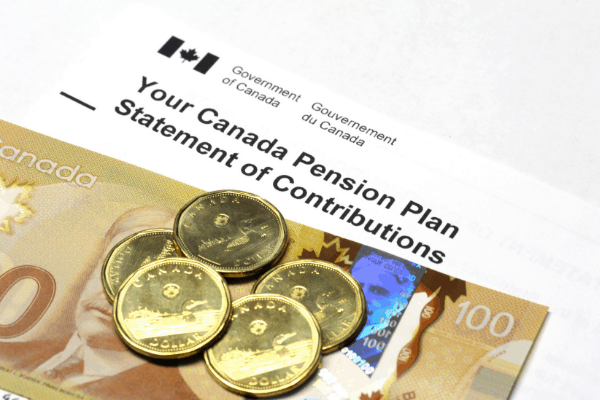
As you can see, many payroll deductions help you save for the future. However, you can take things further by adding more deductions to your pay, each payment term. I know it’s tempting to want all your money from each paycheque but it’s wise to save for the future.
A good way to save for the future is to set up automated deposits into your savings account or a Registered Retirement Savings Plan (RRSP). These automatic deposits contribute a portion of your paycheck into whatever account you want them to.
You can refer to the 50/30/20 budgeting rule if you’re unsure how to budget your money. The rule recommends you put at least 20% of your pay toward savings. This way, you will have most of your pay for fixed expenses and entertainment while building savings over time.
If you plan to pay for your child’s post-secondary education, you can also open a Registered Education Savings Plan (RESP). An RESP is a great way to save for post-secondary education because the government will also contribute money to your RESP for every dollar you contribute. You can set up another automated deposit for this.
The best financial advice is to stick to a budget and automated pay deductions are no exception. Divide your money properly and have enough to pay for basic expenses before you set up any automated deposits. However, it may be wiser to make manual deposits if your income is not reliable or low.
WRITTEN BY
Zain Usmani
Writer, Prepare for Canada
My name is Zain Usmani and I am a freelance content writer who currently resides in Mississauga, Ontario. I immigrated from Pakistan to Canada 5 years ago and have lived in many cities ever since. I have lived in Calgary AB, Edmonton AB, Regina SK, London ON, and Mississauga ON, while visiting over 40 Canadian cities and towns. I have a great passion for writing and I love helping people through it.
© Prepare for Canada 2026
First Time Filing Taxes in Canada? Your 2026 Newcomer Guide
How to Negotiate a Salary | A Guide for Newcomers