Join the ScotiabankStartRight® Program designed for Newcomers‡ and get up to $2,300* in value in the first year.
Living in Winnipeg, Manitoba: The Complete 2026 Guide for Newcomers
Written By
Corinna Frattini
•
Apr 10, 2026
•
Best Cities For Newcomers
Manitoba
Winnipeg
Winnipeg, Manitoba, Canada, is the primary economic engine of the Canadian Prairies. Known as the “Gateway to the West,” it offers a unique blend of big-city amenities and a much lower cost of living compared to Toronto or Vancouver. If you are researching whether Winnipeg, Manitoba, Canada, is the right city for your move, this 2026 guide covers vital information about housing, jobs, and lifestyle.
Before moving, it’s vital to research:
Job opportunities in your field: Ensure your skills match the Winnipeg labour market.
Housing costs: Winnipeg is one of Canada’s most affordable cities for newcomers.
Cost of living: Budget for groceries, utilities, and transportation.
Culture and daily life: Adapt faster and enjoy your new community.
Doing this research will help you make informed decisions and start your life in Canada on the right foot.
Winnipeg Quick Facts: 2026 Snapshot
Metric
2026 Data
Comparison Note
City Population
~855,000
6th largest city in Canada
*Avg. 1-Bedroom Rent
$1,378
Lower than Halifax or Calgary
Benchmark Home Price
$432,000
High potential for home ownership
Top Industry
Advanced manufacturing
Highly diversified economy
Climate
Sunny & cold
Known as “Winterpeg” but 300+ days of sun
*While this is an average, the market moves fast. You can view live Winnipeg rental listings right now at Rentals for Newcomers.
About Winnipeg, Manitoba
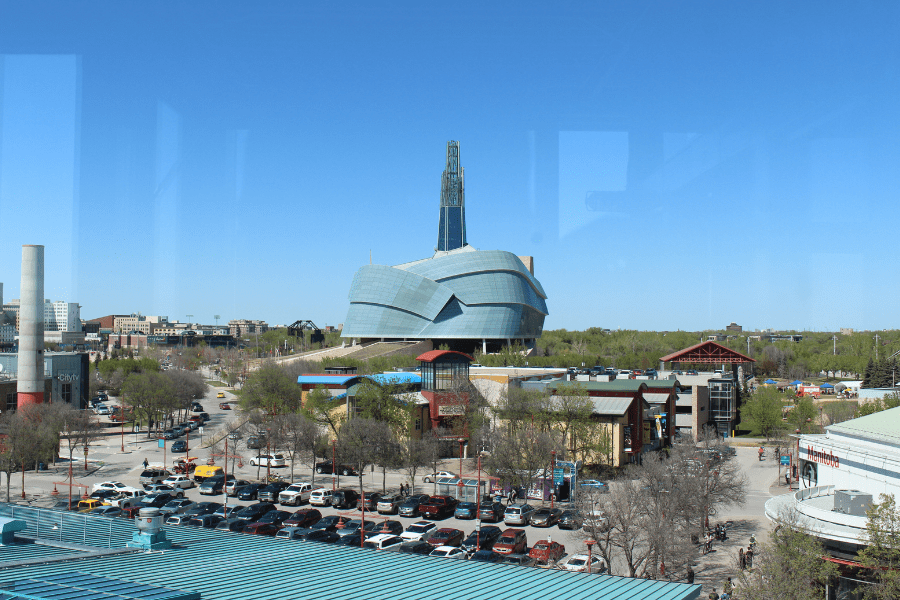
A hub of culture and history: The historic Forks Market and the Canadian Museum for Human Rights.
Winnipeg is the capital of Manitoba and serves as a major transportation hub for the prairie economy. The city has seen record growth through the Manitoba Provincial Nominee Program (MPNP), making it a national leader in cross-cultural settlement.
Located at the junction of the Red and Assiniboine Rivers (known as “The Forks”), Winnipeg, Manitoba, Canada, has a rich history as an Indigenous trading post and later a boomtown of the early 20th century. Today, it is a center for arts, human rights, and technology.
Jobs in Winnipeg
What are the top industries for jobs in Winnipeg?
Key Sectors: Health Care and Social Assistance, Retail Trade, Manufacturing, Transportation and Warehousing
Top 5 Occupations
1. Sales & Service
2. Trades, Transport and Operators
3. Business Finance Administration
4. Social Science, Education, Government
5. Health
Major Employers: Canada Life, NFI Group, and SkipTheDishes.
The economy in Winnipeg, Manitoba, Canada, is one of the most diversified in North America, shielding it from the volatility of the oil or tech sectors.
Is housing expensive in Winnipeg, Manitoba, Canada?
No. In fact, Winnipeg is currently one of the most stable and tenant-friendly markets in Canada. As of April 2026, the average rent for a 1-bedroom unit in Winnipeg is $1,378, which is roughly $650 per month cheaper than a similar unit in Toronto or Vancouver. This “affordability gap” is a primary reason why newcomers are choosing the Prairies to build a strong financial foundation.
Winnipeg Rent by Neighbourhood (April 2026)
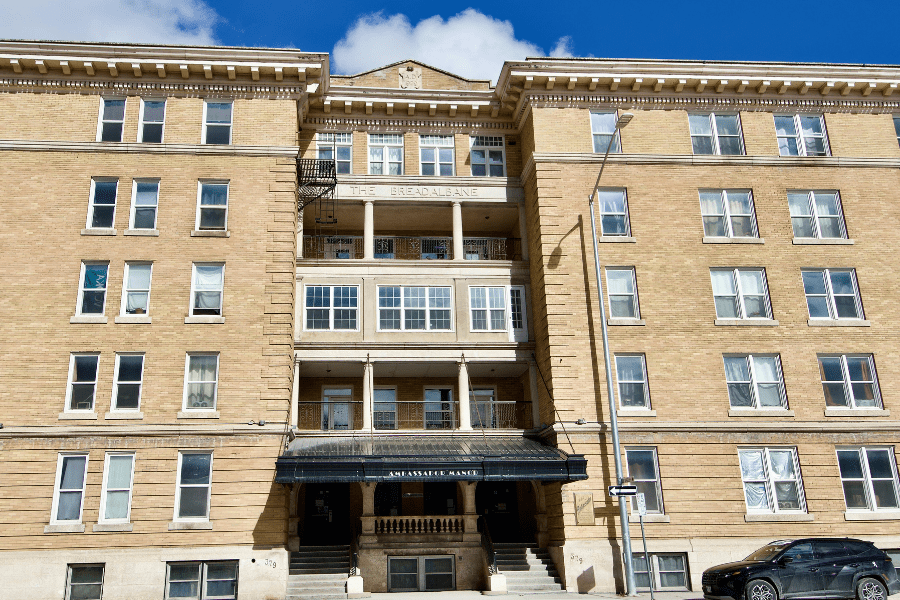
Historic downtown apartment blocks like the Ambassador Manor offer a blend of heritage architecture and some of the city’s most affordable rental options.
Renting is often the first step for newcomers. You’ll discover a range of neighbourhoods and housing types to suit different lifestyles and budgets.
While the city-wide average for a 1-bedroom unit is $1,378, looking in established residential areas can offer large monthly savings.
Neighbourhood
Avg. 1-Bedroom Rent
Vibe for Newcomers
Elmwood
$1,045
Most Affordable: Best for those on a strict budget; very close to downtown.
Best value, walkable to major employers and transit hubs
South Winnipeg
$1,327
Family-focused, near the University of Manitoba and newer schools
West Winnipeg
$1,377
Most expensive, “luxury” builds and major shopping hubs
St. Boniface
$1,321
Historic French quarter, vibrant culture and cafes
🏠 Start Your Search with Confidence
Because the Winnipeg market moves quickly, we recommend using the Rentals for Newcomers search tool to find apartments specifically vetted for new arrivals. Find up-to-date listings and prices!
Target “Renter’s Market” Perks: In early 2026, Winnipeg’s vacancy rate stabilized at 2.8%. This means some landlords are offering “signing bonuses” like $500 grocery gift cards or free high-speed Wi-Fi. Ask if any incentives are available!
Set a realistic budget including rent, groceries, transportation, and utilities
Book a short-term rental before you arrive in Canada, and search for a permanent or long-term rental upon arrival.
💡TIP: You’ll need tenant insurance to protect your belongings and most property owners will require it. Read more about why newcomers need tenant insurance.
Buying a Home in Winnipeg
Winnipeg’s suburban neighbourhoods offer spacious living and a community-focused lifestyle, even in the heart of winter.
Winnipeg remains one of the last major Canadian cities where homeownership is truly attainable for middle-income newcomers. It offers a significant “affordability gap” compared to the national average.
Here is how Winnipeg benchmarks as of April 2026.
Benchmark Home Price: The average home across the Winnipeg Metropolitan Region is about $415,600.
Detached Homes: Expect to pay an average of $432,000 for a single-family detached house.
Tips for newcomers buying a home:
Connect with licensed real estate agents to help you understand how to find, finance, and close on a home.
Get pre-approved for a mortgage to strengthen your offer.
Consider living in Transcona, Elmwood, or North Kildonan for more affordable housing options.
Managing your personal finances is a vital part of living in Winnipeg, MB, Canada. Most major banks offer newcomer programs that help you open an account before you arrive, get a credit card, and start building your credit history.
By visiting a local bank branch, you can also learn about financial products such as lines of credit, savings accounts, and mortgages. You can even meet with a personal banking advisor who can help you budget for life in Winnipeg and plan for long-term goals like buying a home.
Community Support for Newcomers in Winnipeg, MB, Canada
Winnipeg uses a “centralized intake” model to ensure you don’t miss out on vital programs.
Key Settlement Services in Winnipeg
Key Settlement Services in Winnipeg
Organization
Best For
Signature Programs & Perks
Manitoba Start
First Arrivals & Career
Entry Program: Mandatory 4-week orientation on life in MB. Employment Match: Connects your skills to local employers.
Immigrant Centre MB
Documentation & Citizenship
Access English: Language training. Verification Services: Help with official document translations.
New Journey Housing
Housing & Renting
Rental Workshops: Learn your rights as a tenant in MB. Housing Search: Dedicated help finding your first apartment.
Winnipeg Public Library
Language & Community
Check It Out!: Free programs for kids and literacy support. IdeaLEVERAGE: Free business resources and workspace.
SEED Winnipeg
Financial Empowerment
Asset Building: Matching programs to help you save for a home or business. Tax Clinics: Free help with Canadian tax filing.
Ready to Start Your New Life in Winnipeg?
Moving to a new country involves many moving parts. To make sure you don’t miss a step, from getting your Social Insurance Number (SIN) to enrolling your children in school, we’ve created a comprehensive guide just for you.
Driving & Transit in Winnipeg, Manitoba, Canada
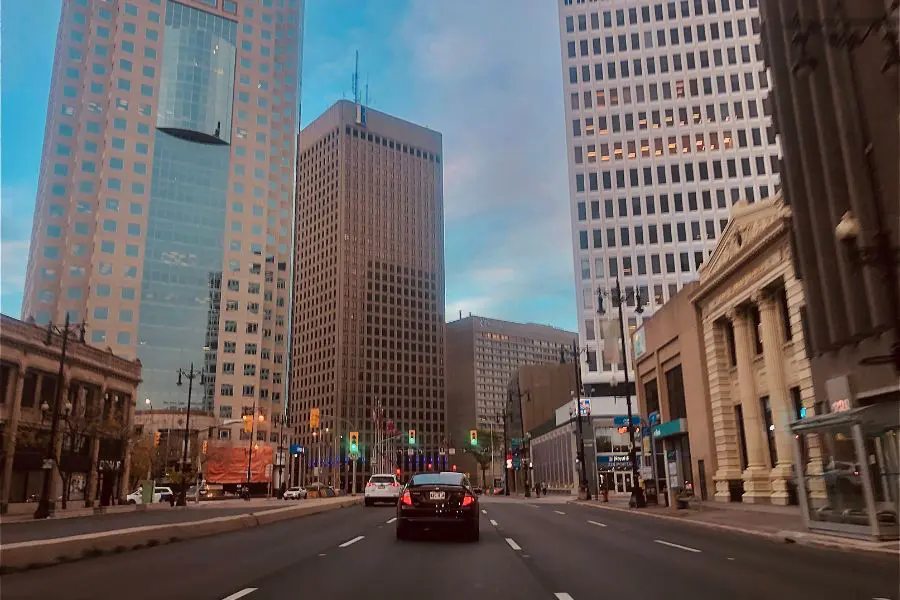
Downtown Winnipeg at the iconic Portage and Main intersection.
Driving in Winnipeg
The Perimeter Highway: This is Winnipeg’s beltway (Hwy 101/102), circling the city to allow for fast travel between suburbs like Transcona and Charleswood.
Winter Driving: Winnipeg residents must install winter tires by late October. Winnipeg’s flat topography makes for icy conditions, and most residential streets use a “Plow Priority” system during heavy snowfalls. Read more in our guide, Winter Driving in Canada: 7 Essential Tips for Newcomers
Licensing: Newcomers must visit a Manitoba Public Insurance (MPI) service centre to exchange their out-of-province or international license for a Manitoba Class 5 license.
Public Transit
Winnipeg Transit manages the city’s public transit. While the city does not have a subway or light rail, it has invested heavily in Bus Rapid Transit (BRT).
The BLUE Line: This is Winnipeg’s flagship rapid transit line, connecting Downtown to the University of Manitoba and the southwestern suburbs. It uses dedicated “transit-only” corridors to bypass vehicle traffic.
Peggo Card: This is the local “smart card” used to pay fares. You can load it with “e-cash” or monthly passes at 7-Eleven or Shoppers Drug Mart locations throughout the city.
Real-Time Tracking: Most locals use the Winnipeg Transit app or the “Telebus” system to track bus arrivals and reduce the time standing outside in -30°C weather.
Air and Rail Travel
Winnipeg James Armstrong Richardson International Airport (YWG): Located just 15 minutes from downtown, YWG is a major cargo and passenger hub, offering direct flights across North America and seasonal routes to Europe.
VIA Rail: Winnipeg’s historic Union Station on Main Street connects the city to the national rail network, including “The Canadian” route to Vancouver and Toronto.
Healthcare & Medical Services
Provincial Health Insurance
Manitoba Health provides the provincial health insurance plan. The plan covers the cost of medically necessary services, including visits to family doctors and specialists, as well as most hospital care and surgical procedures.
Eligibility: To qualify for a Manitoba Health card, you must be a Canadian citizen or have permanent resident status, make Manitoba your primary home, and be physically present in the province for at least 183 days in a calendar year.
No Waiting Period (Newcomers from Outside Canada): Unlike many other provinces, eligible newcomers arriving in Winnipeg, Manitoba, Canada, from outside the country are generally covered from the first day they establish residence. Apply for your health card immediately upon arrival.
Moving from Another Province: If you are moving to Winnipeg from within Canada, there is a three-month waiting period (the first day of the third month) before your Manitoba Health coverage begins. You must maintain your previous provincial coverage during this transition.
Work and Study Permit Holders: Many work permit holders (with a permit valid for at least 12 months) are eligible for Manitoba Health coverage. International students are typically covered by the Manitoba International Student Health Plan (MISHP) via their school; check with your school to confirm details. Visit the Manitoba Health office on Carlton Street in downtown Winnipeg or contact them directly to confirm your status.
How to Find a Family Doctor in Winnipeg
Once you have your Manitoba Health card, your next priority is to find a primary care provider. In Winnipeg, Manitoba, Canada, the provincial government manages a central registry to connect residents with available physicians.
Family Doctor Finder: The easiest way to find a doctor is through the Family Doctor Finder program. The program will match you with a clinic that is accepting new patients in your neighbourhood.
Walk-in & QuickCare Clinics: For non-urgent medical attention, Winnipeg has many walk-in clinics.
Health Links – Info Santé: This is a 24/7 bilingual phone nursing triage service. By calling 204-788-8200, you can speak with a registered nurse who can provide medical advice and direct you to the appropriate level of care (e.g., walk-in vs. emergency room).
Urgent Care vs. Emergency: Locals know to use Urgent Care (located at the Victoria, Seven Oaks, and Concordia hospitals) for non-life-threatening issues that still require immediate attention. This saves the Emergency Rooms (Health Sciences Centre and St. Boniface) for critical emergencies.
Major Hospitals in Winnipeg
Health Sciences Centre (HSC): HSC is the province’s largest hospital and serves as the major adult trauma centre for both Manitoba and Northwestern Ontario. It is the primary teaching hospital for the University of Manitoba and home to specialized programs in neurosurgery, burns, and transplant medicine.
The Children’s Hospital of Winnipeg: Located on the HSC campus, it specializes in comprehensive care for children, youth, and their families, providing everything from emergency pediatrics to long-term specialty clinics.
St. Boniface Hospital: Known as Winnipeg’s second-largest facility, it is a global leader in cardiac care and research. It is also a bilingual facility (English and French), serving the historic St. Boniface community and beyond.
Schools & Learning: A Guide for Families & Students
Public School System:Six distinct school divisions (Winnipeg, Pembina Trails, Seven Oaks, Louis Riel, St. James-Assiniboia, and River East Transcona) provide free education based on your residential address.
Specialized Programs:French Immersion options are available across all divisions, and International Baccalaureate (IB) and Advanced Placement (AP) programs are offered in many high schools.
Private & Independent Options: Schools like St. John’s-Ravenscourt (SJR) and Balmoral Hall offer alternative curricula and elite university preparation.
Early Childhood: Manitoba has many licensed childcare centres and a province-led initiative to increase $10-a-day daycare spaces for families.
Post-Secondary Schools
University of Manitoba (U of M): The province’s largest research university, world-renowned for Agricultural Sciences, Engineering, and Infectious Diseases.
University of Winnipeg (U of W): Famous for its downtown campus, small class sizes, and strong focus on Indigenous Studies, Human Rights, and Environmental Science.
Red River College Polytech (RRC): Manitoba’s largest institute for applied learning, offering 200+ programs focused on skilled trades, nursing, and business technology.
Pros and Cons of Living in Winnipeg
This table shows the trade-offs of moving to the “Gateway to the West.” It balances the high quality of life and affordability with the reality of prairie winters.
Feature
Pros (The Benefits)
Cons (The Challenges)
Lifestyle
Friendly Vibe: Consistently ranked as one of the friendliest cities with a deep sense of community.
Isolation: Winnipeg is far from other major hubs (the nearest large city is Regina, 6 hours away).
Housing
Unmatched Value: Homeownership is a reality here; prices are roughly 44% below the national average.
Older Stock: Some affordable central neighbourhoods require investment in older “character” homes.
Nature
Prairie Beauty: Stunning “living skies,” 1,000+ lakes within a 2-hour drive, and endless cross-country trails.
Extreme Winter: Frequent temperatures below -30°C and significant snow accumulation.
Economy
Stable Sectors: Manufacturing, Agribusiness, and a booming IT sector drive steady job growth.
Lower Wages: While rising, some salaries may be lower than in Ontario, but living costs are lower.
Commute
Driving: A well-laid-out city where most commutes are under 25 minutes.
Construction: Summer is often nicknamed “Construction Season,” leading to significant road delays.
Taxes/Costs
Low Entry Cost: Buying a home is much cheaper than in Vancouver or Toronto.
Provincial Tax: Manitoba has slightly higher income tax brackets than some western provinces (like AB).
Culture
Arts Powerhouse: Home to the Royal Winnipeg Ballet and the world-class Festival du Voyageur.
Professional Sports: While home to the NHL’s Jets, the market is smaller for some “big ticket” touring acts.
Day-to-Day Life & Culture in Winnipeg, MB, Canada
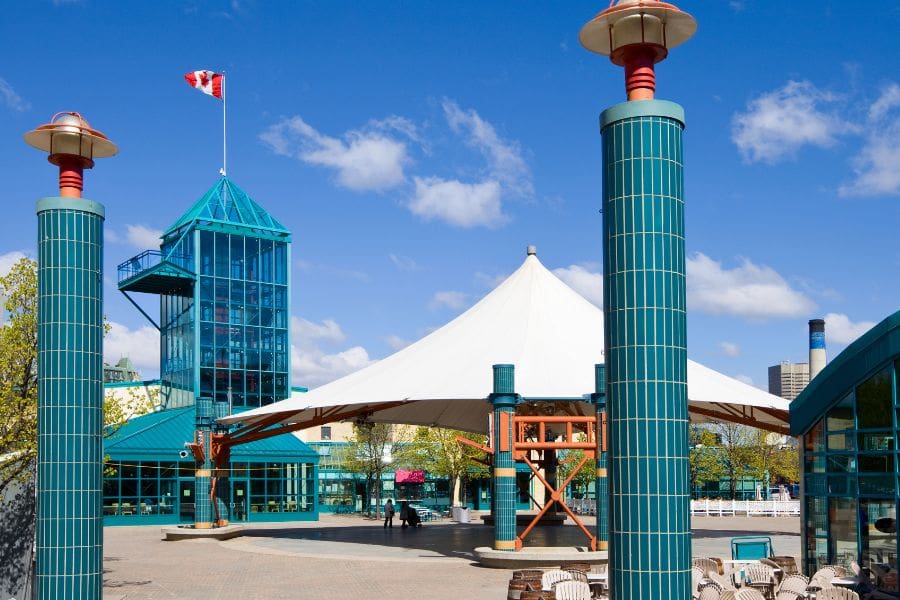
The Forks Market Plaza: Located in the heart of Winnipeg. It features year-round events, local markets, and the iconic glass viewing tower.
Arts, Culture & Entertainment
Winnipeg’s cultural scene is a mix of Indigenous heritage, elite performing arts, and a “festival for every week”.
Museums & History: Explore the world’s first centre for contemporary Inuit art at Qaumajuq, or take a deep dive into prairie history and natural science at the Manitoba Museum. Don’t miss the striking architecture and global human rights narratives at the Canadian Museum for Human Rights.
Cultural Celebrations: Winnipeg hosts North America’s longest-running multicultural event, Folklorama, every August. Other “must-sees” include the Festival du Voyageur (celebrating French-Canadian/Métis roots in February) and the Manito Ahbee Festival, a massive celebration of Indigenous arts and music.
Professional Sports: Join the “Whiteout” as you cheer for the Winnipeg Jets (NHL) at the Canada Life Centre, or catch the Winnipeg Blue Bombers (CFL) at Princess Auto Stadium. For soccer fans, Valour FC matches provide a vibrant, community-focused atmosphere.
Outdoor Activities in Winnipeg
Winnipeg offers a “Big Sky” outdoor lifestyle. Whether it’s a humid summer evening or a crisp winter morning, nature is integrated into the city’s design.
Assiniboine Park & The Leaf: Home to over 1,100 acres of green space, including a world-class zoo and The Leaf, a stunning indoor botanical attraction that allows you to experience tropical climates even in the middle of a Manitoba winter.
The Forks National Historic Site: Located at the meeting of the Red and Assiniboine Rivers, this is Winnipeg’s “Front Yard.” In winter, it hosts the Nestaweya River Trail, one of the longest skating trails in the world. In summer, it’s a hub for boat tours, cycling, and riverside dining.
Newcomer Community & Cultural Events
Winnipeg’s growing population is celebrated through massive community gatherings and inclusive programming.
Multicultural Festivals: Throughout the year, look for events such as Loveville 2026 (Manitoba’s largest multicultural family picnic), Chinatown Street Festival, and Islampura celebrations at various Islamic centres.
Indigenous Connection: Newcomers can join the One Heart, Two Rivers, Four Directions walking tours at The Forks to learn about the deep Indigenous history of the land you now call home.
FAQs: Living in Winnipeg, Manitoba
Do you need a car in Winnipeg?
While you can rely on Winnipeg Transit (especially the BLUE Line Rapid Transit), Winnipeg is a car-centric city. To navigate suburban “Value Pockets” like Transcona or South St. Vital, or to escape the winter wind chill, most residents find a car essential.
How do I enroll my child in school in Winnipeg?
Local School Divisions manage enrollment. Your child will attend a “Catchment School” based on your residential address. To register, you need:
Child’s birth certificate and passport. Proof of address (utility bill). Immigration documents (Permanent Resident card, work permit, or study permit).
Why are utility bills different in Winnipeg?
In Manitoba, almost all homes are heated by Natural Gas or Electricity, both of which are provided by Manitoba Hydro. Because Manitoba produces its own clean hydroelectricity, rates are among the lowest in Canada (roughly $0.10 per kWh in 2026, plus a basic monthly charge). However, because winters are severe, you should ask landlords for a “Budget Billing” history to see the average monthly cost during the coldest months.
What are the benefits of living in Winnipeg, Manitoba, Canada?
The city offers affordable housing, a low cost of living, and diverse employment options. It also has a multicultural and diverse population. In addition to the city’s great culture, you have access to a strong healthcare system and world-class universities. Read more about why Winnipeg is one of the top cities for newcomers.
Final Thoughts: Is Winnipeg Right for You?
Tobogganing is a beloved local tradition. The city is a winter playground for families.
Choosing Winnipeg, Manitoba, Canada, in 2026 means trading the high-stress “affordability crisis” for a balanced, community-focused lifestyle where homeownership is a reality.
The Draw: World-class arts, a “30-minute city” commute, and a housing market that sits 44% below the national average.
The Reality: Severe winters and urban sprawl mean you must invest in quality winter gear and, likely, a reliable vehicle.
The Verdict: If you want a career that allows you to actually enjoy your life and save for your children’s future, Winnipeg offers the strongest financial foundation in Canada. It’s a city that welcomes you with open arms!
Senior Editor and Content Writer, Prepare for Canada
Corinna researches and writes content to help newcomers make informed decisions about housing, employment, banking, and aspects of settling in Canada. With a background in human resources and leadership development, her articles focus on how newcomers can continue their careers in Canada. Her writing combines research, practical guidance, and clear language to support newcomers on their journey.