Join the ScotiabankStartRight® Program designed for Newcomers‡ and get up to $2,300* in value in the first year.
Are you moving to Canada? Thousands of immigrants come to the country every year. There are newcomers dispersed from coast to coast. One of the biggest decisions newcomers must make is where they choose to live. While Barrie is lesser-known than a large city like Toronto, it’s a popular alternative to living in the Greater Toronto Area. Where you choose to live will have a direct impact on your career options, financial success, housing costs, and overall lifestyle.
To find a lower cost of living and more affordable housing, many people consider Ontario cities outside of Toronto. Researching your options will help you choose the best city for you and your family.
Are you interested in learning more about the city of Barrie, Ontario? Our guide provides the thorough information you need to know about living in Barrie.
About Barrie, Ontario
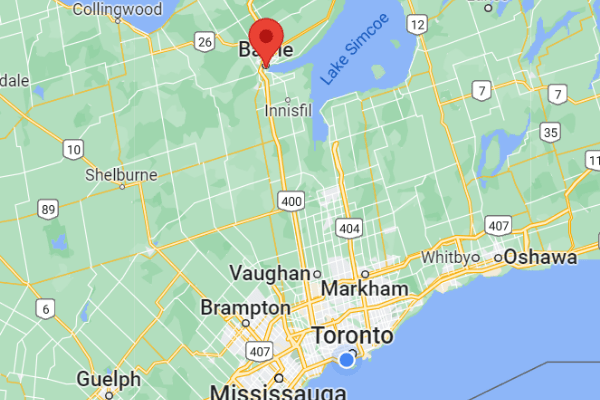
Barrie, Ontario, is a beautiful waterfront city on the shores of Kempenfelt Bay, the western side of Lake Simcoe. It is a growing area that has become a popular destination for new immigrants and people moving out of Toronto as part of a recent interprovincial migration trend.
Barrie, Ontario on the shores of Lake Simcoe and 1 hour from Toronto
People are attracted to the region for several reasons. It is a bedroom community of Toronto located about 90 km north of the city with a one-hour commute. The lower housing prices and cost of living are appealing. There is large employment growth, and it has a good transit system. The city is also ideal for people who love the outdoors because of the swimmable beaches and nearby ski hills. There are many great hiking paths, great skiing, and many watersports.
Over the past few decades, it has evolved from a small town to an up-and-coming city. Barrie was first settled during the War of 1812 as a supply depot for British soldiers. The city was named after Sir Robert Barrie, an officer in the British Navy. Over the years, it has evolved from a village (1854) to a town (1870) and became a city in 1959.
How Many People Live in Barrie, Ontario?
The population of Barrie has grown rapidly over the past few years. The city has recently made the list of the top 5 most-moved-to cities in Canada. With a population of 142,000 residents (City of Barrie, 2025), the government of Ontario projects the city could grow to 300,000 residents by 2051. This is based on increased immigration and intra-provincial migration.
How to Find a Job & Build a Career in Barrie
Barrie’s Local Economy
The economy in Barrie is in a growth phase. As more people move out of the big city, businesses are choosing to invest in Barrie. The projected 70% population growth by 2041 brings new jobs and opportunities. Estimates project that more than 30,000 new jobs will be created over the next 20 years.
Some of the biggest growth sectors are arts, entertainment, and recreation, manufacturing, finance and insurance, healthcare, and construction.
The top sectors in Barrie are:
Manufacturing
Security and cloud services
Technology
Food and beverage
Life sciences
Retail
Tourism.
Major Employers in Barrie
Barrie is home to several corporate headquarters, including:
Coca Cola
Hydro One
Scotiabank
The Royal Victoria Regional Health Centre
Georgian College.
Career Pathways in Barrie
There are many ways to explore career opportunities. You can search the Government of Canada Job Bank or other online job boards. You can also use local recruitment agencies such as Randstad Canada, IS2 Workforce Solutions, TalentWorld, and AppleOne Employment Services.
It’s vital to consider where to live within the city. Ideally, you want to choose a neighbourhood that is close to work, schools, and other amenities.
Is Housing Expensive in Barrie, Ontario?
The housing market is more affordable than in other cities in the Greater Toronto Area, but with housing prices on the rise, the gap is shrinking. The lack of supply and not enough new builds are driving up the cost.
Finding a Place to Rent in Barrie
Renters in Barrie can choose from detached homes, condos, apartments, and townhouses in unique neighbourhoods. To get a sense of the character and rental prices of each neighbourhood, check out Best Barrie Neighbourhoods for Newcomers to Rent.
There are a few ways you can look for rental units. You can search online, use realtor websites, or you can use Rentals for Newcomers to search for available rental units in Barrie. Here, you can also find current rental prices in Barrie.
When renting, it’s a good idea to get to protect your family, belongings, and finances.
Renting your first home in Canada | Options & solutions for newcomers
Searching for your first home in Canada? Join this exclusive session for key insights on housing market conditions, affordable options, and renting without credit history. Tailored for newcomers settling in the next six months, register now for valuable tips and a free guide!
Buying a home in Barrie has become more expensive. For example, prices have increased by over 30% in the past year, and are predicted to increase by as much as 15% in 2022. The average price for a detached house in Barrie is $980,000. The average price for a townhome is $853,000, and the average cost for a condo is $626,000.
Barrie is a commuter city. Many people drive to work within the city or to other locations across the Greater Toronto Area. A strong road system serves Barrie. There are several highways in the area, including Highway 400, the major highway that connects to Toronto. Highway 26 is the primary highway that runs through the city and leads to Collingwood. Other highways in the area include Highways 27, 90, and 93.
All drivers must have an Ontario driver’s licence. To get a licence, you need to complete the graduated licencing process. For information on driving in Canada and how to get a licence, read 10 Facts Newcomers Must Know About Driving in Canada.
Barrie Public Transit
Barrie Transit provides public transit and bus routes throughout the city. As well, you can take advantage of the daily GO Train and Bus service to downtown Toronto and other cities in the region. And, using public transit is a convenient, affordable, and simple way to travel within Barrie and across the region. Get more information about Barrie Transit fares.
Allandale GO Station. Photo: City of Barrie
There are no major airports in the city. The closest is Lake Simcoe Regional Airport.
Community Support for Newcomers
Barrie and Simcoe County offer support services to new immigrants who move to the community. You can get information about living and working in the community.
Some of the settlement agencies include the YMCA of Simcoe/Muskoka Immigrant Services, The Learning Centre, Georgian College, and Bradford Immigration & Community Services (BICS).
Language Support in Barrie
Many community agencies offer free language classes. In Barrie, you can take courses at The Learning Centre, Georgian College, and through the YMCA Immigrant Services. Or, you can also take courses with the Simcoe County District School Board in the Adult English as a Second Language program.
Personal Finance & Banking
Having a strong financial plan is important for new immigrants. Newcomers have access to banks, credit unions, and other financial institutions where they can open a bank account, get a credit card, or a line of credit, and apply for a mortgage. Most banks and financial institutions offer specific products and programs for new immigrants. Visit a local branch to open an account. You will need proof of residence and proper identification.
The Government of Ontario manages the school system, including elementary, high school, and post-secondary education.
Elementary and High School Education
Barrie offers residents several elementary and high school education options. You have the choice to attend the public or Catholic school board. It also has two French school boards and several private schools. You can enrol your children at a school with one of the following:
Simcoe County District School Board
Simcoe Muskoka Catholic District School Board
Conseil scolaire catholique MonAvenir
Conseil scolaire Viamonde.
Post Secondary Institutions
Located in Barrie is Georgian College of Applied Arts and Technology. It offers over 130 full-time career-focused programs. There are over 13,000 full-time students, including 4,500 international students from over 85 countries.
Georgian College ofApplied Arts and Technology
Where to Get Medical Care in Barrie, Ontario
Top-quality health care is something we value as Canadians. In Barrie, you can get urgent care through the Royal Victoria Regional Health Centre. You can also go to walk-in clinics throughout the city to receive care for non-urgent needs.
In case of an emergency call 9-1-1. This number is the same no matter where you live in Canada.
The Ontario Health Insurance Plan (OHIP) provides residents with health care coverage. Learn how to apply for an OHIP card.
You can also pay for additional to help cover the costs of prescription drugs and services that are not covered by OHIP. Some employers offer third-party health insurance through their employer benefits packages.
Finding a family doctor is vital. You can search for a family doctor who is taking on new patients through Health Care Connect. You can call 1-800-445-1822 or visit www.ontario.ca/findadoctor.
What is Day-to-Day Life Like in Barrie?
Things to Do in Barrie
As a waterfront community, Barrie offers many year-round activities for residents. You can enjoy the beaches in the summer and head over to nearby ski clubs in the winter. And it is only a short drive to many other outdoor adventures. Downtown Barrie is at the heart of it all.
Public Spaces & Attractions
The city offers many local attractions, including the Simcoe County Museum, Fort Willow, Centennial Park, and Bear Creek Eco Park. If you are into the arts and theatre, check out Five Points Theatre or Maclaren Art Centre. Be sure to check out the iconic Spirit Catcher sculpture.
Left: Blue Mountain, Top Right: Spirit Catcher Sculpture by the waterfront, Bottom Right: Horseshoe Resort
Restaurants & Nightlife
Downtown Barrie is the place to go to dinner or enjoy entertainment and cultural activities. The city hosts many festivals such as Kempenfest, Barrie Waterfront Festival, Winterfest, and the Barrie Film Festival.
Nature & Natural Landscapes
Located on Lake Simcoe, Barrie provides residents with the opportunity to walk along the waterfront, go boating and enjoy the beach life in the summer months. Be sure to check out the beaches at Minet’s Point, The Gables, Tyndale, Centennial, and Johnson’s Beach.
In the winter, Horseshoe Resort, Snow Valley and Blue Mountain are great for skiing, snowboarding, and tubing. Or check out nature at Arboretum Sunnidale Park.
Sporting Events & Concerts
Barrie is home to the Barrie Colts of the Ontario Hockey League, and other minor sports teams. If you want to catch a concert, check out Sadlon Arena or Burl’s Creek Event Grounds, which is home to the popular country music festival Boots and Hearts.
Culture & Diversity in Barrie
Diversity
Barrie is not traditionally known as a diverse city, but it is on the path to becoming more diverse. There are about 20,000 immigrants in the city. 7.6% of the population are minorities and 5% are Aboriginal. The city has a large francophone community with close to 10,000 residents being bilingual.
The largest minority groups are Black (2.7%), South Asian (2.2%), Chinese (1.2%) and Latin American (1.1%).
Worship
Barrie is mainly a Christian community. Around two-thirds of residents identify as Catholic, United, or Anglican. About 30% of the population has no religious affiliation. About 1-2% of the population identify with another religion.
The Weather in Barrie
Barrie has a climate like the rest of southern Ontario. They experience warm and humid summers and cold winters. It is a humid continental climate. The region experiences heavy thunderstorms in the spring and summer.
In the winter, the city gets significant snowfall, largely because it is close to Georgian Bay and Lake Ontario. The average temperature is -8.1°C in January and +21.0°C in July.
Common Questions Immigrants Ask About Living in Barrie
Is Barrie Ontario a Good Place to Live for Immigrants?
Barrie is a mid-sized city that offers a slower-paced lifestyle than living in a large city such as Toronto. Though Barrie is known for being more traditional, it is becoming a more diverse city. Barrie was named the safest city in Ontario to live in. If you are into the outdoors and cottage lifestyle, it’s a great place to consider.
What are the Advantages and Disadvantages of Living in Barrie?
It’s vital to consider the pros and cons of a city before choosing where to live. On the plus side, Barrie is a great location, with a growing job market, a safe community and offers many great seasonal activities. On the downside, it’s less diverse than a city such as Toronto and other potential issues such as road congestion, challenging winters, and rising housing costs.
Is Barrie, Ontario, Expensive?
Barrie is more affordable than many cities in the Greater Toronto Area, but housing prices are rising as the city has become a prime location for interprovincial migration. Many Toronto residents are moving to Barrie. As a result, the cost of housing is rising.
Barrie, Ontario, is one of Canada’s fastest-growing cities, with a population of more than 142,000 people (City of Barrie, 2025). Just 80 km north of Toronto, Barrie offers newcomers a more affordable lifestyle while staying connected to the Greater Toronto Area (GTA) by GO Train and Highway 400. With average rents around $2,080/month (Rentals.ca, 2025), Barrie is a popular choice for commuters, families, and students. Here are the best neighbourhoods in Barrie to rent in as a newcomer.
Before You Rent in Barrie: Tips for Newcomers
Finding the right neighbourhood is only part of the rental journey. As a newcomer, it’s vital to understand how the Canadian rental application process works. Landlords in Barrie often ask for documents such as identification, proof of income, and references before approving your application. Having these ready will help you stand out in a competitive market.
If you’re just arriving and need flexibility, consider short-term rentals or homesharing options. These options allow you to settle quickly while exploring neighbourhoods before signing a long-term lease.
Shared housing is common for students near Georgian College or in the East End. Discover more about Types of Housing in Canada.
Newcomer Tip: Use trusted platforms like Rentals for Newcomers (RFN) to find verified listings and avoid rental scams. Be cautious of landlords who ask for deposits before you see the unit, or request payment through untraceable methods. Always get a lease in writing and confirm landlord details.
Where Should Newcomers Rent in Barrie?
Newcomers should consider renting in neighbourhoods that balance affordability, amenities, and access to transit. The best choice depends on your lifestyle, whether you prioritize commuting, family-friendly amenities, or scenic lakefront living. Here are some top neighbourhoods to consider.
Barrie Rental Neighbourhoods
Main rental neighbourhoods in Barrie, Ontario.
1. Painswick: Best for commuters and families
Located in Barrie’s south end, Painswick is one of the city’s fastest-growing neighbourhoods. Its biggest draw is the Barrie South GO Station, which makes commuting to Toronto manageable for professionals.
Ideal for: Families seeking schools and green space, professionals commuting to the GTA, renters who want suburban convenience.
Access:Public Transit: Direct GO Train service to Toronto from Barrie South GO Station. Driving: Easy access to Highway 400, about 15 minutes to downtown Barrie, 75 – 90 minutes to Toronto.
Vibe: Suburban, growing, and family-friendly with plenty of shopping and dining along Big Bay Point Road.
Why newcomers like it: Multiple schools and a public library branch to support family needs; easy commuting by GO train or Highway 400.
2. Holly: Best for growing families
Holly is a rapidly developing neighbourhood in Barrie’s south end. It’s one of the most sought-after areas due to its excellent schools, parks, and strong sense of community.
Ideal for: Families with young children; renters looking for a quiet suburban lifestyle.
Access:Public transit: Barrie Transit bus routes connect to downtown and GO stations. Driving: About 10 minutes to downtown Barrie, quick access to Highway 400.
Vibe: Family-focused with new subdivisions, parks, and shopping nearby.
Rental range: Townhouses $2,000 – $3,000; detached homes $2,600+
Why newcomers like it: Well-rated schools and family-friendly amenities; plenty of green space for kids to play, and access to Highway 400 for commuters.
If you’re looking to settle long-term, Holly offers larger rental homes with room for extended family, ideal for newcomers moving with relatives.
Renting your first home in Canada | Options & solutions for newcomers
Searching for your first home in Canada? Join this exclusive session for key insights on housing market conditions, affordable options, and renting without credit history. Tailored for newcomers settling in the next six months, register now for valuable tips and a free guide!
3. Innis Shore: Best for nature lovers and families
Innis Shore, in Barrie’s southeast, is one of the largest neighbourhoods in the city. It borders Kempenfelt Bay, offering lake views and access to parks and trails.
Ideal for: Families seeking large homes near schools; nature lovers seeking trails and lakefront access.
Access: About 15 minutes to drive downtown with easy access to Highway 400. Public transit offers local bus routes. Nearest GO access is Barrie South GO Station (10 – 15 minutes away).
Vibe: Scenic, spacious, and community-oriented.
Rental range: Townhouses $2,000 – $2,400; detached homes $2,700+.
Why newcomers like it: Top-rated schools and playgrounds, scenic trails and green spaces for outdoor activities, proximity to Wilkin’s Beach for family outings.
4. Sunnidale: Best for space and established homes
Sunnidale, in Barrie’s north end, is known for large lots, mature trees, and established homes. It’s a quiet neighbourhood with excellent schools.
Ideal for: Families seeking space, renters who want a quiet, established community.
Access: About 10 minutes to drive to downtown Barrie; close to Highway 400. Barrie Transit routes connect to downtown and the Allandale Waterfront GO Station.
Vibe: Peaceful and residential with a suburban feel.
Rental range: Detached homes $2,400 – $2,800.
Why newcomers like it: Many schools, including six public and four Catholic options; Sunnidale Park offers trails, streams and an arboretum; ideal for families looking for long-term stability.
This area has fewer apartments, so focus your rental search on single-family homes or basement apartments.
5. Bayshore: Best for families
Bayshore is a well-established neighbourhood in Barrie’s south end, with several subdivisions. It features mainly detached homes with few condos or townhouses. It offers quiet, residential streets mixed with commercial strips, parks, and access to waterfront areas.
Ideal for: Families, including those with school-age children.
Access: Driving to downtown Barrie is quick, and access to Highway 400 is reasonable via connector roads. Several Barrie Transit bus routes connect to other parts of the city.
Vibe: Calm, residential, and close to parks
Rental range: Detached homes $2,500+.
Why newcomers like it: Lake proximity, family parks, and quiet streets.
Barrie waterfront condos nearKempenfelt Bay.
6. City Centre: Best neighbourhood for urban living
City Centre overlooks Kempenfelt Bay and is the heart of downtown Barrie. It’s ideal for renters who want walkable access to shops, restaurants, and the waterfront.
Ideal for: Young professionals, students, or singles seeking apartments.
Access: The central location means short drives anywhere in the city; multiple Barrie Transit routes; close to the Allandale Waterfront GO Station.
Vibe: Urban, busy, and scenic with high-rise condos and apartments.
Why newcomers like it: Walkability to amenities and nightlife; access to the Allandale Waterfront GO Station; beautiful waterfront trails and views.
7. East End: Best for students and longtime residents
The East End is one of Barrie’s oldest areas and is home to Georgian College. It offers mature trees, older brick homes, and family parks.
Ideal for: Students attending Georgian College; families who prefer a quieter, older neighbourhood. Access: About 10 minutes to drive to downtown Barrie; direct Barrie Transit service to Georgian College and downtown.
Vibe: Historic, residential, and student-friendly.
Rental range: Rooms for students typically cost $600 – $900/month; rentals/rooms: $600 – $900/month; detached homes range from $2,000 – $2,500.
Why newcomers like it: Close to Georgian College and Kempenfelt Park, a mix of student housing and family homes, quiet, established neighbourhood.
8. Ardagh: Best for outdoor enthusiasts
Ardagh is located in Barrie’s west end and sits next to the Ardagh Bluffs Natural Area, with over 17 km of trails.
Access: About 10 minutes to drive downtown. Public transit bus routes connect to downtown and GO stations.
Vibe: Residential, scenic, and active with access to nature.
Rental range: Apartments/condos near the waterfront $2,000 – $2,200; Detached homes: $2,600+.
Why newcomers like it: Trails, parks, and outdoor spaces like Bear Creek Eco-Park; mix of new condos and older homes; easy access to Highway 400.
If you love the outdoors but want affordability, look for condos near Ardagh Bluffs instead of detached homes.
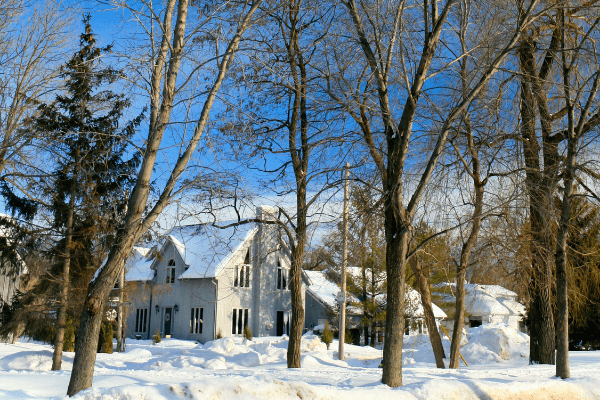
Heritage-style homes in Barrie’s historic Allandale neighbourhood showcase the area’s classic charm.
9. Allandale: Best for heritage charm and commuters
Allandale is one of Barrie’s oldest and most charming neighbourhoods, with heritage homes, lake access, and the Allandale Waterfront GO Station.
Ideal for: Commuters and renters who appreciate heritage charm.
Access: Several Barrie Transit bus routes connect to other parts of the city. Driving to downtown Barrie is quick, and access to Highway 400 is reasonable via connector roads.
Vibe: Calm, residential, and close to parks
Rental range: Detached homes $2,400 – $2,700; Apartments/condos near the waterfront: $2,000 – $2,200.
Why newcomers like it: Historic homes and easy access to BarrieTrails, parks, and outdoor spaces like Bear Creek Eco-Park; a mix of new condos and older homes; easy access to Highway 400.
Barrie Neighbourhoods: Rental Costs at a Glance
Rental Range Key
$ Budget-friendly: Under $1,500/month (mostly student/shared rentals)
$$ Moderate: $1,500 – $2,200/month (apartments, condos, some townhomes)
$$$$Premium: $2,800+/month (new detached homes, large family properties)
NEIGHBOURHOOD
RENTAL RANGE*
Painswick
$1,700 – $2,800+
Holly
$2,000 – $2,600+
Innis Shore
$2,000 – $2,700+
Sunnidale
$2,400 – $2,800
Bayshore
$2,100 – $2,500+
City Centre
$1,800 – $2,200
East End
$600 – $900 (room) / $2,000 – $2,500 (home)
Ardagh
$1,900 – $2,600+
Allandale
$2,000 – $2,700
*Rental ranges are approximate based on 2025 listings.
Heritage-style homes in Barrie’s historic Allandale neighbourhood.
FAQs about Renting in Barrie
What types of rental housing are available in Barrie?
Newcomers can find a variety of rental options in Barrie, including high-rise apartments downtown, heritage homes in Allandale and City Centre, family-sized houses in suburban neighbourhoods like Holly and Innis Shore, and modern condos near the waterfront. Read more about types of housing in Canada.
Is Barrie affordable for renters?
Yes. Rental prices in Barrie are generally more affordable than in Toronto, which is why it’s popular with commuters. Compared to Toronto, newcomers in Barrie can find larger rental units for the same price as smaller apartments downtown.
Is Barrie a good city for commuters to Toronto?
Yes. Many newcomers choose Barrie due to its commuter-friendly access. The GO Train connects Barrie to Union Station in Toronto, and Highway 400 provides a direct driving route. Neighbourhoods near the Barrie South or Allandale Waterfront GO Stations are especially popular with commuters.
Which Barrie neighbourhoods are best for families?
Family-friendly neighbourhoods include Painswick, Innis Shore, Holly, and Sunnidale, all of which have schools, parks, and larger homes. Families looking for heritage character often choose Allandale or City Centre.
What is public transit like in Barrie?
If you’re settling in a central or well-served neighbourhood (City Centre, Allandale, Painswick near GO), transit is reasonably good for commuting and daily errands. You may need a car if you live in newer or more peripheral suburbs.
What makes Barrie attractive to newcomers?
Barrie offers a balance of affordability, job opportunities, and lifestyle. It’s a growing city with a strong economy, and it’s close to the GTA. Newcomers like its waterfront, outdoor activities, and diverse rental housing options. Check out our Living in Barrie guide to learn more about jobs, culture, and life in the city.
Final Thoughts about Barrie Neighbourhoods
Barrie’s neighbourhoods offer something for every newcomer, whether it’s commuter convenience in Painswick and Allandale, family living in Holly and Innis Shore, or student-friendly housing in the East End. With average rents below those in Toronto, Barrie is a popular and affordable option for newcomers seeking space, community, and connection to the Greater Toronto Area.
We use cookies to enhance your experience, analyze site traffic, and support marketing. Some are essential, while others are optional. By clicking "Allow All," you consent to all cookies. You can "Disable All" or adjust your choices in "Cookie Settings." Update preferences anytime in our Privacy Policy.
We and our partners use information collected through cookies and similar technologies to improve your experience on our site, analyse how you use it and for marketing purposes. Because we respect your right to privacy, you can choose not to allow some types of cookies. However, blocking some types of cookies may impact your experience of the site and the services we are able to offer. In some cases, data obtained from cookies is shared with third parties for analytics or marketing reasons. You can exercise your right to opt-out of that sharing at any time by disabling cookies.
These cookies and scripts are necessary for the website to function and cannot be switched off. They are usually only set in response to actions made by you which amount to a request for services, suchas setting your privacy preferences, logging in or filling in forms. You can set your browser to block oralert you about these cookies, but some parts of the site will not then work. These cookies do not store any personally identifiable information.
Analytics
These cookies and scripts allow us to count visits and traffic sources, so we can measure and improve the performance of our site. They help us know which pages are the most and least popular and see how visitors move around the site. All information these cookies collect is aggregated and therefore anonymous. If you do not allow these cookies and scripts, we will not know when you have visited our site.
Embedded Videos
These cookies and scripts may be set through our site by external video hosting services likeYouTube or Vimeo. They may be used to deliver video content on our website. It’s possible for the video provider to build a profile of your interests and show you relevant adverts on this or other websites. They do not store directly personal information, but are based on uniquely identifying your browser and internet device. If you do not allow these cookies or scripts it is possible that embedded video will not function as expected.
Google Fonts
Google Fonts is a font embedding service library. Google Fonts are stored on Google's CDN. The Google Fonts API is designed to limit the collection, storage, and use of end-user data to only what is needed to serve fonts efficiently. Use of Google Fonts API is unauthenticated. No cookies are sent by website visitors to the Google Fonts API. Requests to the Google Fonts API are made to resource-specific domains, such as fonts.googleapis.com or fonts.gstatic.com. This means your font requests are separate from and don't contain any credentials you send to google.com while using other Google services that are authenticated, such as Gmail.
Marketing
These cookies and scripts may be set through our site by our advertising partners. They may be used by those companies to build a profile of your interests and show you relevant adverts on other sites. They do not store directly personal information, but are based on uniquely identifying your browser and internet device. If you do not allow these cookies and scripts, you will experience less targeted advertising.
Facebook Advanced Matching
Facebook Advanced Matching can improve ads attribution and conversion tracking. It can help us reach better-targeted custom audiences through our ads. When possible, we will share with Facebook hashed information like your name, phone, email, or address.
Facebook CAPI
Facebook Conversion API Events (CAPI) help us better understand how you interact with our websites. They allow us to measure the impact of our ads on the website's conversions and they improve ads targeting through custom audiences. When possible, we might share with Facebook information like name, email, phone, address.