Join the ScotiabankStartRight® Program designed for Newcomers‡ and get up to $2,300* in value in the first year.
The 2026 Newcomer’s Guide to Living in Hamilton, Ontario
Written By
Corinna Frattini
•
Apr 27, 2026
•
Choosing a City
Hamilton
Ontario
Hamilton, Ontario, Canada, is the rising star of the Golden Horseshoe. Known as “The Ambitious City,” it offers a unique blend of grit, heritage, and a rapidly diversifying economy. If you are researching whether Hamilton, Ontario, Canada, is the right city for your move, this 2026 guide covers vital information about living in Hamilton, housing, and jobs, in a city undergoing a massive transformation.
Before moving, it’s vital to research:
Job opportunities in your field: Ensure your skills match the Hamilton labour market.
Housing costs: Hamilton is a primary affordability valve for the Greater Toronto and Hamilton Area (GTHA).
Cost of living: Budget for groceries, utilities, and transportation.
Culture and daily life: Adapt faster and enjoy your new community.
Doing this research will help you make informed decisions and start your life in Canada on the right foot.
Quick Facts About Living in Hamilton: 2026
Metric
2026 Data
Comparison Note
City Population
~600,000 (City) / 820,000 (Metro)
9th largest metro area in Canada
*Avg. 1-Bedroom Rent
$1,825
-25% lower than Toronto
Benchmark Home Price
$776,847
Prices stabilizing after 2025 correction
Top Industry
Health Sciences & Biotech
Transitioning from steel to “Eds and Meds”
Climate
Humid Continental
Famous for “Waterfall Season” in the Spring
*While this is an average, the market moves fast. You can see live, neighbourhood-specific listings for Hamilton right now at Rentals for Newcomers.
About Hamilton, Ontario
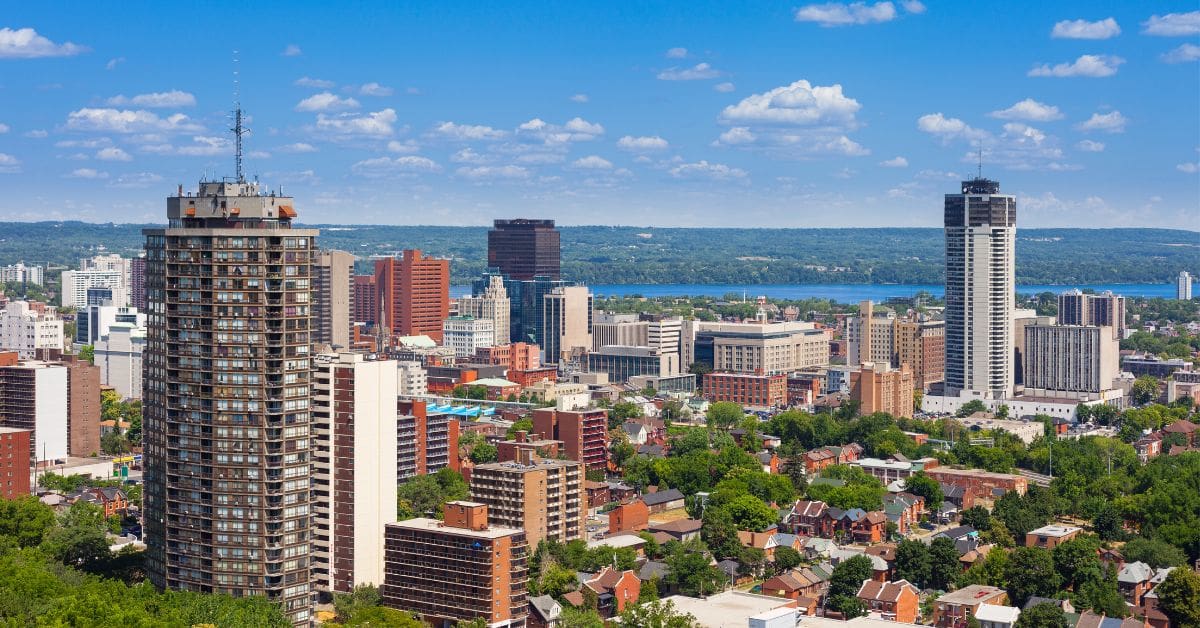
A hub of innovation and nature: From the McMaster Innovation Park to over 100 waterfalls within city limits.
Hamilton serves as the industrial and healthcare heart of Southern Ontario. Located at the western tip of Lake Ontario, the city is geographically divided by the “Mountain” (the Niagara Escarpment), creating a unique upper- and lower-city dynamic. In 2026, the city is a national leader in Green Steel and medical research, attracting a wave of “urban refugees” from Toronto looking for more space without sacrificing culture.
Jobs in Hamilton, Ontario
What are the top industries for jobs in Hamilton?
Key Sectors: Health Care, Advanced Manufacturing, Education, and Film/Digital Media.
5. Specialized Manufacturing (EV Battery Tech & Green Steel)
Major Employers: Hamilton Health Sciences, McMaster University, ArcelorMittal Dofasco, and the City of Hamilton.
💡 Employment Trends: As of March 2026, Hamilton’s unemployment rate sits at 6.5%, trending lower than the provincial average. This stability is driven by the $3.4B Light Rapid Transit (LRT) project and the ongoing “Green Steel” transition, which have created a surge in high-paying construction and engineering roles.
Tips for Newcomers Seeking Jobs in Hamilton
Hamilton’s job market is uniquely tied to the GTHA economy, making networking and specialized settlement support essential for a quick entry into the workforce.
Search Local & National Job Boards: Use Canada Job Bank or the Hamilton Economic Development portal. For specialized roles, check the careers pages of the “Big Three” employers: Hamilton Health Sciences, McMaster University, and ArcelorMittal Dofasco.
Connect with Free Settlement Agencies: Don’t wait until you arrive. Many agencies offer pre-arrival services to help you tailor your resume to Ontario standards and understand the local labour market.
Attend Newcomer Events: Events like the annual Hamilton Newcomer Day (held every April) are vital for meeting employers and service providers face-to-face.
The 2026 Cost of Living in Hamilton: Housing & Rent
Is housing expensive in Hamilton?
Hamilton is a primary “affordability valve” for the Greater Toronto and Hamilton Area. As of April 2026, the average rent for a 1-bedroom apartment is $1,825, which is roughly $700 per month cheaper than a similar unit in downtown Toronto. If you’re deciding between the high-energy lifestyle of the provincial capital and Hamilton, see our guide on Living in Toronto: Everything You Need to Know for a comparison.
Hamilton Rent by Neighbourhood (April 2026)
Renting is often the first step for newcomers. You’ll discover a range of neighbourhoods and housing types to suit different lifestyles and budgets.
While the average for a 1-bedroom unit is $1,825, looking in older residential areas may offer larger monthly savings.
Neighbourhood
Avg. 1-Bedroom Rent
Vibe for Newcomers
East End
$1,550
Most Affordable: Best for families and garden space
Corktown
$1,875
Commuter Hub: Steps to GO Transit; historic and walkable
Westdale
$1,925
Student/Academic: Near McMaster; vibrant and rowdy
The Mountain
$1,750
Suburban Comfort: Quiet streets, great for newcomers with cars
North End
$1,850
Rapid Growth: Near the water; massive redevelopment underway
🏠 Start Your Rental Search with Confidence
The Hamilton market moves quickly! We recommend using the Rentals for Newcomers search tool to find apartments specifically vetted for new arrivals. Find up-to-date listings and prices!
Hamilton landlords now offer rent-free months to fill new buildings.
Target New Downtown Condos for Perks: In early 2026, the vacancy rate has climbed to 3.6%, and the city has over 1,400 new rental units. This is where you’ll find the best incentives; Look for “One Month Free Rent” or “Reduced Move-in Fees” specifically in the Core and West Harbour areas.
Set a realistic budget: Hamilton rents are currently in a “softening” phase, but remain higher than the national average.
Mandatory Renter’s Insurance: Most Hamilton landlords now require proof of a tenant insurance policy before handing over the keys. Budget for renter’s insurance.
Book a short-term rental before you arrive in Canada, and search for a permanent or long-term rental upon arrival.
💡Renting in Hamilton Tip: You’ll need tenant insurance to protect your belongings and most property owners will require it. Read more about why newcomers need tenant insurance.
Buying a Home in Hamilton
A city of neighbourhoods: Hamilton’s 2026 housing market offers a diverse range of suburban and urban options within its iconic leafy landscape.
Hamilton offers an advantage for newcomers looking to stay within the GTHA while avoiding Toronto’s high price points. As of April 2026, the market has shifted toward a “Buyer’s Market” with more inventory and a notable plateau in pricing, making it a strategic time to enter the market.
Here is how Hamilton benchmarks as of April 2026.
Property Type
Benchmark Price (April 2026)
Market Trend
Composite (All Homes)
$721,075
Down 8.7% Year-over-Year
Detached Homes
$807,952
Down 7.7% Year-over-Year
Townhouses
$630,671
Down 7.3% Year-over-Year
Condo Apartments
$388,264
Down 13.3% Year-over-Year
Tips for newcomers buying a home in Hamilton
Connect with licensed real estate agents to help you understand how to find, finance, and close on a home.
Get pre-approved for a mortgage to strengthen your offer.
Consider areas like Crown Point and Corktown, which offer accessible entry points for detached homes and condos.
Community Support for Newcomers in Hamilton, ON, Canada
There are many newcomer agencies in Hamilton, with each playing a distinct role in your first year of arrival.
Key Settlement Services in Hamilton
Organization
Best For
Signature Programs & Perks
YMCA Immigrant Services
First Arrivals
Language Assessment: The mandatory starting point for all English classes. Mentorship: Professional matches for internationally trained workers.
Immigrants Working Centre (IWC)
Career & Skills
WorkLink: Sector-specific language training for Retail, Childcare, and Manufacturing. WES Gateway: Help with credential recognition for displaced documents.
Wesley Newcomer Services
Refugees & Housing
Resettlement Assistance: Temporary housing and intensive orientation for Government-Assisted Refugees. Housing Search: Dedicated case workers to help you find your first apartment.
Hamilton Public Library (HPL)
Learning & Community
Newcomer Learning Centre: Free one-to-one English tutoring and Conversation Circles. Human Library: One-to-one chats with established locals to learn about Canadian culture.
YWCA JOIN Program
Women & Youth
Gender-Based Support: Specialized employment and wellness workshops for newcomer women and 2SLGBTQIA+ youth.
Centre de Santé Communautaire
Francophones
Bilingual Settlement: Comprehensive health and social services for the French-speaking newcomer community.
Ready to Start Your New Life in Hamilton?
Moving to a new country involves many moving parts. To make sure you don’t miss a step, from getting your Social Insurance Number (SIN) to enrolling your children in school, we’ve created a comprehensive guide just for you.
Banking & Personal Finances in Hamilton, ON
Most major banks offer newcomer programs that help you open an account before you arrive, get a credit card, and start building your credit history. By visiting a local bank branch, you can also learn about financial products such as lines of credit, savings accounts, and mortgages. You can even meet with a personal banking advisor who can help you budget for life in Hamilton and plan for long-term goals like buying a home.
Managing your personal finances is a vital part of living in Hamilton, ON, Canada. To prepare, check out our guide, Canadian Financial Tips Before You Move to Canada to help you budget for life in Ontario and plan for long-term goals.
Driving & Transit in Hamilton, Ontario, Canada
Commuting with a view: Highway 403 offers a scenic passage through the lush wetlands of Cootes Paradise.
Driving & Transit in Hamilton
The Linc & Red Hill: These are Hamilton’s primary internal expressways. In 2026, expect “Construction Season” to add 15 minutes to any cross-town trip.
Winter Driving: Driving between the “Lower City” and “The Mountain” involves steep access points (called “Mountain Cuts”). During winter, these inclines become extremely hazardous. Read more in our guide, Winter Driving in Canada: 7 Essential Tips for Newcomers
Licensing: Newcomers must visit a DriveTest Centre to exchange their out-of-province or international license for an Ontario license.
Public Transit
The 2026 Commuter Reality
The LRT (Light Rail Transit): Hamilton is currently in peak construction for the B-Line LRT. While this means heavy traffic on Main and King Streets, the project is scheduled for completion in 2027/2028.
GO Expansion: GO provides frequent, reliable service to Toronto’s Union Station. 2026 marks the arrival of 15-minute all-day, two-way service between West Harbour GO and Toronto Union Station, making Hamilton a viable “bedroom community” for tech workers.
Air and Rail Travel
John C. Munro Hamilton International Airport (YHM): Located about 15 – 20 minutes from downtown, YHM is a major gate for affordable domestic travel. It has become a primary alternative to Toronto Pearson for domestic travelers.
VIA Rail: Hamilton residents typically use the Aldershot GO/VIA station or the West Harbour GO Station for national rail connections.
Healthcare & Medical Services
Provincial Health Insurance: The OHIP Guide
The Ontario Health Insurance Plan (OHIP) covers Hamilton residents for medically necessary services, including visits to family doctors and specialists, as well as most hospital care and surgical procedures. The system provides peace of mind for people establishing residency in the city.
Resident Category
Waiting Period
OHIP Eligibility & Coverage Notes
Newcomers (from Outside Canada)
No Waiting Period
Coverage begins the first day you establish residence in Ontario. Apply immediately upon arrival.
Moving from Another Province
3 Months
Your “old” provincial plan covers you for the first 3 months. OHIP begins on the 1st day of the 3rd month.
Work Permit Holders
No Waiting Period
Eligible if working full-time for an Ontario employer for at least 6 months. Requires an employer letter.
International Students
Not Eligible
Must enroll in the University Health Insurance Plan (UHIP) or equivalent through McMaster or Mohawk College.
Canadian Citizens/PRs
No Waiting Period
Must be physically present in Ontario for 153 days in any 12 months to maintain status.
📍 Where to Apply: In Hamilton, you can visit the ServiceOntario locations downtown (at the corner of King and MacNab) or on the Mountain (Upper James St.) to process your health card application.
How to Find a Family Doctor When Living in Hamilton
Once you have your OHIP card, your next priority is to find a primary care provider. In Hamilton, Ontario, the provincial government and local health teams manage registries to connect residents with available physicians.
Health Care Connect: The primary provincial tool for finding a doctor. You register online, and a “Care Connector” will work to match you with a family doctor or nurse practitioner in Hamilton who is accepting new patients.
Walk-in Clinics: For non-urgent medical attention, Hamilton has dozens of walk-in clinics (such as the Dundurn Walk-In or John Street Clinic) that do not require an appointment.
Health811: This is your 24/7 bilingual phone nursing triage service. By dialling 811, you can speak with a registered nurse for medical advice or help finding local health services.
Urgent Care vs. Emergency: Locals use Urgent Care Centres (located at the Main Street West and King Street East campuses) for issues like stitches, sprains, or minor infections. This keeps Emergency Rooms (at Hamilton General and St. Joseph’s) clear for life-threatening crises.
Major Hospitals in Hamilton
Hamilton is a provincial powerhouse for specialized medicine. The city’s hospitals are divided into two main networks: Hamilton Health Sciences (HHS) and St. Joseph’s Healthcare.
Hospital
Primary Specialty
Key Focus for Newcomers
Hamilton General
Trauma & Cardiac
The regional center for heart surgery and the city’s main adult trauma unit.
McMaster Children’s
Pediatrics
One of Canada’s top children’s hospitals is located on the university campus. Features a 24/7 pediatric ER.
St. Joseph’s (St. Joe’s)
Mental Health & Kidney
Located on the Mountain, the regional center for cancer treatment and major bone/joint surgeries.
Juravinski Hospital
Cancer & Orthopedics
The regional center for cancer treatment and major bone/joint surgeries.
Schools & Learning: A Guide for Families & Students
Hamilton offers a robust and diverse education system, ranging from historic neighbourhood elementary schools to world-class research universities. For families already living in Hamilton, the choice between public and catholic boards is the first key step.
Elementary & High School
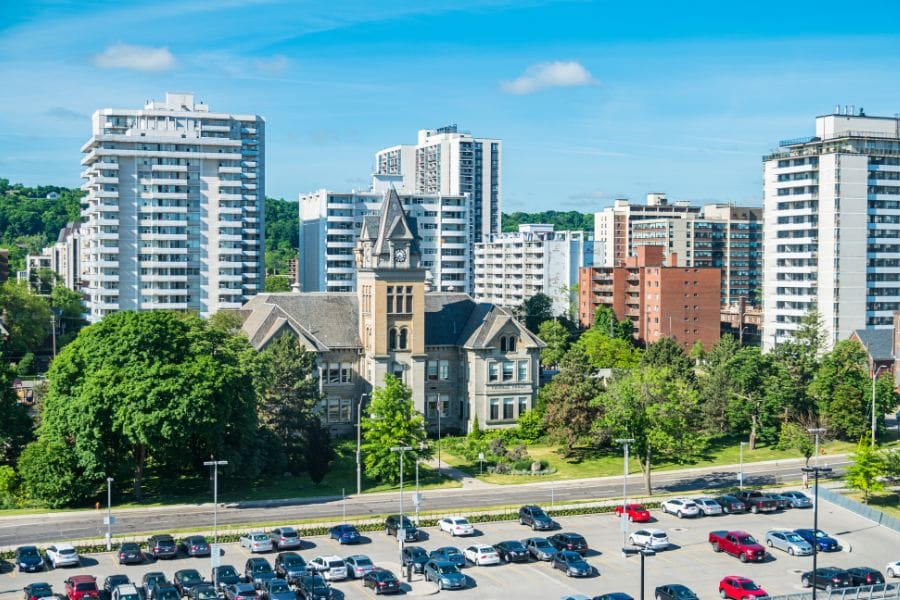
Heritage meets high-rise: Central Public School is a landmark of downtown Hamilton’s historic architecture and family-friendly urban living.
Public School Boards: Education is free, and residents choose between the Hamilton-Wentworth District School Board (HWDSB) and the Hamilton-Wentworth Catholic District School Board (HWCDSB).
Specialized Programs:French Immersion is widely available. High school students can access International Baccalaureate (IB) and Advanced Placement (AP) streams at select locations.
Early Childhood: In 2026, Hamilton continues to expand $10-a-day licensed childcare spaces under the Canada-Wide Early Learning and Child Care
program to support working families.
💡 Newcomer Tip: If your child is entering the Canadian system for the first time, you must register through the Welcome Centre (Assessment Centre). The centre will assess your child’s language proficiency to ensure they receive the appropriate support from day one. Read more in our guide, Read more in our guide, Schooling in Canada | A Look at the Education System.
Post-Secondary Schools
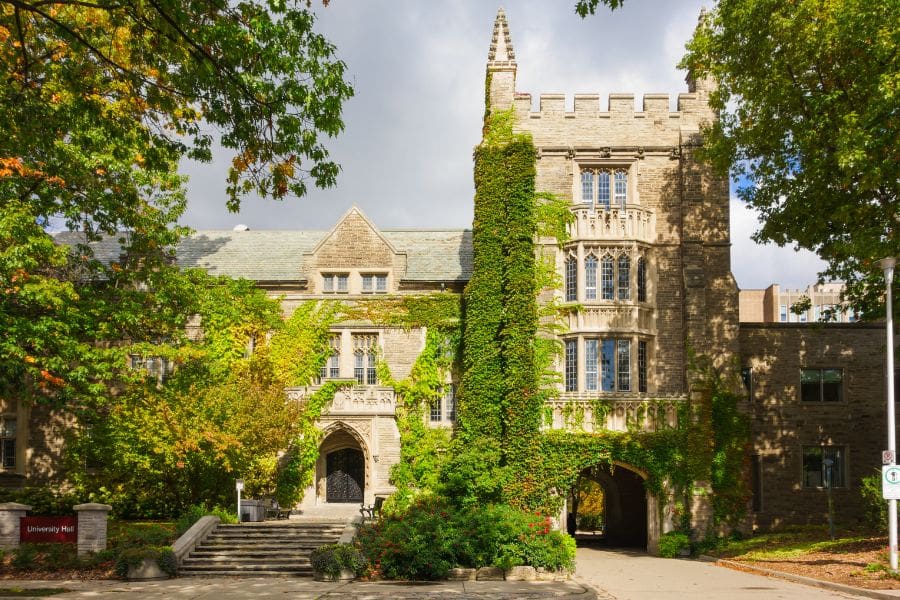
Established in 1887, McMaster University is a world-renowned research hub and a cornerstone of Hamilton’s 2026 economy.
McMaster University: A global Top 100 university known for its world-class Medical School and Engineering.
Mohawk College: The primary hub for nursing, tech, and skilled trades; essential for the local job market.
Pros and Cons of Living in Hamilton
Webster’s Falls: Just one of the 100+ stunning waterfalls that earn Hamilton its title as the Waterfall Capital of the World.
This table highlights the benefits and challenges of choosing Hamilton in 2026, balancing GTHA connectivity and a lower cost of living with the intensifying urban construction and seasonal humidity.
Feature
Pros (The Benefits)
Cons (The Challenges)
Lifestyle
Cultural Renaissance: A world-class culinary scene and a “festival for every week” (Supercrawl, Festival of Friends).
Urban Growing Pains: Rapid growth has led to visible challenges with housing affordability and social services downtown.
Housing
The GTHA Relief Valve: While prices are rising, Hamilton remains roughly 25% more affordable than Toronto.
The Pricing Plateau: Inventory is high, but higher mortgage rates mean buyers need a strong financial “cushion.”
Nature
The Waterfall Capital: Access to 100+ waterfalls and the Bruce Trail within a 15-minute drive from downtown.
Humid Continental Climate: Summers are increasingly hot and humid (expect 30°C+), while the Mountain gets heavy lake-effect snow.
Economy
Healthcare & Tech Hub: Stable job growth in the “Eds and Meds” sectors and a booming creative industry.
Industrial Transition: The shift to “Green Steel” is positive but has caused some short-term labor market volatility.
Transit
GO Expansion: New 15-minute two-way service makes commuting to Toronto faster and more reliable.
The “Hammer” Construction: LRT utility work and two-way street conversions mean significant road delays in the lower city.
Community
Authentic Grit: Consistently ranked as one of the friendliest, most “unpretentious” cities in Ontario.
Rapid Gentrification: Some long-term residents are concerned about the rising cost of living in historically affordable areas.
Culture and Day-to-Day Life in Hamilton, ON
Arts, Culture & Entertainment: The Soul of the City
In 2026, Hamilton is no longer just “near Toronto”; it’s a destination in its own right. With the massive $300 million renovation of the TD Coliseum complete, the city is attracting A-list global tours and major national events.
Museums & History: Immerse yourself in the Art Gallery of Hamilton (AGH), the oldest and largest public art museum. For history buffs, Dundurn Castle offers a glimpse into 19th-century life; the Canadian Warplane Heritage Museum (home to one of only two airworthy Lancasters in the world) offers a thrilling look at aviation history.
Cultural Celebrations: Hamilton’s flagship event is Supercrawl, a massive arts and music street festival that takes over James Street North every September. Other “must-sees” include FrancoFEST (the city’s largest celebration of Francophone culture in June) and the Festival of Friends, one of Canada’s oldest and largest free outdoor music festivals.
Professional Sports: Feel the “Oskee Wee Wee” spirit as you cheer on the Hamilton Tiger-Cats (CFL) at the modern Tim Hortons Field. Soccer fans pack the same stadium for Forge FC (CPL) matches, while the Hamilton Honey Badgers (CEBL) provide high-energy professional basketball.
Outdoor Activities in Hamilton
The Escarpment is Your Backyard: From rock climbing to hiking the Bruce Trail, Hamilton offers outdoor adventures for all ages.Photo courtesy of Destination Ontario.
Hamilton offers a “Cliffside” outdoor lifestyle. With the Niagara Escarpment cutting through the city, nature is always just a few minutes away when you live in Hamilton.
The Waterfront & Bayfront Park: This is Hamilton’s “Front Porch.” In the summer, it’s a hub for the Waterfront Trolley, roller skating at the outdoor rink, and harbour cruises. In the winter, the shoreline trails offer beautiful, crisp walks with views across the harbour to the Burlington skyway.
The Waterfall Capital of the World: Hamilton is home to over 100 waterfalls. Webster’s Falls and Tews Falls offer stunning views and access to the world-famous Bruce Trail, Canada’s oldest and longest marked hiking path.
Royal Botanical Gardens (RBG): As Canada’s largest botanical garden, the RBG features over 2,400 acres of nature sanctuaries and 27 kilometers of walking trails. In winter, its indoor Mediterranean and tropical collections provide a warm escape from the Southern Ontario cold.
Newcomer Community & Cultural Events
Hamilton’s identity is built on its welcoming “Ambitious City” spirit, celebrated through diverse community programming.
Multicultural Festivals: Look for the Hamilton World Music Festival at Gage Park, and It’s Your Festival, which celebrates the city’s multi-ethnic roots every Canada Day weekend. The Hamilton International Village also hosts various street festivals celebrating the local businesses and cuisines of the city’s diverse residents.
Indigenous Connection: Newcomers can visit the Hamilton Regional Indian Centre (HRIC) and participate in the annual Hamilton Pow Wow to learn about the Haudenosaunee and Anishinaabe histories of the “Dish With One Spoon” territory.
Newcomer Day: Every April, the city hosts Hamilton Newcomer Day at City Hall, a massive event featuring a citizenship ceremony, a community services fair, and cultural performances to officially welcome those who have recently chosen to call “The Hammer” home.
Final Thoughts: Is Living in Hamilton Right for You?
Choosing to live in Hamilton, Ontario, in 2026 means choosing a city that is finally finding its balance. It is no longer just “Toronto’s gritty cousin”; it is a distinct, high-growth hub that offers a path to homeownership that bigger cities cannot match. If you can handle the current construction dust, the reward is a front-row seat to Ontario’s most ambitious urban renewal project.
In 2026, it depends. If you live in Corktown or Westdale, you can thrive with a bike and an HSR (bus) pass. However, for those living on “The Mountain” or commuting to nearby Burlington/Oakville, a car is essential.
What is the “Industrial Sector” like in 2026?
It’s going green. ArcelorMittal Dofasco has transitioned away from coal to Electric Arc Furnaces, significantly reducing the visible “black smoke” Hamilton was once known for.
How do I find a family doctor?
Use the Health Care Connect registry. Hamilton has a higher-than-average ratio of doctors due to the McMaster Medical School, making wait times slightly shorter than in rural Ontario.
Is Hamilton a good place to live?
Yes, Hamilton is a good place to live in Ontario. It has a diverse population, a growing culinary culture, access to affordable housing, and world-class health care. The economy is growing, providing good jobs in Hamilton for newcomers.
Is Hamilton a cheap place to live?
Hamilton can be more expensive than other cities in Canada. However, it is more affordable than Toronto and other larger cities within proximity in Ontario.
WRITTEN BY
Corinna Frattini
Senior Editor and Content Writer, Prepare for Canada
Corinna researches and writes content to help newcomers make informed decisions about housing, employment, banking, and aspects of settling in Canada. With a background in human resources and leadership development, her articles focus on how newcomers can continue their careers in Canada. Her writing combines research, practical guidance, and clear language to support newcomers on their journey.