
Alberta
Public Transport in Calgary: A Complete Guide for Newcomers
Join the Scotiabank StartRight® Program designed for Newcomers‡ and get up to $2,300* in value in the first year.

Written By

Corinna Frattini
Jun 18, 2026
•Calgary

If you are planning your move and considering living in Calgary, Alberta? This complete 2026 newcomer guide covers everything you need to know about housing costs, high-paying jobs, and daily life.
| Metric | 2026 Data | Comparison Note |
|---|---|---|
| City Population | ~1,840,000 (Metro Area) | Fast-growing, diverse city; 3rd largest in Canada |
| *Avg. 1-Bedroom Rent (Explore 1-bedroom rentals in Calgary) | $1,440/month | Stabilized and trending lower, providing relief from 2024 peaks. |
| Benchmark Home Price | $568,800 | Notably more accessible than Vancouver or Toronto. |
| Top Industries | Energy, Tech, Aerospace, Agribusiness, and Finance | The corporate head office capital of Western Canada. |
| Climate | Semi-arid, Humid Continental | Averaging the most annual sunshine hours in Canada, with winter Chinooks (passage of warm air over a mountain range) |
*While these are market averages, prices fluctuate. You can view live, Calgary neighbourhood-specific listings right now at Rentals for Newcomers.
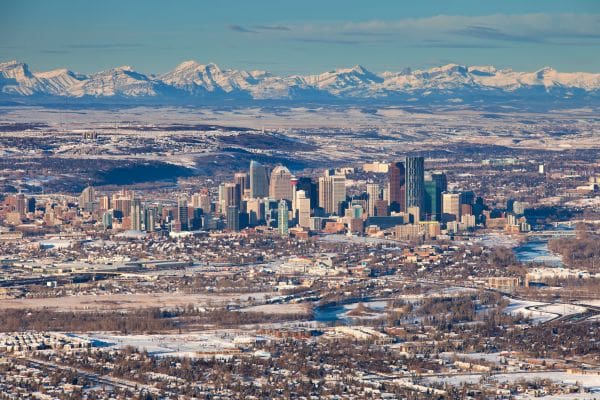
Calgary is a welcoming and successful city located in Alberta, right where the Bow and Elbow rivers meet. It sits just under an hour’s drive from the famous Rocky Mountains and Banff National Park, giving you easy access to beautiful, open spaces and fresh mountain air.
Calgary is also the third-most diverse city in Canada, with neighbours from more than 200 different cultural backgrounds. This means newcomers can easily find community groups, familiar food, and a warm welcome. Moving here means you get the benefits of a big business city while enjoying clean air, massive parks, and safe neighbourhoods for your family.
If you want to compare Alberta’s two biggest cities before making your choice, you can also read our complete guide to Living in Edmonton, Alberta, to see which city is the best fit for your goals.

Calgary’s job market is rapidly diversifying beyond traditional oil and gas. In 2026, the top industries driving local employment are technology, aerospace manufacturing, logistics, green energy, and healthcare.
Many workers are moving here from expensive provinces like Ontario and British Columbia because Calgary offers a great balance: good wages combined with lower living costs. This means you get to keep more of the money you earn. In fact, Calgary ranks as a prominent “Rising Star” in our national overview of the best cities in Canada for immigrants due to this unique mix of economic growth and household value.
💡 Calgary Job Trends: In 2026, Calgary’s job market is steady and strong, with a low unemployment rate of around 5.5%. Many workers are moving here from expensive provinces like Ontario and British Columbia because Calgary offers a great balance: good wages combined with lower living costs, meaning you get to keep more of the money you earn.
💡 Tip: Read more about how to research your profession in our guide, Canada Job Bank: Your Vital Research Tool.

Calgary is a great place to look for a home in 2026 because the housing market is settling down. While buying a standalone house is still a big investment, rental prices and condo prices have come down over the past year. This means newcomers have more choices and power to negotiate a better deal than in expensive cities like Toronto or Vancouver.
Renting is usually the best first step when you arrive. Calgary is divided into four main sections (called quadrants), and each one offers safe, family-friendly neighbourhoods with easy access to public transit, schools, and shopping. To find the right area for your lifestyle and family safety, explore our guide, Best Calgary Neighbourhoods for Newcomers.
The good news for recent arrivals is that average rent prices across the city have dropped by 3% to 11% compared to last year. Right now, the average cost for a standard, unfurnished one-bedroom apartment is around $1,440 per month. This downward trend aligns with broader national shifts outlined in our recent Rental Market in Canada 2026 Spring Update, which highlights how cooling major markets are giving newcomers more bargaining power.
Here is a look at average rental expectations according to recent Rentals for Newcomers 2026 Tracking:
| Quadrant/Neighbourhood | Avg. 1-Bedroom Rent/Month | Vibe for Newcomers |
| North East (Falconridge, Explore Saddle Ridge Rental Listings) | $1,320 | Budget-Conscious: Highly diverse, excellent ethnic markets, steepest recent rental drop |
| North West (Brentwood, Evanston) | $1,439 | Academic & Scenic: Close to the University of Calgary, highly family-friendly, great LRT access. |
| City Centre Beltline, Downtown (Explore Beltline Rental Listings) | $1,550 | Urban: High-density, walkable, close to corporate offices, dining, and nightlife. |
| South West (Coach Hill, Marda Loop) | $1,600 | Premium Suburban: Trendy corridors, established tree-lined streets, exceptional schools. |
| South East (Deer Ridge, Mahogany) | $1,490 | Master-Planned: Lake communities, fantastic public parks, ideal for vehicle owners. |

💡Renting in Calgary Tip: You’ll need tenant insurance to protect your belongings and most landlords require it. Read more about why newcomers need tenant insurance.
You can realistically move from renting to buying a home in Calgary. Current 2026 data shows that Calgary’s real estate market is now stable and balanced. The average price for all housing types combined sits at $568,800. This is a manageable 3.5% drop from record highs, creating an ideal window for first-time buyers.
Importantly, the market gives you two clear choices. Standard standalone houses are in high demand, and prices remain firm. However, the apartment and condo market features deep discounts, giving you excellent bargaining power to negotiate a lower price.
Here is how the Calgary real estate market benchmarks by property type:
| Property Type | Benchmark Price (2026) | Market Trend & Reality |
| Composite (All Housing Types) | $568,800 | Balanced market; down 3.5% year-over-year |
| Single-Family Detached Homes | $745,400 | Tighter inventory; prices recovering slightly month-over-month |
| Semi-Detached (Duplex) | $690,200 | Stable; slight 0.3% annual adjustment |
| Townhouses/Row Houses | $422,900 | Increased inventory; down 7.0% year-over-year |
| Condo Apartments | $301,400 | Deep Buyer’s Market; down 8.9% year-over-year |
Check out more tips for first-time home buyers.
Calgary offers helpful programs to welcome newcomers and support the city’s growing communities. Settlement agencies work hard to help you adapt smoothly to your new life in Canada.
Large South Asian, Chinese, and Filipino communities already call Calgary home. Because the city is so diverse, you can easily find cultural associations, people who speak your language, and local grocery stores that sell familiar food from back home.
| Organization | Best For | Signature Programs & Perks |
| Immigrant Services Calgary (ISC) | Centralized intake, language mapping, and settlement pathways. | Gateway Plan: A customized roadmap connecting you directly to resources based on your family profile. Language Assessments: Official diagnostic testing for government-funded language training. |
| Centre for Newcomers (CFN) | Career bridging, social integration, and youth initiatives. | Real-World Career Support: Tailored mentoring to align international credentials with Alberta tech and corporate standards. |
| Canadian Immigrant Women’s Association (CIWA) | Specialized gender-focused integration, family support, and language training. | Mother-to-Mother Mentoring: Peer support systems for transitioning families. LINC Classes: Language Instruction for Newcomers to Canada featuring on-site childcare options. |
| Calgary Catholic Immigration Society (CCIS) | Comprehensive resettlement, housing placement, and rural integration. | First-Home Finding: Get help finding short-and long-term housing options. |
Managing your money wisely is vital to living in Calgary and building a stable life. To make things easy, major banks across Calgary offer special newcomer packages, such as the Scotiabank StartRight™ Program.
Through these programs, you can open a Canadian bank account online before you even leave your home country. Once you arrive in Calgary, you can visit a local branch to activate your account. You can apply for a newcomer credit card (even if you do not have a Canadian credit history) and access tailored financial products such as savings accounts and specialized newcomer mortgages.
For a complete pre-arrival financial blueprint, explore our complete guide: Canadian Financial Tips Before You Move to Canada.
Driving in Calgary is straightforward because the roads are laid out in a clean, quadrant-based system that divides the city into North West (NW), North East (NE), South West (SW) and South East (SE). Avenues run east-west, while streets run north-south.
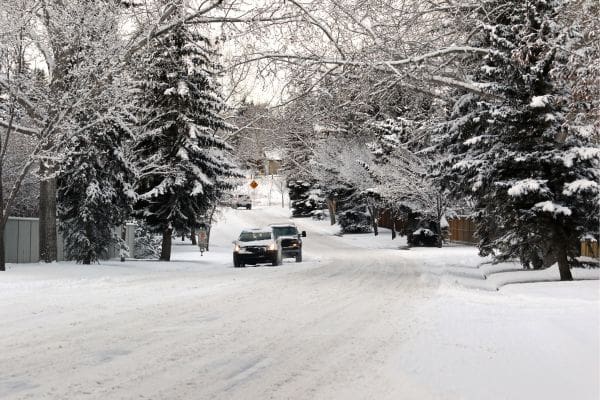
Read more in our guide, Winter Driving in Canada: 7 Essential Tips for Newcomers
Calgary Transit makes it easy to get around the city using standard buses, neighbourhood shuttle routes, and the C-Train (the local Light Rail Transit) system. The C-Train is the main way people travel in Calgary. It runs along two major high-speed lines connecting the far northern and southern suburbs directly to the downtown core. To learn how to buy tickets and map out your daily commute, read our complete guide to Public Transit in Calgary.
Newcomer Tip: Newcomers must register for provincial healthcare immediately upon landing. To verify the documents your require and the application process, follow our step-by-step guide, How Can Newcomers Get Public Health Insurance in Canada?
Alberta Health Services (AHS) runs the province’s healthcare system. When you show your valid Alberta Health Care (AHCIP) card, the government pays 100% of the cost for doctor visits, hospital stays, surgeries, and appointments with specialists.
However, the public plan does not cover dental work, prescription medicines, or eye care. Because of these gaps, many people choose to buy private extended health insurance or use employer benefit plans to help cover the costs of medications and extra care.
To see how quickly your coverage starts and what rules apply to your family, review the health insurance guidelines below:
| Resident Category | Waiting Period | AHCIP Eligibility & Coverage Notes |
| Newcomers (International PRs) | No Waiting Period | Eligible for full coverage starting the exact day you establish residency in Alberta. You must submit your application immediately upon arrival. |
| Moving from Another Province | Up to 3 Months | Your “old” provincial plan covers you for the first 3 months (usually until the last day of the 2nd month following your arrival). Alberta coverage kicks in on the first day of the third month (e.g., if you move July 10, coverage begins on October 1). |
| Work Permit Holders | No Waiting Period | Eligible from arrival date, provided the permit is valid for at least 6 months, and you intend to live in Alberta for 12 months. Note: IEC (Type 58) holders now require proof of full-time employment and a 12-month permit. |
| International Students | Eligible | Fully eligible if holding a valid study permit issued for at least 12 months and maintaining full-time enrollment. |
| Canadian Citizens/PRs | No Waiting Period | Coverage is valid as long as you are physically present in Alberta for at least 183 days in any 12 months. |
Calgary features five major hospitals located across the city, each offering specialized emergency and medical care for you and your family:
| Hospital | Primary Specialty & Location | Key Focus for Newcomers |
| Foothills Medical Centre | Adult Trauma & Cancer Care (North West) | One of Canada’s top medical campuses; features a massive 24/7 emergency department and the brand-new Arthur J.E. Child Comprehensive Cancer Centre. |
| Rockyview General Hospital | Urology & Eye Care (South West) | Located on the shores of the Glenmore Reservoir; specializes in urological surgeries and advanced eye care. |
| Peter Lougheed Centre | Emergency & Vascular Surgery (North East) | A very busy, large hospital that manages high-volume emergency cases and regional blood-vessel (vascular) surgeries. |
| South Health Campus | Modern Patient Care & Tech (South East) | A brand-new, high-tech hospital that focuses on green sustainability and innovative, patient-first treatment. |
| Alberta Children’s Hospital | Pediatric Emergency & Trauma (North West) | A world-famous hospital built specifically for kids, specializing in advanced children’s medicine and pediatric emergency care. |
Alberta’s public education system is widely regarded as one of the strongest in the world. Parents can select between two completely free, publicly funded school streams based on family preference:
Specialized & Newcomer Support: French Immersion, traditional language academies, and specialized fine arts or science curricula are accessible across both boards. High school students can pursue advanced academic pathways via widespread Advanced Placement (AP) or International Baccalaureate (IB) programming.
Early Childhood: Under the Canada-Wide Early Learning and Child Care agreement, Alberta continues to expand its $10-a-day licensed child care, daycare, and preschool spaces. To find Calgary daycares, pre-schools, family day homes, out-of-school care, or group family child care, the government has a great child care search tool.
💡 Newcomer Tip: If you are registering your children for school in Calgary for the first time while living in Calgary, you must visit the CBE’s welcome and assessment centre. The staff there will check your children’s English skills to make sure they get the right English language support (EAL) on their very first day at school. Read more in our guide, Schooling in Canada | A Look at the Education System.
To help you weigh your options, here is a look at the major upsides and downsides of moving to the city.
| Feature | Pros (The Benefits) | Cons (The Challenges) |
| Money & Taxes | Keep more of your paycheck: Alberta’s lack of a provincial sales tax and low income taxes help you save more money each month. | Economic Shifts: While the city is diversifying into tech and aviation, the local economy can still fluctuate based on global oil prices. |
| Housing Market | Great apartment deals: A massive supply of new buildings gives you excellent bargaining power to rent or buy a condo affordably. | Premium Detached Market: Buying a standard standalone home in a highly desirable school district remains a major financial investment. |
| Transit & Driving | Easy cross-city travel: The Stoney Trail ring road and the efficient C-Train network make your daily commute easy. | Rush Hour Congestion: Major central roads, such as Deerfoot Trail, experience heavy traffic jams during morning and evening rush hours. |
| Climate & Nature | Sunlight & Mountains: You get 333 days of sunshine a year and live less than an hour’s drive from world-class mountain parks like Banff. | Intense winter cold snaps: Winters are long and can bring freezing drops below −25°C, along with sudden summer hail or autumn freezes. |

People in Calgary are energetic, friendly, and very welcoming to newcomers. The city has an amazing arts and culture scene, featuring the Studio Bell (National Music Centre), the Arts Commons performance theatres, and the Calgary Philharmonic Orchestra.
The Calgary Stampede: Deeply intertwined with local identity, Calgary transforms every July for the world-famous Calgary Stampede. Attracting over 1.2 million global visitors annually, the 10-day exhibition celebrates western heritage with world-class rodeos, concerts, and free community pancake breakfasts, offering newcomers an electric, immediate way to experience local culture.
Urban Parks: Calgary features breathtaking urban parks. Nose Hill Park in the northwest is the largest municipal park in Canada, preserving massive expanses of native prairie hillside. Prince’s Island Park sits embedded in the downtown Bow River corridor, and is a green sanctuary where cultural festivals often take place.
Professional Sports: Local sports passion centers heavily around the NHL’s Calgary Flames (hockey) and the CFL’s Calgary Stampeders (football), bringing immense energy to the downtown red-mile corridor during competitive seasons.
Multicultural Celebrations: Calgary loves diversity and celebrates with summer cultural festivals. You can enjoy GlobalFest (a multi-ethnic festival with international fireworks), Expo Latino, and Calgary Pride. These events are part of a larger nationwide energy highlighted in our cross-country guide to the most Exciting Summer Festivals in Canada in 2026. If you want to buy traditional foods and goods from back home, you can easily find them at the shops and street markets along International Avenue (17th Ave SE).
Indigenous Connections: Calgary is located on the traditional territories of the Blackfoot Confederacy (Siksika, Kainai, Piikani), the Stoney Nakoda, and the Tsuut’ina Nations, and is home to the Métis Nation of Alberta (Districts 5 & 6). Newcomers can meaningfully connect with Indigenous heritage by attending community educational forums, art showcases at local galleries, and public traditional Pow Wows held throughout the spring and summer months.
Embracing Winter Culture: Thriving in Calgary means stepping into the snow! Calgary embraces its identity as an Olympic city (1988 Winter Games), providing newcomers immediate winter access to world-class facilities like the WinSport (Canada Olympic Park) ski hills and the high-speed Olympic Oval skating facilities.


If you want to keep more of the money you earn, build a career in a growing industry, and buy a home in a stable housing market, Calgary is one of the smartest cities to choose in Canada. The winters are cold, and you will need to buy good winter clothes, but the bright sunshine, low taxes, and close drive to the Rocky Mountains make Calgary a wonderful place to call home.
🏠 Ready to start your housing search? Browse vetted Calgary rentals on Rentals for Newcomers today!
Calgary experiences true continental winters when January daily averages land around −8.9°C. However, extreme winter cold snaps can drop temperatures below −25°C for brief intervals. Crucially, Calgary is famous for the Chinook, a warm, dry wind blowing over the Rocky Mountains that can raise temperatures by as much as 15 degrees in a matter of hours, providing refreshing winter melting periods unique to southern Alberta.
Calgary is a very spread-out city, so having a car is highly useful for suburban families and weekend trips to the mountains. However, you can easily live here without a vehicle. If you choose to live in inner-city neighbourhoods like the Beltline, Mission, or Bridgeland, you can walk to most places. Combining that walkability with the local C-Train makes your daily commute simple and saves you money.
Yes, Calgary is regularly ranked among the top 10 cities in the world because it is safe and family-friendly. Newer suburban neighbourhoods like Evanston, Rocky Ridge, and Mahogany are designed with quiet streets, local elementary schools, nearby medical clinics, and plenty of playgrounds. This makes the city an ideal place to raise children.
WRITTEN BY
Corinna Frattini
Senior Editor and Content Writer, Prepare for Canada
Corinna researches and writes content to help newcomers make informed decisions about housing, employment, banking, and aspects of settling in Canada. With a background in human resources and leadership development, her articles focus on how newcomers can continue their careers in Canada. Her writing combines research, practical guidance, and clear language to support newcomers on their journey.
© Prepare for Canada 2026
Public Transport in Calgary: A Complete Guide for Newcomers