Join the ScotiabankStartRight® Program designed for Newcomers‡ and get up to $2,300* in value in the first year.
Public Transport in Calgary: A Complete Guide for Newcomers
Written By
Corinna Frattini
•
Aug 7, 2026
•
Alberta
Calgary
Driving
Navigating a new city can feel overwhelming, but Calgary’s public transit network, managed by Calgary Transit, is clean, efficient, and cost-effective. Whether you are commuting to work, exploring downtown, or looking to lower your living expenses, understanding the transit system is vital for any newcomer.
This guide covers everything you need to know about Calgary’s trains (the CTrain), regular buses, Bus Rapid Transit (BRT) routes, ticket prices, payment options, and bike paths.
Primary Modes: CTrain (Light Rail Transit), local buses, and high-frequency Bus Rapid Transit (MAX BRT).
Standard Fares: $4.00 for single adult tickets (valid for 90 minutes of unlimited transfers); $126.00 for a monthly pass.
Free Travel: Free CTrain rides within the Downtown Free Fare Zone (along 7th Avenue) and pets ride for free!
Core App: Download the official My Fare app (iOS & Android) to purchase and activate digital passes on your phone.
Discounted Rates: Low-income newcomers can apply for heavily discounted monthly passes through Calgary’s Fair Entry Program.
1. The CTrain Network (Light Rail Transit)
The CTrain is Calgary’s primary electric light rail system. It is one of North America’s most eco-friendly transit systems, running on 100% wind power. Trains generally operate from 4:30 AM to 1:00 AM daily, with peak frequency every 5–10 minutes.
The Two Core Lines on Calgary Public Transit
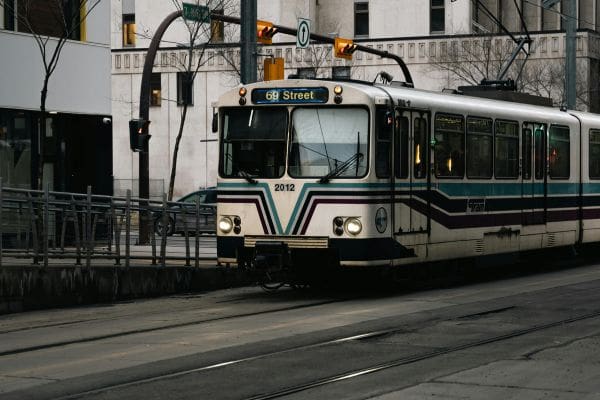
A Calgary Transit CTrain operating along the Blue Line corridor.
The Red Line (Line 201): Runs from Northwest Calgary (Tuscany/Crowfoot) through Downtown and down to South Calgary (Somerset-Bridlewood).
The Blue Line (Line 202): Connects Northeast Calgary (Saddletowne) through Downtown out to West Calgary (69 Street SW).
Green Line LRT Update: Calgary is building a third train line called the Green Line that is expected to open in 2031. It will connect the north and southeast parts of the city. Because the plans and timelines change, check the official Calgary Transit website for the newest updates.
Key CTrain Features for Newcomers
Downtown Free Fare Zone: You can ride the CTrain for free between 3rd Street East and 11th Street West along 7th Avenue downtown. No ticket is required within this zone.
Park and Ride: Many suburban stations offer free or low-cost parking so you can drive to the train and commute downtown without hassle. If you’re still deciding where to live, explore our breakdown of the Best Calgary Neighbourhoods for Newcomers: City to Suburbs to find communities located directly along these rail corridors.
Next Step: Finding Your Calgary Home
Using public transit makes exploring Calgary’s neighbourhoods simple and stress-free. Once you’ve toured a few areas on the CTrain, start browsing Calgary Rentals for Newcomers to find homes near major transit hubs.
When you’re ready to apply, stand out to local landlords using the Prepare for Canada Ultimate Rental Application Guide below:
2. Calgary Bus & MAX BRT System
Where the CTrain doesn’t go, Calgary public transit relies on an extensive network of over 160 bus routes to fill the gaps.
Regular Buses: Connect local residential neighbourhoods to suburban hubs and CTrain stations.
MAX Bus Rapid Transit (BRT): High-frequency routes (MAX Red, MAX Orange, MAX Teal, MAX Purple) featuring dedicated lanes, heated shelters, and transit-priority signals to bypass traffic.
Tip: Use Google Maps, Transit App, or the Calgary Transit NextRide planner for real-time arrival estimates and step-by-step route mapping.
3. Calgary Public Transit Fares, Passes & Discounts
Calgary Transit uses a unified fare system. A single ticket or fare validation is valid for 90 minutes across all buses and CTrains, allowing unlimited transfers within that window.
Standard Fare Breakdown
According to the official City of Calgary Transit Fee Schedule, standard adult single fares are set at $4.00. Below is the full breakdown of standard transit fares and multi-ride passes:
Rider Category
Single Fare (90-Min)
Day Pass
Monthly Pass
Adult (18 and older)
$4.00
$12.65
$126.00
Youth (13-17)
$2.65
$9.25
$86.00 ($92.00 starting September 2026)
Children (12 & under)
Free
Free
Free
Low-Income Discounts (Fair Entry Program)
Newcomers with permanent residency, refugee status, or low income can apply for Calgary’s Fair Entry Program, which provides discounted monthly transit passes (ranging from $6.30/month to $63.00 depending on the household income tier).
4. How to Pay Your Calgary Public Transit Fare
You have several convenient options to purchase tickets and passes:
My Fare App: Download the official app on iOS or Android to buy single tickets, day passes, or monthly passes directly on your smartphone. Activate the ticket right before boarding.
Ticket Vending Machines (TVMs): Located at all CTrain stations, these accept credit cards, debit cards, and cash.
Cash on Buses: Exact change is required when paying cash directly to a bus driver (drivers cannot provide change). Always ask for a paper transfer ticket if transferring to another bus or train.
Physical Retailers: Monthly passes and ticket books are available at Calgary Transit Customer Service Centers, major grocery stores (Sobeys, Safeway), and select convenience stores.
5. Cycling and Micro-Mobility in Calgary
If you like biking or walking, Calgary has the largest urban pathway network in North America, with over 1,000 kilometers of paved trails.
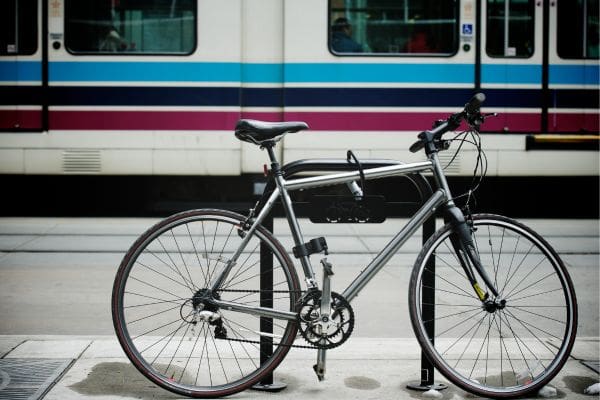
On Transit: CTrains allow bicycles on board during non-peak hours (and fold-up bikes at all times). All Calgary public transit buses are equipped with front bike racks.
Shared e-Scooters & e-Bikes: Seasonally available throughout downtown and inner-city neighbourhoods via app-based operators.
Final Thoughts on Navigating Calgary Transit
Getting comfortable with a new public transit system is one of the fastest ways to feel at home in Calgary. With clean trains, extensive bus coverage, and free downtown travel, getting around the city as a newcomer is both straightforward and budget-friendly.
Mastered your commute? From setting your banking to finding your first home, check off your next steps with our guide to the first things to do after landing in Canada.
Frequently Asked Questions
Is Calgary Transit safe at night?
Calgary Transit operates Help Buttons on all train platforms, designated “Waiting Areas” with enhanced lighting and cameras, and active Transit Peace Officers patrolling stations and trains.
How do transfers work between CTrains and buses?
Your ticket or digital activation lasts 90 minutes. If paying cash on a bus, ask the driver for a paper transfer. If using the My Fare app, your active digital ticket serves as proof of payment for transfers.
Does the CTrain go to the Calgary International Airport (YYC)?
Currently, there is no direct CTrain rail link to YYC Airport. However, you can take Route 300 (BRT) from Downtown or Route 100 from the Saddletowne / McKnight-Westwinds CTrain stations directly to the airport terminal.
Are pets allowed on Calgary Transit?
Yes. You must keep dogs on a leash, and small animals inside a secure carrier or cage during the entire trip. Pets ride for free!
WRITTEN BY
Corinna Frattini
Senior Editor and Content Writer, Prepare for Canada
Corinna researches and writes content to help newcomers make informed decisions about housing, employment, banking, and aspects of settling in Canada. With a background in human resources and leadership development, her articles focus on how newcomers can continue their careers in Canada. Her writing combines research, practical guidance, and clear language to support newcomers on their journey.