
Children Sharing Bedrooms in Canada: Rules and Guidelines
Written By

Corinna Frattini
Jul 13, 2026
•
How Many People Can Share a Bedroom?
Newcomer families moving to Canada often ask, How many people can legally share a bedroom? If you are on a budget and looking for rental housing, understanding the rules on children sharing bedrooms can help you secure an apartment without running into issues. Discover what to know about National Occupancy Standards (NOS), housing for families, and kids sharing rooms in Canada.
What You Need to Know
- Understand your rights: Canadian landlords cannot legally refuse to rent an apartment because you have children or a large family.
- Check the guidelines: Use the National Occupancy Standard (NOS) to see how government agencies recommend separating bedrooms by age and gender.
- Verify local bylaws: Remember that local city safety rules dictate real occupancy limits based on total apartment square footage, not just the number of bedrooms.
- Weigh the pros and cons: Consider how sharing a room can cut your monthly expenses while potentially causing minor schedule or privacy friction among siblings.
- Use practical solutions: Try temporary fixes like ceiling curtains, standalone bookshelves, or bunk beds to give children their own space on a tight budget.
Can a Canadian Landlord Refuse to Rent to You Based on Your Family Size?
No. In Canada, landlords cannot legally refuse to rent a dwelling to you simply because you have children or a large family. Doing so violates provincial human rights codes regarding family status.
However, cities often have their own safety rules (or bylaws) on how many people can live in a space based on its size (square footage). The government also uses a specific guide to see if a home has enough bedrooms for a family.
What Can a Landlord Legally Ask You?
Human rights laws in provinces such as Ontario prevent landlords from discriminating. When a landlord reviews your rental application:
- They CANNOT ask: “Are you pregnant?” or “How many children do you have?”
- THEY CAN ask: “How many people will be living in this unit?” and “What are the names of the occupants who will be living here?”
Knowing this difference helps you avoid sharing too much personal information. It prevents a landlord from using those details to turn you down for other reasons, such as your credit score or income.
What is the National Occupancy Standard for Kids Sharing Rooms?
To determine if a home has “suitable housing” (enough space for the household), the Canada Mortgage and Housing Corporation (CMHC) uses the NOS.
While the NOS is a policy guideline, not a law, it is the gold standard that banks, housing programs, and landlords use to assess crowding.
Official CMHC Bedroom Sharing Guidelines
- Maximum Occupancy: A maximum of two people can share any single bedroom.
- Couples: Spouses or common-law partners share a bedroom.
- Adults (18+): Any household member aged 18 or older should have a separate bedroom.
- Children under 5: Kids under five can share a bedroom, regardless of gender.
- Children aged 5 to 17: Kids of the same gender can share a room until age 18. However, a child aged 5–17 should not share a room with a child under 5 of a different gender.
- Single Parents: Parents are expected to have a separate bedroom from their children.
Look Up Your Family Size Requirement
| Family Size and Dynamic | Minimum Bedrooms Required (NOS) |
| Single Parent + 1 Daughter (Age 6) | 2 Bedrooms |
| Two Parents + 1 Son (Age 4) + 1 Daughter (Age 3) | 2 Bedrooms |
| Two Parents + 1 Son (Age 10) + 1 Daughter (Age 7) | 3 Bedrooms |
| Two Parents + 3 Sons + 1 Daughter | 4 Bedrooms |
Source: Statistics Canada Housing Suitability data
Understanding the rules about children sharing bedrooms is only one part of choosing the right home. Newcomer families should also consider layout, location, and budget when choosing an apartment that works for their family.
💡 Moving with Family?
Knowing the bedroom rules is just step one. Learn how to successfully find, apply for, and secure your first Canadian apartment at our next free Renting Your First Home in Canada Webinar.

City Bylaws versus CMHC Guidelines: The Real Rules
It’s important to know that the CMHC guidelines are recommendations for comfort. However, your local city has legal occupancy limits for fire and safety.
For example, in many Canadian cities (such as Toronto), the municipal code states that the maximum number of people living in a habitable room is 1 per 9 square meters (97 sq. ft.) of floor area.
As long as your family fits within the city’s square-footage safety limits, a landlord cannot use the CMHC guideline as a legal excuse to evict you or refuse your application.
Why Understanding Overcrowding Matters
Finding an affordable apartment that fits your family perfectly is one of the biggest hurdles for newcomers. Watch this detailed video to help you navigate accommodation requirements:
How to Balance Your Housing Budget with Your Family’s Needs
Along with bedroom guidelines, you must consider your monthly budget, your cultural preferences, and how quickly you need to find a home.
When deciding on the size of your rental, calculate the total cost of living. This means making sure you can comfortably afford the monthly rent plus the cost of basic utilities such as heat, electricity, and water.
If your budget is tight, there are ways to make a smaller space work:
- Create temporary rooms: Use curtains, room dividers, or bookshelves to give kids their own space.
- Consider a 2-bedroom apartment: Many newcomer families find that a 2-bedroom unit offers the perfect balance between affordability and layout flexibility. You can read more about renting a 2-bedroom apartment in Canada.
- Get professional help: Once you know how many bedrooms you need, you can begin your housing search. Consider working with a licensed real estate agent who can help you find suitable rental listings in your target area.
Children Sharing Bedrooms: Balancing the Pros and Cons
If a 2-bedroom apartment is what fits your budget right now, knowing the pros and cons for your kids can help you prepare.
For many newcomer families, rental affordability in Canada often means balancing space and budget, which can include decisions about children sharing bedrooms.
The Pros of Sharing a Bedroom
- Financial Relief: Renting a smaller space significantly cuts monthly costs and utility bills.
- Life Skills and Bonding: Sharing a room teaches children how to compromise, resolve conflict, and build closer sibling bonds.
The Cons of Children Sharing a Bedroom

- Conflicting Schedules: A teenager studying for high school exams will have vastly different sleep and homework schedules than a toddler.
- Privacy Friction: When children share bedrooms, as they reach adolescence, a lack of personal space may cause household tension and stress.
Find Newcomer-Friendly Apartments with Rentals for Newcomers
Navigating the Canadian housing market with a family can feel overwhelming, especially if you do not have a Canadian credit history. To reduce these barriers, you can search for your first home using Rentals for Newcomers.
Our specialized platform connects you with newcomer-friendly landlords across Canada who understand your unique situation. Whether you are looking for a spacious 2-bedroom apartment or a larger family home, you can browse thousands of verified listings in welcoming communities nationwide.
👉 Start your apartment search on Rentals for Newcomers today!
Final Thoughts
Finding the right home in Canada as a newcomer is about balancing your budget with your family’s needs. When homes are overcrowded, it can affect your family’s privacy and comfort. However, in Canada’s current competitive market, balancing space and budget often means making temporary adjustments, such as having children share bedrooms.
While the government’s bedroom guidelines are helpful to know, remember they are a guide. A landlord cannot use them as a legal reason to turn you away. Take your time to budget, consider your children’s ages and personalities, and choose a space that keeps your family comfortable and financially secure as you start your new journey in Canada.
Frequently Asked Questions About Children Sharing Bedrooms
No, it is not illegal. No federal or provincial law makes it a crime for opposite-gender siblings to share a room. The National Occupancy Standard (NOS) suggests separate rooms after age 5 for suitability, but this is not legally enforced on private renters.
Absolutely not. “Adults-only” rental buildings are illegal in almost all Canadian provinces (with rare exceptions for designated 55+ senior housing). A rental listing that specifies “no kids” is violating provincial human rights.
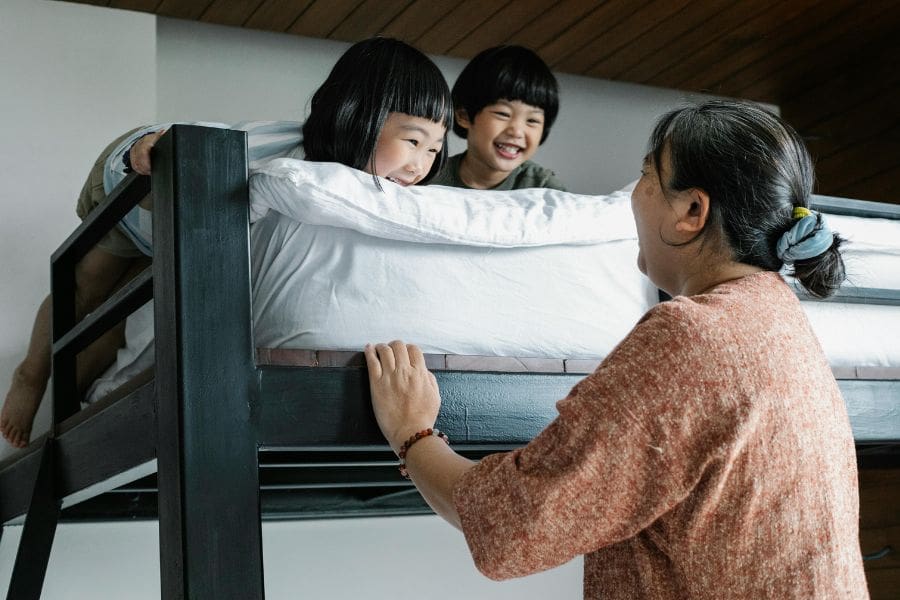
When children sharing bedrooms need their own space, you can install ceiling-tracked privacy curtains or use bookshelves as room dividers. You can also buy bunk beds with built-in privacy curtains to give each child their own “zone.”
WRITTEN BY
Corinna Frattini
Senior Editor and Content Writer, Prepare for Canada
Corinna researches and writes content to help newcomers make informed decisions about housing, employment, banking, and aspects of settling in Canada. With a background in human resources and leadership development, her articles focus on how newcomers can continue their careers in Canada. Her writing combines research, practical guidance, and clear language to support newcomers on their journey.
© Prepare for Canada 2026