Join the ScotiabankStartRight® Program designed for Newcomers‡ and get up to $2,300* in value in the first year.
Affordable Ways to Explore Canada: Discovery Pass, Canada Strong Pass 2026, and Canoo
Written By
Gitanjali Verma
•
Jun 8, 2026
•
Life in Canada
What You Need to Know
Discovery Pass: A paid annual pass providing unlimited entry to over 80 Parks Canada destinations for 12 months.
Canada Strong Pass 2026: A free public initiative running from June 19 to September 7, 2026, offering free Parks Canada admission, free youth rail/museum access, and 25% rebates on campgrounds and train fares.
Canoo: A dedicated mobile app giving eligible newcomers free or deeply discounted access to thousands of cultural and natural experiences across Canada.
Exploring Canada as a newcomer is one of the most rewarding parts of settling into your new life. It helps you connect with your new community, understand the country’s vast geography, and discover its rich history. The good news is that it doesn’t have to break your budget. Three programs make travel affordable this year: the Parks Canada Discovery Pass, the Canada Strong Pass 2026, and the Canoo app.
Why Exploring Your Province Matters for Newcomers
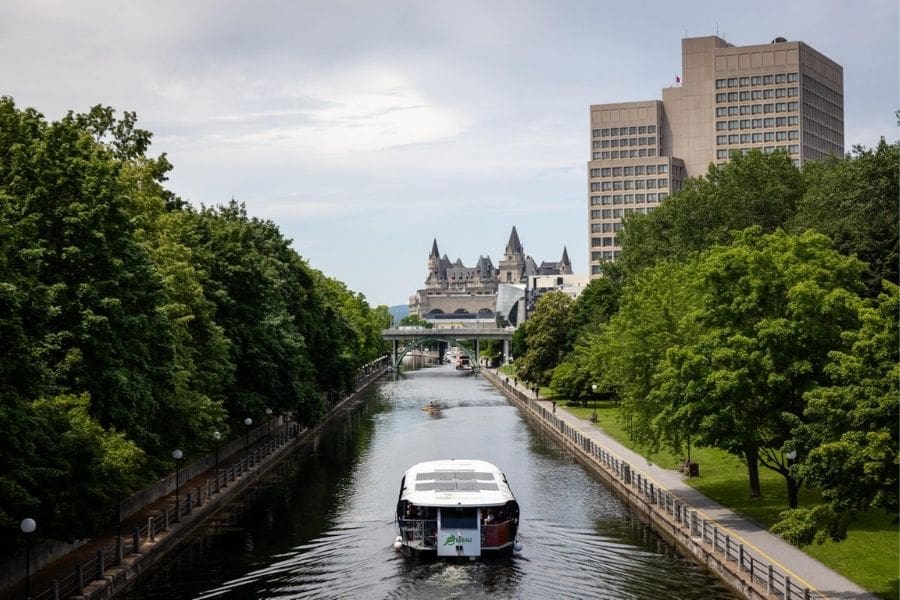
The historic Rideau Canal operated by Parks Canada. All historic waterway lockage fees are free during the 2026 Canada Strong Pass promotional window. Photo Credit: Destination Ontario / Partner Asset
Settling in is about much more than managing paperwork, setting up banking, or starting a new job. It is about turning an unfamiliar place into a true home. When you explore your province, you start to understand the unique places, people, distances, and history around you. A museum visit, a day trip, or a weekend drive can help you connect to your new community.
My Experience: My own early visits in Ontario helped me understand the place where I was building my life. Later, travelling further showed me just how distinct each Canadian region is. You don’t need a massive travel budget to start. Immense value comes from simple day trips, local museum visits, and weekend drives.
Exploring your new province is exciting, but it also helps to balance travel plans with everyday settlement costs. As you build your budget, it’s smart to conquer your vital settlement milestone first. You can check out our handy checklist in First Things to Do After Landing in Canada to map out your initial setup.
💡 Newcomer Tip: Secure Your Home Base First
Finding an affordable place to live is the secret to freeing up your budget for Canadian travel. Before you map out your next weekend road trip, make sure your housing is lined up. Browse thousands of neighbourhood apartment and housing listings tailored for new arrivals at Rentals for Newcomers!To stand out to landlords the moment you find the perfect place, download our Ultimate Rental Application Guide for Newcomers to prepare your paperwork in advance.
See How the Discovery Pass, Canada Strong Pass 2026, and Canoo App Compare
If you are wondering which option is right for you, this quick comparison shows the main differences at a glance.
Permanent Residents (<5years) & New Citizens (<1 year)
Free or discounted admission to 2,000+ national & local attractions.
Free mobile application
While the table gives you a high-level breakdown, each of these programs has specific rules, hidden costs, and eligibility windows. Here’s what you need to know to maximize the benefits of each program.
1. How Much Does the Parks Canada Discovery Pass Cost?
The Parks Canada Discovery Pass is an annual admission pass valid for 12 months. It covers entry fees for more than 80 national parks, historic sites, and marine conservation areas the federal government manages.
Who is eligible?
This public pass is for the general public and newcomers. Canadian citizens, permanent residents, temporary workers, students, and international students can buy a pass.
Current 2026 Pricing
Adult (18-64): $83.50
Senior (65+): $71.50
Family/Group (Up to 7 people in one vehicle): $167.50
Note: Youth aged 17 and under receive free entry to Parks Canada sites.
When does it make sense to buy one?
A Discovery Pass is cost-effective if you:
Plan to visit several national parks throughout the year
Expect to travel outside of the summer months
Want year-round value in addition to the summer offer
💡Important 2026 Rule: Because of the summer tourism initiative, standard Discover Passes are only sold outside of the Canada Strong Pass period. If you already hold and active Discovery Pass that overlaps with the summer, Parks Canada will automatically extend your pass expiry date for an extra three months at no additional charge. You can verify your automatic pass extension via Parks Canada.
2. What is included in the Canada Strong Pass 2026?
The Canada Strong Pass is a temporary federal initiative returning for the summer of 2026. It is open to all domestic residents and international travellers.
Key dates & benefits (June 19 to September 7, 2026)
Parks Canada Sites:Free admission for all visitors at national parks, historic sites, and marine conservation areas, plus a 25% discount on camping and roofed accommodations (view the official list of participating Parks Canada places).
National & Regional Museums: Free train travel nationwide for kids aged 17 and under (when accompanied by an adult) and 25% off Escape and Economy fares for young adults aged 18 to 24.
Free Waterway Lockage: Waived lockage fees at seven canals administered by Parks Canada on historic waterways
How do you apply for the Canada Strong Pass 2026?
You don’t need to apply, sign up, or download a code. The discounts are automatic when you show up at participating sites from June 19 to September 7 to claim your savings.
Why the Canada Strong Pass 2026 is helpful for newcomers
Even though it is a public offer, it is especially useful if you want to explore your province or another part of Canada on a budget during summer 2026. With free admission to Parks Canada sites, free or reduced admission at participating museums and galleries, and selected VIA Rail discounts, it’s a low-cost travel option for newcomers.
3. What is the Canoo App and Who Qualifies?
Canoo is the most newcomer-focused program in this article. It is specifically designed to welcome new arrivals by removing financial barriers to Canadian culture.
Canoo is a free app for newcomers that gives eligible newcomers access to thousands of experiences across Canada, including museums, parks, theatre festivals, concerts, and other attractions.
Who is eligible for Canoo?
Permanent Residents (PR): Anyone who has received their PR status within the last 5 years.
New Canadian Citizens: Individuals who received their citizenship within the last 12 months.
Why I like this option for newcomers
Not every newcomer is ready for a long national park trip. Many of us start by exploring our own city or province first. Canoo can help because it is not limited to parks. It can open up museums, galleries, cultural attractions, and events that help you connect to Canada without breaking the budget.
For recent arrivals, this pairs well with practical settlement planning. Read our helpful guide on Living in Edmonton to understand local job markets, housing markets, and newcomer networks.
From Ontario Trails to the Rocky Mountains: A Personal Journey
Moraine Lake in Banff National Park, Alberta. Newcomers can visit this iconic Canadian destination for free during the summer of 2026 under the Canada Strong Pass initiative. Photo Credit: Gitanjali Verma
When I first arrived, I didn’t jump into an expensive, cross-country trip. I started closer to home in Ontario, with places like the ROM, the Bata Shoe Museum, Black Creek Pioneer Village, and the Mast Trail in Rouge National Urban Park. Those smaller visits helped me understand the history, culture, and natural spaces around me without stressing over finances. One of the first provinces I visited outside Ontario was Quebec, and even that felt like discovering a different side of Canada.
Later, I visited Banff, Glacier National Park, and the surrounding Rockies, and that experience stayed with me. I was living in Ontario then too, so seeing Alberta and nearby British Columbia felt breathtakingly different. We stayed in Golden, B.C. for a week and drove about three hours in the morning and at night after visiting Banff National Park, Bow Lake, the Athabasca Glacier, and other places. It reminded me how much there is to discover across Canada.
I also visited St. John’s, Newfoundland and Labrador, in March 2024. One of the highlights was Cape Spear Lighthouse National Historic Site, the easternmost point of North America. Standing there felt incredibly special. It was a reminder to me that exploring Canada is not only about saving money on admission, but also about experiencing places that stay with you.
That is one reason I think it helps to start close to home. Exploring your own province first can be more affordable, more realistic, and still deeply meaningful.
A Practical Newcomer Budget Strategy
To get the most out of these programs without overspending, try this layered approach.
1. Start local with Canoo
Months 1-3
Download the Canoo app immediately upon arrival. Use it to explore museums, galleries, and local attractions in your city or province.
2. Capitalize on the Canada Strong Pass 2026
June 19 – September 7
Plan your long-distance train travel, national museum tours, and camping trips during the offer window to eliminate entry fees and slash transit costs.
3. Evaluate a Discovery Pass later
If you fall in love with the Canadian outdoors, you may want to continue hiking or snowshoeing past September. In that case, consider purchasing a Discovery Pass once the summer promotional window closes.
This kind of layered approach helps you explore and feel more at home while keeping costs down.
Local conservation areas, city beaches, private campgrounds
Quick Tips to Explore Your Province Affordably
1. Start nearby
You do not need a major trip to get value from this. A museum visit, a short road trip, or a day at a historic site can still help you learn about your province and community.
2. Check for hidden costs
“Free admission” cuts your front-gate costs, but you still need to budget for gas, accommodations, special tours, reservations, and transportation.
3. Mix cultural with nature
This is one of the best ways to get to know Canada. Museums and historic places help you understand the country’s story. Parks and natural sites help you understand its landscapes and distances.
Places like Wapta Falls in British Columbia reminded me that some of Canada’s most memorable experiences come from simply spending time in nature and seeing a different landscape up close.
Wapta Falls in British Columbia. Photo credit: Gitanjali Verma.
Final Thoughts
As an immigrant, I have found that exploring Canada helps turn it from a place you live in into a place you begin to know. For me, that started with museums, local attractions, and trails in Ontario. Later, places like Banff, Moraine Lake, Glacier National Park, and Cape Spear showed me how varied and unforgettable this country can be.
Affordable options like the Discovery Pass, the Canada Strong Pass, and Canoo are worth knowing about. Exploring Canada as a newcomer does not have to be expensive or overwhelming. These options can make it easier to explore your province, understand your new country, and create meaningful memories without overspending.
Next Steps for Newcomers
Exploring your new country turns an unfamiliar landscape into a place where you truly belong. Pair this travel guide with Prepare for Canada resources on Living in Canada: Essentials for Newcomers, and webinars for newcomers so you can balance housing, careers, and exploration goals with confidence.
Common Questions about These Programs
Are the Discovery Pass and Canada Strong Pass only for newcomers?
No. Both are public offers. The Discovery Pass is a standard Parks Canada annual pass, and the Canada Strong Pass is a public summer 2026 offer.
Which option is specifically for newcomers?
Canoo is the newcomer-focused option in this article. It offers eligible newcomers free or discounted access to thousands of experiences across Canada.
Can international students or temporary workers use Canoo?
No. The Canoo app is only for Permanent Residents who have received their PR card within the last 5 years, or new Canadian Citizens within their first year of citizenship. Temporary residents can use the Canada Strong Pass or Discovery Pass.
Is Banff National Park free under the Canada Strong Pass 2026?
Yes. Banff National Park, including Moraine Lake, is managed by Parks Canada. This means general park admission is free during the Canada Strong Pass period (June 19 to September 7, 2026). However, you still have to pay for shuttle fees, hot springs access, and parking reservations.
Do I need to sign up online to get the Canada Strong Pass 2026 discount?
No. You do not need to purchase or sign up for it. The free entry and camping discounts apply automatically when you show up at the gates.
Does the Canada Strong Pass 2026 apply to provincial parks?
No, not usually. Provincial parks generally have separate passes, fees, and booking systems. The programs in this article relate to Parks Canada places and Canoo partner experiences.
WRITTEN BY
Gitanjali Verma
Gitanjali Verma is a Toronto-based community advocate who is deeply involved in supporting newcomers to Canada. She serves as Co-Chair of the Toronto Newcomer Council and has been working with refugees for over a decade. Alongside her community work, she brings experience working with global organizations, including HSBC. Having lived and travelled across diverse cultures, she brings a global perspective to her work. Gitanjali is passionate about helping newcomers build confidence and find their footing, and shares practical, people-focused insights to support their journey in Canada.
We use cookies to enhance your experience, analyze site traffic, and support marketing. Some are essential, while others are optional. By clicking "Allow All," you consent to all cookies. You can "Disable All" or adjust your choices in "Cookie Settings." Update preferences anytime in our Privacy Policy.
We and our partners use information collected through cookies and similar technologies to improve your experience on our site, analyse how you use it and for marketing purposes. Because we respect your right to privacy, you can choose not to allow some types of cookies. However, blocking some types of cookies may impact your experience of the site and the services we are able to offer. In some cases, data obtained from cookies is shared with third parties for analytics or marketing reasons. You can exercise your right to opt-out of that sharing at any time by disabling cookies.
These cookies and scripts are necessary for the website to function and cannot be switched off. They are usually only set in response to actions made by you which amount to a request for services, suchas setting your privacy preferences, logging in or filling in forms. You can set your browser to block oralert you about these cookies, but some parts of the site will not then work. These cookies do not store any personally identifiable information.
Analytics
These cookies and scripts allow us to count visits and traffic sources, so we can measure and improve the performance of our site. They help us know which pages are the most and least popular and see how visitors move around the site. All information these cookies collect is aggregated and therefore anonymous. If you do not allow these cookies and scripts, we will not know when you have visited our site.
Embedded Videos
These cookies and scripts may be set through our site by external video hosting services likeYouTube or Vimeo. They may be used to deliver video content on our website. It’s possible for the video provider to build a profile of your interests and show you relevant adverts on this or other websites. They do not store directly personal information, but are based on uniquely identifying your browser and internet device. If you do not allow these cookies or scripts it is possible that embedded video will not function as expected.
Google Fonts
Google Fonts is a font embedding service library. Google Fonts are stored on Google's CDN. The Google Fonts API is designed to limit the collection, storage, and use of end-user data to only what is needed to serve fonts efficiently. Use of Google Fonts API is unauthenticated. No cookies are sent by website visitors to the Google Fonts API. Requests to the Google Fonts API are made to resource-specific domains, such as fonts.googleapis.com or fonts.gstatic.com. This means your font requests are separate from and don't contain any credentials you send to google.com while using other Google services that are authenticated, such as Gmail.
Marketing
These cookies and scripts may be set through our site by our advertising partners. They may be used by those companies to build a profile of your interests and show you relevant adverts on other sites. They do not store directly personal information, but are based on uniquely identifying your browser and internet device. If you do not allow these cookies and scripts, you will experience less targeted advertising.
Facebook Advanced Matching
Facebook Advanced Matching can improve ads attribution and conversion tracking. It can help us reach better-targeted custom audiences through our ads. When possible, we will share with Facebook hashed information like your name, phone, email, or address.
Facebook CAPI
Facebook Conversion API Events (CAPI) help us better understand how you interact with our websites. They allow us to measure the impact of our ads on the website's conversions and they improve ads targeting through custom audiences. When possible, we might share with Facebook information like name, email, phone, address.