Join the ScotiabankStartRight® Program designed for Newcomers‡ and get up to $2,300* in value in the first year.
7 Ways to Save Money on Gas in Canada
Written By
Gitanjali Verma
•
Aug 26, 2026
•
Driving
With high fuel costs adding to car ownership, learning how to save money on gas in Canada can help you manage your monthly transportation budget. Whether you drive to work, run errands, or take longer trips, a few simple driving and maintenance habits can help your fuel go further.
Owning a vehicle involves car payments, insurance, registration, parking, maintenance, winter tires, and repairs. Finding ways to reduce everyday driving costs makes transportation far more manageable.
At a Glance: How to Save Money on Gas in Canada
Accelerate gently and maintain a steady speed.
Obey speed limits
Avoid unnecessary idling.
Check tire pressure and maintain your vehicle.
Remove excess weight and unused roof racks.
Plan routes and use Canadian fuel apps.
Track your fuel use in L/100 km.
Why Fuel-Efficient Driving Matters for Newcomers
💡Newcomer Tip: Before buying a vehicle, look beyond the purchase price. Consider fuel consumption, insurance, maintenance, and regional fuel tax differences across provinces to understand what the vehicle will cost you each month.
When you are new to Canada, transportation can be a large part of your monthly budget. Gas prices fluctuate based on international oil markets and vary widely by province because of different regional fuel taxes and carbon pricing structures. For example, British Columbia, Ontario, and Alberta often have noticeably different pump prices.
Fuel costs can also vary depending on how far you commute, where you live, the vehicle you drive, and how often you travel.
For newcomers settling into a new job, city, or household budget, finding simple ways to save money on gas in Canada can make transportation costs more manageable.
If you are searching for a home close to work or transit to shorten your commute, use our Rental Apartment Viewing Checklist to evaluate prospective neighbourhoods. And download our step-by-step Rental Application Guide to secure your next home with confidence:
7 Tips to Save Money on Gas in Canada
1. Accelerate and Brake Gently
Accelerating rapidly uses more fuel than gradually increasing speed. Natural Resources Canada (NRCan) notes that fuel-efficient driving techniques can reduce fuel consumption and carbon dioxide emissions by up to 25%.
Try to:
Look ahead for traffic lights and congestion.
Leave enough space between you and the vehicle ahead.
Accelerate gradually (aim for about five seconds to reach 20 km/h).
Coast safely when you need to slow down.
💡 Fuel-Saving Tip: Imagine an open cup of coffee sitting on your dashboard. Accelerate and brake smoothly enough that it would not spill.
2. Maintain a Steady and Legal Speed
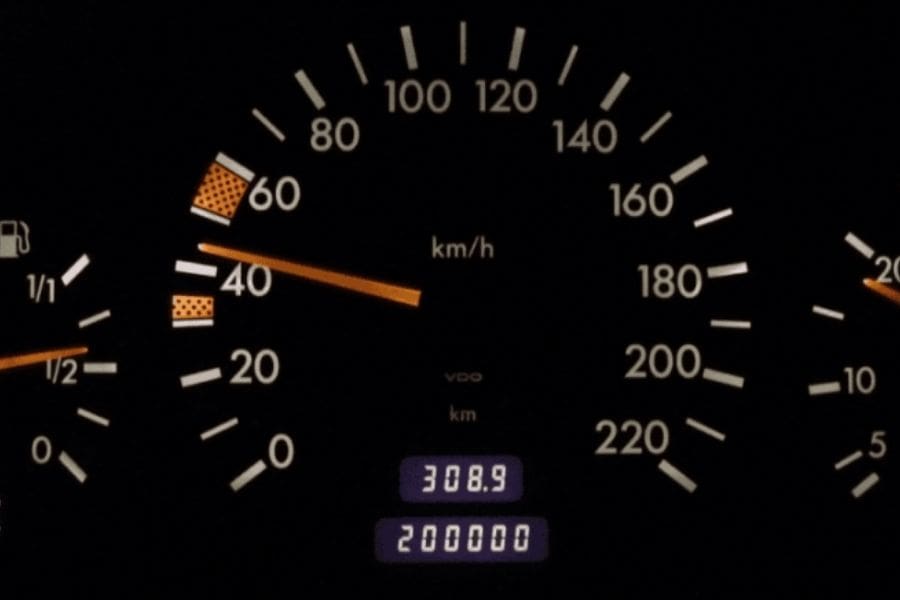
Constantly speeding up and slowing down consumes excess fuel. Speed itself is a major factor: NRCan states that a vehicle travelling at 120 km/h uses about 20% more fuel than the same vehicle travelling at 100 km/h.
When road and weather conditions are suitable, cruise control can help you maintain a consistent speed on the highway.
Avoid cruise control on:
Wet, snowy, or icy roads
Steep hills or winding roads
Heavy traffic
3. Avoid Unnecessary Idling
Idling means leaving your engine running when your vehicle is not moving. NRCan recommends turning off your engine if you expect to stop for more than 60 seconds (except in traffic).
Modern vehicles generally do not need long warm-up periods. In cold weather, follow your vehicle manufacturer’s instructions and drive moderately during the first few minutes.
4. Check Your Tire Pressure
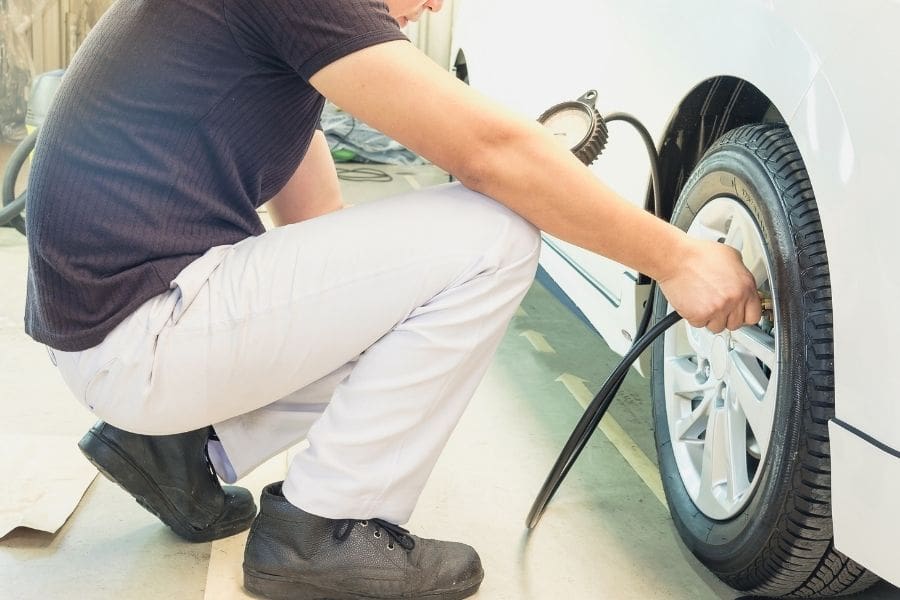
Properly inflated tires help your vehicle operate efficiently and safely. NRCan reports that driving with tires underinflated by 56 kPa (8psi) can increase fuel consumption by up to 4%.
Check tire pressure at least once a month.
Match the recommended pressure found on the driver’s door jamb label, not the maximum pressure printed on the tire itself.
💡 Quick Check: Tire pressure is one of the simplest things you can monitor yourself, and it can help with fuel economy, tire life, and vehicle safety.
5. Remove Unnecessary Weight
The heavier your vehicle, the more energy it needs to move. NRCan estimates that fuel consumption in a mid-size car increases by about 1% for every additional 25 kg of weight carried.
To save money on gas in Canada, clear out items in your trunk such as heavy boxes, sports gear, or unused tools. Be sure to keep essential emergency and winter safety supplies in the vehicle.
If you are buying a vehicle and want to control long-term costs, Prepare for Canada also has a guide on buying a used car in Canada.
6. Remove Roof Racks When Not in Use
Roof boxes, bike racks, ski racks, and other external accessories create aerodynamic drag. NRCan highlights that exterior racks noticeably increase fuel consumption, particularly at highway speeds.
When possible, pack luggage inside the vehicle without blocking your view or exceeding the vehicle’s cargo limit to save money on gas in Canada.
💡Road-Trip Tip: Remove unused external accessories when your road trip or activity is complete.
7. Plan Routes and Use Canadian Fuel Apps
Combining errands into a single trip is another simple way to save money on gas in Canada. This is more efficient than taking multiple short, cold-start trips.
To maximize savings at the pump, track local prices using tool apps for Canadian drivers.
GasBuddy: Features real-time crowd-sourced pump prices across Canadian cities and provinces.
CAA Fuel Price Finder: Displays provincial averages and local station prices to help you plan where to fill up.
Note: Avoid driving long out-of-way distances to save a cent per litre, as extra driving will reduce the savings.
Track Your Fuel Consumption in L/100 km to Save Money on Gas in Canada
In Canada, fuel consumption is commonly measured in litres per 100 kilometres, or L/100 km. A lower number means better fuel efficiency.
Formula:
Litres used ÷ kilometres driven × 100 = L/100 km
Example: If you use 45 litres of gas to drive 600 kilometres:
45 ÷ 600 × 100 = 7.5 L/100 km
Tracking your fuel consumption over time can help you notice changes caused by tire pressure, driving habits, additional cargo, weather, or vehicle maintenance.
NRCan’s 2026 Fuel Consumption Guide provides model-specific fuel ratings for all light-duty vehicles sold in Canada.
Checklist: Save Money on Gas in Canada on Road Trips
Before heading out on a long drive, run through this quick checklist to save money on gas in Canada and protect your travel budget:
Check your tire pressure.
Remove unnecessary trunk cargo and unused roof racks.
Plan routes via mapping apps to avoid peak gridlock.
Potential Gas Savings by Driving Habit (NRCan Data)
Driving / Maintenance Habit
Estimated Fuel Impact (NRCan Data)
Smooth Acceleration (5s to 20 km/h)
Reduces fuel use and carbon dioxide emissions by up to 25%
Driving at 100 km/h vs. 120 km/h
Reduces highway fuel consumption by ~20%
Correct Tire Inflation (+56 kPa / 8 psi)
Prevents up to a 4% increase in fuel use
Trunk Cargo Weight Reduction (-25 kg)
Improves fuel economy by ~1%
Save Fuel Without Sacrificing Safety
Fuel-efficient driving is about making smarter choices, not compromising safety or comfort. Even modest improvements in fuel consumption can help you save money on gas in Canada and make car ownership more manageable.
And remember that Canadian driving conditions change considerably with the seasons. When the temperature drops, Prepare for Canada’s Winter Driving in Canada: 7 Essential Safety Tips for Newcomers can help you prepare for snow, ice, winter tires, and colder-weather driving.
Frequently Asked Questions
What is the easiest way to save money on gas in Canada?
Start with zero-cost habits: accelerate gently, maintain a steady speed, avoid idling, check cold tire pressure monthly, and use Canadian gas-tracking apps to find lower fuel prices.
Does driving slower save gas?
Yes. Natural Resources Canada states that driving at 120 km/h can use about 20% more fuel than driving at 100 km/h.
How often should I check my tire pressure?
Check tire pressure at least once a month and before long trips, using the recommended pressure listed inside your driver’s door frame.
What does L/100 km mean?
It measures how many litres of fuel a vehicle requires to travel 100 kilometres. The lower the number, the more fuel-efficient the vehicle is.
WRITTEN BY
Gitanjali Verma
Gitanjali Verma is a Toronto-based community advocate who is deeply involved in supporting newcomers to Canada. She serves as Co-Chair of the Toronto Newcomer Council and has been working with refugees for over a decade. Alongside her community work, she brings experience working with global organizations, including HSBC. Having lived and travelled across diverse cultures, she brings a global perspective to her work. Gitanjali is passionate about helping newcomers build confidence and find their footing, and shares practical, people-focused insights to support their journey in Canada.