Join the ScotiabankStartRight® Program designed for Newcomers‡ and get up to $2,300* in value in the first year.
Vancouver is one of Canada’s most desirable and expensive cities to rent in. While rents are high, you can still find pockets of value, especially in East Vancouver (Hastings-Sunrise, Renfrew), Joyce–Collingwood,and Surrey. These areas offer lower rent, good transit, and diverse communities. For newcomers, finding the best areas to live in Vancouver, BC, Canada, means balancing affordability, transit, safety, and lifestyle.
Whether you’re a student, young professional, or family, understanding the best areas to live in Vancouver, BC, Canada will help you find the best place to rent for newcomers. Explore neighbourhoods, compare updated 2026 rental costs, and discover the perfect fit for your move.
While Vancouver offers incredible career and outdoor opportunities, managing day-to-day expenses requires a clear strategy. For a full breakdown of average expenses, transit passes, and income needs, check out our comprehensive guide to Living in Vancouver: Costs, Jobs, and Settlement Reality.
📌What You Need to Know
Rent Expectations: Metro Vancouver remains one of Canada’s pricier markets, with 1-bedroom apartments averaging $2,100 to $2,850/month depending on location.
Best Value Locations: You can save $300–$600+ per month by looking at Surrey or Joyce–Collingwood instead of central Vancouver, without sacrificing quick SkyTrain access.
Transit Beats Cars: You don’t need a car to live comfortably. Neighbourhoods like The West End, Mount Pleasant, and Lonsdale (North Vancouver) offer excellent walkability and transit links.
Rental Watchout: Rental scams targeting newcomers are common. Never send deposit funds before viewing a property in person or via verified video tour.
Most Affordable Areas to Live in Vancouver, Canada
Surrey City Centre: Best budget-friendly alternative to living in Vancouver with direct SkyTrain access to downtown.
Joyce-Collingwood: Affordable Vancouver address with rapid transit connections.
East Vancouver (Hastings-Sunrise & Renfrew): Best value, community-focused, and close to the city core.
Popular Areas to Live in Vancouver for Newcomers
The West End: Walkable, beachside, and central downtown living.
Mount Pleasant: A creative hub with vibrant dining and access to the tech corridor.
Kitsilano: Beachside lifestyle, trendy shops, and direct transit to University of British Columbia (UBC).
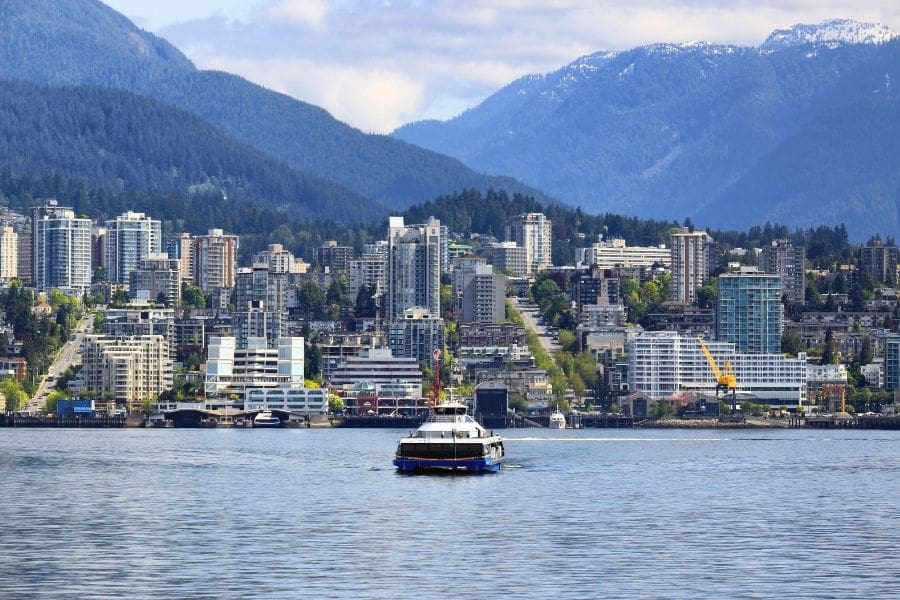
North Vancouver (Lonsdale): Family-friendly, scenic, with SeaBus connection to downtown.
Vancouver Neighbourhood Rental Comparison (2026 Estimates)
Choosing areas like Surrey or Joyce-Collingwood over central Vancouver can save newcomers hundreds of dollars each month while keeping transit times manageable.
💡 Tip: Standard guidelines evaluate gross income, but your take-home or net pay determines what you can comfortably spend each month. To get a realistic figure based on your net income, run your numbers through Prepare for Canada’sFree Rental Affordability Calculator ↗.
Top Neighbourhoods and Best Areas to Live in Vancouver, Canada
1. Surrey (Greater Vancouver Area)
Best for: Budget-conscious newcomers, families, and students
Transit:Expo Line SkyTrain (Surrey Central, King George, Gateway), rapid buses; ~35–45 min to downtown Vancouver
Why Newcomers Like It: Lower rent, modern high-rise rentals, diverse cultural communities, and access to jobs and services. For in-depth information, read more about living in Surrey.
Best for: Affordable rentals within Vancouver city limits; families, international students
Transit: Joyce-Collingwood Station (Expo Line); 15 minutes to downtown.
Vibe: Culturally diverse, family-friendly, walkable, with many newcomer-owned businesses and grocery stores
Why Newcomers Like It: This vibrant, multicultural neighbourhood is one of the most cost-effective options with direct access to downtown via the SkyTrain. It offers a mix of low-rise apartments and newer condos, local shops, grocery stores, and services.
🏠 See our complete Vancouver Public Transit guide for details on routes, fares, and tips for newcomers.
3. East Vancouver (Hastings-Sunrise & Renfrew)
Best for: Newcomers seeking budget-friendly housing near downtown and small families wanting proximity to downtown.
Transit: Hastings bus corridors to downtown; Renfrew, Rupert, Nanaimo Stations (Expo Line).
Vibe: Community-driven, multicultural, lined with parks, older rentals, and affordable local shops.
Why Newcomers Like It: Practical balance of central access and residential neighbourhood charm. Hastings-Sunrise is considered one of the best places to live in Vancouver, BC, for newcomers looking for affordability and transit links.
💡 East Van Insider Tip: Look for secondary suites or basement apartments in East Vancouver. They often offer more square footage per dollar than traditional downtown condo units!
Why Newcomers Like It: Immediate access to Kits Beach and a relaxed neighbourhood atmosphere. It offers a mix of older rental apartments, condos, and townhomes, along with trendy shops and cafés.
6. Mount Pleasant
Best for: Tech professionals and creative industries, young newcomers wanting a walkable community near downtown
Transit: Main Street-Science World stations; frequent cross-town buses.
Why Newcomers Like It: Vibrant lifestyle with quick access to Main Street and the Broadway tech district. It offers a mix of apartments and older homes.
7. North Vancouver (Lonsdale)
Best for: Families, outdoor enthusiasts
Transit: Lonsdale Quay SeaBus (12 minutes to downtown Waterfront Station).
Vibe: Safe, community-oriented, with mountain backdrops.
Why Newcomers Like It: Family-friendly community; proximity to hiking trails and nature without sacrificing downtown access.
Essential Tips for Renting in Vancouver as a Newcomer
Prepare Documents Early: Have your photo ID, proof of funds, employment letter, and references ready before viewing properties.
Beware of Rental Scams: Never wire money or send e-Transfers before viewing a property in person or via an interactive video call with a verified property manager.
Explore Secondary Suites: Basement suites in East Vancouver and Surrey often offer more space at a lower cost than traditional apartment units.
Consider Home Sharing: Co-living arrangements can lower upfront move-in costs during your first few months.
Rental Viewing Checklist for Newcomers
When inspecting an apartment in person or via video tour, check off these key items before putting down a deposit:
Unit Condition: Test water pressure/hot water, inspect under sinks for leak damage, test light switches/outlets, and check window seals.
Utilities & Heating: Confirm which utilities (heat, hot water, electricity, internet) are included in the monthly rent.
Appliances & Amenities: Make sure the stove, fridge, in-suite or shared laundry, and dishwasher (if applicable) are clean and working.
Lease Terms & Landlord Verification: Verify the landlord or property manager’s ID, review the lease duration, and confirm payment methods (avoid non-refundable cash or untraceable wire transfers).
What is the most affordable area to rent near Vancouver?
Surrey offers the most competitive rental prices in the Metro Vancouver region with direct transit connections into downtown via the SkyTrain.
Do I need a car to live in Vancouver?
No. Many neighbourhoods, such as the West End, Mount Pleasant, Joyce-Collingwood, and Lonsdale, are highly walkable and have frequent TransLink bus and rail options.
Which neighbourhoods are best for families?
North Vancouver (Lonsdale) and East Vancouver (Hastings-Sunrise) offer family-friendly parks, good school access, and quieter residential streets.
How far in advance should I look for a rental in Vancouver?
Start searching 30 to 45 days before your target move-in date, as most lease notices in BC are given on a 30-day cycle.
Final Thoughts: Choosing the Best Areas to Live in Vancouver, Canada
Whether you are looking for budget-friendly apartments or oceanfront views, taking time to explore the best areas to live in Vancouver, Canada will ensure a smooth move.
With snow-capped mountains framing the Pacific Ocean, mild winters, and a booming job market, living in Vancouver consistently ranks as a top choice for immigrants moving to Canada. British Columbia’s largest city offers an exceptional quality of life. But there is a distinct reality behind the scenic views: living in Vancouver can be one of the most challenging Canadian settlement experiences if you land without a clear financial strategy.
For newcomers who arrive with a realistic household budget, Metro Vancouver provides outstanding career, educational, and lifestyle opportunities. However, attempting to “figure it out after landing” without analyzing local housing costs can quickly drain initial settlement savings.
Before booking flights, here is a breakdown of the real housing costs, job market, and vital settlement steps for living in Vancouver.
What You Need to Know
Plan your finances to successfully balance Vancouver’s high quality of life with its higher cost of living.
Budget for steep rental prices, expecting average monthly costs of $2,270 for a one-bedroom and $3,200 for a two-bedroom apartment.
Explore suburban hubs like Surrey and Burnaby to secure larger, more affordable housing than downtown offers.
Build local professional networks before arrival to significantly boost job search results.
Embrace the vibrant multicultural community and broad job market to stay energized through the rainy season.
📌Fast Facts: Metro Vancouver at a Glance
Population: 631,486 (City of Vancouver), 2,632,000 (Greater Vancouver Area)
Density: Over 5,400 people per square kilometre, the highest urban density in Canada
Languages: Diverse and multicultural; over 190 languages spoken; (Mandarin and Cantonese are the most widely spoken non-English languages)
📊 The Reality Check: True Cost of Living in Vancouver
While median rents across Metro Vancouver have adjusted slightly over the past year, the region remains Canada’s most expensive rental market.
In The Globe and Mail’s 2026 ranking of Canada’s Best Cities for Renters (conducted with Rentals.ca), Vancouver ranked 130th out of 243 Canadian cities. The city scored exceptionally high for livability and neighbourhood quality. However, high housing costs, where nearly 39% of renter households spend over 30% of their income on shelter, dragged down its overall score. This reinforces why exploring surrounding transit hubs like Surrey, Burnaby, and Coquitlam is critical for newcomer budgets.
To avoid landing stress, look at your full budget rather than housing costs alone. Below is a realistic, mid-tier monthly budget breakdown across major categories for newcomers in 2026:
Monthly Landing Budget Breakdown (2026 Estimates)
Expense Category
Single Professional
Family of 3 (2-Bed Rental)
Housing (Rent + Tenant Insurance)
$2,250 – $2,500
$3,200 – $3,600
Groceries & Basic Household Goods
$450 – $600
$1,100 – $1,400
Transit (Compass Card – 2 Zone)
$140
$280
Utilities, High-Speed Internet & Mobile
$180
$260
Emergency Buffer / Discretionary
$300
$500
Target Gross Annual Household Income Needed (*Based on 30% Net Pay Rule)
~$115,000/ year
~$165,000 / year
💡*Why We Calculate Rent Based on Net (Take-Home) Income:
Traditional financial guides suggest spending no more than 30% of your “gross” income on rent. However, in Canada, provincial taxes, CPP, and EI take 20-25% of your pay before it hits your bank account. You don’t pay rent with gross; you pay with take-home pay.
Single Renter Example: Renting a typical 1-bedroom apartment at $2,300/month requires a net take-home pay of $7,660/month to keep housing under 30% of your real income. Accounting for British Columbia tax deductions, this translates to a gross annual salary of $115,000.
Family Example: Renting a 2-bedroom apartment at $3,000/month requires a net take-home pay of $11,000/month, and a combined household gross annual salary of $165,000.
If your starting household income falls below these levels, you may need to spend a higher percentage of your net income on rent initially, look at shared housing options, or settle in suburbs like Surrey or Coquitlam.
🔢Want to test if your landing income can cover Vancouver rent? Before signing a lease or selecting a destination province, test your family’s budget using our free Rent Affordability Calculator. It factors in provincial tax rates to give you a realistic target based on your target household income.
3 Hard Lessons Newcomers Learn in Their First Month
1. “Downtown” Isn’t Where Most Newcomer Families Settle
The low-rise waterfront apartments in Yaletown or Coal Harbour look amazing on social media, but most families and newcomers settle in Burnaby, Surrey, Richmond, or Coquitlam. These surrounding cities sit directly along the SkyTrain line, offering lower rent per square foot, larger community centers, and easier access to newcomer settlement programs such as MOSAIC and S.U.C.C.E.S.S.
2. Networking Beats Cold Resumes Every Time
Vancouver’s job market is heavily based on professional networking and local connections. Sending hundreds of identical resumes on job boards rarely works. Newcomers who land roles in their first 60 days usually start setting up virtual “coffee chats” on LinkedIn with local professionals and settlement career coaches before their plane even touches down.
3. “Raincouver” is Real, Prepare for the Seasonal Shift
Vancouver doesn’t get the harsh -30°C common in other parts of Canada, but it does rain, sometimes for weeks at a time between October and April. Seasonal Affective Disorder (SAD) catches many newcomers from warmer climates off guard. Budget for proper waterproof footwear, a quality rain shell, and daily Vitamin D right out of the gate.
💼 How is the Job Market in Vancouver for Newcomers?
Skilled construction trades remain one of the fastest-growing job sectors for newcomers arriving in Metro Vancouver.
Metro Vancouver has a diverse and growing job market, with major opportunities in technology, film and digital media, healthcare, and skilled construction trades. To secure employment in Vancouver, focus on three things: network with local professionals, evaluate your foreign credentials early, and tailor your resume to Canadian standards.
Primary Hiring Sectors
Technology & Clean Tech: (Major regional offices for Microsoft, Amazon, SAP, and a growing ecosystem of sustainable tech startups.
Film & Digital Media: Known as “Hollywood North,” driving high demand in animation, post-production, and digital arts.
Healthcare & Life Sciences: Consistent demand for registered nurses, laboratory specialists, and continuing care assistants.
Construction & Skilled Trades: Regional infrastructure development maintains steady demand for certified trade professionals.
Practical Career Action Steps
1. Begin the Credential Recognition Process Early: If working in a regulated field (engineering, nursing, teaching, accounting, etc), contact the respective BC regulatory body months before arriving to begin the process. Learn more in our guide, Credential Recognition Guide for Newcomers & Professionals.
2. Monitor Regional Job Boards: In addition to national platforms, such as Canada Job Bank, review listings on bcjobs.ca and WorkBC.ca for provincial government and regional employer openings.
3. Work with Settlement Career Advisors: Organizations such as S.U.C.C.E.S.S. and MOSAIC provide free professional resume reformatting to align qualifications with Canadian hiring expectations.
If you plan to work in a regulated profession or a skilled trade, check out Career Pathways to discover what you need to work in Canada.
🏠 Finding Your First Rental When Living in Vancouver
Vancouver Housing Market Overview:
Renting your first home in Canada can be tough. Landlords usually ask for local job references and a Canadian credit history, two things most newcomers don’t have yet.
You can save money by looking beyond downtown Vancouver. Expanding your search to the surrounding Metro Vancouver suburbs gives you much more living space for your budget.
Average Rent in Metro Vancouver (2026 Benchmark)
Unit Type
Average Monthly Rent
Comparison to National Average ($2,040)
1-Bedroom
$2,270/month
11% higher
2-Bedroom
$3,200/month
56% higher
3-Bedroom
$4,130/month
100% higher
Metro Vancouver Neighbourhood Snapshot
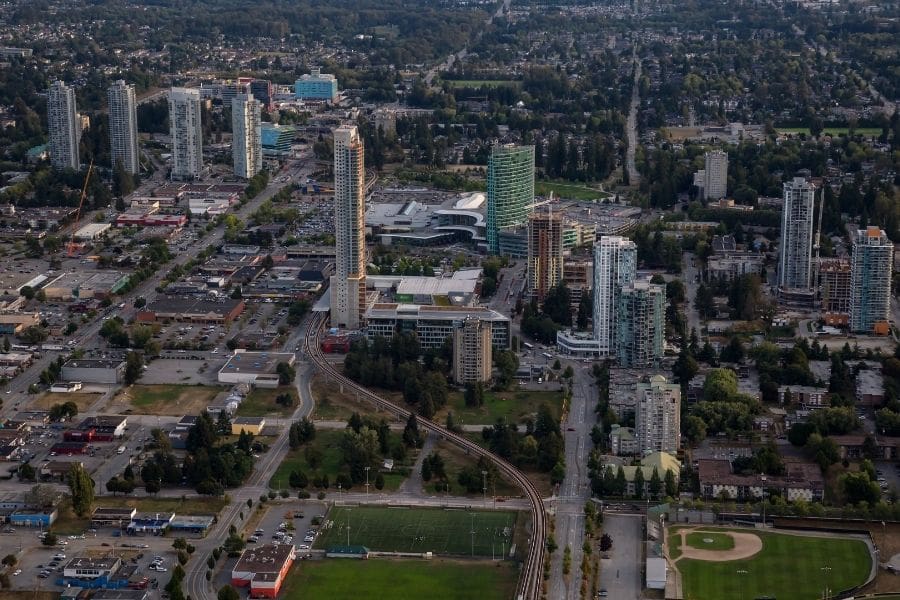
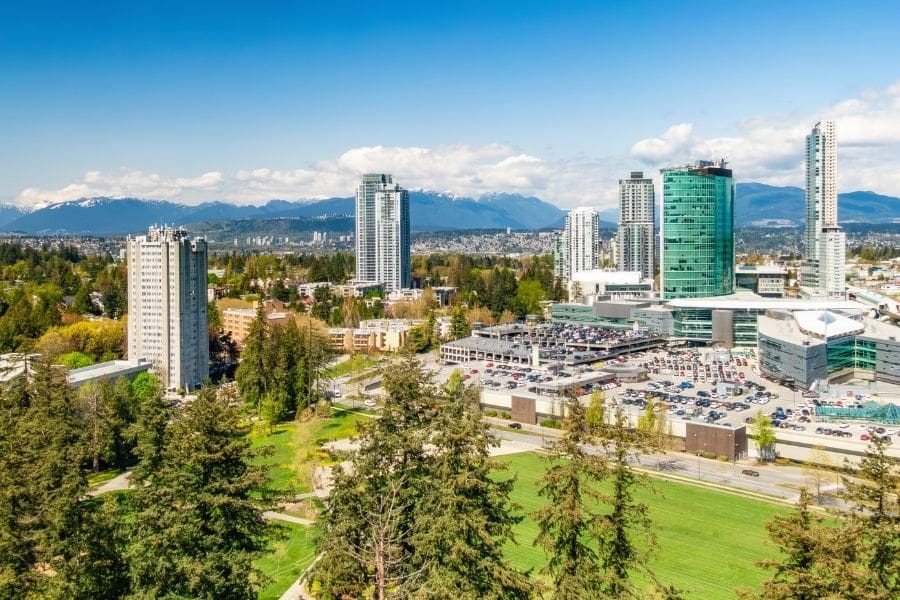
Surrey City Centre offers newcomers modern apartment rentals, direct SkyTrain access, and extensive community amenities at significantly lower monthly rates than downtown Vancouver.
Popular Neighbourhoods for Newcomers:
Surrey: A fast-growing suburb in the Greater Vancouver Area, Surrey is popular with families due to its schools, parks, and recreational facilities. Read more about Best Surrey Neighbourhoods for Newcomers.
Joyce-Collingwood: Located along the SkyTrain line, this neighbourhood is well-connected to the rest of Vancouver, making commuting easy.
East Vancouver: A culturally diverse area with a mix of apartments, condos, and single-family homes. It’s ideal for newcomers who want a lively community with relatively more affordable housing than the city centre.
🏠When applying for rentals, most landlords check credit scores. If you just arrived in Canada, you likely don’t have a local credit history yet. Don’t worry, most property managers accept alternative proof of funds while you are settling. To start building your credit history from day one, read How to Build Credit in Canada from Zero.
4 Practical Rental Tips for Newcomers
1.Set a realistic budget that includes rent, groceries, transportation, utilities, and tenant insurance.
2.Prepare a “Financial Credibility Package” before you begin viewing properties: (short bio or cover letter, proof of income/job search, bank proof of funds, and references. Organize this information in a single PDF.
3. Know Your Security Deposit Rights: Under the BC Residential Tenancy Act, landlords cannot legally ask for more than 50% of one month’s rent as a security deposit.
4.Explore Newcomer-Friendly Listings: Search verified listings from property managers who work directly with new immigrants at Rentals for Newcomers.
Meeting with a personal banking advisor at a local bank branch helps newcomers open accounts, set up credit cards, and start building Canadian credit history.
Banking & Personal Finances in Vancouver, BC
Managing your personal finances is a vital part of living in Vancouver, BC, Canada. Most major banks offer newcomer programs that help you open an account before you arrive, get a credit card, and start building your credit history.
By visiting a local bank branch, you can also learn about financial products such as lines of credit, savings accounts, and mortgages, useful as you budget for life in Vancouver and plan for long-term goals like renting or buying a home.
Language programs are also available through settlement agencies, making it easier to integrate into the community and workplace.
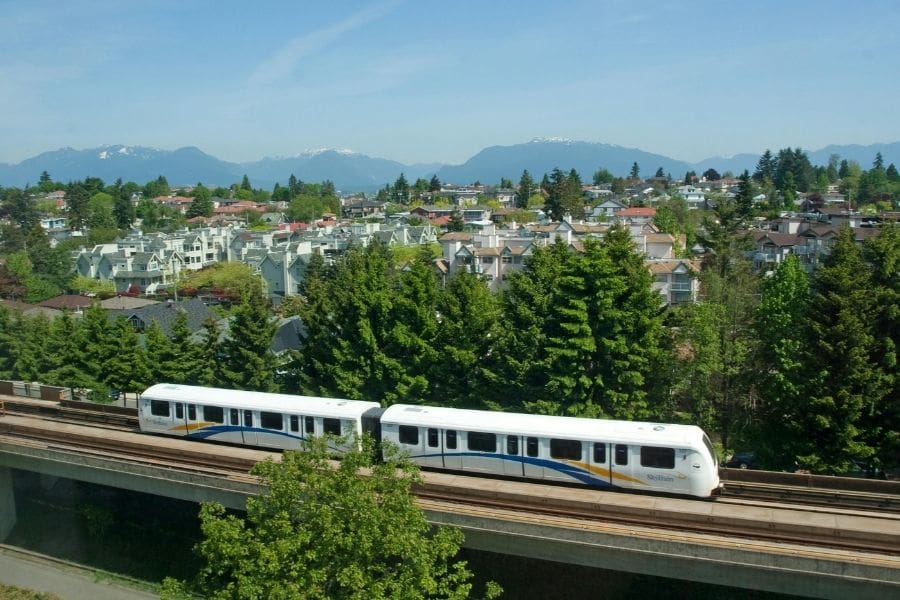
TransLink’s automated SkyTrain network connects downtown Vancouver to suburban residential hubs like Burnaby, New Westminster, and Surrey.
🚆Getting Around: Driving Rules & Public Transit Options
TransLink, Metro Vancouver’s public transit authority, operates buses, SkyTrain (above-ground rapid transit), SeaBus (ferry to North Vancouver), and West Coast Express (commuter train). Using public transit allows many newcomers to delay buying a car during their first year. For more tips, see How to Get Around Vancouver Using Public Transit.
Major highways in Vancouver are Highway 1 (Trans-Canada), Highway 7 (Lougheed), and Highway 99 (Sea to Sky). Traffic congestion is high, especially during peak hours.
Compass Card: A single reloadable card used to tap in and out across SkyTrains, regional buses, and the SeaBus passenger ferry connecting Downtown to North Vancouver.
Fare Zones: SkyTrain fares are calculated based on 3 fare zones. Commuting from suburbs such as Burnaby or Surrey into Downtown Vancouver requires a 2-Zone or 3-Zone fare.
To learn how to navigate buses, SkyTrain, SeaBus, and commuter trains with ease, check out our guide on Vancouver Public Transit.
Driver’s Licence Exchange: The 90-Day Rule
Newcomers holding a valid foreign driver’s license may legally drive in BC for up to 90 days following arrival.
ICBC License Transfer: Drivers must visit an ICBC (Insurance Corporation of British Columbia) licensing office to convert their license.
Reciprocal Countries: License holders from designated jurisdictions (including the US, UK, Australia, Germany, Japan, and South Korea) can exchange their credentials directly for a BC Class 5 license without a road test. All other drivers must complete a knowledge test and road examination.
Healthcare & Medical Services
Medical Services Plan (MSP)
Canada has a publicly funded healthcare system, and in BC, it’s called the Medical Services Plan (MSP).
MSP:
Covers most doctor visits, medical tests, and treatments
Some services, like dental or physiotherapy, may require additional insurance
International students and work permit holders (6+ months) can enroll.
To find a family doctor, call HealthLink BC (8-1-1) or visit a walk-in clinic.
Vancouver General Hospital, Mount Saint Joseph Hospital, and St. Paul’s Hospital.
Emergency Number
Call 9-1-1 for urgent situations. This emergency number is the same across Canada.
🏫Schools & Education for Newcomer Families
British Columbia offers high-performing public, Catholic, and independent systems, along with internationally recognized universities. Vancouver offers excellent education for all ages.
School Catchment Rules (K-12): Your home address determines which public school your child attends. Before signing a lease, check which school district covers that address (such as the Vancouver School Board or Burnaby School District).
Welcome Centre Registration: School districts run Newcomer Welcome Centres to test your child’s English skills and register them for class. Parents must bring official proof of residence along with certified translations of birth certificates and immunization records.
Colleges & Universities: Metro Vancouver features top research universities including the University of British Columbia (UBC) and Simon Fraser University (SFU). You can also attend applied colleges: Kwantlen Polytechnic, Langara College, and Vancouver Community College (VCC).
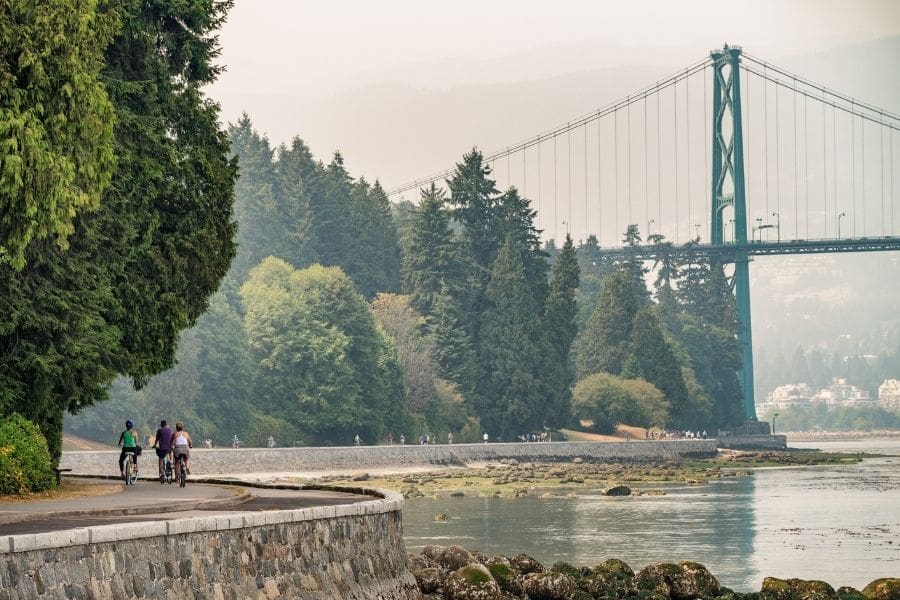
Stanley Park in Vancouver, BC, offers residents and newcomers scenic outdoor activities and a connection to nature.
Pros and Cons of Living in Vancouver
Living in Vancouver offers a high quality of life, but it also comes with trade-offs. Here’s a look at the pros and cons of living in Vancouver, BC, Canada.
Pros
Cons
✅ Unmatched Natural Setting: Direct access to ocean beaches and mountain trails.
❌ High Cost of Housing: Rental rates and purchase prices rank among Canada’s highest.
✅ Mild Winter Climate: Sub-zero temperatures and snow accumulation are infrequent.
❌ Extended Rainy Season: Over 160 rainy days annually require an adjustment period.
✅ Integrated Transit System: Comprehensive SkyTrain network reduces car dependency.
❌ Competitive Rental Market: While vacancy rates are stabilizing, rental rates are still high.
✅ Diverse Community: Over 40% of the population was born outside of Canada.
❌ Healthcare Waitlists: Accessing a dedicated family physician requires time on registries.
Day-to-Day Culture & Life When Living in Vancouver
Outdoor Activities: Explore Stanley Park and its seawall, the Capilano Suspension Bridge, and the North Shore Mountains for skiing, mountain biking, and hiking. Enjoy the city’s waterfront and many beaches.
Arts, Entertainment, & Sports: Visit Granville Island, Science World, Chinatown, and Davie Village for cultural experiences, international cuisine, and live music venues. Cheer for major sports teams, including the Vancouver Canucks (hockey), Whitecaps (soccer), and the BC Lions (football).
Events: Celebrate cultural events including Lunar New Year, Diwali, Eid, and Black History Month.
Living in Vancouver, BC, offers a balance of city life, natural beauty, and cultural diversity.
Final Thoughts on Living in Vancouver, BC, Canada
Living in Vancouver, Canada, offers a unique mix of natural beauty, cultural diversity, and career opportunities. For immigrants arriving with adequate financial reserves or a job offer in a key growth sector, it represents an outstanding environment to build a life in Canada.
For newcomers who want to buy a home right away or save money when you first arrive, consider starting in mid-sized cities in Alberta or Saskatchewan. These provinces offer a more affordable place to build Canadian work experience before you move to BC.
Frequently Asked Questions: Living in Vancouver as a Newcomer
Is Vancouver a good city for new immigrants?
Yes, but success depends heavily on pre-arrival financial preparation. Metro Vancouver is a welcoming multicultural city with strong long-term career prospects in technology, film, healthcare, and trades. However, because rental costs and daily expenses are among the highest in Canada, newcomers who budget realistically before landing experience much smoother transitions.
How much money do I need to move to Vancouver?
For a single professional, arriving with $12,000–$15,000 CAD is recommended to cover temporary housing, initial lease security deposits, and initial living costs while searching for work. For a family of three, aim for $25,000–$30,000 CAD in financial buffer.
Can I rent an apartment in Vancouver without a Canadian credit history?
Yes. While many private landlords request a Canadian credit report, newcomer-friendly property managers and purpose-built rental buildings frequently accept alternative proof of financial stability. This includes international bank statements showing proof of funds, a verified Canadian job offer letter, or an advance payment of the security deposit (capped at 50% of one month’s rent under the BC Residential Tenancy Act).
Do I need to own a car to live in Metro Vancouver?
No. Over 80% of daily commutes in Metro Vancouver use TransLink’s public transit network, which includes the rapid SkyTrain system, the SeaBus ferry, and extensive bus routes. Choosing a rental near a SkyTrain station in Burnaby, New Westminster, Surrey, or Richmond allows most newcomers to live comfortably without the added expenses of vehicle ownership, fuel, and ICBC auto insurance during their first year.
How long does it take for healthcare coverage to start in BC?
British Columbia’s public healthcare scheme, the Medical Services Plan (MSP), has a 90-day waiting period (the balance of your arrival month plus two full calendar months). We recommend that newcomers purchase private emergency medical insurance before departure to cover their household during this initial three-month gap.
What is the best suburb in Metro Vancouver for families?
Surrey and Burnaby are the two most popular destinations for newcomer families. Surrey provides lower rental prices per square foot, rapidly expanding community facilities, and extensive newcomer settlement services. Burnaby offers central access, top-tier schools, and large retail hubs connected directly by the Expo and Millennium SkyTrain lines
Why Should Newcomers Use Vancouver Public Transit?
Vancouver public transit can feel confusing at first—especially with fare zones, transfers, and multiple transit systems. This guide gives a clear overview of how newcomers can travel confidently using public transportation. Using public transit saves time, reduces costs, and makes exploring the city and the surrounding suburbs easier. TransLink manages Vancouver public transit across Metro Vancouver, including Vancouver, Surrey, Burnaby, Richmond, and North Vancouver.
Benefits of Public Transit
Save money on commuting and reduce reliance on a car in one of Canada’s most expensive cities.
Travel quickly and conveniently to work,school, shopping, and entertainment.
Avoid traffic congestion and parking costs with eco-friendly transportation.
In 2024, TransLink recorded 240.9 million trips, showing strong reliance on public transit across the region.
What are the Main Transit Options in Metro Vancouver?
Metro Vancouver has four main transit systems:
1.SkyTrain – Rapid, automated trains on elevated and underground tracks
2.Buses – Frequent service connecting every neighbourhood
3.SeaBus – Ferry connecting Vancouver to North Vancouver
4. West Coast Express – Weekday commuter train connecting Downtown Vancouver with the Fraser Valley (ending in Mission City).
Most newcomers primarily use SkyTrain, buses, and SeaBus. TransLink also operates HandyDART, a dedicated service for people with disabilities.
Over 80% of downtown commuters rely on the SkyTrain or RapidBus during peak hours.
SkyTrain provides fast, automated transit across Vancouver.
How Can Newcomers Use the SkyTrain in Vancouver?
For many newcomers, the SkyTrain is the easiest place to start. It’s straightforward, fast, and connects major settlement areas like Surrey, Burnaby, and Downtown Vancouver. Read more about Living in Surrey, BC.
Automated trains on elevated and underground tracks make commuting fast and reliable.
Average speed: 35 km/h
Lines: Expo, Millennium, and Canada Lines connect downtown, suburbs, and key hubs.
💡Tip: Living within 500 m of a SkyTrain station significantly reduces commute times.
Frequent bus routes connect every neighbourhood in Vancouver.
How Do Buses Help Newcomers Reach Every Neighbourhood?
Buses cover areas beyond SkyTrain reach and work in tandem with the SkyTrain to provide flexible routes.
Operating hours: 5:00 AM to 1:00 AM
Transfers: Longer journeys may require one or more transfers. Use Google Maps or the Transit app to plan efficiently.
SeaBus connects Vancouver to North Vancouver across the Burrard Inlet.
How Can Newcomers Use the SeaBus to Cross Burrard Inlet?
SeaBus connects Downtown Vancouver to North Vancouver, making waterfront commutes simple.
Frequency: Every 15 minutes during the day, 30 minutes in the evenings and on Sundays
Operating Hours: 6:00 AM – 1:00 AM (Mon–Sat) and 8:00 AM – 11:00 PM (Sun/Holidays).
💡 Tip:Great for newcomers living in North Vancouver or commuting to downtown jobs.
How Does the West Coast Express Serve Metro Vancouver Commuters?
West Coast Express serves commuters travelling long distances from the Fraser Valley, offering a comfortable alternative to driving.
Distance: 69 km with 8 stops.
Travel time: ~1 hour 15 minutes.
Zone-based fare: 5 zones total; one-way $8.60–$14.25 (adult), $5.05–$8.85 concession. Refer to West Coast Express Fares to estimate your fare.
How Much Does Vancouver Public Transit Cost in 2025?
There are three fare zones across Metro Vancouver. The number of zone boundaries you cross during your trip, as well as the time and day, determine your fare.
Map of Vancouver public transit fare zones showing SkyTrain, SeaBus, and bus zones across Metro Vancouver.
Vancouver Public Transit Fare Zones (SkyTrain, SeaBus, Bus Fare)
ZONE
ADULT CASH FARES
CONCESSION FARE (YOUTH/ 65+)
1
$3.35
$2.25
2
$4.85
$3.30
3
$6.60
$4.05
Fares last updated: 2025.These fares apply to SkyTrain and SeaBus. Bus fares are always 1-Zone regardless of distance.
Bus fares and HandyDART: 1-Zone fare at all times
Off-peak travel: Weekends and weekdays after 6:30 PM are 1-zone fare
Single fare: valid for 90 minutes on the bus, SkyTrain, and HandyDART.
Surrey–Langley SkyTrain Extension (completion ~2027): Better access to South Fraser suburbs.
New RapidBus routes and frequency upgrades: Increased service reliability.
Federal and provincial funding: ensures long-term investment in transit infrastructure.
Tips for Newcomers Using Vancouver Public Transit
Plan your route with Google Maps or the TransLink app
Check peak-hour overcrowding, especially buses and the SkyTrain
Buy a Compass card to save money and track trips
Factor transit costs into your monthly budget ($106/month adult pass).
Choose a neighbourhood near the SkyTrain or RapidBus for easier commutes.
FAQs About Vancouver Public Transit
Is Vancouver’s public transit reliable for newcomers?
Yes, it’s extensive and frequent. Peak-hour buses may be crowded, but the SkyTrain and RapidBus provide fast and reliable travel.
Can I get around Vancouver without a car?
Yes, most newcomers rely entirely on the SkyTrain, buses, and SeaBus.
Are there discounted fares for students or adults 65+?
Yes. Youth (5–18) and seniors (65+) pay concession fares via Compass card.
Which areas are best for transit-accessible housing?
East Vancouver, Mount Pleasant, Kitsilano, North Vancouver, and soon-to-improve suburbs like Surrey and Langley.
How much does a monthly transit pass cost in Vancouver?
Approx. $106/month for an adult; cheaper for youth/senior concessions.
Final Thoughts
For newcomers, understanding Vancouver public transit is a vital first step in settling into the city. The SkyTrain, bus network, and SeaBus make it possible to live and work in Vancouver without a car, while Compass Cards and clear fare zones help you manage costs.
If you are settling in Vancouver soon, reliable transit access can make your first months easier. Explore rental options in transit-friendly neighbourhoods using the Rentals for Newcomers tool.
Renting your first home in Canada | Options & solutions for newcomers
Searching for your first home in Canada? Join this exclusive session for key insights on housing market conditions, affordable options, and renting without credit history. Tailored for newcomers settling in the next six months, register now for valuable tips and a free guide!
Driving is a big part of life in Canada. If you are planning to move to Vancouver or anywhere in British Columbia (B.C), you will need to learn about the process for getting your driver’s licence in British Columbia. The steps to complete will differ depending on your current driver’s licence status. Below we will outline the steps to get your driver’s licence in B.C.
You Have 90 Days to Switch to a B.C Driver’s Licence
The local licencing authority is called the Insurance Corporation of British Columbia (ICBC). Newcomers to the province are allowed to drive using a foreign licence for up to 90 days after arrival. This is referred to as the 90-day rule. After this point, you can only use a driving licence in Canada issued by British Columbia.
How to Apply for a B.C Driver’s Licence
New residents can apply for a licence at an ICBC licencing offer. For the appointment you will need to bring:
Personal identification
Your current driver’s licence
Proof of previous driving experience (driving record)
Funds to pay for licencing fees.
To get a B.C licence you will need to surrender your previous licence to ICBC. Experienced drivers from approved countries can exchange their foreign licence for a British Columbia equivalent right away.
Reciprocal Licence Exchange List
Licencing requirements are based on your current licence and the country it is from. ICBC has licence exchange agreements with the following countries:
Austria
Australia
Belgium
France
Germany
Guernsey
Isle of Man
Jersey
Ireland
Japan
Netherlands
New Zealand
South Korea (not motorcycles)
Switzerland
Taiwan (for passenger vehicles only, not motorcycles)
United Kingdom (England, Wales, Scotland, and Northern Ireland
United States.
If you hold a license from any of these countries, you will need to bring identification, (including a permanent resident card, or work/study permit). You will also need to surrender your existing licence and answer basic questions about road safety to get a British Columbia licence.
What if I am Not from a Country on the Licence Exchange List?
If you have a licence from a country that is not on the list, you can still apply for a B.C driver’s licence. You will need to fill out an application and pass a knowledge test and road test.
Complete the knowledge test: Book an appointment to complete your knowledge test. This is a multiple-choice quiz about road rules and road signs. You will need to get at least 40 out of 50 questions correct to pass. You can take the practice knowledge test online here.
Take the class 5 road test: Once you pass the knowledge test you can make an appointment to complete your road test. If you pass the test, you will be issued a B.C driver’s licence.
You will have 90 days to complete the process.
Steps to Complete if You Have Less Than Two Years of Driving Experience
If you have less than two years of driving experience in your home country, you will have to take more steps to get a driver’s licence.
Those with more than two years of driving experience will get a full, Class 5 licence right away as outlined above. People with less than two years of experience will receive a Class 7 novice licence and may then apply for a full Class 5 licence when they have accumulated two years of experience. Foreign experience will be credited towards the two-year total.
You will enter the graduated licencing program. This is also applicable to newcomers who do not have a driver’s licence and want to get a B.C licence. Here’s how it works:
Get your learner’s licence – your L: you will need to pass the knowledge test and a vision test
Get your novice licence – your N: You will need one year of driving experience with a qualified supervisor. You will need to pass the Class 7 road test.
Get your full licence: Complete 2 years of safe driving with your Class 7 licence and pass the Class 5 road test.
What to Know About Driving in British Columbia
Now that you know how to get a driver’s licence, let’s briefly talk about what it is like to drive in British Columbia. Here are some must-know facts:
In B.C. all drivers must:
Have car insurance to drive a car
Wear a seatbelt when driving (including passengers)
Install winter tires in the winter months
Be aware of driving conditions that can change quickly – you will experience rain, snow, icy roads at different times of the year
Watch for wildlife – wild animals often cross the roadways, especially on highways and in mountainous regions.
Obey speed limits and other traffic signs
Pay fees to drive on toll roads in the province
It is illegal to use your cell phone while driving
The legal blood alcohol level is 0.05 in BC.
Also, to ensure your safety, it’s illegal to use your cell phone while driving and the legal blood alcohol level is 0.05 in B.C. However, it’s best to avoid drinking and driving.
For more information about living and working in Canada, check out our free webinars. We’ll help you to achieve success in Canada!