Join the ScotiabankStartRight® Program designed for Newcomers‡ and get up to $2,300* in value in the first year.
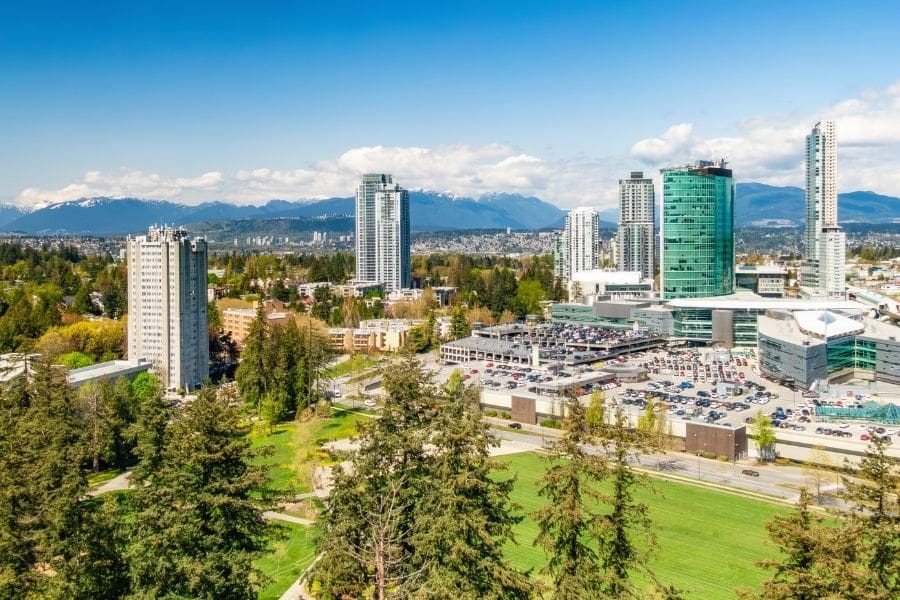
Surrey sits 23 kilometres southeast of downtown Vancouver. Today, living in Surrey, British Columbia, places you in BC’s second-largest city. Surrey is growing fast and will soon become the province’s largest city. Known as the “City of Parks,” Surrey offers active urban centres, quiet suburbs, green parks, and farmland.
For newcomers arriving in Canada, living in Surrey is a practical choice. You pay less rent per square foot than in downtown Vancouver while staying connected through the SkyTrain. Living in Surrey helps you stretch your landing budget without losing access to great jobs.
📌What You Need to Know
Affordable Living and Good Jobs: Surrey housing costs offer significantly better value than central Vancouver, with steady job opportunities across health care, clean tech, construction, and education.
Finding Work and Housing: Strong regional employment and more accessible rent prices per square foot make settling in Surrey practical for arriving families.
Help for Newcomers: The city offers robust, government-funded immigrant settlement organizations with programs for arriving families, students, and workers.
Getting Around: Commute easily using the SkyTrain Expo Line and TransLink buses, with major highways connecting you to Vancouver and the Fraser Valley.
Outdoor Lifestyle: Enjoy a mild Pacific climate year-round, over 600 public parks, 277 trails, and nearby ocean beaches at Crescent Beach.
Quick Facts About Living in Surrey: 2026
Category
Key Statistic & Information
Location
Metro Vancouver, British Columbia (23 km southeast of downtown Vancouver)
Population
BC’s second-largest city (over 600,000 residents; on track to pass Vancouver)
Average 1-Bed Rent*
$1,800 – $2,200 / month
Average 2-Bed Rent*
$2,500 – $2,900 / month
Commute to Vancouver
~35 minutes via SkyTrain Expo Line (Surrey Central / King George to Waterfront)
Public Transit
TransLink SkyTrain & bus network (Flat 1-Zone fare for all buses)
Parks & Outdoor Space
600+ parks, 277 hiking/biking trails, and ocean beaches
Top Job Industries
Health Care, Technology & Clean Energy, Skilled Construction Trades, Logistics
*Rental prices change over time. You can see real-time rental listings in Surrey at Rentals for Newcomers ↗
1. Overview & Location Strategy: Why Newcomers Choose Living in Surrey
Many newcomers look only at downtown Vancouver when searching for homes. However, experienced immigrants and settlement experts agree: choosing to live in Surrey over central Vancouver saves money.
Key reasons newcomers pick living in Surrey include:
Lower Rent Costs: Renters save $300 to $600+ every month by living in Surrey instead of central Vancouver.
Fast Public Transit: Living in Surrey City Centre connects you directly to Waterfront Station in downtown Vancouver in about 35 minutes on the SkyTrain.
Family-Friendly Amenities: Living in Surrey gives your family access to 600+ parks, 277 trails, modern recreation centres, and public schools.
Welcoming Community: Living in Surrey connects you to diverse cultural groups, events, and settlement support services.
2. Rental Market, Housing & Net Take-Home Pay Math
Is Housing Expensive in Surrey?
Metro Vancouver has a competitive rental market, but living in Surrey offers more affordable options. Calculate your true take-home pay before you sign a lease to manage your finances wisely.
Average Rent Comparison: Surrey vs. Vancouver
Choosing where to rent is one of your biggest decisions as a newcomer. In The Globe and Mail’s August 2026 ranking of “Canada’s 100 Best Cities for Renters” (conducted in partnership with Rentals.ca), Surrey stood out as Metro Vancouver’s premier value hub. Surrey outranked central Vancouver thanks to lower average rent costs, strong transit, and better rental inventory for families.
The table below compares average monthly rent for 1-bedroom and 2-bedroom apartments in Surrey and Vancouver:
In Canada, mandatory deductions for taxes, Canada Pension Plan (CPP), and Employment Insurance (EI) take about 20% to 25% from your gross pay. We recommend spending no more than 30% of your net (take-home) pay on housing when living in Surrey.
Home Type
Average Monthly Rent (Surrey)
Required Net Income/Month
Required Gross Household Income
1-Bedroom Apartment
$1,800 – $2,200
~$6,000 – $7,300
~$90,000 – $110,000 / year
2-Bedroom Apartment
$2,500 – $2,900
~$8,300 – $9,600
~$125,000 – $145,000 / year
3-Bedroom Townhome
$3,000 – $3,500
~$10,000 – $11,600
~$150,000 – $175,000 / year
Tip: Use our freeRent Affordability Calculatorto test your household budget before you start looking for a place while living in Surrey.
Worried about navigating Canadian landlords, lease contracts, or credit requirements? Watch our free expert webinar:
Buying a Home in Surrey: Property Prices (2026)
While most newcomers start by renting, buying a home in Surrey remains a popular long-term goal. With a varied housing stock, entry-level condos and townhomes offer a more accessible entry point into the Metro Vancouver property ladder than central Vancouver.
Property Type
Benchmark / Average Price Range
Best For
Condo / Apartment
$470,000 – $520,000
First-time buyers, singles, young professionals
Townhome
$740,000 – $780,000
Growing families needing multi-level space & yard
Detached House
$1,260,000 – $1,350,000
Established buyers, multigenerational households
Source: Fraser Valley Real Estate Board (FVRB) 2026 Market Data.
3. Surrey’s Six Town Centres: Neighbourhood Profiles for Living in Surrey
Surrey has six distinct “Town Centres.” Each town centre offers unique housing options and lifestyles. For a closer look at neighbourhoods, read our dedicated guide, Surrey Neighbourhoods: Best Areas to Rent for Newcomers.
Town Centre
Features & Atmosphere
Housing Types
Best For Living in Surrey
Whalley / City Centre
Surrey’s urban core; walkable area with SkyTrain access, high-rise towers, Simon Fraser University Surrey campus, and Central City shopping.
High-rise condos, modern apartments.
Students, young professionals, car-free commuters.
Guildford
Located in northeast Surrey; features Guildford Town Centre mall, transit hubs, and quick highway access.
Mid-rise apartments, townhomes, detached houses.
Families, retail workers, commuters.
Fleetwood
Fast-growing area along Fraser Highway; features great parks, community centres, and upcoming SkyTrain stations.
Townhouses, detached homes, low-rise condos.
Growing families, long-term residents.
Newton
Surrey’s most populated town centre; rich culture, shopping plazas, wave pool, and community centres.
Basement suites, townhouses, detached homes.
Multigenerational families, budget renters.
Cloverdale
Historic center of Surrey; known for the Cloverdale Rodeo, antique shops, and a small-town feel.
Heritage houses, new townhouse builds.
Families wanting quiet suburban living.
South Surrey
Coastal district near White Rock; features Crescent Beach, Morgan Crossing shops, and top parks.
Detached homes, luxury townhomes, condos.
Retirees, established families, beach lovers.
4. Top Jobs & Employment Options When Living in Surrey
Living in Surrey places you in an economic powerhouse. Fast population growth and proximity to U.S. border crossings drive these main hiring industries:
Health Care & Life Sciences: Rapid expansion around the Surrey Memorial Hospital health tech district creates many jobs for people living in Surrey.
Technology & Clean Energy: Tech hubs in City Centre focus on software, green tech, and innovation.
Skilled Construction Trades: Demand is high for workers to build homes and city projects as more people choose to live in Surrey.
Advanced Manufacturing & Supply Chain: Major logistics, shipping, and factory hubs operate across Surrey’s industrial parks.
Business, Finance & Retail: Local stores, commercial spaces, and office jobs are growing.
Career Advice for Newcomers Living in Surrey
Format Your Resume for Canada: Tailor your resume to Canadian standards. Remove photos, age, and marital status, and highlight measurable achievements
Start Networking Early: Over 70% of jobs in Metro Vancouver are filled through connections. Message local professionals on LinkedIn before you move to Surrey.
Evaluate Your Qualifications: If you work in health care, teaching, or engineering, apply for credential checks with BC licensing bodies right away.
Connect with Local Settlement Agencies: Partner with community organizations like DIVERSEcity or S.U.C.C.E.S.S. to access free employment workshops, resume writing, and direct connections to local employers hiring newcomers.
5. Banking & Money Advice for Newcomers Living in Surrey
Setting up your bank account is one of the first steps to settling in Surrey. Major Canadian banks (such as BMO, CIBC, RBC, TD, and Scotiabank) have branches across the city with special newcomer banking programs.
These programs let you open an account, get your first Canadian credit card without previous credit history, and start building your financial future. Meeting with a personal advisor early will help you set up a practical household budget.
6. Diversity & Community Support for Newcomers in Surrey, BC
Surrey is one of Canada’s most diverse municipalities. According to Statistics Canada census data, 67.1% of Surrey’s total population was born outside of Canada. The demographic breakdown by population share includes:
South Asian: 37.8% (212,675 residents)
European Origins: 30.8%
Chinese: 8.6% (48,350 residents)
Filipino: 7.0% (39,290 residents)
Black: 2.3% (12,870 residents)
Southeast Asian: 2.7% (15,350 residents)
Latin American: 1.6% (8,835 residents)
Korean: 1.8% (10,140 residents)
Arab & West Asian: 2.2% (12,615 residents combined)
This rich cultural mix brings strong support networks, lively festivals, international food, and dedicated newcomer services to all six town centres.
Key Settlement Services in Surrey
Free, government-funded settlement support, English classes (LINC), employment coaching, and family integration services are available through leading local organizations:
• Community orientation & referrals • Family & youth integration hubs • Health, wellness & English conversation circles
Personalized settlement plans, mentoring programs, and community connections.
💡Tip: Joining settlement programs early helps you build social connections, learn about your neighbourhood, and access vital services. Read more in our guide: Essential Services to Help Newcomers Settle in Canada.
7. Public Transit & Driving & Airport Access When Living in Surrey
TransLink runs an efficient public transit network across Metro Vancouver. You can easily travel while living in Surrey without owning a car.
Public Transit Options
SkyTrain Expo Line: Connects people living in Surrey directly to New Westminster, Burnaby, and downtown Vancouver. Key stations include Scott Road, Gateway, Surrey Central, and King George.
Bus Network: Local buses connect all six town centres. TransLink uses a flat 1-Zone fare for all bus routes, making bus travel simple while living in Surrey.
Compass Card: Tap this reloadable card to pay fares on all SkyTrain, bus, and SeaBus routes.
New Transit Extensions: The upcoming Surrey-Langley SkyTrain extension will add 16 kilometres of elevated track along Fraser Highway, making transit even easier for residents living in Surrey.
🚆 Newcomer Mobility Tip: Getting around Metro Vancouver without a car is easier than you think. Learn how to save on fares, master the SkyTrain network, and use Compass Cards in our complete guide: How Can Newcomers Get Around Vancouver Using Public Transit?
Driving & Licence Rules
Driving in Surrey connects you easily to major routes like Highways 1, 10, 99, and the Fraser Highway. Local city bylaws and the BC Motor Vehicle Act set the rules for driving and parking. If you hold an out-of-province driver’s licence, you must exchange it for a BC ICBC licence within 90 days of moving.
Air Travel & Airport Access
Living in Surrey gives you convenient access to two major international airports for domestic and global travel:
Vancouver International Airport (YVR): Located about 30 to 35 kilometres west of Surrey. You can drive to YVR in 35 to 45 minutes or take the SkyTrain (Expo Line to Commercial-Broadway, transfer to the Millennium Line, then switch to the Canada Line at Broadway-City Hall).
Abbotsford International Airport (YXX): Located about 35 to 40 kilometres east of Surrey. YXX offers budget domestic flights and regional connections. You can drive there in about 35 to 45 minutes along Highway 1 or take regional express buses.
8. Healthcare & Medical Services When Living in Surrey
💡 Newcomer Tip: Apply for your provincial health card as soon as you move to British Columbia.
Provincial Health Insurance: Medical Services Plan (MSP)
MSP pays for necessary doctor visits, diagnostic tests, and hospital care across BC. Permanent residents and eligible work permit holders can apply for coverage right away once they move to British Columbia. Read more about public health care in Canada.
Permanent residents, returning citizens, and eligible work permit holders can apply for coverage right away once they establish residency in BC.
Standard MSP does not cover basic dental care, prescription medicines, routine eye care, or emergency ambulance trips. Most residents use private extended health insurance or workplace benefits to pay for these extra costs.
Resident Category
Waiting Period
Coverage Notes
Newcomers (PRs)
Up to 3 Months
Coverage starts on the first day of the third month after establishing BC residency.
Moving from Another Province
Up to 3 Months
Your previous province covers your medical costs for the first 3 months until MSP starts.
Work Permit Holders
Up to 3 Months
Eligible if your work permit is valid for at least 6 consecutive months.
International Students
Up to 3 Months
Eligible if your study permit is valid for 6 months or longer. (International students pay a monthly health fee).
Returning Citizens/PRs
Up to 3 Months
Coverage starts on the first day of the third month after moving back to live in BC.
How to Find a Family Doctor in Surrey
Health Connect Registry: Register online through the official BC government Health Connect Registry to get matched with a local family doctor or nurse practitioner.
Medimap Search Tool: Use the online Medimap locator tool to find open walk-in clinics near you and view real-time wait times.
HealthLink BC (Dial 8-1-1): Call 8-1-1 anytime to speak with a registered nurse, pharmacist, or dietitian for free health advice.
Medical Emergency: For serious life-threatening emergencies, call 9-1-1.
Surrey Memorial Hospital is the primary hospital. Located in Whalley/City Centre, it features the region’s largest emergency department, a specialized pediatric emergency area, maternal care units, and a growing health-technology research hub. Standard provincial health insurance does not cover basic dental care, prescription medicines, eye care, or ambulance trips. Most people use private extended health insurance or workplace benefits to pay for these extras.
9. Schools and Learning: A Guide for Families and Students
Elementary & High School
Surrey features one main public school district alongside independent options:
Surrey Schools (School District 36): BC’s largest school district, serving over 78,000 students across 100+ elementary schools and 21 secondary schools.
Catholic Independent Schools of Vancouver Archdiocese (CISVA): Publicly available Catholic independent elementary and high schools operating in Surrey.
Independent & Private Schools: Includes local faith-based and specialized independent schools.
💡 Newcomer Tip: Children attending Canadian schools for the first time complete a basic assessment to get English language support (ELL) in class. Read more in our guide, Schooling in Canada | A Look at the Education System.
Colleges and Universities
Simon Fraser University (SFU Surrey): A major research university campus located right inside Central City Mall in Surrey City Centre.
Kwantlen Polytechnic University (KPU): A public polytechnic university offering hands-on degree, diploma, and trades programs across campuses in Surrey (Newton and Cloverdale).
Douglas College & Local Career Colleges: Nearby public and private vocational institutions offering career-focused diploma training.
10. Pros and Cons of Living in Surrey
Here is a quick breakdown of the main advantages and challenges of living in Surrey.
Topic
Pros (The Benefits)
Cons (The Challenges)
Money & Housing
Better Rental Value: Rent costs $300 to $600+ less per month than central Vancouver.
High Regional Costs: Overall living costs remain higher than in inland provinces like Alberta.
Transit & Commute
Fast SkyTrain Access: Travel to downtown Vancouver in ~35 minutes on the Expo Line.
Suburban Traffic: Driving along major corridors like Fraser Highway can get busy during peak hours.
Lifestyle & Outdoors
City of Parks: Access 600+ parks, 277 trails, ocean beaches, and modern recreation centres.
Rainy Winters: Winters bring frequent rain (“Raincouver”) rather than continuous snow.
Community & Jobs
Rich Diversity: Strong multicultural networks, diverse food, and comprehensive newcomer services.
Evolving Rental Market: While Metro Vancouver’s vacancy rate has eased to multi-decade highs (~3.7%–4.1% in Surrey), affordable lower-end units remain competitive, so having organized financial documents is still key.
11. Culture and Day-to-Day Life in Surrey, BC
The Heart of the City
Surrey combines urban growth with beautiful natural spaces. The community offers vibrant art and cultural hubs, including the Surrey Arts Centre, Museum of Surrey in Cloverdale, and the modern Surrey City Centre Library.
Parks and Nature: Over 600 public parks span the city. Local favourites include Crescent Beach, Green Timbers Urban Forest, Bear Creek Park, and Tynehead Regional Park.
Historic Sites: Explore local heritage at the Historic Stewart Farm in South Surrey or visit Cloverdale’s historic main street.
Sports and Entertainment: Attend community events at Holland Park, catch local sporting matches, or visit modern aquatic facilities like the Grandview Heights Aquatic Centre.
Places of Worship: Surrey features diverse places of worship, including Gurdwaras, churches of various denominations, mosques (such as Ayesha Mosque), and multi-faith centres.
Newcomer Community & Cultural Events
Surrey Vaisakhi Parade: Held every April, this is one of the largest Vaisakhi celebrations outside India, bringing over 500,000 visitors.
Diwali Celebrations (Festival of Lights): Every autumn, Surrey comes alive with major community Diwali events, cultural performances, local night markets, and light displays across Newton and City Centre (read our complete guide to Diwali Celebrations in Surrey for event dates and locations).
Surrey Fusion Festival: An award-winning summer festival celebrating global food, music, and cultures at Holland Park.
Indigenous Land Acknowledgment: Surrey sits on the traditional, ancestral, and unceded territories of the Coast Salish peoples, including the Semiahmoo, Katzie, and Kwikwetlem First Nations.
💡 Moving to Surrey soon? Download our free Canadian Pre-Arrival Checklist to plan your arrival tasks for a smooth transition.
Common Questions About Living in Surrey
What is the population of Surrey in 2026?
Surrey has an estimated population of over 600,000 residents. It is BC’s second-largest city and is on track to surpass Vancouver as the province’s most populated city.
How far is Surrey from Downtown Vancouver?
Surrey sits about 23 kilometres southeast of downtown Vancouver. The SkyTrain Expo Line connects Surrey City Centre to Waterfront Station in downtown Vancouver in about 35 minutes.
Is it easy to live in Surrey without a car?
Yes, especially if you live near SkyTrain stations in Whalley/City Centre or along main bus routes. TransLink runs frequent buses across all six town centres using a flat 1-Zone bus fare.
How wet are Surrey winters?
Surrey experiences a mild maritime climate. Temperatures average around 5°C in winter. While snow is rare, rain falls frequently from October through April, so waterproof gear is essential.
Is Surrey safe for young families?
Yes. Surrey offers family-focused suburban neighbourhoods, modern schools, extensive park networks, and active newcomer settlement services.
Is Surrey a good place for immigrants?
Yes. Living in Surrey provides many great services and activities for families, making it a great choice for newcomers. It’s close to Vancouver with affordable housing, many schools, and a diverse community.
Final Thoughts: Is Living in Surrey Right for You?
If you want lower rent, vibrant multicultural communities, fast public transit to downtown Vancouver, and quick access to parks and beaches, living in Surrey is a great choice. While Metro Vancouver living costs are high, Surrey gives newcomers a practical way to balance budget, career opportunities, and family life.
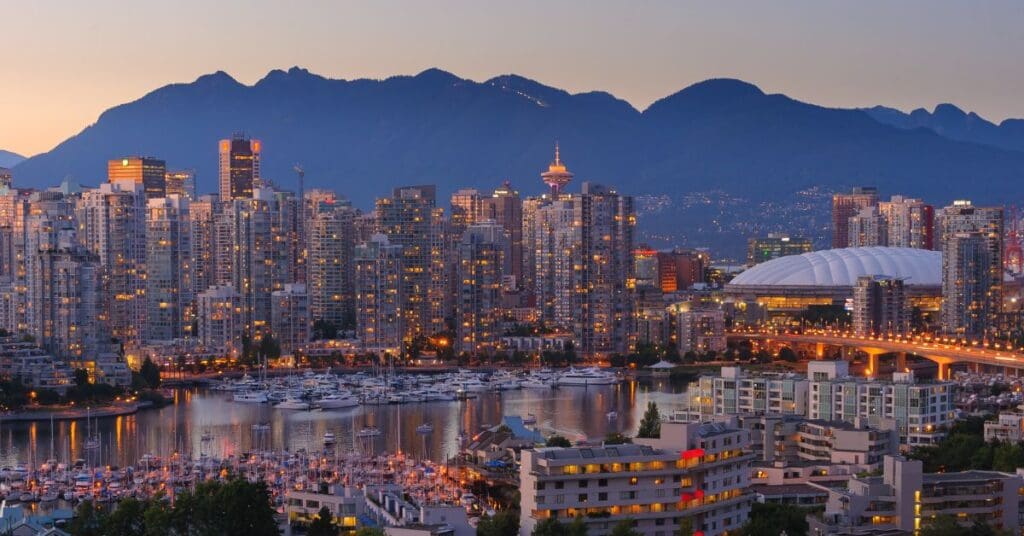
With snow-capped mountains framing the Pacific Ocean, mild winters, and a booming job market, living in Vancouver consistently ranks as a top choice for immigrants moving to Canada. British Columbia’s largest city offers an exceptional quality of life. But there is a distinct reality behind the scenic views: living in Vancouver can be one of the most challenging Canadian settlement experiences if you land without a clear financial strategy.
For newcomers who arrive with a realistic household budget, Metro Vancouver provides outstanding career, educational, and lifestyle opportunities. However, attempting to “figure it out after landing” without analyzing local housing costs can quickly drain initial settlement savings.
Before booking flights, here is a breakdown of the real housing costs, job market, and vital settlement steps for living in Vancouver.
What You Need to Know
Plan your finances to successfully balance Vancouver’s high quality of life with its higher cost of living.
Budget for steep rental prices, expecting average monthly costs of $2,270 for a one-bedroom and $3,200 for a two-bedroom apartment.
Explore suburban hubs like Surrey and Burnaby to secure larger, more affordable housing than downtown offers.
Build local professional networks before arrival to significantly boost job search results.
Embrace the vibrant multicultural community and broad job market to stay energized through the rainy season.
📌Fast Facts: Metro Vancouver at a Glance
Population: 631,486 (City of Vancouver), 2,632,000 (Greater Vancouver Area)
Density: Over 5,400 people per square kilometre, the highest urban density in Canada
Languages: Diverse and multicultural; over 190 languages spoken; (Mandarin and Cantonese are the most widely spoken non-English languages)
📊 The Reality Check: True Cost of Living in Vancouver
While median rents across Metro Vancouver have adjusted slightly over the past year, the region remains Canada’s most expensive rental market.
In The Globe and Mail’s 2026 ranking of Canada’s Best Cities for Renters (conducted with Rentals.ca), Vancouver ranked 130th out of 243 Canadian cities. The city scored exceptionally high for livability and neighbourhood quality. However, high housing costs, where nearly 39% of renter households spend over 30% of their income on shelter, dragged down its overall score. This reinforces why exploring surrounding transit hubs like Surrey, Burnaby, and Coquitlam is critical for newcomer budgets.
To avoid landing stress, look at your full budget rather than housing costs alone. Below is a realistic, mid-tier monthly budget breakdown across major categories for newcomers in 2026:
Monthly Landing Budget Breakdown (2026 Estimates)
Expense Category
Single Professional
Family of 3 (2-Bed Rental)
Housing (Rent + Tenant Insurance)
$2,250 – $2,500
$3,200 – $3,600
Groceries & Basic Household Goods
$450 – $600
$1,100 – $1,400
Transit (Compass Card – 2 Zone)
$140
$280
Utilities, High-Speed Internet & Mobile
$180
$260
Emergency Buffer / Discretionary
$300
$500
Target Gross Annual Household Income Needed (*Based on 30% Net Pay Rule)
~$115,000/ year
~$165,000 / year
💡*Why We Calculate Rent Based on Net (Take-Home) Income:
Traditional financial guides suggest spending no more than 30% of your “gross” income on rent. However, in Canada, provincial taxes, CPP, and EI take 20-25% of your pay before it hits your bank account. You don’t pay rent with gross; you pay with take-home pay.
Single Renter Example: Renting a typical 1-bedroom apartment at $2,300/month requires a net take-home pay of $7,660/month to keep housing under 30% of your real income. Accounting for British Columbia tax deductions, this translates to a gross annual salary of $115,000.
Family Example: Renting a 2-bedroom apartment at $3,000/month requires a net take-home pay of $11,000/month, and a combined household gross annual salary of $165,000.
If your starting household income falls below these levels, you may need to spend a higher percentage of your net income on rent initially, look at shared housing options, or settle in suburbs like Surrey or Coquitlam.
🔢Want to test if your landing income can cover Vancouver rent? Before signing a lease or selecting a destination province, test your family’s budget using our free Rent Affordability Calculator. It factors in provincial tax rates to give you a realistic target based on your target household income.
3 Hard Lessons Newcomers Learn in Their First Month
1. “Downtown” Isn’t Where Most Newcomer Families Settle
The low-rise waterfront apartments in Yaletown or Coal Harbour look amazing on social media, but most families and newcomers settle in Burnaby, Surrey, Richmond, or Coquitlam. These surrounding cities sit directly along the SkyTrain line, offering lower rent per square foot, larger community centers, and easier access to newcomer settlement programs such as MOSAIC and S.U.C.C.E.S.S.
2. Networking Beats Cold Resumes Every Time
Vancouver’s job market is heavily based on professional networking and local connections. Sending hundreds of identical resumes on job boards rarely works. Newcomers who land roles in their first 60 days usually start setting up virtual “coffee chats” on LinkedIn with local professionals and settlement career coaches before their plane even touches down.
3. “Raincouver” is Real, Prepare for the Seasonal Shift
Vancouver doesn’t get the harsh -30°C common in other parts of Canada, but it does rain, sometimes for weeks at a time between October and April. Seasonal Affective Disorder (SAD) catches many newcomers from warmer climates off guard. Budget for proper waterproof footwear, a quality rain shell, and daily Vitamin D right out of the gate.
💼 How is the Job Market in Vancouver for Newcomers?
Skilled construction trades remain one of the fastest-growing job sectors for newcomers arriving in Metro Vancouver.
Metro Vancouver has a diverse and growing job market, with major opportunities in technology, film and digital media, healthcare, and skilled construction trades. To secure employment in Vancouver, focus on three things: network with local professionals, evaluate your foreign credentials early, and tailor your resume to Canadian standards.
Primary Hiring Sectors
Technology & Clean Tech: (Major regional offices for Microsoft, Amazon, SAP, and a growing ecosystem of sustainable tech startups.
Film & Digital Media: Known as “Hollywood North,” driving high demand in animation, post-production, and digital arts.
Healthcare & Life Sciences: Consistent demand for registered nurses, laboratory specialists, and continuing care assistants.
Construction & Skilled Trades: Regional infrastructure development maintains steady demand for certified trade professionals.
Practical Career Action Steps
1. Begin the Credential Recognition Process Early: If working in a regulated field (engineering, nursing, teaching, accounting, etc), contact the respective BC regulatory body months before arriving to begin the process. Learn more in our guide, Credential Recognition Guide for Newcomers & Professionals.
2. Monitor Regional Job Boards: In addition to national platforms, such as Canada Job Bank, review listings on bcjobs.ca and WorkBC.ca for provincial government and regional employer openings.
3. Work with Settlement Career Advisors: Organizations such as S.U.C.C.E.S.S. and MOSAIC provide free professional resume reformatting to align qualifications with Canadian hiring expectations.
If you plan to work in a regulated profession or a skilled trade, check out Career Pathways to discover what you need to work in Canada.
🏠 Finding Your First Rental When Living in Vancouver
Vancouver Housing Market Overview:
Renting your first home in Canada can be tough. Landlords usually ask for local job references and a Canadian credit history, two things most newcomers don’t have yet.
You can save money by looking beyond downtown Vancouver. Expanding your search to the surrounding Metro Vancouver suburbs gives you much more living space for your budget.
Average Rent in Metro Vancouver (2026 Benchmark)
Unit Type
Average Monthly Rent
Comparison to National Average ($2,040)
1-Bedroom
$2,270/month
11% higher
2-Bedroom
$3,200/month
56% higher
3-Bedroom
$4,130/month
100% higher
Metro Vancouver Neighbourhood Snapshot
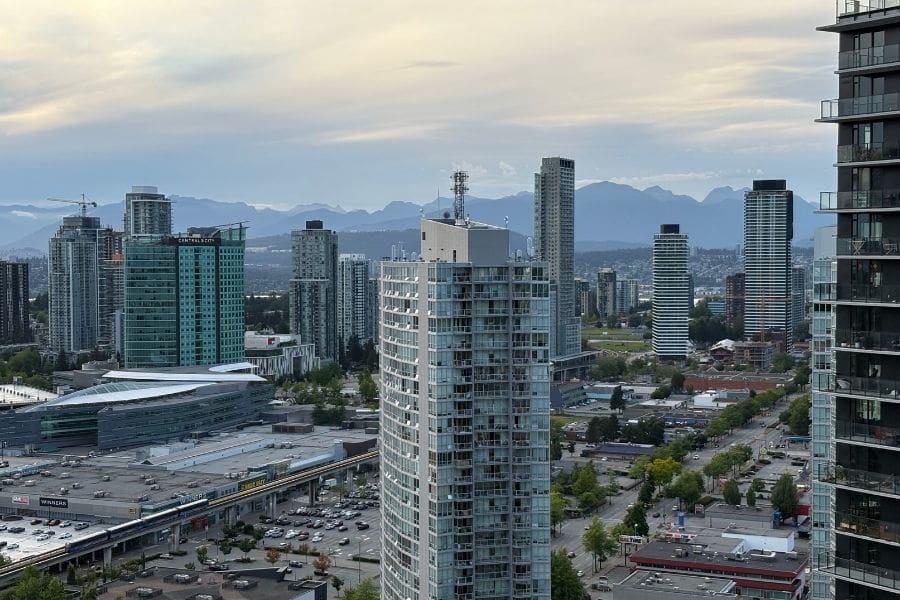
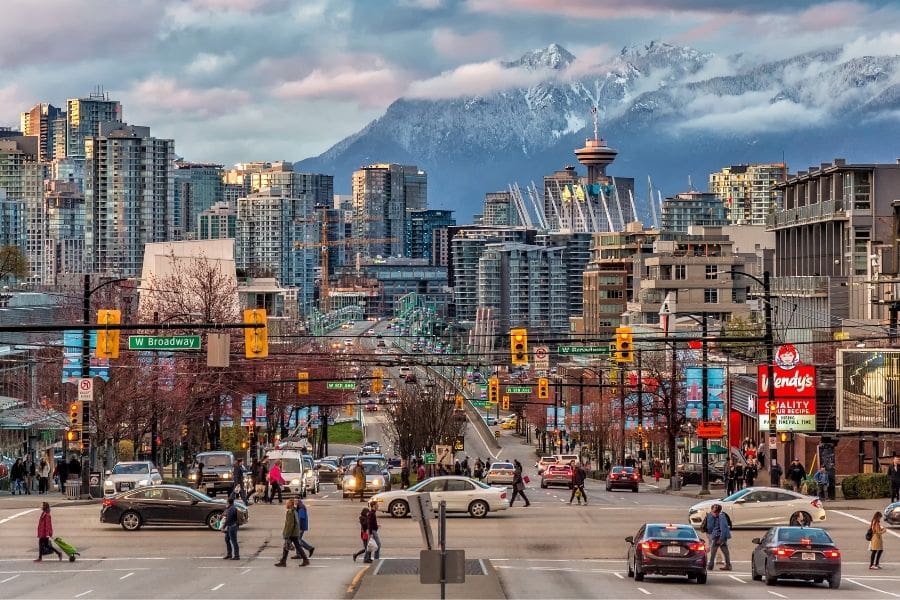
Surrey City Centre offers newcomers modern apartment rentals, direct SkyTrain access, and extensive community amenities at significantly lower monthly rates than downtown Vancouver.
Popular Neighbourhoods for Newcomers:
Surrey: A fast-growing suburb in the Greater Vancouver Area, Surrey is popular with families due to its schools, parks, and recreational facilities. Read more about Best Surrey Neighbourhoods for Newcomers.
Joyce-Collingwood: Located along the SkyTrain line, this neighbourhood is well-connected to the rest of Vancouver, making commuting easy.
East Vancouver: A culturally diverse area with a mix of apartments, condos, and single-family homes. It’s ideal for newcomers who want a lively community with relatively more affordable housing than the city centre.
🏠When applying for rentals, most landlords check credit scores. If you just arrived in Canada, you likely don’t have a local credit history yet. Don’t worry, most property managers accept alternative proof of funds while you are settling. To start building your credit history from day one, read How to Build Credit in Canada from Zero.
4 Practical Rental Tips for Newcomers
1.Set a realistic budget that includes rent, groceries, transportation, utilities, and tenant insurance.
2.Prepare a “Financial Credibility Package” before you begin viewing properties: (short bio or cover letter, proof of income/job search, bank proof of funds, and references. Organize this information in a single PDF.
3. Know Your Security Deposit Rights: Under the BC Residential Tenancy Act, landlords cannot legally ask for more than 50% of one month’s rent as a security deposit.
4.Explore Newcomer-Friendly Listings: Search verified listings from property managers who work directly with new immigrants at Rentals for Newcomers.
Meeting with a personal banking advisor at a local bank branch helps newcomers open accounts, set up credit cards, and start building Canadian credit history.
Banking & Personal Finances in Vancouver, BC
Managing your personal finances is a vital part of living in Vancouver, BC, Canada. Most major banks offer newcomer programs that help you open an account before you arrive, get a credit card, and start building your credit history.
By visiting a local bank branch, you can also learn about financial products such as lines of credit, savings accounts, and mortgages, useful as you budget for life in Vancouver and plan for long-term goals like renting or buying a home.
Language programs are also available through settlement agencies, making it easier to integrate into the community and workplace.
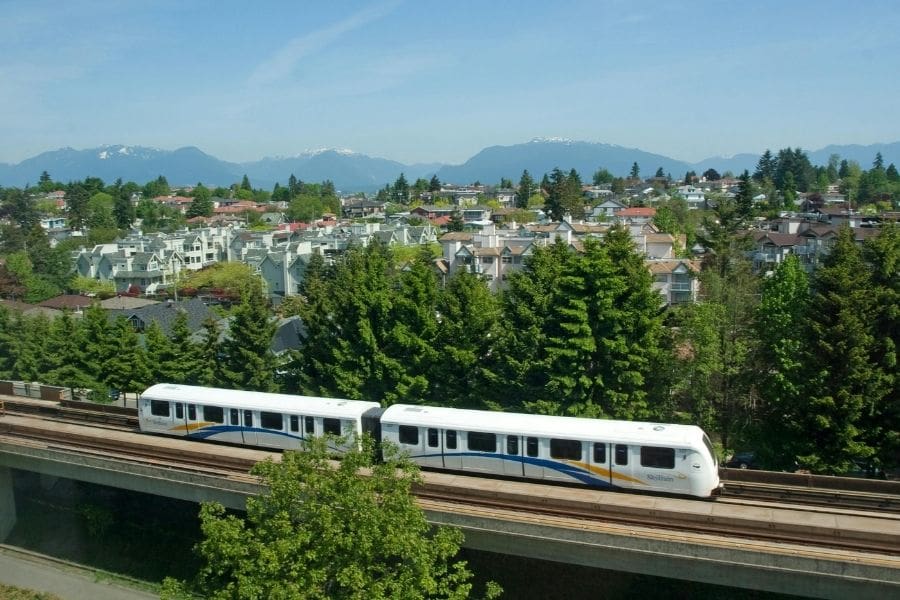
TransLink’s automated SkyTrain network connects downtown Vancouver to suburban residential hubs like Burnaby, New Westminster, and Surrey.
🚆Getting Around: Driving Rules & Public Transit Options
TransLink, Metro Vancouver’s public transit authority, operates buses, SkyTrain (above-ground rapid transit), SeaBus (ferry to North Vancouver), and West Coast Express (commuter train). Using public transit allows many newcomers to delay buying a car during their first year. For more tips, see How to Get Around Vancouver Using Public Transit.
Major highways in Vancouver are Highway 1 (Trans-Canada), Highway 7 (Lougheed), and Highway 99 (Sea to Sky). Traffic congestion is high, especially during peak hours.
Compass Card: A single reloadable card used to tap in and out across SkyTrains, regional buses, and the SeaBus passenger ferry connecting Downtown to North Vancouver.
Fare Zones: SkyTrain fares are calculated based on 3 fare zones. Commuting from suburbs such as Burnaby or Surrey into Downtown Vancouver requires a 2-Zone or 3-Zone fare.
To learn how to navigate buses, SkyTrain, SeaBus, and commuter trains with ease, check out our guide on Vancouver Public Transit.
Driver’s Licence Exchange: The 90-Day Rule
Newcomers holding a valid foreign driver’s license may legally drive in BC for up to 90 days following arrival.
ICBC License Transfer: Drivers must visit an ICBC (Insurance Corporation of British Columbia) licensing office to convert their license.
Reciprocal Countries: License holders from designated jurisdictions (including the US, UK, Australia, Germany, Japan, and South Korea) can exchange their credentials directly for a BC Class 5 license without a road test. All other drivers must complete a knowledge test and road examination.
Healthcare & Medical Services
Medical Services Plan (MSP)
Canada has a publicly funded healthcare system, and in BC, it’s called the Medical Services Plan (MSP).
MSP:
Covers most doctor visits, medical tests, and treatments
Some services, like dental or physiotherapy, may require additional insurance
International students and work permit holders (6+ months) can enroll.
To find a family doctor, call HealthLink BC (8-1-1) or visit a walk-in clinic.
Vancouver General Hospital, Mount Saint Joseph Hospital, and St. Paul’s Hospital.
Emergency Number
Call 9-1-1 for urgent situations. This emergency number is the same across Canada.
🏫Schools & Education for Newcomer Families
British Columbia offers high-performing public, Catholic, and independent systems, along with internationally recognized universities. Vancouver offers excellent education for all ages.
School Catchment Rules (K-12): Your home address determines which public school your child attends. Before signing a lease, check which school district covers that address (such as the Vancouver School Board or Burnaby School District).
Welcome Centre Registration: School districts run Newcomer Welcome Centres to test your child’s English skills and register them for class. Parents must bring official proof of residence along with certified translations of birth certificates and immunization records.
Colleges & Universities: Metro Vancouver features top research universities including the University of British Columbia (UBC) and Simon Fraser University (SFU). You can also attend applied colleges: Kwantlen Polytechnic, Langara College, and Vancouver Community College (VCC).
Stanley Park in Vancouver, BC, offers residents and newcomers scenic outdoor activities and a connection to nature.
Pros and Cons of Living in Vancouver
Living in Vancouver offers a high quality of life, but it also comes with trade-offs. Here’s a look at the pros and cons of living in Vancouver, BC, Canada.
Pros
Cons
✅ Unmatched Natural Setting: Direct access to ocean beaches and mountain trails.
❌ High Cost of Housing: Rental rates and purchase prices rank among Canada’s highest.
✅ Mild Winter Climate: Sub-zero temperatures and snow accumulation are infrequent.
❌ Extended Rainy Season: Over 160 rainy days annually require an adjustment period.
✅ Integrated Transit System: Comprehensive SkyTrain network reduces car dependency.
❌ Competitive Rental Market: While vacancy rates are stabilizing, rental rates are still high.
✅ Diverse Community: Over 40% of the population was born outside of Canada.
❌ Healthcare Waitlists: Accessing a dedicated family physician requires time on registries.
Day-to-Day Culture & Life When Living in Vancouver
Outdoor Activities: Explore Stanley Park and its seawall, the Capilano Suspension Bridge, and the North Shore Mountains for skiing, mountain biking, and hiking. Enjoy the city’s waterfront and many beaches.
Arts, Entertainment, & Sports: Visit Granville Island, Science World, Chinatown, and Davie Village for cultural experiences, international cuisine, and live music venues. Cheer for major sports teams, including the Vancouver Canucks (hockey), Whitecaps (soccer), and the BC Lions (football).
Events: Celebrate cultural events including Lunar New Year, Diwali, Eid, and Black History Month.
Living in Vancouver, BC, offers a balance of city life, natural beauty, and cultural diversity.
Final Thoughts on Living in Vancouver, BC, Canada
Living in Vancouver, Canada, offers a unique mix of natural beauty, cultural diversity, and career opportunities. For immigrants arriving with adequate financial reserves or a job offer in a key growth sector, it represents an outstanding environment to build a life in Canada.
For newcomers who want to buy a home right away or save money when you first arrive, consider starting in mid-sized cities in Alberta or Saskatchewan. These provinces offer a more affordable place to build Canadian work experience before you move to BC.
Frequently Asked Questions: Living in Vancouver as a Newcomer
Is Vancouver a good city for new immigrants?
Yes, but success depends heavily on pre-arrival financial preparation. Metro Vancouver is a welcoming multicultural city with strong long-term career prospects in technology, film, healthcare, and trades. However, because rental costs and daily expenses are among the highest in Canada, newcomers who budget realistically before landing experience much smoother transitions.
How much money do I need to move to Vancouver?
For a single professional, arriving with $12,000–$15,000 CAD is recommended to cover temporary housing, initial lease security deposits, and initial living costs while searching for work. For a family of three, aim for $25,000–$30,000 CAD in financial buffer.
Can I rent an apartment in Vancouver without a Canadian credit history?
Yes. While many private landlords request a Canadian credit report, newcomer-friendly property managers and purpose-built rental buildings frequently accept alternative proof of financial stability. This includes international bank statements showing proof of funds, a verified Canadian job offer letter, or an advance payment of the security deposit (capped at 50% of one month’s rent under the BC Residential Tenancy Act).
Do I need to own a car to live in Metro Vancouver?
No. Over 80% of daily commutes in Metro Vancouver use TransLink’s public transit network, which includes the rapid SkyTrain system, the SeaBus ferry, and extensive bus routes. Choosing a rental near a SkyTrain station in Burnaby, New Westminster, Surrey, or Richmond allows most newcomers to live comfortably without the added expenses of vehicle ownership, fuel, and ICBC auto insurance during their first year.
How long does it take for healthcare coverage to start in BC?
British Columbia’s public healthcare scheme, the Medical Services Plan (MSP), has a 90-day waiting period (the balance of your arrival month plus two full calendar months). We recommend that newcomers purchase private emergency medical insurance before departure to cover their household during this initial three-month gap.
What is the best suburb in Metro Vancouver for families?
Surrey and Burnaby are the two most popular destinations for newcomer families. Surrey provides lower rental prices per square foot, rapidly expanding community facilities, and extensive newcomer settlement services. Burnaby offers central access, top-tier schools, and large retail hubs connected directly by the Expo and Millennium SkyTrain lines
Why Should Newcomers Use Vancouver Public Transit?
Vancouver public transit can feel confusing at first—especially with fare zones, transfers, and multiple transit systems. This guide gives a clear overview of how newcomers can travel confidently using public transportation. Using public transit saves time, reduces costs, and makes exploring the city and the surrounding suburbs easier. TransLink manages Vancouver public transit across Metro Vancouver, including Vancouver, Surrey, Burnaby, Richmond, and North Vancouver.
Benefits of Public Transit
Save money on commuting and reduce reliance on a car in one of Canada’s most expensive cities.
Travel quickly and conveniently to work,school, shopping, and entertainment.
Avoid traffic congestion and parking costs with eco-friendly transportation.
In 2024, TransLink recorded 240.9 million trips, showing strong reliance on public transit across the region.
What are the Main Transit Options in Metro Vancouver?
Metro Vancouver has four main transit systems:
1.SkyTrain – Rapid, automated trains on elevated and underground tracks
2.Buses – Frequent service connecting every neighbourhood
3.SeaBus – Ferry connecting Vancouver to North Vancouver
4. West Coast Express – Weekday commuter train connecting Downtown Vancouver with the Fraser Valley (ending in Mission City).
Most newcomers primarily use SkyTrain, buses, and SeaBus. TransLink also operates HandyDART, a dedicated service for people with disabilities.
Over 80% of downtown commuters rely on the SkyTrain or RapidBus during peak hours.
SkyTrain provides fast, automated transit across Vancouver.
How Can Newcomers Use the SkyTrain in Vancouver?
For many newcomers, the SkyTrain is the easiest place to start. It’s straightforward, fast, and connects major settlement areas like Surrey, Burnaby, and Downtown Vancouver. Read more about Living in Surrey, BC.
Automated trains on elevated and underground tracks make commuting fast and reliable.
Average speed: 35 km/h
Lines: Expo, Millennium, and Canada Lines connect downtown, suburbs, and key hubs.
💡Tip: Living within 500 m of a SkyTrain station significantly reduces commute times.
Frequent bus routes connect every neighbourhood in Vancouver.
How Do Buses Help Newcomers Reach Every Neighbourhood?
Buses cover areas beyond SkyTrain reach and work in tandem with the SkyTrain to provide flexible routes.
Operating hours: 5:00 AM to 1:00 AM
Transfers: Longer journeys may require one or more transfers. Use Google Maps or the Transit app to plan efficiently.
SeaBus connects Vancouver to North Vancouver across the Burrard Inlet.
How Can Newcomers Use the SeaBus to Cross Burrard Inlet?
SeaBus connects Downtown Vancouver to North Vancouver, making waterfront commutes simple.
Frequency: Every 15 minutes during the day, 30 minutes in the evenings and on Sundays
Operating Hours: 6:00 AM – 1:00 AM (Mon–Sat) and 8:00 AM – 11:00 PM (Sun/Holidays).
💡 Tip:Great for newcomers living in North Vancouver or commuting to downtown jobs.
How Does the West Coast Express Serve Metro Vancouver Commuters?
West Coast Express serves commuters travelling long distances from the Fraser Valley, offering a comfortable alternative to driving.
Distance: 69 km with 8 stops.
Travel time: ~1 hour 15 minutes.
Zone-based fare: 5 zones total; one-way $8.60–$14.25 (adult), $5.05–$8.85 concession. Refer to West Coast Express Fares to estimate your fare.
How Much Does Vancouver Public Transit Cost in 2025?
There are three fare zones across Metro Vancouver. The number of zone boundaries you cross during your trip, as well as the time and day, determine your fare.
Map of Vancouver public transit fare zones showing SkyTrain, SeaBus, and bus zones across Metro Vancouver.
Vancouver Public Transit Fare Zones (SkyTrain, SeaBus, Bus Fare)
ZONE
ADULT CASH FARES
CONCESSION FARE (YOUTH/ 65+)
1
$3.35
$2.25
2
$4.85
$3.30
3
$6.60
$4.05
Fares last updated: 2025.These fares apply to SkyTrain and SeaBus. Bus fares are always 1-Zone regardless of distance.
Bus fares and HandyDART: 1-Zone fare at all times
Off-peak travel: Weekends and weekdays after 6:30 PM are 1-zone fare
Single fare: valid for 90 minutes on the bus, SkyTrain, and HandyDART.
Surrey–Langley SkyTrain Extension (completion ~2027): Better access to South Fraser suburbs.
New RapidBus routes and frequency upgrades: Increased service reliability.
Federal and provincial funding: ensures long-term investment in transit infrastructure.
Tips for Newcomers Using Vancouver Public Transit
Plan your route with Google Maps or the TransLink app
Check peak-hour overcrowding, especially buses and the SkyTrain
Buy a Compass card to save money and track trips
Factor transit costs into your monthly budget ($106/month adult pass).
Choose a neighbourhood near the SkyTrain or RapidBus for easier commutes.
FAQs About Vancouver Public Transit
Is Vancouver’s public transit reliable for newcomers?
Yes, it’s extensive and frequent. Peak-hour buses may be crowded, but the SkyTrain and RapidBus provide fast and reliable travel.
Can I get around Vancouver without a car?
Yes, most newcomers rely entirely on the SkyTrain, buses, and SeaBus.
Are there discounted fares for students or adults 65+?
Yes. Youth (5–18) and seniors (65+) pay concession fares via Compass card.
Which areas are best for transit-accessible housing?
East Vancouver, Mount Pleasant, Kitsilano, North Vancouver, and soon-to-improve suburbs like Surrey and Langley.
How much does a monthly transit pass cost in Vancouver?
Approx. $106/month for an adult; cheaper for youth/senior concessions.
Final Thoughts
For newcomers, understanding Vancouver public transit is a vital first step in settling into the city. The SkyTrain, bus network, and SeaBus make it possible to live and work in Vancouver without a car, while Compass Cards and clear fare zones help you manage costs.
If you are settling in Vancouver soon, reliable transit access can make your first months easier. Explore rental options in transit-friendly neighbourhoods using the Rentals for Newcomers tool.
Renting your first home in Canada | Options & solutions for newcomers
Searching for your first home in Canada? Join this exclusive session for key insights on housing market conditions, affordable options, and renting without credit history. Tailored for newcomers settling in the next six months, register now for valuable tips and a free guide!
If you are considering moving to Canada, Prince George, British Columbia is a beautiful place to call home. It’s a great location if you prefer a smaller city, a rural setting, and the outdoors. Where you choose to live will greatly impact your social, personal, financial, and professional outcomes. It’s wise to carefully explore your destination city options. Use this guide and get helpful information about living in Prince George, B.C.
About Prince George, British Columbia
Prince George is the “Northern Capital” of British Columbia. It’s the largest city in the northern area of the province. Situated at the confluence of the Fraser and Nechako Rivers and the crossroads of Highway 16 and Highway 97, Prince George is a service and supply hub and plays a vital role in British Columbia’s economy and culture. Many skilled immigrants choose Prince George as their home in Canada, because of its safe, embracing community, and easy lifestyle. Its economy is experiencing steady growth with an influx of new businesses in the community.
The city has roots dating back to 1807 when it was originally established as a fur trading post named for George. It was set up by Simon Fraser in the name of King George III. It was officially incorporated as a city in 1915.
How Many People Live in Prince George, British Columbia?
Prince George has a population of 76,708 people as of the 2021 Census. The population has grown 3.7% since 2016. Overall, the population has remained about the same since the mid-1990s. The city’s Aboriginal community comprises 15% of the population.
How to Find a Job & Build a Career in Prince George
Prince George’s Local Economy
The service industries dominate Prince George’s economy. Previously, the forestry sector was the dominant one. The city’s education sector also contributes about $800 million to the local economy every year.
The area is seeing sawmill closures and the creation of ‘super mills’. More closures are expected to follow, and some see mining exploration and development as the future of Prince George.
The city is a staging centre for mining and prospecting, and major regional transportation, trade, and government hub. Several major retailers are increasing their presence in the Prince George region.
The top industries in Prince George are:
Forestry
Construction
Manufacturing
Professional services
Transportation and warehousing.
Major Employers in Prince George
Prince George is home to a diverse range of businesses. Some top employers include:
Canfor Pulp
Canfor Wood Products
Government of BC
Government of Canada
Northern Health
TELUS
University of Northern British Columbia.
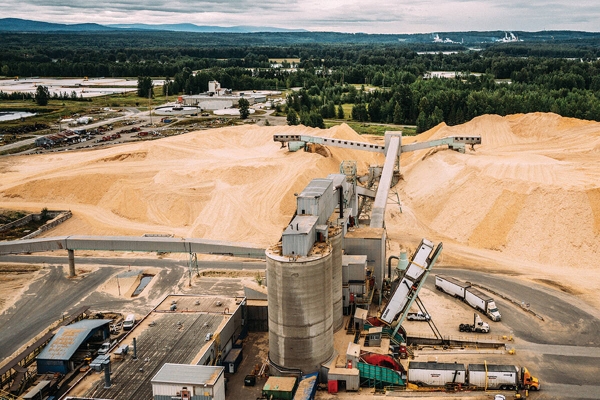
Canfor Pulp is one of the top employers in the city.
Career Pathways in Prince George
You can search for job opportunities on the Move Up Prince George website. You can also look for jobs using bcjobs.ca and WorkBC or use a local recruitment agency to find work.
The Housing Market in Prince George
Prince George offers housing options in many neighbourhoods. You can look to rent or buy in areas such as Austin East & West, Blackburn, Chief Lake, College Heights, Cranbrook Hill, Crescents, Downtown, East Central Fort George, Fraserview, Hart Highlands, Lansdowne, Perry, South Fort George, Van Bow, Van Bien, and West Bowl.
Is Housing Expensive in Prince George, British Columbia?
Prince George is an affordable city. It is consistently cheaper to rent or buy a home than other mid-size cities in B.C. and across Canada. Its cost of living is more affordable than most cities in the country.
Finding a Place to Rent in Prince George
Renting an apartment or housing unit is a common first step for newcomers. The average rent for an apartment in Prince George is $950 for a 1-bedroom and $1,400 for a 3-bedroom.
Use Rentals for Newcomers to search for available rental units. Here, you can also find current rental prices in Prince George. When renting a home or apartment, it’s also important to buy renter’s insurance for added protection from damage or theft.
Housing prices in Prince George are on the rise. But the city is still more affordable than other cities in B.C. such as Vancouver, Surrey, and Delta.
According to the BC Northern Real Estate Board, the average selling price for a home in Prince George is $519,979, as of March 2022. This is up from $450,901 in March 2021. Find out more about buying your first home in Canada: First Time Home Buyer: Newcomer Tips.
Overlooking Prince George from Connaught Hill Park.
Driving & Public Transit in Prince George
Driving in Prince George, British Columbia
The city serves as a transportation hub for Northern B.C. You can expect a high volume of commercial traffic. Roads are in a grid formation. If you live in one of Prince George’s residential areas, your largest commute downtown will be about 15 minutes.
All drivers must have a valid British Columbia driver’s licence to operate a vehicle.
Prince George Public Transit
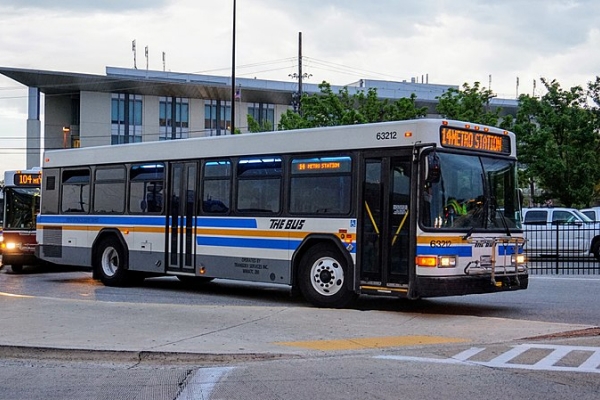
Prince George Transit System, or PG Transit, provides public transit. Click here to find the current cost for fares including a monthly pass. Purchasing a monthly pass offers a discount for unlimited travel throughout the month. This may be more cost-effective if you plan to use public transit often.
Prince George Airport is in the southern part of the city. With its international airport (YXS), VIA Rail daylight passenger train service, Greyhound Bus and good highway infrastructure, Prince George is a convenient transit hub.
The primary air connection to the rest of the world is provided by multiple daily flights out of YXS to Vancouver on Air Canada and WestJet. A few smaller airlines and charter flights fly to regional and smaller centres.
Greyhound Bus Lines supplies daily bus service south to Vancouver, west to Prince Rupert, east to Edmonton, Alberta and north to Fort St. John.
Newcomers to Prince George have access to community support through organizations such as:
Immigrant and Multicultural Services Society (IMSS)
Immigrant Services Society of BC – Career Paths for Skilled Immigrants
Le Cercle des Canadiens Français de Prince George – Welcoming Francophone Community
Library Champions Online
Northern Immigration Services (NIS)
Multicultural Heritage Society of Prince George
Immigrant Employment Council of BC.
Newcomers may also be eligible for the Introduction to British Columbia program through the Immigrant Services Association of British Columbia. Find out more about Services in Canada to Help Newcomers Settle.
Language Support in Prince George
New immigrants can access language support programs through community settlement agencies such as The Immigrant and Multicultural Services Society (IMSS), and WelcomeBC.
Personal Finance & Banking
Opening a bank account and organizing your finances is an important step when settling into a new community. All banks and credit unions offer services for newcomers to help them open a bank account. You can also apply for a credit card, a line of credit, and even a mortgage. Visit a local branch to get started.
Prince George has 40 elementary and eight secondary schools, as well as eight private schools, and many options for early childhood care including childcare centers and home providers.
It is also home to a public francophone elementary and secondary school, both of which are part of School District 93 Conseil scolaire francophone, a province-wide francophone school district.
The Settlement Workers in Schools (SWIS) is a free program to help the children of newcomers to the public school system and supplies services in Chinese, English, Hindi, Punjabi, and Urdu.
UNBC is home to an active international student population.
Post Secondary Institutions
Residents have access to several post-secondary education choices. The regional College of New Caledonia (CNC) offers over 75 programs to over 5,000 students. British Columbia Institute of Technology (BCIT) and the Open Learning Agency have integrated their local programs with CNC.
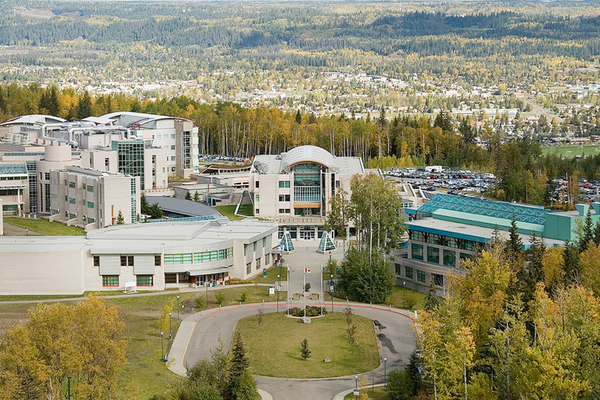
The University of Northern British Columbia (UNBC) campus overlooks the city and offers spectacular views of the Rocky Mountains to the east. It offers a range of undergraduate and graduate programs. UNBC is home to an active international student population from over 40 countries.
Where To Get Medical Care in Prince George, British Columbia
Prince George offers access to high-quality medical care at the University Hospital of Northern B.C. The city’s healthcare services include the B.C. Cancer Agency Centre for the North, family doctors, dentists, walk-in clinics and the full range of health care professionals.
In case of an emergency call 9-1-1. This number is the same no matter where you live in Canada.
Residents have access to two health insurance plans in BC. They are the Medical Service Plan (MSP) and PharmaCare. For those, who can not afford to pay the monthly MSP premium, there is Premium Assistance. You also have the option to purchase individual .
How to Find A Family Doctor
Finding a family doctor is an important step to ensuring you can receive regular medical care in Canada. Check out the list of physicians accepting new patients from the College of Physicians and Surgeons of British Columbia.
If you don’t have a family doctor, you can go to walk-in clinics.
What is Day-to-Day Life Like in Prince George?
Things to Do in Prince George
Prince George is a gateway city to Northern British Columbia and an excellent starting point for exploring the region. It offers a unique opportunity to enjoy the amenities of a city and wilderness opportunities just minutes away.
Hiking, camping, fishing, golfing and cross-country skiing are just a few outdoor activities that the city has to offer. Dog-sled racing is an exciting Northern BC experience and has been a popular winter pastime in many northern communities. Other winter sports include skating, curling, downhill skiing, and snowmobiling.
Public Spaces & Attractions
The Prince George Railway Museum, The Exploration Place Museum & Science Centre, and Two Rivers Gallery are popular attractions. You can explore pioneer history and agricultural ways at Huble Homestead for a more rustic experience.
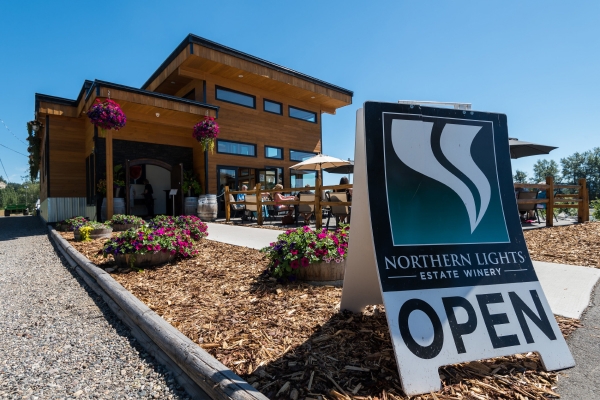
Northern Lights Estate Winery
Restaurants & Nightlife
The city has several great places to eat and socialize. You can check out the Northern Lights Estate Winery, CrossRoads Brewing & Distillery, Treasure Cove Casino & Bingo, and Trench Brewing & Distillery.
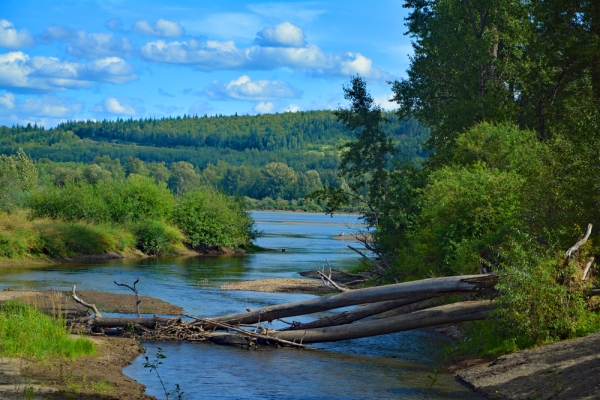
Cottonwood Island Nature Park
Nature & Natural Landscapes
Fort George Park is Prince George’s main urban park, but there are many other natural landscapes to visit. They include Lheidli T’enneh Memorial Park, Pruden Lake Provincial Park, Teapot Mountain, Connaught Hill Park, and Cottonwood Island Nature Park.
Sporting Events & Concerts
The city is home to the Prince George Cougars of the Western Hockey League. It is also home to several other minor hockey league teams. If you want to see live music or concerts, check out the local listings at CN Centre and Busker Rock Merch and Venue.
Culture & Diversity In Prince George
Multicultural performances on Canada Day in the beautiful Lheidli T’enneh Memorial Park.
Diversity
Prince George is an increasingly diverse city. About 9% of the population identifies as a visible minority. 3.5% identify as South Asian. Others include Filipino (1.4%), Chinese (1.3%), and Black (1%). Over 15% of the population is Aboriginal.
Over 7,100 people speak a language other than French or English. The largest number of newcomers in recent years are from India, the United Kingdom, the Philippines, the United States, Germany, and China. The city is also home to many cultural associations for immigrants.
Prince George has a humid continental climate and four seasons. You can expect lots of sun between May and September and lots of snow between November and March. The average January temperature is −10 °C, and there’s an average of 38 days from December to February where the high reaches or surpasses freezing.
Summer days are warm, with a July high of 22°C, but lows are often cool, with monthly lows averaging below 10 °C. The transitions between winter and summer, however, are short. There is some precipitation year-round, but February through April is the driest period. Snow averages 216 centimetres each year.
Common Questions Immigrants Ask About Living in Prince George
Is Prince George Part of Vancouver?
No. The city is regarded as the “capital” of northern British Columbia. But it’s about 800 kilometres north of Vancouver. It’s closer to Edmonton, Alberta, which is approximately 740 kilometres west of the city.
Is Prince George a Good City for Immigrants?
The city is seeing an increase in the number of immigrants moving to the city. The region’s economy is growing and offers greater job opportunities. The city is diverse, and offers newcomers the opportunity to live in a beautiful rural part of Canada.
What are the Pros and Cons of Living in Prince George?
This city has much to offer newcomers. It has a lower cost of living and more affordable real estate compared to other mid-size cities in Canada. There is a lot of space with wonderful outdoor experiences all around you. Even though it’s small, there are good career and education options.
A couple of potential drawbacks of the city are job opportunities are limited to certain industries, the city is in a more remote location, and there are fewer amenities compared to bigger cities.
If you are thinking about moving to Canada, British Columbia is an appealing province to consider. There are many great cities to research, including Delta, B.C. Where you live in Canada will have a big impact on your lifestyle for years to come. So, before you decide where to live, carefully assess possible landing locations. You’ll want to look at the cost of living, job market, local economy, and the overall lifestyle of the locals.
Delta is a great city to consider if you plan to move to British Columbia. It’s a part of Greater Vancouver and is only 22 kilometres from the United States border. Mostly a rural area surrounded by water on three sides, it’s an ideal location for people who love the outdoors.
Learn more about life in Delta, British Columbia.
About Delta, British Columbia
Delta is the largest municipality in the Greater Vancouver Regional District. Located at the delta of the Fraser River and having rich soils and water, Delta is one of the most important agricultural areas in Metro Vancouver.
Just 27 km from Vancouver, Delta is home to many people who prefer to live and raise their families in safe, quiet neighbourhoods, surrounded by nature, and, if necessary, commute every day to other cities to work. Delta is ideal for nature lovers with its parks, bike and walking trails, islands, and wildlife.
Discovered by European settlers, Delta’s roots date back to 1791. It was an isolated community until ferry service and Highway access were established in 1962. It wasn’t until 2017 that the city’s name was changed from the Corporation of Delta to the City of Delta.
Delta comprises three different neighbourhoods: North Delta, Ladner, and Tsawwassen. North Delta is the most populous of the three communities. Most of its residents are middle-class people who commute daily to Vancouver or to other places to work.
Ladner is a community proud of preserving the atmosphere of a 19th-century fishing village. Many of its residents are involved in farming and fishing.
Tsawwassen is a rich community with beautiful houses. It is also home to the Tsawwassen Indian Reserve.
How Many People Live in Delta, British Columbia?
According to 2021 census data, Delta has a population of 108,455 residents. This is a 6.1% growth in population since 2016. The city is the 10th largest population in British Columbia.
How to Find a Job & Build a Career in Delta
Farmland in Delta, BC. Delta is an important agricultural area in Metro Vancouver.
Delta’s Local Economy
Because of its fertile soil Delta is one of the most important agricultural areas in Metro Vancouver. The regulations of the Agricultural Land Reserve prevent Delta’s land from being converted to suburban housing. One of Delta’s communities, Ladner, is traditionally a farming and fishing village.
Nevertheless, North Delta, located northeast of Delta, is a suburban area with more than 51,623 residents. It is largely a middle-class bedroom community, which means that most of the workforce have homes in Delta but commute daily to work in the nearby cities.
Tsawwassen is the shooting location for many films. Some productions that used Tsawwassen sights were The X-files, Jumanji, Smallville, Insomnia, and X-men: The Last Stand.
Most top employers are in manufacturing, farming, or agriculture. Top employers include:
Amazon
GCT Global Container Terminals Inc.
TDK Logistics Inc.
British Columbia Ferry Corp.
BC Fresh Vegetables Inc.
Canadian Autoparts Toyota Inc.
Ocean Trailer.
Career Pathways in Delta
One of the advantages of living in Delta is you can work in the local economy or commute to other regions within the Greater Vancouver area. You have plenty of job opportunities available. To search for potential job opportunities you can use bcjobs.ca and WorkBC. You can also work with local recruitment agencies such as Recruiting in Motion, Impact Recruiting, Robert Half, and Randstad Canada.
The Delta Housing Market
North Delta is the largest residential area and home to more than half of the municipality’s population. Affordable housing attracts many immigrants and Canadians, who choose to live in this neighbourhood and commute to work in other locations in Metro Vancouver.
Ladner together with Tsawwassen is called South Delta. Ladner is a historic fishing village. Many of the buildings reflect an earlier era. Ladner’s real estate market consists of ranch-style houses, duplexes, waterfront townhouses, riverfront condos, and floating homes.
Is Housing Expensive in Delta, British Columbia?
The cost of living is higher than the national average. It is one of the more expensive cities in the country to rent or buy real estate. However, it does offer more affordable housing prices than Metro Vancouver.
Finding a Place to Rent in Delta
Rental rates are comparable to Vancouver. You will find it challenging to find a place to rent for less than $2,000 per month. The average rent for an apartment in Vancouver is $2048 for a Bachelor, $2211 for a 1 Bedroom, $3421 for a 2 Bedroom, and $4973 for a 3 Bedroom. These rates are significantly higher compared to other smaller cities in the country.
🏠 Check out Rentals for Newcomers, a practical and easy-to-navigate site to help you find housing and make an easier transition to life in Canada.
Here you can find helpful articles about housing in Canada and average rental prices in cities across Canada. It’s helpful to check out the prices on the site since rental prices change all the time.
Delta housing prices are lumped in with the overall costs to buy a house in the Greater Vancouver area. Housing affordability is a big concern in the city.
According to Royal LePage, the average cost to buy a home in Greater Vancouver (including Delta) is $1,253,300. This is a year-over-year increase of 17.1%. The median price for a single-family detached home is $1,707,900. The median price to buy a condo is $717,200.
Find out more about buying your first home in Canada: First Time Home Buyer: Newcomer Tips
Driving & Public Transit in Delta
Driving in Delta, British Columbia
There are a series of major highways that pass through the city. It is a major transportation hub for the Lower Mainland. Most cars leaving Vancouver to go to the United States pass through. It is also a popular route for people travelling to Vancouver Island using the Tsawwassen ferry terminal.
Major highway routes include:
Highway 99 links Delta to Richmond via the George Massey Tunnel.
Alex Fraser Bridge and Highway 91 link North Delta to New Westminster and Richmond.
Highway 10 links Delta to Surrey, Langley, and all points eastward.
Highway 17 has Lower Mainland and Vancouver Island sections joined by the Tsawwassen B.C. Ferry Terminal.
All drivers must have a valid British Columbia driver’s licence. Learn more about getting your driver’s licence in B.C.
Get more information about driving in Canada:
Driving in Canada: 10 Essential Facts to Know
Driving Test in Canada: A Full Guide
Tips for Winter Driving to Ensure Your Safety
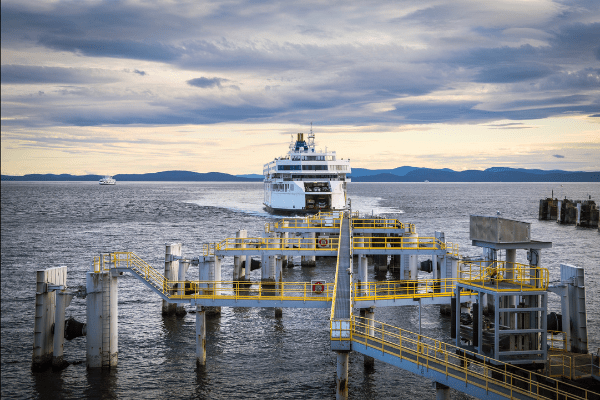
Tsawwassen Ferry Terminal is a major transportation facility in Delta.
Delta Public Transit
A network of buses and community shuttles connect Delta to other communities. Translink, The Greater Vancouver Transit Authority, manages bus routes and schedules in Delta.
Translink covers three fare zones and Delta is in the Green Zone. Fare prices depend on the number of zone boundaries a passenger crosses during a trip. Transit Fare holders can make unlimited transfers within 90 minutes throughout the number of zones printed on their tickets. Passengers who pay on the bus must have the exact coin fare. Frequent travellers save money by using Prepaid Fare Media. On weekdays after 6:30 pm and on weekends and holidays commuters travel everywhere on a one-zone fare.
Children under the age of four ride for free. Concession fares apply to children aged 5-13, high-school students, and seniors aged 65+.
Community Support for Newcomers
Newcomers to British Columbia may also be eligible for the Introduction to British Columbia program through the Immigrant Services Association of British Columbia. Other organizations based out of Vancouver include SUCCESS BC Settlement & Integration, Immigration Services Society of BC, Settlement Orientation Service, and MOSAIC.
Find out more about Services in Canada to Help Newcomers Settle.
Language Support in Delta
The Language Instruction for Newcomers to Canada (LINC) Program provides courses for permanent residents. Delta Community College offers instructional courses. You can also get help through the Surrey Language Assessment Centre.
Personal Finance & Banking
Setting up a personal bank account is an important step for newcomers. All local banks and credit unions offer programs for new immigrants. These programs can help you open a bank account, get a credit card, line of credit, and even qualify for a mortgage.
Get more banking tips for newcomers:
Top 10 Financial Steps to Take Before You Leave for Canada
Move to Canada | Transferring Cash & Valuables
Open a Bank Account Before Arriving in Canada
Delta’s Education System
Elementary and High School Education
Delta School District has 24 elementary and seven secondary schools, with nearly 16,000 students. It also maintains the Delview Adult Centre and the Delta Resource Centre.
Parents seeking an alternative to traditional classroom-based instruction can choose Home Quest, a Ministry-funded Distributed Learning program.
Delta School District offers French Immersion programs which provide students with the opportunity to become bilingual. The District also works with Canadian Parents for the French–Delta Chapter to promote French in the community. Canadian Parents for French organizes language camps and offers scholarships. Adults and children can also enroll in French courses at L’Alliance Française in Delta.
Post Secondary Institutions
Delta Community College is the only post-secondary school in the city. However, there are several major universities and colleges close by in Vancouver.
Read more about education in Canada:
Schooling in Canada | A Look at the Education System
Higher Education Offers Benefits to Newcomers
Where to Get Medical Care in Delta, British Columbia
British Columbia has a government-funded health insurance plan called the Medical Services Plan (MSP). You need to be a permanent resident in Canada to qualify. MSP pays for health costs such as visits to the doctor, most medical tests, and treatments. For information on medical insurance in British Columbia click here.
Delta Hospital, located in Ladner provides 24-hour emergency, out-patient, and in-patient care to citizens of North Delta, Ladner, and Tsawwassen. It offers surgical daycare, radiography, ultrasound, mammography, cardiac services, outpatient laboratory services, and other services.
North Delta Public Health Unit and South Delta Public Health Unit provide an annual influenza program, early childhood development services, hearing clinic services, vision and hearing screening, tuberculosis testing, parenting education and support, and dental care.
In case of an emergency call 9-1-1. This number is the same no matter where you live in Canada. For prescription drugs and some services that British Columbia Health does not cover, you can buy additional health insurance. Some people have third-party health insurance through their employer benefits packages.
How to Find A Family Doctor in Delta
Every new resident of Delta should find a family physician. On its website, the College of Physicians and Surgeons of British Columbia provides a list of physicians accepting new patients. If necessary, family physicians refer their patients to specialists and hospitals. Patients who have not found family doctors can go to walk-in clinics.
Get more information about health care in Canada: Steps to Access Free Health Care in Canada
What is Day-to-Day Life Like in Delta?
Things to Do in Delta
Delta has many beautiful parks and scenic trails for walking, hiking, biking, in-line skating, and horseback riding. Bird watching is a popular activity in Delta and attracts tourists from around the world. As Delta is found on the Pacific Flyway, more than five million migratory birds stop in the area every year. The most famous place for watching birds is Boundary Bay.
The shallow waters and sandy bottoms of Boundary Bay also attract windsurfers, skim, kite, and paddle boarders.
Farmlands in Delta offer many U-pick fields. The Earthwise Farm and the Earthwise Gardens are learning centres for gardening and growing produce. One of the biggest recreational centres in Delta is the Ladner Leisure Centre. It offers swimming pools, swirl, an aquatic climbing wall an inflatable obstacle course, a sauna, a weight room, a fitness studio, and an ice arena.
Public Spaces & Attractions
There are many local attractions to explore. Many are outdoors such as Emma Lea Farms, Westham Island Herb Farm, Ladner Village Market, North Delta Farmers’ Market, and Angel Estate Winery. If you enjoy art, visit Tsawwassen Arts Centre.
Restaurants & Nightlife
There are a variety of great restaurants and pubs throughout Delta. Some of the most popular include Primerose Greek Restaurant, Tasty Indian Bistro, and Taverna Gorgona.
Nature & Natural Landscapes
There is no shortage of natural landscapes to explore in Delta. Check out Centennial Beach, Boundary Bay Regional Park, and Brunswick Point Park.
Sporting Events & Concerts
Delta is not home to any major or minor league sports team. However, Vancouver is only a short drive away. If you want to enjoy live music or concerts, there are several intimate venues to visit. They include Blue Frog Studios, Centennial Theatre, and Commodore Ballroom.
Culture & Diversity In Delta
Diversity
Delta has a diverse population. Over one-third of the population are a visible minority. This accounts for about 36,000 of the 108,000 residents. The largest minority group is South Asian with 20.3% of the population. Other minority groups include Chinese (7.6%), Filipino (2.6%) and Japanese (1.1%). 3.4% of the population is Aboriginal.
Worship
Delta also has a diverse religious community. About 44% identify as Christian, 10.6% Sikh, 3.1% Hindu, and 2.1% Islam. Muslims in Delta can refer to the Surrey/Delta Branch of the BC Muslim Association.
Sikhs in Delta can visit Guru Nana Sikh Gurdwara in Surrey. It is one of the leading Sikh Temples in Canada.
The Weather in Delta
Delta enjoys one of the mildest climates in Canada. Winter is not as cold as in other cities in the country and there is little snow. The daily average temperature in January is 2.8° C. Extremes are rare.
Summer in Delta is sunny and warm but seldom hot. In July and August, the average temperature is 16.9° C. Unlike many Canadian cities where summer replaces winter in a matter of few weeks, even days, Delta has genuine fresh spring. Autumn is cool and pleasant.
Common Questions Immigrants Ask About Living in Delta
Is Delta a Good Place for Immigrants?
Delta is a thriving multicultural community with people from all over the world. It is a great location for newcomers because it has well-established cultural communities and support for immigrants.
What are the Benefits of Living in Delta?
Delta is a beautiful city to live in. It is surrounded by nature and water, and it is only a short drive from Vancouver. The city has a mild climate and there are a lot of career opportunities for newcomers to pursue.
What are the Disadvantages of Living in Delta?
The major drawback of living in Delta is the high cost of living. There are also limited entertainment options compared to large cities. Jobs in the local community are not plentiful, but there are significant opportunities close by in other communities in Greater Vancouver.