
What You Need to Know
- Plan for paperwork early: Microchip your pet and secure veterinary health certificates in advance when moving to Canada with pets.
- Budget for transit costs: Expect to spend between $800 and $1,500 USD to fly a dog from India to Canada. This total covers your airline fees and crate expenses.
- Buy an IATA-approved crate: Choose a crate that meets strict IATA standards. Airlines enforce these rules strictly and will deny boarding if the crate is wrong.
- Skip the quarantine: Canada waives the mandatory quarantine for personal pets from India as long as their vaccinations and paperwork are in order.
- Check local rental laws: Research provincial housing regulations before arriving, since provincial rules vary for pet owners.
When I decided to move to Canada permanently, one thing I knew for sure: my dog Comet was coming with me. Comet is a five-year-old super mutt/mix breed dog, a street-smart and loyal companion who has been with me through every stage of life. Leaving him behind in India was never an option. If you are planning on moving to Canada with pets, managing the necessary export documents, choosing pet-friendly airlines, and preparing an IATA-approved crate are crucial steps for a long international journey.
I quickly discovered that moving to Canada with your pet requires careful planning, patience, paperwork, and finances. But while you are protecting your furry companion’s health for the journey, don’t forget to safeguard your own. Many provinces have a three-month waiting period before newcomers qualify for public healthcare. Reading Do You Need Travel Medical Health Insurance to Move to Canada? can help you protect your family from unexpected medical bills right from day one. Proper pre-arrival planning ensures both you and your pet start your new life together completely stress-free.
Quick Facts: Relocating a Pet from India to Canada
| Detail | Requirement / Cost | Key Condition |
| Average Airline Cost | $400 – $500 USD | Cargo hold rates; varies by pet size/weight |
| Mandatory India Documents | AQCS Export Certificate, Local Vet Health Certificate | Must be completed 3–5 days before flying |
| Identification Mandate | 15-digit ISO Microchip | Must be implanted before rabies vaccination |
| Recommended Airlines | Qatar Airways, Lufthansa | High safety track records for cargo pet transit |
| Canada Import Type | Personal Pets Only | Rescues, fosters, or resale dogs are strictly prohibited |
How to bring a dog from India to Canada
To bring a personal pet dog from India to Canada, you must complete three core steps:
- 1. Have an ISO-compliant 15-digit microchip implanted before your dog receives their rabies vaccine.
- 2. Secure an official Veterinary Health Certificate from a local vet within 3 to 5 days of travel.
- 3. Take your dog and paperwork to the India Animal Quarantine and Certification Service (AQCS) to obtain a mandatory Export Certificate.
⚠️Note: Canada does not require a rabies titer test or quarantine for accompanied, personal pets.
How much does it cost to fly a dog from India to Canada?
The total cost to fly a dog from India to Canada generally ranges between $800 and $1,500 USD, depending on your dog’s size and the airline.
Estimated Expense Breakdown
Use this breakdown to budget for your pet’s international relocation expenses:
| Expense Category | Estimated Cost | Currency | Notes / Details |
| Airline Ticket / Cargo Fee | $400 – $500 | USD | Varies by carrier, pet weight, and cabin vs. cargo. |
| IATA-Approved Travel Crate | $150 – $300 | USD | Heavy-duty rigid plastic crate (e.g., Sky Kennel). |
| AQCS & Vet Clearances | Varies | INR / USD | Covers local vet checks and Indian government processing. |
| CBSA Border Inspection Fee | $30 – $55 | CAD | Standard fee charged upon arrival at Canadian customs. |
| Estimated Total | $800 – $1,500+ | USD | Excludes potential multi-stop layover comfort fees. |
⚠️ Note: Always double-check current airline baggage or cargo rates directly with your carrier before booking, as fuel surcharges and seasonal weight restrictions can affect the final price.
1. Understanding the Paperwork: How to Apply for an Export Certificate in India
The most important step in exporting a pet from India is obtaining the Export Certificate from the Animal Quarantine and Certification Service (AQCS). This certificate confirms that your pet is healthy and cleared to travel.
What you need to prepare before visiting the AQCS office:
- Application form: Available on the AQCS website.
- Veterinary health certificate: Issued by a local licensed vet within 3–5 days of travel.
- Microchip certificate: Your dog must have a 15-digit ISO-compliant microchip implanted before their latest rabies vaccination.
- Vaccination record: Full booklet for the past year, signed and stamped by your vet.
- Your identification: Copy of your passport and a confirmed air ticket.
- Photographs: Two postcard-sized photographs (4×6″) of your pet on a light background.
Booking your AQCS appointment
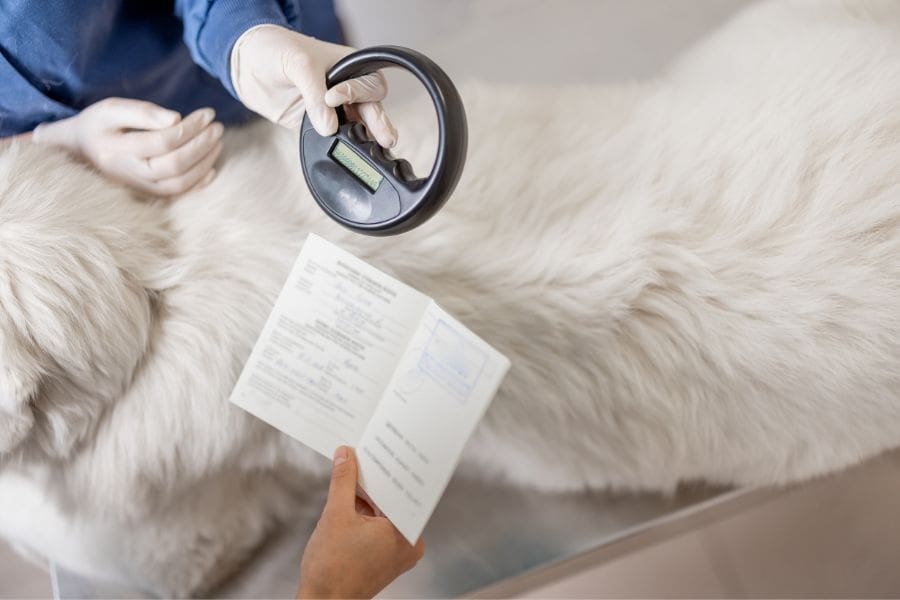
Email the AQCS regional branch for your area (e.g., aqcs.mum-dadf@nic.in for the Mumbai zone) roughly 6 to 10 days before your departure to schedule a visit.
On the day of your appointment, bring your dog and all original documents. The officers will verify your paperwork and perform a brief physical exam to scan the microchip. Once approved, you’ll receive your Export Certificate, which is valid for your travel date.
💡TIP: Carry food, water, and a bowl for your pet. The AQCS process and exam can easily take 2–3 hours.
2. Booking the Right Flight: Airlines that Allow Pets from India to Canada
When booking your flight, you must check whether your airline allows pets in-cabin or requires them to travel in the climate-controlled cargo hold.
- In-Cabin: Your pet and crate must weigh under 7 kg (15lbs). This is usually only possible for small puppies or toy breeds.
- Cargo Hold: Airlines such as Qatar Airways or Lufthansa allow pets up to 70 kg in secure, pressurized holds.
Before booking your own ticket, call the airline directly to verify that there is space for a pet on your exact route and dates. Checking airline capacity early is vital to moving to Canada with pets safely. Once you book, make sure you get an email verification from the airline stating your dog is locked into the manifest.
⚠️ Crucial Transit & Border Restrictions
- The EU Layover Trap: If you transit through the European Union, your pet will legally require a Rabies Titer Test, which must be processed through an EU-approved lab. There’s also a mandatory three-month waiting period.
- The UK Restriction: If traveling via British Airways through the UK, pets cannot fly in the cargo hold of the same aircraft as you; they are routed on a separate cargo flight entirely.
- The Commercial Ban: The Canadian Food Inspection Agency (CFIA) has a strict, permanent ban on commercial dog imports from India. This includes dogs meant for adoption, fostering, or rescue networks. Your dog will only clear customs smoothly if they are your legally documented personal pet.
Because of these rules, I flew with Qatar Airways. They didn’t require a Rabies Titer Test for a Doha layover, allowed Comet to fly in the cargo of my exact plane, and kept the layover duration perfectly manageable.
3. Getting an IATA-Approved Pet Crate for Air Travel
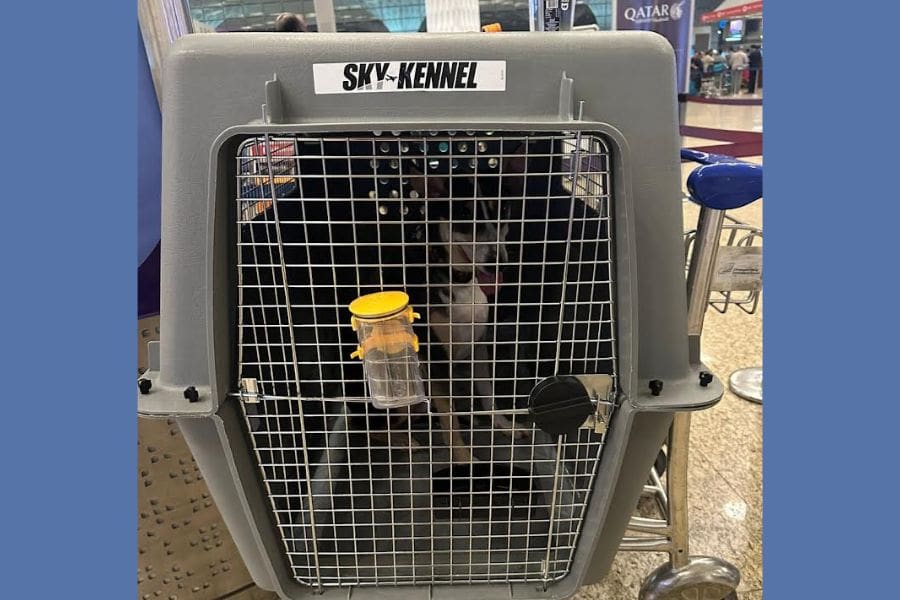
Your pet’s crate must meet IATA (International Air Transport Association) standards. If it doesn’t, the airline will deny your dog boarding at the gate. When moving to Canada with pets, your crate selection can make or break your travel day.
Crate Preparation Checklist
- Size: The crate must be tall enough for your dog to stand up straight without their head touching the roof, wide enough for them to turn around comfortably, and long enough for them to lie down fully extended.
- Water & Food: Attach a water bottle or clip-on bowls to the metal wire door. Most crates include a detachable feeding bowl. Tape a small zip-lock pouch of dry kibble to the top of the crate.
- Bedding: Line the floor with highly absorbent pee pads and secure the edges firmly with tape.
- Acclimatization: Buy the crate months in advance. Start by tossing treats inside for 10 minutes a day, gradually increasing the time until your dog views it as a safe sleeping den.
- Identification: Attach a one-page document in a weatherproof pouch with your pet’s name, breed, photo, flight numbers, feeding instructions, and your emergency contact numbers.
Take Control of Your Settlement Journey
Moving your life, and your furry family member, to a new country involves many moving parts. Don’t let confusing logistics overwhelm you. Take control of your entire settlement journey with a step-by-step master plan designed to ensure you land smoothly. Download the ultimate Pre-Arrival Moving Checklist Now!

4. Travel Day Tips: Flying to Canada with Your Pet
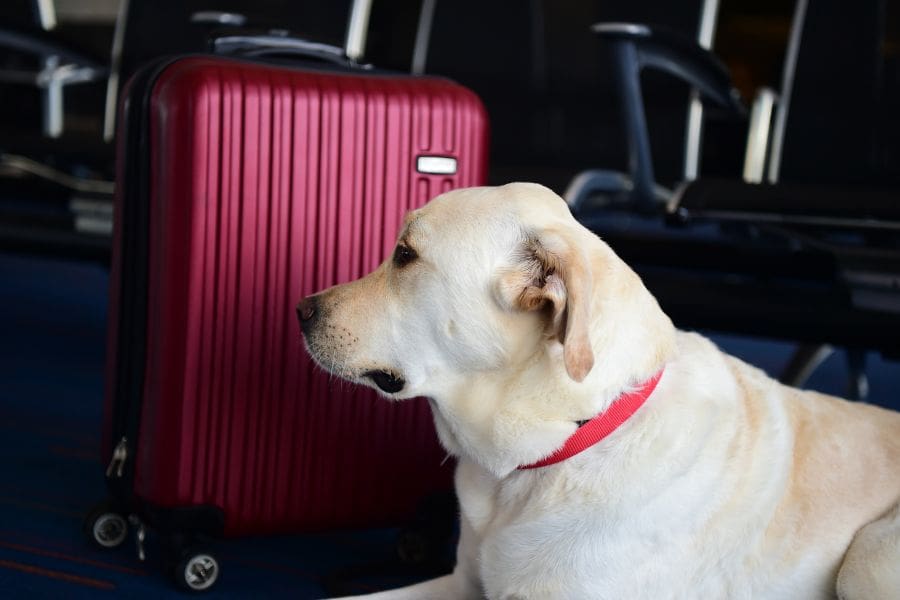
Preparing yourself mentally for travel day is just as important as the paperwork. Anyone moving to Canada with pets will tell you that a calm owner equals a calm animal.
What to expect on the day of your flight
- Arrive 4–5 hours early: Checking in a pet involves manual paperwork verification and weighing the crate, which takes extra time.
- Hire an airport porter: Navigating heavy suitcases and a giant pet crate on a trolley is exhausting. Porters are worth every penny, and they know the fastest routes through check-in. You can book the porter in advance on the airport’s website
- Communicate at the gate: Remind the airline staff that you’re traveling with a pet in cargo so they can ensure temperature regulation in the hold.
- Keep calm! Your pet can sense your anxiety, so staying composed helps them stay relaxed too.
Landing in Canada
When moving to Canada with pets, your entry is relatively easy. Once you land, there are no import formalities as long as your dog’s vaccinations are up to date. You’ll collect your pet from the oversized baggage area. That’s where I first saw Comet after our long journey, tail wagging and ready to start his Canadian adventure.
Take your paperwork to the Canada Border Services Agency (CBSA) secondary inspection area. An agent will verify your AQCS certificate and rabies records, and collect the standard Canadian animal inspection fee ($30 – $55 CAD).
✂️ The Ultimate Insider Tip: Keep a pair of scissors easily accessible in your check-in bag, or ask the person picking you up at the Canadian airport to bring a pair. Airlines tightly zip-tie the crate door shut for safety during travel. You will want to let your dog out the absolute second you see them, and trying to break heavy-duty zip ties without scissors is nearly impossible!
🏠 Your pet made it across the border, but can they get through the front door?
It depends on where you land. Ontario law completely voids “no pet” lease clauses, but provinces like B.C. and Alberta allow landlords to ban pets or require extra deposits. Master these provincial differences before you apply by reading our guide, Can Landlords Say No to Pets in Canada? Or, start your search right now by browsing pet-friendly rental listings at Rentals for Newcomers.
📍Browse Pet-friendly listings in Toronto
📍Browse Pet-friendly listings in Vancouver
🍁Final Thoughts: Planning, Patience, and Positivity When Moving to Canada with Pets
Moving to Canada from India with your pet means understanding Canada’s pet import requirements, airline rules, and how to prepare your pet for international travel. It can feel overwhelming, but it’s completely doable with proper planning.
Bringing Comet to Canada was an emotional journey, but seeing him explore his new home from Ottawa’s local parks to fall hikes in smaller towns nearby made every bit of effort worthwhile. For anyone moving to Canada with their furry companion, remember: it’s not just about relocation; it’s about keeping family together.
🐾Common Questions About Flying a Dog from India
Yes, but only if the dog is your personal pet and they are moving with you. You need to make sure they have a microchip and a valid rabies vaccination certificate. Canada has a strict ban on bringing in dogs from high-risk rabies countries like India if they are meant for “commercial” reasons. This means you cannot bring over street dogs for rescue networks, adoption, or fostering.
No. Canada does not have a mandatory pet quarantine for dogs or cats arriving from India if their vaccinations and documents are in order. Border officials will inspect your dog’s paperwork at your first point of entry.
Airline cargo fees usually range between $400 and $500 USD, depending on the size and weight of your pet and crate. Remember to budget for an IATA-approved crate ($150–$300 USD), local veterinary health checks, and the mandatory Canada Border Services Agency (CBSA) inspection fee of roughly $30–$55 CAD.
An IATA-approved crate meets the International Air Transport Association’s standards for pet safety, spacing, and ventilation during air travel. Airlines require it for all pets traveling in cargo. Crates should be spacious, secure, and well-ventilated with space for water and food. Airlines will refuse to board your pet if the crate does not meet IATA standards.